
About the Author
Amos Yong is chief academic officer and professor of theology and mission at Fuller Theological Seminary. One of the most notable Pentecostal theologians writing today, Yong is the author and editor of more than four dozen books.
Image credit: Used by permission of Baker Publishing Group, copyright © 2008. All rights to this material are reserved. Materials are not to be distributed to other web locations for retrieval, published(see © info.)
Works by Amos Yong
The Spirit Poured Out on All Flesh: Pentecostalism and the Possibility of Global Theology (2005) 89 copies
The Future of Evangelical Theology: Soundings from the Asian American Diaspora (2014) 54 copies, 2 reviews
Hospitality and the Other: Pentecost, Christian Practices, and the Neighbor (Faith Meets Faith Series) (2008) 50 copies
In the Days of Caesar: Pentecostalism and Political Theology (Sacra Doctrina: Christian Theology for a Postmodern Age) (2010) 37 copies
The Spirit of Creation: Modern Science and Divine Action in the Pentecostal-Charismatic Imagination (Pentecostal Manifestos (PM)) (2011) 35 copies
Mission after Pentecost: The Witness of the Spirit from Genesis to Revelation (Mission in Global Community) (2019) 32 copies
The Gospel and Pluralism Today: Reassessing Lesslie Newbigin in the 21st Century (Missiological Engagements) (2015) — Editor — 30 copies
Discerning the Spirits: A Pentecostal-Charismatic Contribution to Christian Theology of Religions (2000) 26 copies
Renewing the Church by the Spirit: Theological Education after Pentecost (Theological Education between the Times) (2020) 20 copies
Afro-Pentecostalism: Black Pentecostal and Charismatic Christianity in History and Culture (Religion, Race, and Ethnicity) (2011) 18 copies
The Hermeneutical Spirit: Theological Interpretation and Scriptural Imagination for the 21st Century (2017) 18 copies
The Missiological Spirit: Christian Mission Theology in the Third Millennium Global Context (2014) 12 copies
The Spirit Renews the Face of the Earth: Pentecostal Forays in Science and Theology of Creation (2009) — Editor — 10 copies
The Dialogical Spirit: Christian Reason and Theological Method in the Third Millennium (2014) 8 copies
Pentecostalism and Prosperity: The Socio-Economics of the Global Charismatic Movement (Christianities of the World) (2012) 6 copies
Interdisciplinary and religio-cultural discourses on a spirit-filled world : loosing the spirits (2013) — Editor — 5 copies
Pneumatology and the Christian-Buddhist Dialogue: Does the Spirit Blow Through the Middle Way? (2012) 4 copies
Pentecostal Theology and Jonathan Edwards (T&T Clark Systematic Pentecostal and Charismatic Theology) (2019) 3 copies
Global Renewal, Religious Pluralism, and the Great Commission (Asbury Theological Seminary Series in World Christian Revita) (2011) 1 copy
La Biblia las Discapacidades y la Iglesia: Una Nueva Vision para la Iglesia (Spanish Edition) (2018) 1 copy
The Dialogical Spirit II: Contextual God, Pluralistic Selves, and Dialectical Imagination After Pentecost (2024) 1 copy
Associated Works
Studying Global Pentecostalism: Theories and Methods (The Anthropology of Christianity) (2010) — Contributor — 20 copies
Asian and Pentecostal: The Charismatic Face of Christianity in Asia (2005) — Contributor — 18 copies
Christian Scholarship in the Twenty-First Century: Prospects and Perils (2014) — Contributor — 16 copies
From the Margins: A Celebration of the Theological Work of Donald W. Dayton (Princeton Theological Monograph) (2007) — Contributor — 8 copies
Tagged
Common Knowledge
- Other names
- 楊偉明
- Birthdate
- 1965-07-26
- Gender
- male
- Education
- Bethany College
Portland Seminary
Portland State University
Boston University - Occupations
- theologian
- Organizations
- Society for Pentecostal Studies (president | 2009)
Fuller Theological Seminary
Regent University
Bethel College
Bethany College - Nationality
- Malaysia (birth)
USA - Birthplace
- Taiping, Malaysia
- Associated Place (for map)
- Taiping, Malaysia
Members
Reviews

Pentecostals face a theological problem. We are comfortable with a language of power. With our roots sunk deep into the Luke-Acts "canon within a canon" (93), we proudly proclaim, "you will receive power when the Holy Spirit has come upon you” (Acts 1:8 ESV). So far so good. The problem comes when we emphasize power at the expense of love. Did you know that the book of Acts does not even contain the word "love"?
Do Pentecostals have anything to say about a theology of love?
In Johannine show more literature we find two similarly constructed phrases:
1. "God is love" (1 John 4:8, 16)
2. "God is spirit" (John 4:24)
While John doesn't go so far as to say that "The Spirit is love," the relationship of the Spirit to love is important and worth exploring. This is what Yong accomplishes in Spirit of Love. Here's his thesis:
"Pentecostal understandings of the Spirit of God can shed new light on God as love and loving, and on what it means for creation as a whole and for human beings in particular to receive the love of God who gives graciously" (x).
Yong explores various fields of research to make his point. He looks at the science of altruism and the history of the Pentecostal movement before diving exegetically into the Lukan, Johannine, and Pauline writings.
The relationship between God's love and the history of the Pentecostal movement is particularly enlightening. Yong describes the racial unity (and subsequent disunity) in the early days of the pentecostal outpouring as well as the movement's explicit pacifism (and subsequent follow-your-conscience theory). I cannot think of two more critical love-based issues than racial integration and non-violence!
Yong makes every written page count—even the 44 pages of fine-print notes that followed the 164 pages of main text were interesting! A work like this has the potential not only to challenge one-sided Pentecostal theologies of power but also to remind us of our close connection to the Wesleyan tradition, which emphasizes love more explicitly. show less
Do Pentecostals have anything to say about a theology of love?
In Johannine show more literature we find two similarly constructed phrases:
1. "God is love" (1 John 4:8, 16)
2. "God is spirit" (John 4:24)
While John doesn't go so far as to say that "The Spirit is love," the relationship of the Spirit to love is important and worth exploring. This is what Yong accomplishes in Spirit of Love. Here's his thesis:
"Pentecostal understandings of the Spirit of God can shed new light on God as love and loving, and on what it means for creation as a whole and for human beings in particular to receive the love of God who gives graciously" (x).
Yong explores various fields of research to make his point. He looks at the science of altruism and the history of the Pentecostal movement before diving exegetically into the Lukan, Johannine, and Pauline writings.
The relationship between God's love and the history of the Pentecostal movement is particularly enlightening. Yong describes the racial unity (and subsequent disunity) in the early days of the pentecostal outpouring as well as the movement's explicit pacifism (and subsequent follow-your-conscience theory). I cannot think of two more critical love-based issues than racial integration and non-violence!
Yong makes every written page count—even the 44 pages of fine-print notes that followed the 164 pages of main text were interesting! A work like this has the potential not only to challenge one-sided Pentecostal theologies of power but also to remind us of our close connection to the Wesleyan tradition, which emphasizes love more explicitly. show less
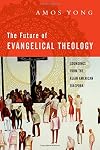
Summary: An exploration of the contribution that has been made and could be made from Asian-Americans to evangelical theology, with particular attention to context and the author's Pentecostal perspective.
Euro-American voices have long dominated evangelical theology, such that some may consider the two synonymous. The landscape has changed. In addition to the presence of many people of color in the North American context contributing to the theological dialogue from their own context, there show more is a growing church in east and southeast Asia, as well as in the global South that now represent a numerical majority of evangelical Christians in the world, and are beginning to exercise a voice in theological discussions.
Amos Yong's book is a contribution from the Asian and Asian American perspective. Also distinctive, and important in global discussions of evangelical theology are the voices of Pentecostal believers, and Yong represents this stream as well. In fact he describes his own perspective as an Asian American pent-evangelical perspective!
His first two chapters chart the contemporary global scene of evangelical theology, including the voices of Asian theologians in chapter one, and those of the Asian American diaspora in chapter two. He then asks why the evangelical Asian American voice has been relatively "unenergetic" compared to mainline and Roman Catholic voices, considering both the white North American contribution to this problem, and how Asian American evangelicals have internalized this tradition. This is central to his argument in the book. He writes,
"The argument unfolded here is at the heart of this book: it claims to address not only challenges confronting Asian American evangelicals but also the blind spots of evangelical theology especially in its American incarnations. If it is successful, then we shall see that the 'problem' for Asian American evangelical theology is simultaneously the problem of evangelical theology itself--there is no way to address either without addressing the other" (pp. 29-30).
In chapter four, Yong turns to the Pentecostal voices in Asian American theology and the unique contribution that the Pentecostal experience brings to understanding the many voices in the conversation in a context where the missional impetus of the Spirit's empowering creates contact across so many cultures.
Chapters five and six were, I thought, among the most interesting in the book, in exploring what an Asian American pent-evangelical theology brings to questions of immigration, centering on themes of migration in a Pentacostal reading of Lukan migration narratives, and the experiences in the Asian American context around money, migration, and mission.
Chapter seven is Yong's attempt to sketch a programmatic vision for pent-evangelical Asian American theology that encourages Asian American voices in dialogue with other North Americans and also engages with other voices in the global South. This is followed by a more personal epilogue in which Yong charts with ten binaries ways in which he, perhaps mirroring the experience of "hybridity" of other Asian Americans, finds himself between _____ and _____.
Speaking from a Euro-American perspective, I welcome work like this. So often, we are unreflective of how our own cultural context (which we often fail to distinguish from the gospel of the kingdom) has shaped our theology, even our theological categories. I appreciated the more extensive sketch of an Asian American pent-evangelical theology of immigration. Our inability to think this way, and often blindness to how so much of the Bible is a narrative of migrations and diasporas, is one of the areas where our Asian American fellow believers might help us see parts of the Bible that our own context may have obscured. We need voices like Yong's, not only in the theological formation of the Asian American diaspora, but to see the world beyond our own, often Euro-American, perspective. I share his hope that his book would encourage other Asian American evangelical and Pentecostal theologians to find and use their voices. show less
Euro-American voices have long dominated evangelical theology, such that some may consider the two synonymous. The landscape has changed. In addition to the presence of many people of color in the North American context contributing to the theological dialogue from their own context, there show more is a growing church in east and southeast Asia, as well as in the global South that now represent a numerical majority of evangelical Christians in the world, and are beginning to exercise a voice in theological discussions.
Amos Yong's book is a contribution from the Asian and Asian American perspective. Also distinctive, and important in global discussions of evangelical theology are the voices of Pentecostal believers, and Yong represents this stream as well. In fact he describes his own perspective as an Asian American pent-evangelical perspective!
His first two chapters chart the contemporary global scene of evangelical theology, including the voices of Asian theologians in chapter one, and those of the Asian American diaspora in chapter two. He then asks why the evangelical Asian American voice has been relatively "unenergetic" compared to mainline and Roman Catholic voices, considering both the white North American contribution to this problem, and how Asian American evangelicals have internalized this tradition. This is central to his argument in the book. He writes,
"The argument unfolded here is at the heart of this book: it claims to address not only challenges confronting Asian American evangelicals but also the blind spots of evangelical theology especially in its American incarnations. If it is successful, then we shall see that the 'problem' for Asian American evangelical theology is simultaneously the problem of evangelical theology itself--there is no way to address either without addressing the other" (pp. 29-30).
In chapter four, Yong turns to the Pentecostal voices in Asian American theology and the unique contribution that the Pentecostal experience brings to understanding the many voices in the conversation in a context where the missional impetus of the Spirit's empowering creates contact across so many cultures.
Chapters five and six were, I thought, among the most interesting in the book, in exploring what an Asian American pent-evangelical theology brings to questions of immigration, centering on themes of migration in a Pentacostal reading of Lukan migration narratives, and the experiences in the Asian American context around money, migration, and mission.
Chapter seven is Yong's attempt to sketch a programmatic vision for pent-evangelical Asian American theology that encourages Asian American voices in dialogue with other North Americans and also engages with other voices in the global South. This is followed by a more personal epilogue in which Yong charts with ten binaries ways in which he, perhaps mirroring the experience of "hybridity" of other Asian Americans, finds himself between _____ and _____.
Speaking from a Euro-American perspective, I welcome work like this. So often, we are unreflective of how our own cultural context (which we often fail to distinguish from the gospel of the kingdom) has shaped our theology, even our theological categories. I appreciated the more extensive sketch of an Asian American pent-evangelical theology of immigration. Our inability to think this way, and often blindness to how so much of the Bible is a narrative of migrations and diasporas, is one of the areas where our Asian American fellow believers might help us see parts of the Bible that our own context may have obscured. We need voices like Yong's, not only in the theological formation of the Asian American diaspora, but to see the world beyond our own, often Euro-American, perspective. I share his hope that his book would encourage other Asian American evangelical and Pentecostal theologians to find and use their voices. show less
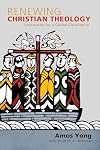
The only word to describe this work is "impressive." Yong has provided a wonderful work of systematic theology that is truly astonishing in its breadth of reference, helpful in its clarification of difficult matters, and insightful in both the questions asked and solutions proposed.
Perhaps one of the BEST features of the text is the fact that each chapter follows a similar structure. (Believe me, having read other so-called systematic theologies, THAT is a huge help.) Also, Jonanthan show more Anderson's theological meditations on artistic works were FANTASTIC. If there's any piece of this text that I would adopt for my classroom, that would be it.
Which leads me to the difficulties this text presents, especially for uninitiated readers of theology. First, it is built entirely around the World Assemblies of God Statement of Faith. While this IS a remarkable and thorough theological summary and Yong does make thorough use of other theological traditions, it does strike me as a shade "parochial." Relatedly (and probably the real reason I find the use of the WAG SF off-putting), Yong elects to move through the enumerated articles in REVERSE ORDER. Even though he does offer a very convincing rationale for doing so in the first chapter of the text, I found it almost impossible to feel comfortable about "moving backward" through a foundational document.
The second major difficulty is that Yong is undertaking an "unabashedly evangelical" (his words) re-reading of the WAG SF. Uninitiated readers will not understand that this has been an undercurrent in Yong's work for some time (see especially his earlier "The Spirit Poured Out on All Flesh"). The issue is that seeing Pentecostal theology as a kind of "subset" of a larger "Evangelical" theology is a very particular-and debated-view of the Pentecostal theological enterprise. (For a different perspective on this question, I would encourage you to read the excellent "Passion for the Kingdom: A Pentecostal Spirituality" by Steven Jack Land.) The "fan boy"-ism for all things evangelical is palpable throughout the text; one prime example is Yong's extended interaction with the current evangelical debates related to theistic evolution/historical Adam debates. While they are in and of themselves intriguing and important discussions, very few Pentecostal scholars that I know would see them as "our" debates. Our approach to Scripture is so radically different than the fundamentalist/modernist rationalistic approach that such questions effectively do not register with the Pentecostal mindset; it may not be a "good" thing, but I think it most certainly is NOT a "bad" thing either.
Having given that critique, I must return to say what good work Yong has done. He is a formidable theologian whose output, just in terms of sheer volume (not to mention its top-notch scholarship), is staggering. I probably won't use this as a main text in any of my theology classes, but it will surely remain near at hand on my bookshelf; I undoubtedly will return to it often. show less
Perhaps one of the BEST features of the text is the fact that each chapter follows a similar structure. (Believe me, having read other so-called systematic theologies, THAT is a huge help.) Also, Jonanthan show more Anderson's theological meditations on artistic works were FANTASTIC. If there's any piece of this text that I would adopt for my classroom, that would be it.
Which leads me to the difficulties this text presents, especially for uninitiated readers of theology. First, it is built entirely around the World Assemblies of God Statement of Faith. While this IS a remarkable and thorough theological summary and Yong does make thorough use of other theological traditions, it does strike me as a shade "parochial." Relatedly (and probably the real reason I find the use of the WAG SF off-putting), Yong elects to move through the enumerated articles in REVERSE ORDER. Even though he does offer a very convincing rationale for doing so in the first chapter of the text, I found it almost impossible to feel comfortable about "moving backward" through a foundational document.
The second major difficulty is that Yong is undertaking an "unabashedly evangelical" (his words) re-reading of the WAG SF. Uninitiated readers will not understand that this has been an undercurrent in Yong's work for some time (see especially his earlier "The Spirit Poured Out on All Flesh"). The issue is that seeing Pentecostal theology as a kind of "subset" of a larger "Evangelical" theology is a very particular-and debated-view of the Pentecostal theological enterprise. (For a different perspective on this question, I would encourage you to read the excellent "Passion for the Kingdom: A Pentecostal Spirituality" by Steven Jack Land.) The "fan boy"-ism for all things evangelical is palpable throughout the text; one prime example is Yong's extended interaction with the current evangelical debates related to theistic evolution/historical Adam debates. While they are in and of themselves intriguing and important discussions, very few Pentecostal scholars that I know would see them as "our" debates. Our approach to Scripture is so radically different than the fundamentalist/modernist rationalistic approach that such questions effectively do not register with the Pentecostal mindset; it may not be a "good" thing, but I think it most certainly is NOT a "bad" thing either.
Having given that critique, I must return to say what good work Yong has done. He is a formidable theologian whose output, just in terms of sheer volume (not to mention its top-notch scholarship), is staggering. I probably won't use this as a main text in any of my theology classes, but it will surely remain near at hand on my bookshelf; I undoubtedly will return to it often. show less
My own theology and faith has been shaped by Asian-Americans. I half-grew up in Hawaii, so feel at home in an Asian culture, but I can also point to key Asian-American mentors who invested in my spiritual formation. They taught me the Bible, mentored me, prayed for me and helped me confront my own blind spots and white privilege. I was also blessed to have a number of Asian friends at seminary which challenged me to see theology from the margins, when the curriculum was largely a Western show more story. [My graduate school prided itself on being an international Christian graduate school and had a number of Asian students. But I can remember sitting at a table with a group of Asian American students who pointed to a large painting which only depicted Europe and North American. There is still more work to be done on including our Asian sisters and brothers!].
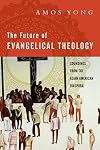
Amos Young is perhaps the preeminent Pentecostal theologian in America and is a Chinese-American (by way of Malaysia). He has taught theology at Regent University and currently professor of theology and the dircetor of the Center for Missiological Research at Fuller Theological Seminary. Yong begins The Futrue of Evangelical Theology: Soundings from the Asian American Diaspora by examining the effects of globalization and the shift of Christianity’s center to the South and East. He then looks at Asian theology and Asian-American theology (chapter two before honing in on the contribution of Asian American evangelicals (chapter three) and Pentecostals (chapter four). Chapter five and six explore Asian American Pentecostal/Evangelical contributions to im/migration and in the final chapter, Yong lays out some ‘next steps for Asian-Americans, Evangelicals and Christian theologians.
As the subtitle of this book indicates, this book records ‘soundings’ from the Asian-American diaspora and is not an exhaustive treatment on Asian theology (as if such a work were even possible). Yong is good at naming distinctives and trends in theology. As an Asian-American, Yong speaks of his own experience of immigration, generational tension, and navigating the tensions between East and West. Asian-Americans who read this book will be encouraged and inspired to reflect theologically on their experience (especially in his introduction and epilogue). He proposes ‘local theologies’ from an Asian American perspective.
But this book was not just written for Asian Americans. It was written for the Church (specifically the church in America, but this will be pertinent to Canadian friends as well). Yong focuses on the Asian-American experience because he knows that their theological reflection enriches the whole of Evangelicalism and Pentecostalism. Specifically, Asian American theology helps the church reflect and converse well in the realm of culture, economics and inter-religious dialogue. Asian American theologians can inform our public theology and we are impoverished if we ignore their contributions. Yong writes:
Asian Americans who live betwixt-and-between Asia and the United States can bring more existential and interrelational resources to bear on the transnational and globaliing dynamics of the present time. (118).
While my own reading of Asian American theologies is limited (I’ve read some Yong and a couple of others that he cites), I think Yong illustrates well their contribution to the wider Evangelical discourse. Specifically, Asian American voices are ignored to our peril if we fail to wrestle with their perspectives on immigration and Jubilee. I highly recommend this book for anyone who cares about theology and race (and if you care about neither you ought to read it anyway). Asian American friends will appreciate Yong’s thoughtful survey and encouragement to let their cultural perspective inform their work. I give this book an enthusiastic five stars: ★★★★★
Thank you to InterVarsity Academic for providing me a copy of this book for the purposes of review. show less
Amos Young is perhaps the preeminent Pentecostal theologian in America and is a Chinese-American (by way of Malaysia). He has taught theology at Regent University and currently professor of theology and the dircetor of the Center for Missiological Research at Fuller Theological Seminary. Yong begins The Futrue of Evangelical Theology: Soundings from the Asian American Diaspora by examining the effects of globalization and the shift of Christianity’s center to the South and East. He then looks at Asian theology and Asian-American theology (chapter two before honing in on the contribution of Asian American evangelicals (chapter three) and Pentecostals (chapter four). Chapter five and six explore Asian American Pentecostal/Evangelical contributions to im/migration and in the final chapter, Yong lays out some ‘next steps for Asian-Americans, Evangelicals and Christian theologians.
As the subtitle of this book indicates, this book records ‘soundings’ from the Asian-American diaspora and is not an exhaustive treatment on Asian theology (as if such a work were even possible). Yong is good at naming distinctives and trends in theology. As an Asian-American, Yong speaks of his own experience of immigration, generational tension, and navigating the tensions between East and West. Asian-Americans who read this book will be encouraged and inspired to reflect theologically on their experience (especially in his introduction and epilogue). He proposes ‘local theologies’ from an Asian American perspective.
But this book was not just written for Asian Americans. It was written for the Church (specifically the church in America, but this will be pertinent to Canadian friends as well). Yong focuses on the Asian-American experience because he knows that their theological reflection enriches the whole of Evangelicalism and Pentecostalism. Specifically, Asian American theology helps the church reflect and converse well in the realm of culture, economics and inter-religious dialogue. Asian American theologians can inform our public theology and we are impoverished if we ignore their contributions. Yong writes:
Asian Americans who live betwixt-and-between Asia and the United States can bring more existential and interrelational resources to bear on the transnational and globaliing dynamics of the present time. (118).
While my own reading of Asian American theologies is limited (I’ve read some Yong and a couple of others that he cites), I think Yong illustrates well their contribution to the wider Evangelical discourse. Specifically, Asian American voices are ignored to our peril if we fail to wrestle with their perspectives on immigration and Jubilee. I highly recommend this book for anyone who cares about theology and race (and if you care about neither you ought to read it anyway). Asian American friends will appreciate Yong’s thoughtful survey and encouragement to let their cultural perspective inform their work. I give this book an enthusiastic five stars: ★★★★★
Thank you to InterVarsity Academic for providing me a copy of this book for the purposes of review. show less
Lists
You May Also Like


Associated Authors
Statistics
- Works
- 41
- Also by
- 6
- Members
- 888
- Popularity
- #28,846
- Rating
- 3.8
- Reviews
- 6
- ISBNs
- 98
- Languages
- 1
- Favorited
- 1