
Michael R. Trimble
Author of The Soul in the Brain: The Cerebral Basis of Language, Art, and Belief
About the Author
Works by Michael R. Trimble
Tagged
Common Knowledge
- Gender
- male
- Education
- University Of Birmingham, England, UK
- Occupations
- neuroscientist
Members
Reviews
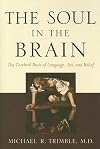
Professor Michael Trimble (University of London) employs his professional expertise to tease out what the bicamerality of the brain might mean for what it is to be human. His efforts are plausible and intellectually stimulating. He remains a materialist through and through.
He emphasises that we have evolved (as other researchers have shown) a dominant and a non-dominant hemisphere with the non-dominant being older in evolutionary terms. His interest is in the latter and how it expresses show more itself in a world dominated by the former.
Popular views of the bicameral nature of the brain have tended to circle around Julian Jaynes' work which always struck me as fundamentally absurd, based on an over-emphasis on ancient texts to come up with internal 'god voices'. Trimble moves us on from such suggestive nonsense.
His more sophisticated approach takes aspects of being human not as irrational but simply as not purely cognitive, based on other ways of seeing the world which may be older biologically and which impact on certain uses of language. These tend to metaphor, music, poetry and 'spirituality'.
This is not about religion as new found truth or music or poetry as superior value but rather pointing out why such modes of language and thinking are so widespread to the point of 'normality. He is good on disconnecting these modes of thought from some extreme claims about mental illness.
The human brain is a material entity that tends to follow certain patterns and has certain shared physical limitations but which has evolved into a fair range of difference which can ultimately (though much has yet to be done) be traced to our neurons, our 'wiring'.
This does not diminish humanity in its relation to belief and artistic expression but rather makes humanity only comprehensible as inclusive of this diversity of responses to reality. The mind is truly complex and bicamerality is no simple aspect of it. Quite the contrary.
The neurology in the book takes no prisoners. Like many such books, the author is torn between ensuring the respect of his professional peers (which will make some of it hard-going) and making his arguments clear (which he does) to the more general reader.
In the end the general reader has to trust to his scientific authority, which is always a little awkward when great claims are being made, but a lot of what he claims just seems to work in the light of common experience. I found myself taking it seriously.
Personally, I do not have a spiritual bone in my body, tend not to think metaphorically, got bored with poetry in my early twenties (though I loved the easy-to-read romantics) and certainly do not have the passion of many contemporaries for music although I can enjoy it well enough in passing.
On the other hand, I read widely in religious history without believing any of it, can understand the rules of poetry without caring too much about them and have a wide knowledge of musical history. In other words, my brain is geared against the non-dominant hemisphere and I am just fine with that.
What Trimble is teaching me and others is that the conformation of my brain and others' brains is the grounding of my and others' minds and there is no reason to consider any mind superior to another except in relation to the survival and happiness of the organism.
If religious beliefs and experiences are grounded in the biology of the non-dominant hemisphere (which strikes me as increasingly self-evident) and certain types of creativity arise out of that grounding then this adds to the sum of resources available to some individuals and the species alike.
Perhaps what is most interesting philosophically is how the non-philosopher author returns us to Nietzsche as the most insightful into the phenomenon he is describing. None of what he writes of is a matter of truth but only of individual approaches to truth that then get socialised.
Of course, some cognitive truths are unanswerable - the bridge or aircraft that will fall without the application of correct cognition in advance - but it is quite possible that humanity will find that such cognitive truths will soon be better handled by machines in any case.
Human truths derived from the huge variation in human brains, albeit limited by a certain biological framework, are going to be far more interesting in the coming age of AI but none of these truths are truly absolute. All are social negotiations within a struggle for power between minds (brains).
The non-dominant hemisphere, with certain types (though not all types) of creativity as its territory, may well be competing more vigorously soon, as cold and clinical basic analytical cognition weakens in value, with the creativities, the superpowers, of the dominant hemisphere.
This will bring out into the open, with neurological and many other studies providing more understanding, the fundamentals of cultural and social conflict and force us to live with 'other minds' or perhaps positively decide to declare war on them, a rather futile human civil war to be sure.
At the moment, we have ferocious cultural wars spilling over into political violence in a world of limited resources and of a general fear of the 'other' not entirely without justification. While poets and musicians are no danger, the spiritual can prove truly murderous in their own drive to power.
Disconnected from false assumptions about mental illness (an entirely different matter), some human ways of thinking drawn from our distant evolutionary past are both frighteningly normal (at least to those defending themselves from them) and unable to see themselves for what they are.
The value of this book is like that of a book on autism to an intelligent high-functioning autist or on sexual difference to a homosexual - it should both endorse the right to a position and, if it is to be of any use, warn us of the limitations of that position in relation to other forms of 'normality'.
It might be said that there is no 'normal' humanity, no essence of Man, but only a competing network of evolutionarily useful 'normalities' that operate alongside true abnormalities (such as dysfunctional schizophrenia) and create the very viability of our species so long as we let no one of them dominate.
We know now that the symptoms of madness are often much more 'normal' than we think with more people hearing voices, for example, than anyone has wanted to admit in the past and that mental breakdown is an extremity of human 'being'.
In the same way, extreme analytical cognition or religious mania or poetic obscurity may also be radicalisations of normality. Trimble provides interesting data on the link between poetic extremity and manic-depression in one of the few evident links between mental issues and creativity.
He also explores a probable link between religious ekstasis and epilepsy so that we find particular modes of experience linked to quite precise types of brain dysfunction rather than a more general breakdown of madness as it is commonly understood.
The non-dominant hemisphere is not irrational. It does not break down into nonsense. It constructs a different reasoning about what it sees in the world. At the core of this is the metaphorical approach to describing reality. This metaphorical approach hangs together very well conceptually.
My personal complaint about metaphorical ways of thinking or metaphorical expression is only that they strike me as wasteful when things can generally (though not all things admittedly) be told more simply in prose or need not be said at all, merely felt.
This book feels quite tentative at times. Trimble is not afraid to speak of the 'soul' (I think he is right) but also of lodging it not in Descartes pineal gland but in brain processes, implying that it dies when the brain dies and has been created out of genes and environment individual by individual.
'The Soul in the Brain' is not going to be the last word on the subject but it is an excellent intellectual launching pad both for more research and for bringing general readers to the point where they can see the outlines of the new science of the mind and draw their own conclusions.
There is no necessity for God or transmigration of souls or guiding hands here. Our creativity arises out of the dynamic between our brains and social and cultural learning. Instincts for certain types of feeling and expression then gain form from a dialectical relationship with social and material reality. show less
He emphasises that we have evolved (as other researchers have shown) a dominant and a non-dominant hemisphere with the non-dominant being older in evolutionary terms. His interest is in the latter and how it expresses show more itself in a world dominated by the former.
Popular views of the bicameral nature of the brain have tended to circle around Julian Jaynes' work which always struck me as fundamentally absurd, based on an over-emphasis on ancient texts to come up with internal 'god voices'. Trimble moves us on from such suggestive nonsense.
His more sophisticated approach takes aspects of being human not as irrational but simply as not purely cognitive, based on other ways of seeing the world which may be older biologically and which impact on certain uses of language. These tend to metaphor, music, poetry and 'spirituality'.
This is not about religion as new found truth or music or poetry as superior value but rather pointing out why such modes of language and thinking are so widespread to the point of 'normality. He is good on disconnecting these modes of thought from some extreme claims about mental illness.
The human brain is a material entity that tends to follow certain patterns and has certain shared physical limitations but which has evolved into a fair range of difference which can ultimately (though much has yet to be done) be traced to our neurons, our 'wiring'.
This does not diminish humanity in its relation to belief and artistic expression but rather makes humanity only comprehensible as inclusive of this diversity of responses to reality. The mind is truly complex and bicamerality is no simple aspect of it. Quite the contrary.
The neurology in the book takes no prisoners. Like many such books, the author is torn between ensuring the respect of his professional peers (which will make some of it hard-going) and making his arguments clear (which he does) to the more general reader.
In the end the general reader has to trust to his scientific authority, which is always a little awkward when great claims are being made, but a lot of what he claims just seems to work in the light of common experience. I found myself taking it seriously.
Personally, I do not have a spiritual bone in my body, tend not to think metaphorically, got bored with poetry in my early twenties (though I loved the easy-to-read romantics) and certainly do not have the passion of many contemporaries for music although I can enjoy it well enough in passing.
On the other hand, I read widely in religious history without believing any of it, can understand the rules of poetry without caring too much about them and have a wide knowledge of musical history. In other words, my brain is geared against the non-dominant hemisphere and I am just fine with that.
What Trimble is teaching me and others is that the conformation of my brain and others' brains is the grounding of my and others' minds and there is no reason to consider any mind superior to another except in relation to the survival and happiness of the organism.
If religious beliefs and experiences are grounded in the biology of the non-dominant hemisphere (which strikes me as increasingly self-evident) and certain types of creativity arise out of that grounding then this adds to the sum of resources available to some individuals and the species alike.
Perhaps what is most interesting philosophically is how the non-philosopher author returns us to Nietzsche as the most insightful into the phenomenon he is describing. None of what he writes of is a matter of truth but only of individual approaches to truth that then get socialised.
Of course, some cognitive truths are unanswerable - the bridge or aircraft that will fall without the application of correct cognition in advance - but it is quite possible that humanity will find that such cognitive truths will soon be better handled by machines in any case.
Human truths derived from the huge variation in human brains, albeit limited by a certain biological framework, are going to be far more interesting in the coming age of AI but none of these truths are truly absolute. All are social negotiations within a struggle for power between minds (brains).
The non-dominant hemisphere, with certain types (though not all types) of creativity as its territory, may well be competing more vigorously soon, as cold and clinical basic analytical cognition weakens in value, with the creativities, the superpowers, of the dominant hemisphere.
This will bring out into the open, with neurological and many other studies providing more understanding, the fundamentals of cultural and social conflict and force us to live with 'other minds' or perhaps positively decide to declare war on them, a rather futile human civil war to be sure.
At the moment, we have ferocious cultural wars spilling over into political violence in a world of limited resources and of a general fear of the 'other' not entirely without justification. While poets and musicians are no danger, the spiritual can prove truly murderous in their own drive to power.
Disconnected from false assumptions about mental illness (an entirely different matter), some human ways of thinking drawn from our distant evolutionary past are both frighteningly normal (at least to those defending themselves from them) and unable to see themselves for what they are.
The value of this book is like that of a book on autism to an intelligent high-functioning autist or on sexual difference to a homosexual - it should both endorse the right to a position and, if it is to be of any use, warn us of the limitations of that position in relation to other forms of 'normality'.
It might be said that there is no 'normal' humanity, no essence of Man, but only a competing network of evolutionarily useful 'normalities' that operate alongside true abnormalities (such as dysfunctional schizophrenia) and create the very viability of our species so long as we let no one of them dominate.
We know now that the symptoms of madness are often much more 'normal' than we think with more people hearing voices, for example, than anyone has wanted to admit in the past and that mental breakdown is an extremity of human 'being'.
In the same way, extreme analytical cognition or religious mania or poetic obscurity may also be radicalisations of normality. Trimble provides interesting data on the link between poetic extremity and manic-depression in one of the few evident links between mental issues and creativity.
He also explores a probable link between religious ekstasis and epilepsy so that we find particular modes of experience linked to quite precise types of brain dysfunction rather than a more general breakdown of madness as it is commonly understood.
The non-dominant hemisphere is not irrational. It does not break down into nonsense. It constructs a different reasoning about what it sees in the world. At the core of this is the metaphorical approach to describing reality. This metaphorical approach hangs together very well conceptually.
My personal complaint about metaphorical ways of thinking or metaphorical expression is only that they strike me as wasteful when things can generally (though not all things admittedly) be told more simply in prose or need not be said at all, merely felt.
This book feels quite tentative at times. Trimble is not afraid to speak of the 'soul' (I think he is right) but also of lodging it not in Descartes pineal gland but in brain processes, implying that it dies when the brain dies and has been created out of genes and environment individual by individual.
'The Soul in the Brain' is not going to be the last word on the subject but it is an excellent intellectual launching pad both for more research and for bringing general readers to the point where they can see the outlines of the new science of the mind and draw their own conclusions.
There is no necessity for God or transmigration of souls or guiding hands here. Our creativity arises out of the dynamic between our brains and social and cultural learning. Instincts for certain types of feeling and expression then gain form from a dialectical relationship with social and material reality. show less
Dr Letellier, whom I suspect to be the leading contributor, has written several books on opera. His co-authors are, unusually for this genre, medics. They have together produced a thoughtful book, with attractive illustrations.
The book includes some philosophical views on the operas considered: a slightly unusual, and interesting, perspective.
The book includes some philosophical views on the operas considered: a slightly unusual, and interesting, perspective.
For such broad themes this book is rather short. Trimble gives only a cursory overview of everything, and his use of language falls flat. I found myself re-reading many paragraphs because of their brevity and lack of impact. It serves as a good starting point for further research in brain studies, though, I suppose.
Statistics
- Works
- 20
- Members
- 138
- Popularity
- #148,170
- Rating
- 4.0
- Reviews
- 4
- ISBNs
- 48