
About the Author
Don Lattin is an award-winning author and journalist. His five previously published books include The Harvard Psychedelic Club, a national bestseller that won the California Book Award Silver Medal for nonfiction. His feature articles have been published in dozens of leading magazines and show more newspapers, including the New York Times and San Francisco Chronicle, where Lattin worked as a staff writer for twenty years. show less
Works by Don Lattin
The Harvard Psychedelic Club: How Timothy Leary, Ram Dass, Huston Smith, and Andrew Weil Killed the Fifties and Ushered in a New Age for America (2010) 314 copies, 9 reviews
Jesus Freaks: A True Story of Murder and Madness on the Evangelical Edge (2007) 115 copies, 4 reviews
Following Our Bliss: How the Spiritual Ideals of the Sixties Shape Our Lives Today (2003) 46 copies, 1 review
Tagged
Common Knowledge
Members
Reviews
The Harvard Psychedelic Club: How Timothy Leary, Ram Dass, Huston Smith, and Andrew Weil Killed the Fifties and Ushered in a New Age for America by Don Lattin
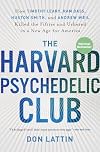
While undertaking a course on the psychology of religious conversion at the Graduate Theological Union, Bay Area religion writer Don Lattin cast back in his memory for his own “personal conversion narrative.” Like many of his generation, Lattin had experimented with psychedelics with—in retrospect, predictably—polarized results.
What this reflection led Lattin to consider was that his encounters with LSD, both good and bad, were the beginning of a long process of spiritual awakening. show more A process closer, perhaps, to the journey of Huston Smith (who Lattin personifies as The Teacher), than the more convoluted roads that Timothy Leary (The Trickster), Ram Dass né Richard Alpert (The Seeker), and Andrew Weil (The Healer) traveled.
Originally called in to help Smith finish his biography, Tales of Wonder, Lattin was approached to tell this story, a fascinating tale of an incredible time in human history. The editors at HarperOne realized they had inadvertently found just the right guy to do it justice.
With a subtitle of “How Timothy Leary, Ram Dass, Huston Smith, and Andrew Weil killed the fifties and ushered in a new age for America,” the uninitiated may have the impression that the four men worked in consort toward that goal, however, the interesting push and pull of these four strong and very distinct personalities is what gives this story its legs.
Weil’s betrayal of Leary and Alpert that resulted in their expulsion from Harvard was the most shocking revelation of the early years of the quartet’s transformation. It is surprising, even with the hindsight that the two men had to leave the confines of the institution—one way or another—to become what they ultimately became, that an enlightened person like Ram Dass still can’t forgive the young Weil, a man that arguably no longer exists.
The Harvard Psychedelic Club is a fast-paced read, with faces both famous and infamous popping up throughout the entire ride. The men independently show up with almost Zelig regularity at every important moment that collectively led to a shattering of the calcified paradigm of post-war American culture.
While Weil was busy becoming the guru of the organic health movement, and Leary was spending a good deal of time and effort staying one step ahead of the law, Smith and Dass explored the Far East, found affirmation and enlightenment in India and Japan, and ultimately brought those lessons and attitudes back to a United States hungry for deeper meaning.
It is these spiritual ramifications of the psychedelic experience that Lattin considers important, and, like many at the time, he discounts Leary’s messianic tendencies as being antithetical to the possibility of positive change through inner exploration. Leary’s surviving cohorts seem to hold him responsible for the unfortunate cessation of serious scientific research into the use of these drugs at the same time they realize that, as an archetypal “trickster,” he was playing as inevitable a part in the passion play as they had been.
Lattin sums up the quartet’s tumultuous history in his conclusion as such: “All four of these characters played a role in the social and spiritual changes that made the sixties such a pivotal decade in recent American history. They stirred up the water and then rode a wave of social change. The difference is that Timothy Leary never found … the stability needed to bring those changes into his life in a positive, long-lasting way. Instead of finding an anchor, Leary tried to walk on the water.”
He then addresses a generation that, for a large part, has turned its back on the lessons learned in the era of questioning “the materialist, consumerist mind-set into which we were raised.” Lattin points out that, “Now more than ever, we need to remember the lessons of that idealistic era. It’s time, once again, to find new ways to live together with equality, justice, and compassion.”
Amen, brother. show less
What this reflection led Lattin to consider was that his encounters with LSD, both good and bad, were the beginning of a long process of spiritual awakening. show more A process closer, perhaps, to the journey of Huston Smith (who Lattin personifies as The Teacher), than the more convoluted roads that Timothy Leary (The Trickster), Ram Dass né Richard Alpert (The Seeker), and Andrew Weil (The Healer) traveled.
Originally called in to help Smith finish his biography, Tales of Wonder, Lattin was approached to tell this story, a fascinating tale of an incredible time in human history. The editors at HarperOne realized they had inadvertently found just the right guy to do it justice.
With a subtitle of “How Timothy Leary, Ram Dass, Huston Smith, and Andrew Weil killed the fifties and ushered in a new age for America,” the uninitiated may have the impression that the four men worked in consort toward that goal, however, the interesting push and pull of these four strong and very distinct personalities is what gives this story its legs.
Weil’s betrayal of Leary and Alpert that resulted in their expulsion from Harvard was the most shocking revelation of the early years of the quartet’s transformation. It is surprising, even with the hindsight that the two men had to leave the confines of the institution—one way or another—to become what they ultimately became, that an enlightened person like Ram Dass still can’t forgive the young Weil, a man that arguably no longer exists.
The Harvard Psychedelic Club is a fast-paced read, with faces both famous and infamous popping up throughout the entire ride. The men independently show up with almost Zelig regularity at every important moment that collectively led to a shattering of the calcified paradigm of post-war American culture.
While Weil was busy becoming the guru of the organic health movement, and Leary was spending a good deal of time and effort staying one step ahead of the law, Smith and Dass explored the Far East, found affirmation and enlightenment in India and Japan, and ultimately brought those lessons and attitudes back to a United States hungry for deeper meaning.
It is these spiritual ramifications of the psychedelic experience that Lattin considers important, and, like many at the time, he discounts Leary’s messianic tendencies as being antithetical to the possibility of positive change through inner exploration. Leary’s surviving cohorts seem to hold him responsible for the unfortunate cessation of serious scientific research into the use of these drugs at the same time they realize that, as an archetypal “trickster,” he was playing as inevitable a part in the passion play as they had been.
Lattin sums up the quartet’s tumultuous history in his conclusion as such: “All four of these characters played a role in the social and spiritual changes that made the sixties such a pivotal decade in recent American history. They stirred up the water and then rode a wave of social change. The difference is that Timothy Leary never found … the stability needed to bring those changes into his life in a positive, long-lasting way. Instead of finding an anchor, Leary tried to walk on the water.”
He then addresses a generation that, for a large part, has turned its back on the lessons learned in the era of questioning “the materialist, consumerist mind-set into which we were raised.” Lattin points out that, “Now more than ever, we need to remember the lessons of that idealistic era. It’s time, once again, to find new ways to live together with equality, justice, and compassion.”
Amen, brother. show less
The Harvard Psychedelic Club: How Timothy Leary, Ram Dass, Huston Smith, and Andrew Weil Killed the Fifties and Ushered in a New Age for America by Don Lattin

This is a very interesting book chronicling the the lives of the four men most involved in the popularization of psychedelic drugs. I like the way Lattin presents them as archetypes: Leary, the Trickster; Ram Dass, the Seeker; Smith, the Teacher; and Weil, the Healer. Weil comes off very poorly at first as vindictive and self serving, but he grows. All four men grow except Leary - he stays the Trickster: dishonest, self-promoting partier to the end. Strangely, in spite of success and acclaim show more in their chosen fields, only Huston Smith, the religious teacher is able to sustain a personal relationship. Maybe his ability to disengage from observational reality in the pursuit of religion is the same attribute that allows him to maintain an interpersonal relationship with his wife for over 60 years.
I was interested in Lattin's claim that the over promotion of psychedelics helped launch the war on drugs and strengthened the conservative movement. Only The Trickster could have foreseen such an outcome. show less
I was interested in Lattin's claim that the over promotion of psychedelics helped launch the war on drugs and strengthened the conservative movement. Only The Trickster could have foreseen such an outcome. show less
The Harvard Psychedelic Club: How Timothy Leary, Ram Dass, Huston Smith, and Andrew Weil Killed the Fifties and Ushered in a New Age for America by Don Lattin
This is an entertaining, informative, and relatively brief (228 pages of text) overview of the interactions of four men involved in the Harvard psychedelic drug trials of the early 1960s. Timothy Leary is probably the most infamous, but Ram Dass (né Richard Alpert) has had a more lasting and positive influence on the lives of Westerners interested in delving into enlarging conscious awareness. The other two main subjects are Andrew Weil (more on him in a moment), and Huston Smith, an early show more partner in an effort to see if religious experience could be had by use of a biological or chemical substance.
Alpert and Leary were not the first researchers to test LSD on Harvard students. In the 1950s the CIA used undergraduates, having as cover two medical doctors who worked with the blessing of Harvard. The CIA's goal was to see if LSD could be used as chemical warfare. (One of their test subjects was Theodore Kuczynski, later the Unibomber.) Leary and Alpert came on the scene a few years later, setting up the Harvard Psilocybin Project through the school's Center for Personality Research. Hundreds of graduate students, professors, and prison inmates were voluntarily given doses, although, untypical of drug trials, one or more of the Project's staff usually took the drugs with the volunteers. The researchers were barred from using undergraduates, and freshman Weil, who wanted very badly to participate and, on his own, experimented widely, became angry when he was turned down. Another undergraduate student, Ronnie Winston, who was a friend of both Weil's and Alpert's, was given some drugs, although not as part of the study. The vindictive Weil used his position as a reporter for the Harvard Crimson to bring them down. Not only did he serve as an informant for school authorities who were uneasy about the Project, but when no one would give evidence, he blackmailed Winston and his parents, threatening to name Winston in the exposé if they didn't come forward. Weil got his statement, the school got its ammunition, and Alpert and Leary were fired. Weil apologized years later after finding himself the subject of a similar attack, so perhaps karma has been served.
Famous people and events of the era populate the pages. Aldous Huxley and Allen Ginsburg appear frequently, and the Haight-Ashury district of San Francisco, the Rolling Stones, the Fillmore, and other famous names rotate through the story. Near the end the author gives a synopsis of his subjects' lives for the last couple of decades. Leary, of course, crashed and burned, and he died in 1996. Ram Dass has been a spiritual teacher and guide for many of the Boomers, especially since [Be Here Now] was published in 1971. Smith went on to educate several generations on the underlying similarities in the teachings of the major religions, and to fight what he saw as the monstrosity of the doctrine of eternal damnation. And then there is Andrew Weil, now a famous doctor, speaker and author, who got his start by betraying Alpert and Leary. I find it hard to have much forgiveness, but it's also true that without that betrayal, Ram Dass might never have made his journey to India and returned to America to benefit so many. The experiments publicized for the first time some intriguing possibilities for the human mind, which, while not maintainable without drugs by the majority of those experimenting, were still an indication of untapped abilities. At the least, we learned more about ourselves. And for some who experimented, the whole world was changed.
A couple of tidbits of special interest:
"In his book What the Dormouse Said: How the Sixties Shaped the Personal Computer Industry, John Markoff shows how key Silicon Valley pioneers, including Apple cofounder Steve Jobs, and Douglas Engelbart, the man who invented the mouse, were inspired, in part, by their psychedelic experiences."
Leary was arrested several times for having small quantities of marijuana. Each time he was sentenced to 10 years in jail. The first arrest was made by G. Gordon Liddy of Watergate fame.
The Beatles' song "Come Together" was written in honor of Leary's gubernatorial run against Ronald Reagan. show less
Alpert and Leary were not the first researchers to test LSD on Harvard students. In the 1950s the CIA used undergraduates, having as cover two medical doctors who worked with the blessing of Harvard. The CIA's goal was to see if LSD could be used as chemical warfare. (One of their test subjects was Theodore Kuczynski, later the Unibomber.) Leary and Alpert came on the scene a few years later, setting up the Harvard Psilocybin Project through the school's Center for Personality Research. Hundreds of graduate students, professors, and prison inmates were voluntarily given doses, although, untypical of drug trials, one or more of the Project's staff usually took the drugs with the volunteers. The researchers were barred from using undergraduates, and freshman Weil, who wanted very badly to participate and, on his own, experimented widely, became angry when he was turned down. Another undergraduate student, Ronnie Winston, who was a friend of both Weil's and Alpert's, was given some drugs, although not as part of the study. The vindictive Weil used his position as a reporter for the Harvard Crimson to bring them down. Not only did he serve as an informant for school authorities who were uneasy about the Project, but when no one would give evidence, he blackmailed Winston and his parents, threatening to name Winston in the exposé if they didn't come forward. Weil got his statement, the school got its ammunition, and Alpert and Leary were fired. Weil apologized years later after finding himself the subject of a similar attack, so perhaps karma has been served.
Famous people and events of the era populate the pages. Aldous Huxley and Allen Ginsburg appear frequently, and the Haight-Ashury district of San Francisco, the Rolling Stones, the Fillmore, and other famous names rotate through the story. Near the end the author gives a synopsis of his subjects' lives for the last couple of decades. Leary, of course, crashed and burned, and he died in 1996. Ram Dass has been a spiritual teacher and guide for many of the Boomers, especially since [Be Here Now] was published in 1971. Smith went on to educate several generations on the underlying similarities in the teachings of the major religions, and to fight what he saw as the monstrosity of the doctrine of eternal damnation. And then there is Andrew Weil, now a famous doctor, speaker and author, who got his start by betraying Alpert and Leary. I find it hard to have much forgiveness, but it's also true that without that betrayal, Ram Dass might never have made his journey to India and returned to America to benefit so many. The experiments publicized for the first time some intriguing possibilities for the human mind, which, while not maintainable without drugs by the majority of those experimenting, were still an indication of untapped abilities. At the least, we learned more about ourselves. And for some who experimented, the whole world was changed.
A couple of tidbits of special interest:
"In his book What the Dormouse Said: How the Sixties Shaped the Personal Computer Industry, John Markoff shows how key Silicon Valley pioneers, including Apple cofounder Steve Jobs, and Douglas Engelbart, the man who invented the mouse, were inspired, in part, by their psychedelic experiences."
Leary was arrested several times for having small quantities of marijuana. Each time he was sentenced to 10 years in jail. The first arrest was made by G. Gordon Liddy of Watergate fame.
The Beatles' song "Come Together" was written in honor of Leary's gubernatorial run against Ronald Reagan. show less
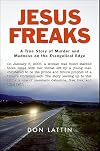
The trouble with this book is that Lattin can't decide if he wants to write a true crime book or an expose of a cult. There are ways to balance these beautifully -- Jon Krakauer did it in Under the Banner of Heaven. But Jesus Freaks really falls short. I felt like I never got enough information about the murder/suicide or enough analysis of the cult. It was more like a stew of facts set on my plate without much connection to each other, and there was no analysis of how these things happen to show more make the book feel whole.
Fascinating subject matter, and a terrifying story, but I wish it had been more cohesive. show less
Fascinating subject matter, and a terrifying story, but I wish it had been more cohesive. show less
Lists
Awards


You May Also Like


Statistics
- Works
- 6
- Members
- 512
- Popularity
- #48,443
- Rating
- 3.5
- Reviews
- 15
- ISBNs
- 22
- Languages
- 2