
Ram Dass (1931–2019)
Author of Be Here Now
About the Author
Baba Ram Dass was born Richard Albert in 1931 in the U.S. In 1967 he went to India and returned as a bushy-bearded, barefoot, white-robed guru, Ram Dass, who became a peripatetic lecturer on New Age possibilities and a popular author of more than a dozen inspirational books. His first title, Be show more Here Now (1971), was originally issued by the Lama Foundation as loose pages in a box, but its published version went on to sell more than two million copies. By the 1980s, Ram Dass had shaved off his beard but left a neatly trimmed mustache. He continued to turn out books and recordings. He started or helped start foundations to promote his charities, to help prisoners and to spread his message of spiritual equanimity. He made sure his books and tapes were reasonably priced. His other books include Still Here: Embracing Aging, Changing, and Dying (2000); Paths to God: Living the Bhagavad Gita (2004); Be Love Now: The Path of the Heart (2010) and Polishing the Mirror: How to Live from Your Spiritual Heart (2013), both with Rameshwar Das; Compassion in Action: Setting Out on the Path of Service (1991) and Walking Each Other Home: Conversations on Loving and Dying (2018), both with Mirabai Bush. Baba Ram Dass passed away on December 22, 2019 at the age of 88. (Bowker Author Biography) show less
Image credit: Kathleen Murphy
Works by Ram Dass
Birth of a Psychedelic Culture: Conversations about Leary, the Harvard Experiments, Millbrook and the Sixties (2010) 39 copies, 2 reviews
Ram Dass Audio Collection: A Collection of Three Ram Dass Favorites--"Conscious Aging, The Path of Service, and Cultivating the Heart of Compassion" (2000) 12 copies
Finding and Exploring Your Spiritual Path: An Exploration of the Pleasures and Perils of Seeking Personal Enlightenment (1989) 10 copies
Un viaje de mil millas empieza con un paso (Coleccion Prana) (Spanish Edition) (1979) 2 copies, 1 review
Open to the Infinite : Live at the Inner Directions Gathering [1999 videorecording] (2006) — Lecture — 2 copies
Be Here Be Now 1 copy
Ram Dass 2021 On-the-Go Weekly Planner: 17-Month Calendar with Pocket (Aug 2020 - Dec 2021, 5" x 7" closed): Be Here Now (2020) 1 copy
Becoming Nobody 1 copy
Cosmix 1 copy
Meditations on the Gita (CD) 1 copy
A Meeting with Emmanuel 1 copy
Vieillir en pleine conscience - Sur la nature du changement et la confrontation de la mort - Livre audio 2CD (2015) 1 copy
Be Now Here 1 copy
Associated Works
The Psychedelic Experience: A Manual Based on the Tibetan Book of the Dead (1964) — Author — 687 copies, 5 reviews
The Experience of Insight: A Simple and Direct Guide to Buddhist Meditation (1976) — Introduction, some editions — 487 copies, 4 reviews
The Meditative Mind: The Varieties of Meditative Experience (1977) — Foreword — 366 copies, 4 reviews
Spiritual Emergency: When Personal Transformation Becomes a Crisis (1989) — Contributor — 214 copies, 1 review
In the Footsteps of Gandhi: Conversations With Spiritual Social Activists (1990) — Contributor — 148 copies, 1 review
Conversations on the Edge of the Apocalypse: Contemplating the Future with Noam Chomsky, George Carlin, Deepak Chopra, Rupert Sheldrake, and Others (2005) — Contributor — 76 copies
Take My Advice: Letters to the Next Generation from People Who Know a Thing or Two (2002) — Contributor — 50 copies
Higher Wisdom: Eminent Elders Explore the Continuing Impact of Psychedelics (2005) — Contributor — 48 copies, 1 review
A Bell Ringing in the Empty Sky: The Best of the Sun (Vols. I & II) (1987) — Contributor — 15 copies
Abide as the self : the essential teachings of Ramana Maharshi [2006 video recording] (2002) — Narrator — 6 copies
Crazy Wisdom: The Life & Times of Chogyam Trungpa Rinpoche (2011, film) (2011) — Featured, some editions — 3 copies
Tagged
Common Knowledge
- Canonical name
- Dass, Ram
- Legal name
- Alpert, Richard (birth name)
- Other names
- Dass, Baba Ram
- Birthdate
- 1931-04-06
- Date of death
- 2019-12-22
- Gender
- male
- Education
- Tufts University (BA ∙ 1952)
Wesleyan University
Stanford University (Ph.D ∙ 1957) - Occupations
- yogi
spiritual teacher (lineage of Neem Karoli Baba)
psychologist
professor - Organizations
- Harvard University
International Federation for Internal Freedom
Harvard Psilocybin Project
Love Serve Remember Foundation - Relationships
- Leary, Timothy (colleague)
- Nationality
- USA
- Birthplace
- Boston, Massachusetts, USA
- Places of residence
- Millbrook, New York, USA
Taos, New Mexico, USA
Middletown, Connecticut, USA
Medford, Massachusetts, USA
Cambridge, Massachusetts, USA - Place of death
- Maui, Hawai'i, USA
- Associated Place (for map)
- USA
Members
Reviews
Birth of a Psychedelic Culture: Conversations about Leary, the Harvard Experiments, Millbrook and the Sixties by Ram Dass
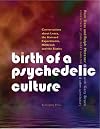
The ghost at the centre of this invaluable testimony about the early days of consciousness studies surrounding drugs that alter mental states is, of course, the late Dr. Timothy Leary.
This is the well edited transcript of a conversation, mediated by Gary Bravo, between Leary's two main associates in the experimentation that took place, first at Harvard, then at various experimental locations and finally at the Millbrook Commune, between 1960 and 1966 - Richard Alpert (here in his later ego show more as Ram Dass) and Ralph Metzner.
Both Dass and Metzner moved on from psychedelic studies to Eastern Tradition spiritual and West Coast consciousness studies respectively, while Leary became part of something that might be called part cultural phenomenon and part resistance movement against authority that has overshadowed the scientific, intellectual and finally artistic work that took place in those critical years.
The interviews are also interspersed with contributions from other, less central but still important figures involved in this period, including a strong contribution from a number of women involved in the experiments and the commune.
There are also facsimiles of key documents and leaflets and a generous supply of photographs in a well designed and attractive book from Synergetic Press. It is highly recommended to those interested in the origins of modern consciousness studies and of North American culture.
Why this book is so useful is that it moves the centre of our attention away from Leary as icon and cultural guru, a frenetic ambiguous character whose judgement was often poor but who was clearly an important figure in the transformation of Western culture in the 1960s.
Instead it gives us a more rounded picture that starts with a group of young middle class nerdish Harvard academics - straight out of 'Big Bang Theory' – and watches them change as they come across the standard problem of peers and superiors failing to ‘get’ their paradigm, so they go out on a limb and do their own thing.
They were moving into territory - consciousness studies – that threatened to undermine both of the prevailing controlling psychological paradigms of the day: psychoanalysis (which plays no role in this story) and behaviourism.
Leary never quite abandoned his behaviourial mentality during this period. A common thread and ambiguity is the degree to which Leary and his team struggle with the controlling, experimental instincts of science and the liberatory anarchic aspects of the experience.
Often this would appear to have degenerated in the later stages into games-playing (the best example of this has nothing to do with Leary but represents Ram Dass’ connection with the equally charismatic and manipulative R. D . Laing in Scotland), into ‘mind-fucks’ and into experimentation for experimentation’s sake.
The degeneration was logical when such people were effectively not given the chance to challenge prevailing paradigms within the existing system yet themselves had been raised within the prevailing paradigm’s neurotic demands for order and logic.
Ram Dass’ own secretive (at the time) homosexuality is not analysed within the text yet it is clear that psychic liberation under the influence of drugs was often more illusory than real or else he might have behaved differently himself. This more negative conclusion is arrived by implication by the two protagonists themselves towards the end but is perhaps a theme throughout the book.
Everything happens within a bare six years and none of the protagonists were mature enough (as they seem to recognize later) to understand how they should deal with establishment rejection and then its overt and aggressive hostility, while a wider revolution, of which they were part, unfolded around them. In short, they were young and confused.
In retrospect, not only were they hobbled by the behaviourist and analytical mentality within which they conducted their initial experiments but by the lack of any political or social scientific component to their work.
There was no real understanding of the structures of power (and they would have benefited from the cynicism and nihilism of the Foucauldians at this point) nor of what would happen when ‘closed system’ ideas reached out to the masses. The ‘games theory’ aspect of their work did not help them understand that they were children playing in an adult’s world.
There is a class element in this. These were broadly middle class elite kids whose links to the less well off were either as subjects (in prisons or as patients) or as marginal figures dealing in drugs or bumming around happily enough in the New York world as musicians and artists. Ram Dass was of wealthy background while Millbrook was a large house and estate that was granted by admirers for a dollar a year.
Leary and the others faced off the establishment on credit and what amounted to cultural busking. This attitude to money is important because it helps to link the attitude of the ‘me’ generation to their eventual nemesis in the credit crunch of 2008.
They discovered credit cards and patrons – no working class or hard-working middle class family could live like that easily in the 1960s. Dass simply told his colleagues (page 120): “oh, you just use credit cards and you just pay a little bit every month … It opened a whole world of possibilities that had never occurred to me (he adds).”
From easy grants within a mothering university system (that ultimately owed its scale to the patronage of State and finance capital), the team moved from serious investigation of consciousness to an experiential approach that was still within the bounds of learning (which is where the paradigm should really have challenged the official system).
But from there, the story degenerates into a briefly tedious soap opera involving beautiful models and the New York scene through to a last phase where the academics became, in effect, entertainers on a hand-to-mouth artistic-cultural ‘wannabe’ circuit, eventually breaking up and taking their separate routes like a rock band that had spent too much time together on the road.
Meanwhile, what became a somewhat hapless crew were being besieged from the Right by an increasingly dark and nasty authoritarian State (which is largely off-stage in this story except when it actively intervenes with a bit of thuggery and skull-duggery) and from the ‘Left’ by the populist approach to ‘acid’ of Ken Kesey and his anarcho-libertarian Pranksters.
Everyone then gets seduced by this huge cultural phenomenon we now call ‘the Sixties’. We are now a long way from the serious academic and quasi-spiritual (and rather conservative) model of informed intellectuals exploring consciousness studies and using it to expand traditional freedoms against the State and mass society, the approach that we see in the earnest Aldous Huxley.
Within six years, serious studies had imploded and a new form of counter-cultural mass society took on the mass of the population (which remained conservative about sexuality, consciousness and authority) in a straight fight and lost. They should have spent more time with Sun Tzu and less with Buddha.
Liberals castigate themselves for Altamont and Manson but this misses the point. The shattering naivete was not only about human nature which many still do not ‘get’ (the problem that a psychopath on drugs remains a psychopath but with heightened awareness) but the fact that consciousness studies brought nothing to the party for people struggling to build a material life, working very long hours and trying to hold their families together.
The net result was a lot of entertaining stuff and major cultural change as the masses, business and authority adapted to the desires unleashed by the 1960s but we still have an expensive, vicious and counter-productive war on drugs, serious research on psychedelics has only been permitted again in the last decade or so and there has been no effective change in the actual structures of power within the US. Indeed, the mass of the population continues to get poorer while the economy apparently grows.
This may seem like a curmudgeonly view of the Harvard team. It is unfair to criticise politically naïve young people for not having a command of their situation under the conditions of the time. Blame should perhaps be more appropriately attached to the provocations of the Pranksters.
But far more good than bad was done by opening up consciousness studies despite the new age nonsense, the blocking of research by repression, the political and economic failures and the Mansons , ‘bad trips’ and bad art.
Given the original asinine decision of Harvard (which must count as a perfect example of the very clever not being very wise) to work against the new research, the team had the courage to keep going and provide a massive amount of material, much of it perhaps negative but still useful, about psychedelics and their uses.
They were also an ‘iconic’ example of the will to freedom and, for that, we must be truly grateful. By doing this, they made sure that the authorities had to take note of a genie that had been let out of the bottle.
The self-defeating response of the Establishment is now coming home to roost as drug culture has degenerated (as did alcohol production under prohibition) into the creation not of a merely cultural force that challenged the State but something far more serious – a physical force with large accumulations of capital and the willingness to use guns and terror to extend its empire.
We see the state of Mexico today and in it maybe we see the state of a depressed America tomorrow – and all because small-minded frightened conservative ideologues could not keep scientific experimentation and the desire of the human spirit to discover new things within the capitalist fold.
There are also useful descriptions in this book of the experience of taking psychedelics though, beautiful and consciousness-changing as they were, what also comes across is that they change much less than has been claimed by many. These are very limited tools, way stations in personal development perhaps or of use in extreme situations (as Huxley took LSD in his dying moments).
Similarly, this was not a particularly intellectually broad community and their limitations have perhaps guided the subsequent community of followers down some very limited paths. These were scientists and perhaps artists but they were not intellectuals within their own tradition. This alone meant that they had difficulty communicating with the mainstream in the West.
The texts on which their creative work was based seemed to be limited to those of the Eastern Traditions (based on the initial central role of the Tibetan Book of the Dead) and to Hermann Hesse (whose Glass Bead Game was seen to approximate the personal development journey of the psychedelic adept). There is little engagement with public intellectuals in science or public policy or continental philosophy or debate with the religious West or the conservative mythographers.
Given the rich intellectual heritage offered via Huxley and the chance to challenge psychoanalysis on its own ground, the palette for Millbrook appears to have been strangely circumscribed, salted with the occasional enthusiasm for some guru or other.
All in all, this book is highly recommended . Almost every page has some insight into the relationship between freedom, politics, religion, sexuality and science in the period – a world half way between the world of ‘Mad Men’ and the political turmoil in the years before Jimmy Carter took the American throne.
Where next? A full economic cycle has passed since then. The experiments started a full fifty years ago. We know that the war on drugs has failed and the population of the US is no longer fully conservative – if not a majority, a very very large minority are social libertarian. Young scientists no longer consider experimentation in altered states to be career-ending and a few don’t care any way.
The authorities, if not in America then in the UK, are now beginning tentatively to be interested in applications as part of a much wider interest in understanding consciousness and decision-making, if for possibly their own manipulative reasons.
The internet now spreads radical ideas even if the law stops the easy spread of the drugs themselves although it seems unable to halt the spread of heroin from Afghanistan or cocaine from South America.
Leary, Watts, McKenna, Anton Wilson, Crowley are just some of the radical libertarians now easily accessible on the internet. Some new compact is in the air – perhaps in Europe before America and despite being held back by American official protests.
Perhaps we will see the eventual slow decriminalisation of drugs (after the successful experiment in Portugal) to enable mind-altering substances to be integrated into the State system in order to provide revenue and concentrate resources on protecting the vulnerable. A situation where 13 year olds are being supplied heroin in a small English town like ours indicates just how out of control things are.
From this point, serious research can start again, research that can set social conditions of use that return to Leary’s original insight (which was lost under the pressure of history) that psychedelic use as therapy or personal development requires careful assessment and management of ‘set’ (the needs and personality of the individual) and ‘setting’ (the conditions of use).
Once lightly regulated to ensure responsible use, society might integrate psychedelics into healing, pain control, psychotherapy under trained specialists – much as Ayahuasca and Peyote are used in a religious setting.
We are still a long way from such a wise and common sense approach (I write as someone with little or no interest in taking psychedelics myself), one which starts to treat altered states as normal and even vital for some but which equally treats them seriously as social and healthcare phenomenon.
Within a generation, society might then come to be more at one with itself even if, on balance, very few will be changed as radically as the gurus of psychedelia might claim. The necessary changes to the power structures in society, however, will require something a bit harder than losing yourself to the flow … show less
This is the well edited transcript of a conversation, mediated by Gary Bravo, between Leary's two main associates in the experimentation that took place, first at Harvard, then at various experimental locations and finally at the Millbrook Commune, between 1960 and 1966 - Richard Alpert (here in his later ego show more as Ram Dass) and Ralph Metzner.
Both Dass and Metzner moved on from psychedelic studies to Eastern Tradition spiritual and West Coast consciousness studies respectively, while Leary became part of something that might be called part cultural phenomenon and part resistance movement against authority that has overshadowed the scientific, intellectual and finally artistic work that took place in those critical years.
The interviews are also interspersed with contributions from other, less central but still important figures involved in this period, including a strong contribution from a number of women involved in the experiments and the commune.
There are also facsimiles of key documents and leaflets and a generous supply of photographs in a well designed and attractive book from Synergetic Press. It is highly recommended to those interested in the origins of modern consciousness studies and of North American culture.
Why this book is so useful is that it moves the centre of our attention away from Leary as icon and cultural guru, a frenetic ambiguous character whose judgement was often poor but who was clearly an important figure in the transformation of Western culture in the 1960s.
Instead it gives us a more rounded picture that starts with a group of young middle class nerdish Harvard academics - straight out of 'Big Bang Theory' – and watches them change as they come across the standard problem of peers and superiors failing to ‘get’ their paradigm, so they go out on a limb and do their own thing.
They were moving into territory - consciousness studies – that threatened to undermine both of the prevailing controlling psychological paradigms of the day: psychoanalysis (which plays no role in this story) and behaviourism.
Leary never quite abandoned his behaviourial mentality during this period. A common thread and ambiguity is the degree to which Leary and his team struggle with the controlling, experimental instincts of science and the liberatory anarchic aspects of the experience.
Often this would appear to have degenerated in the later stages into games-playing (the best example of this has nothing to do with Leary but represents Ram Dass’ connection with the equally charismatic and manipulative R. D . Laing in Scotland), into ‘mind-fucks’ and into experimentation for experimentation’s sake.
The degeneration was logical when such people were effectively not given the chance to challenge prevailing paradigms within the existing system yet themselves had been raised within the prevailing paradigm’s neurotic demands for order and logic.
Ram Dass’ own secretive (at the time) homosexuality is not analysed within the text yet it is clear that psychic liberation under the influence of drugs was often more illusory than real or else he might have behaved differently himself. This more negative conclusion is arrived by implication by the two protagonists themselves towards the end but is perhaps a theme throughout the book.
Everything happens within a bare six years and none of the protagonists were mature enough (as they seem to recognize later) to understand how they should deal with establishment rejection and then its overt and aggressive hostility, while a wider revolution, of which they were part, unfolded around them. In short, they were young and confused.
In retrospect, not only were they hobbled by the behaviourist and analytical mentality within which they conducted their initial experiments but by the lack of any political or social scientific component to their work.
There was no real understanding of the structures of power (and they would have benefited from the cynicism and nihilism of the Foucauldians at this point) nor of what would happen when ‘closed system’ ideas reached out to the masses. The ‘games theory’ aspect of their work did not help them understand that they were children playing in an adult’s world.
There is a class element in this. These were broadly middle class elite kids whose links to the less well off were either as subjects (in prisons or as patients) or as marginal figures dealing in drugs or bumming around happily enough in the New York world as musicians and artists. Ram Dass was of wealthy background while Millbrook was a large house and estate that was granted by admirers for a dollar a year.
Leary and the others faced off the establishment on credit and what amounted to cultural busking. This attitude to money is important because it helps to link the attitude of the ‘me’ generation to their eventual nemesis in the credit crunch of 2008.
They discovered credit cards and patrons – no working class or hard-working middle class family could live like that easily in the 1960s. Dass simply told his colleagues (page 120): “oh, you just use credit cards and you just pay a little bit every month … It opened a whole world of possibilities that had never occurred to me (he adds).”
From easy grants within a mothering university system (that ultimately owed its scale to the patronage of State and finance capital), the team moved from serious investigation of consciousness to an experiential approach that was still within the bounds of learning (which is where the paradigm should really have challenged the official system).
But from there, the story degenerates into a briefly tedious soap opera involving beautiful models and the New York scene through to a last phase where the academics became, in effect, entertainers on a hand-to-mouth artistic-cultural ‘wannabe’ circuit, eventually breaking up and taking their separate routes like a rock band that had spent too much time together on the road.
Meanwhile, what became a somewhat hapless crew were being besieged from the Right by an increasingly dark and nasty authoritarian State (which is largely off-stage in this story except when it actively intervenes with a bit of thuggery and skull-duggery) and from the ‘Left’ by the populist approach to ‘acid’ of Ken Kesey and his anarcho-libertarian Pranksters.
Everyone then gets seduced by this huge cultural phenomenon we now call ‘the Sixties’. We are now a long way from the serious academic and quasi-spiritual (and rather conservative) model of informed intellectuals exploring consciousness studies and using it to expand traditional freedoms against the State and mass society, the approach that we see in the earnest Aldous Huxley.
Within six years, serious studies had imploded and a new form of counter-cultural mass society took on the mass of the population (which remained conservative about sexuality, consciousness and authority) in a straight fight and lost. They should have spent more time with Sun Tzu and less with Buddha.
Liberals castigate themselves for Altamont and Manson but this misses the point. The shattering naivete was not only about human nature which many still do not ‘get’ (the problem that a psychopath on drugs remains a psychopath but with heightened awareness) but the fact that consciousness studies brought nothing to the party for people struggling to build a material life, working very long hours and trying to hold their families together.
The net result was a lot of entertaining stuff and major cultural change as the masses, business and authority adapted to the desires unleashed by the 1960s but we still have an expensive, vicious and counter-productive war on drugs, serious research on psychedelics has only been permitted again in the last decade or so and there has been no effective change in the actual structures of power within the US. Indeed, the mass of the population continues to get poorer while the economy apparently grows.
This may seem like a curmudgeonly view of the Harvard team. It is unfair to criticise politically naïve young people for not having a command of their situation under the conditions of the time. Blame should perhaps be more appropriately attached to the provocations of the Pranksters.
But far more good than bad was done by opening up consciousness studies despite the new age nonsense, the blocking of research by repression, the political and economic failures and the Mansons , ‘bad trips’ and bad art.
Given the original asinine decision of Harvard (which must count as a perfect example of the very clever not being very wise) to work against the new research, the team had the courage to keep going and provide a massive amount of material, much of it perhaps negative but still useful, about psychedelics and their uses.
They were also an ‘iconic’ example of the will to freedom and, for that, we must be truly grateful. By doing this, they made sure that the authorities had to take note of a genie that had been let out of the bottle.
The self-defeating response of the Establishment is now coming home to roost as drug culture has degenerated (as did alcohol production under prohibition) into the creation not of a merely cultural force that challenged the State but something far more serious – a physical force with large accumulations of capital and the willingness to use guns and terror to extend its empire.
We see the state of Mexico today and in it maybe we see the state of a depressed America tomorrow – and all because small-minded frightened conservative ideologues could not keep scientific experimentation and the desire of the human spirit to discover new things within the capitalist fold.
There are also useful descriptions in this book of the experience of taking psychedelics though, beautiful and consciousness-changing as they were, what also comes across is that they change much less than has been claimed by many. These are very limited tools, way stations in personal development perhaps or of use in extreme situations (as Huxley took LSD in his dying moments).
Similarly, this was not a particularly intellectually broad community and their limitations have perhaps guided the subsequent community of followers down some very limited paths. These were scientists and perhaps artists but they were not intellectuals within their own tradition. This alone meant that they had difficulty communicating with the mainstream in the West.
The texts on which their creative work was based seemed to be limited to those of the Eastern Traditions (based on the initial central role of the Tibetan Book of the Dead) and to Hermann Hesse (whose Glass Bead Game was seen to approximate the personal development journey of the psychedelic adept). There is little engagement with public intellectuals in science or public policy or continental philosophy or debate with the religious West or the conservative mythographers.
Given the rich intellectual heritage offered via Huxley and the chance to challenge psychoanalysis on its own ground, the palette for Millbrook appears to have been strangely circumscribed, salted with the occasional enthusiasm for some guru or other.
All in all, this book is highly recommended . Almost every page has some insight into the relationship between freedom, politics, religion, sexuality and science in the period – a world half way between the world of ‘Mad Men’ and the political turmoil in the years before Jimmy Carter took the American throne.
Where next? A full economic cycle has passed since then. The experiments started a full fifty years ago. We know that the war on drugs has failed and the population of the US is no longer fully conservative – if not a majority, a very very large minority are social libertarian. Young scientists no longer consider experimentation in altered states to be career-ending and a few don’t care any way.
The authorities, if not in America then in the UK, are now beginning tentatively to be interested in applications as part of a much wider interest in understanding consciousness and decision-making, if for possibly their own manipulative reasons.
The internet now spreads radical ideas even if the law stops the easy spread of the drugs themselves although it seems unable to halt the spread of heroin from Afghanistan or cocaine from South America.
Leary, Watts, McKenna, Anton Wilson, Crowley are just some of the radical libertarians now easily accessible on the internet. Some new compact is in the air – perhaps in Europe before America and despite being held back by American official protests.
Perhaps we will see the eventual slow decriminalisation of drugs (after the successful experiment in Portugal) to enable mind-altering substances to be integrated into the State system in order to provide revenue and concentrate resources on protecting the vulnerable. A situation where 13 year olds are being supplied heroin in a small English town like ours indicates just how out of control things are.
From this point, serious research can start again, research that can set social conditions of use that return to Leary’s original insight (which was lost under the pressure of history) that psychedelic use as therapy or personal development requires careful assessment and management of ‘set’ (the needs and personality of the individual) and ‘setting’ (the conditions of use).
Once lightly regulated to ensure responsible use, society might integrate psychedelics into healing, pain control, psychotherapy under trained specialists – much as Ayahuasca and Peyote are used in a religious setting.
We are still a long way from such a wise and common sense approach (I write as someone with little or no interest in taking psychedelics myself), one which starts to treat altered states as normal and even vital for some but which equally treats them seriously as social and healthcare phenomenon.
Within a generation, society might then come to be more at one with itself even if, on balance, very few will be changed as radically as the gurus of psychedelia might claim. The necessary changes to the power structures in society, however, will require something a bit harder than losing yourself to the flow … show less
I deeply admire Ram Dass and cherish his profound teachings, which he shares from his own spiritual journey. Although he has left his body, I continue to benefit from his wisdom that is shared through the Be Here Now podcast and the books he has authored. Ram Dass possesses a remarkable ability to simplify complex life events and make them comprehensible.
One area I’m constantly striving to gain a deeper understanding of is aging and death. As I age, I make an effort to maintain realistic show more expectations, gracefully embrace my aging process, and come to terms with my mortality. This topic became particularly pertinent as my husband and I navigated my recent retirement. Additionally, I’ve struggled to cope with the deaths of those closest to me. It’s important to note that I have no concrete idea of what constitutes “dealing well” with death. Instead, I’ve pushed away the concept of death and dying, and through the teachings of Ram Dass, I’ve come to realize that my attachment to my losses has been a significant contributor to my emotional suffering.
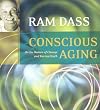
Conscious Aging: On the Nature of Change and Facing Death is a two-part recorded session featuring Ram Dass delivering a talk at the Omega Institute. At the time of the recording, Ram Dass was 60 years old. He begins the teaching by sharing humorous and relatable stories about aging, allowing him to laugh at himself while simultaneously offering a profound spiritual application for the listeners. His use of humor creates a sense of comfort and openness, enabling the audience to fully engage with the more significant material as the teaching progresses.
Ram Dass offers insightful perspectives on people confronting their own mortality. However, he dedicates a significant portion of his work to exploring the acceptance of losing loved ones. He has spent considerable time with individuals as they were passing away and shares personal, heartfelt examples. As a caregiver, he provided support to his stepmother during her battle with cancer and also to his father. He intentionally sought to work with individuals diagnosed with AIDS and also assisted those who reached out to him, requesting his assistance.
In this two and a half-hour audiobook, Ram Dass provides insightful and rational perspectives on confronting our aging process and exploring attachments to the people we love. It’s important to note that Ram Dass acknowledges the natural tendency to form attachments to others. He doesn’t view this as inherently problematic or wrong; instead, he explains the underlying reasons behind these attachments. By recognizing our thought processes, we gain the ability to navigate our responses effectively.
I thoroughly enjoyed listening to the audiobook of Conscious Aging. Ram Dass’s captivating and enlightening talk to a group is always a treat to listen to.
I have photos and additional information that I'm unable to include here. It can all be found on my blog, in the link below.
A Book And A Dog show less
One area I’m constantly striving to gain a deeper understanding of is aging and death. As I age, I make an effort to maintain realistic show more expectations, gracefully embrace my aging process, and come to terms with my mortality. This topic became particularly pertinent as my husband and I navigated my recent retirement. Additionally, I’ve struggled to cope with the deaths of those closest to me. It’s important to note that I have no concrete idea of what constitutes “dealing well” with death. Instead, I’ve pushed away the concept of death and dying, and through the teachings of Ram Dass, I’ve come to realize that my attachment to my losses has been a significant contributor to my emotional suffering.
Conscious Aging: On the Nature of Change and Facing Death is a two-part recorded session featuring Ram Dass delivering a talk at the Omega Institute. At the time of the recording, Ram Dass was 60 years old. He begins the teaching by sharing humorous and relatable stories about aging, allowing him to laugh at himself while simultaneously offering a profound spiritual application for the listeners. His use of humor creates a sense of comfort and openness, enabling the audience to fully engage with the more significant material as the teaching progresses.
Ram Dass offers insightful perspectives on people confronting their own mortality. However, he dedicates a significant portion of his work to exploring the acceptance of losing loved ones. He has spent considerable time with individuals as they were passing away and shares personal, heartfelt examples. As a caregiver, he provided support to his stepmother during her battle with cancer and also to his father. He intentionally sought to work with individuals diagnosed with AIDS and also assisted those who reached out to him, requesting his assistance.
In this two and a half-hour audiobook, Ram Dass provides insightful and rational perspectives on confronting our aging process and exploring attachments to the people we love. It’s important to note that Ram Dass acknowledges the natural tendency to form attachments to others. He doesn’t view this as inherently problematic or wrong; instead, he explains the underlying reasons behind these attachments. By recognizing our thought processes, we gain the ability to navigate our responses effectively.
I thoroughly enjoyed listening to the audiobook of Conscious Aging. Ram Dass’s captivating and enlightening talk to a group is always a treat to listen to.
I have photos and additional information that I'm unable to include here. It can all be found on my blog, in the link below.
A Book And A Dog show less
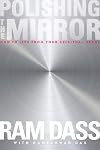
I have so much gratitude for Ram Dass’ teachings. This book provides a brief history of Ram Dass’ experience with psychadelics and his first trip to India where he met his beloved Guru, Maharaj-ji. He graciously shares his wisdom on aging, karma, anger, dying, suffering, and meditation. Ram Dass has such an incredible way of explaining these concepts. Studying his teachings provides me with a perspective that is relatable and calming. He has a way of righting my views of the world and show more establishing a sense of balance. Ram Dass not only offers wisdom, he shares his personal experiences and how he struggled to apply the teachings of his Guru. His stories are often humorous and remind the reader he is human too. He closes the book with suggestions for practicing these concepts. ~Namaste show less

As a student of Ram Dass’ teachings, this is an excellent book that addresses dying. Ram Dass and Mirabai engage in thoughtful spiritual conversations about the fear of dying. They often remind the reader to love everyone, tell the truth, and give up material attachments as we navigate through this incarnation. Ram Dass offers spiritual insight into how to be present for a dying person, how to grieve losses, and how to create space for our own dying. This is a book I intend to re-read show more often as I encounter future losses and prepare for my own death as I age. The audiobook is narrated by Mirabai and includes a couple of audio clips from Ram Dass’ past talks. The ending of the book offers several meditations. Namaste show less
Lists
Awards


You May Also Like


Associated Authors
Statistics
- Works
- 93
- Also by
- 20
- Members
- 5,560
- Popularity
- #4,473
- Rating
- 4.0
- Reviews
- 72
- ISBNs
- 161
- Languages
- 10
- Favorited
- 9
