
Timothy Leary (1920–1996)
Author of The Psychedelic Experience: A Manual Based on the Tibetan Book of the Dead
About the Author
Image credit: Photo: James Klepitsch
Series
Works by Timothy Leary
The Psychedelic Experience: A Manual Based on the Tibetan Book of the Dead (1964) — Author — 687 copies, 5 reviews
Exo-psychology: A manual on the use of the human nervous system according to the instructions of the manufacturers (1977) 52 copies
Interpersonal Diagnosis of Personality: A Functional Theory and Methodology for Personality Evaluation (1957) 14 copies, 1 review
Leary on Drugs: New Material from the Archives! Advice, Humor and Wisdom from the Godfather of Psychedelia (2009) 9 copies
Supreme Court of the United States. Timothy Leary, appellant, v. State of California, appellee (1970) 4 copies
You Can Be Anyone This Time Around 4 copies
Beyond Life With Timothy Leary 2 copies
The Tibetan Book Of Thead 1 copy
The Marijuana Papers 1 copy
Psychedelic Prayers [2 CD] 1 copy
Religious Implications of Consciousness Expanding Drugs [Religious Education, May-June, 1963] (1963) 1 copy
Clinical Psychology 1 copy
Timothy Leary's Mind Mirror 1 copy
Associated Works
Cosmic trigger : final secret of the illuminati (1977) — Foreword, some editions — 1,218 copies, 16 reviews
Storming the Reality Studio: A Casebook of Cyberpunk and Postmodern Science Fiction (1991) — Contributor — 263 copies
On the Firing Line: The Public Life of Our Public Figures (1989) — Contributor — 128 copies, 1 review
Green Egg Omelette: An Anthology of Art and Articles from the Legendary Pagan Journal (2009) — Contributor — 67 copies
Concrete and buckshot : William S. Burroughs paintings, 1987-1996 [art exhibition catalog] (1996) — Contributor — 15 copies
Tagged
Common Knowledge
- Legal name
- Leary, Timothy Francis
- Birthdate
- 1920-10-22
- Date of death
- 1996-05-31
- Gender
- male
- Education
- College of the Holy Cross
United States Military Academy
University of Alabama (BA|1945)
Georgetown University
Ohio State University
Washington State University (MS|Psychology|1946) (show all 7)
University of California, Berkeley (PhD|Clinical Psychology|1950) - Occupations
- psychologist
author
professor
research director - Organizations
- United States Army
International Foundation for Internal Freedom
League for Spiritual Discovery
Harvard University - Awards and honors
- Good Conduct Medal
American Defense Service Medal
American Campaign Medal
World War II Victory Medal - Relationships
- Ryder, Winona (god-daughter)
Dass, Ram (colleague)
Leary, Joanna (wife) - Cause of death
- prostate cancer
- Nationality
- USA
- Birthplace
- Springfield, Massachusetts, USA
- Place of death
- Los Angeles, California, USA
- Burial location
- cremated, also buried in space aboard a Pegasus rocket
- Map Location
- Massachusetts, USA
Members
Reviews

I entered this reading expecting wild and wacky, but I got much more than I bargained for. This book is absolutely ludicrous, out of touch with reality, and what's worse - appropriates neuroscience terminology and scientific aesthetics in a way that is misleading and damaging. It didn't take 12 pages before the Learys claimed that autism is caused by motherly neglect in the first several days of life, and that autism may be cured by administering LSD to the child and having the mother hug show more them for the 8 hour duration of a trip. I trust I don't have to explain just how messed up that is.
The whole thesis of the book is insane on the face of it - that human cognition is made up of just 7 "circuits" that build on each other. This was obviously false even to the psychology of the 1970s. It reads like the ravings of a stoned philosophy undergraduate who has heard in passing about Freud and just recently watched a TED talk on the brain. Similarly, the book contains a staggering density of incorrect and confused claims. Later chapters claim that right handed people exclusively use the left hemisphere and that their right is completely unusued. The right hemisphere is then seen as the unconscious mind, which can be accessed via cannabis. This is fairly bog standard when it comes to new age claims about the brain, but the scientific trappings that it attempts to cloak itself in are gross.
This book is a wild journey that needs to be read to be believed, and it culminates in something I never could have expected going in. Leary alleges that "The D.N.A. code" (his words) has been implanted by an interstellar being of some kind, and that the purpose of this "code" is to produce sufficiently advanced nervous systems with the goal of decoding DNA. "Wait", you might say, "doesn't each cell regularly transcribe DNA in order to synthesize proteins?" Yes, but Leary anticipates this interpretation and is quick to say that DNA's real purpose is to contain a complete history of the world, the future, and to reveal the "meaning of existence". This culminates in DNA's final message "Escape! The genetic entity wants off the planet". So according to the Learys, DNA is an alien virus that is desperately trying to escape from earth? It gets weirder though, because at the very end they allege that death is only a fear of the mind and that your consciousness will reside in everlasting bliss... *checks notes* inside your DNA.
In summary: this is wild, even for Leary. It's actually quite sad to me, knowing that he wrote this while in solitary confinement, and in some reports, in a cell next to Charles Manson in Folsom prison. It sort of tells a story of a man whose mind is deteriorating, which is clear when you see the breadth of his terminology. It would be quite an effort indeed to absorb so much technical language while displaying such basic ignorance of the facts of the field. No, I really think it must have been his mental decline. And while I personally believe in the therapeutic potential of psychedelics (especially MDMA), this book does his cause more harm than good by serving shovel-loads of bunk science. Avoid at all costs, unless you desire a good reason to pull your hair out. show less
The whole thesis of the book is insane on the face of it - that human cognition is made up of just 7 "circuits" that build on each other. This was obviously false even to the psychology of the 1970s. It reads like the ravings of a stoned philosophy undergraduate who has heard in passing about Freud and just recently watched a TED talk on the brain. Similarly, the book contains a staggering density of incorrect and confused claims. Later chapters claim that right handed people exclusively use the left hemisphere and that their right is completely unusued. The right hemisphere is then seen as the unconscious mind, which can be accessed via cannabis. This is fairly bog standard when it comes to new age claims about the brain, but the scientific trappings that it attempts to cloak itself in are gross.
This book is a wild journey that needs to be read to be believed, and it culminates in something I never could have expected going in. Leary alleges that "The D.N.A. code" (his words) has been implanted by an interstellar being of some kind, and that the purpose of this "code" is to produce sufficiently advanced nervous systems with the goal of decoding DNA. "Wait", you might say, "doesn't each cell regularly transcribe DNA in order to synthesize proteins?" Yes, but Leary anticipates this interpretation and is quick to say that DNA's real purpose is to contain a complete history of the world, the future, and to reveal the "meaning of existence". This culminates in DNA's final message "Escape! The genetic entity wants off the planet". So according to the Learys, DNA is an alien virus that is desperately trying to escape from earth? It gets weirder though, because at the very end they allege that death is only a fear of the mind and that your consciousness will reside in everlasting bliss... *checks notes* inside your DNA.
In summary: this is wild, even for Leary. It's actually quite sad to me, knowing that he wrote this while in solitary confinement, and in some reports, in a cell next to Charles Manson in Folsom prison. It sort of tells a story of a man whose mind is deteriorating, which is clear when you see the breadth of his terminology. It would be quite an effort indeed to absorb so much technical language while displaying such basic ignorance of the facts of the field. No, I really think it must have been his mental decline. And while I personally believe in the therapeutic potential of psychedelics (especially MDMA), this book does his cause more harm than good by serving shovel-loads of bunk science. Avoid at all costs, unless you desire a good reason to pull your hair out. show less
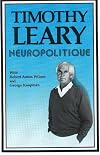
Been a while since i have read any Leary and now i realise that his ideas are best read through a Robert Anton Wilson filter, or maybe i am just biased. Lots of interesting philosophy and future predictions, its the future predictions that i am sure most people have some issue with. Many would call him naive however i think that it is a combination of wishful thinking, genuine belief in the abilities of the human race and possibly a good old attempt at a self-fullfilling prophecy. Many of show more his predictions especially space migration could have been attempted and be well on its way by now but he failed to predict the nature of mans love for and drive to get more money, or as i said he may of thought this but attempted the self-fullfilling prophecy. Just thinking now i cant recall any cynicism or negative predictions at all. show less
Leary will always be remembered as the high-priest of LSD - but he was so much more than that. A high-ranking academic Harvard psychologist, his first acquaintance with the drug was through legitimate, government funded psychological experiments, and it was only later that he broke ranks to join the growing counter-culture, famously advising people to "Tune in, turn on, drop out" of the authoritarian, capitalist death machine that he had up until that point been in service of. His show more autobiography - brilliantly entitled "Flashbacks"! - is well worth a read, and underlines just how much more interesting Leary the person was than Leary the myth.
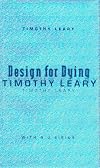
Design for Dying is his last book, written as he was dying of cancer, and published posthumously. It is a wild ride, ranging through a critique of conventional Western attitudes to death, how we are trapped linguistically and ideologically in a restricted sense of self, and the various alternatives, both philosophical and technological. The latter alternatives come under the transhumanist umbrella: cryonic preservation of the corpse until science can resurrect us; the use of nanotechnology to rebuild dead cells; the digitisation of consciousness and upload to a computer; and so on. At the end, however, while he seemed to have planned to have his head cryogenically frozen, he ultimately backed out. His last words were apparently "Why not?", an utterance as enigmatic as the man himself.
Gareth Southwell is a philosopher, writer and illustrator. show less
Design for Dying is his last book, written as he was dying of cancer, and published posthumously. It is a wild ride, ranging through a critique of conventional Western attitudes to death, how we are trapped linguistically and ideologically in a restricted sense of self, and the various alternatives, both philosophical and technological. The latter alternatives come under the transhumanist umbrella: cryonic preservation of the corpse until science can resurrect us; the use of nanotechnology to rebuild dead cells; the digitisation of consciousness and upload to a computer; and so on. At the end, however, while he seemed to have planned to have his head cryogenically frozen, he ultimately backed out. His last words were apparently "Why not?", an utterance as enigmatic as the man himself.
Gareth Southwell is a philosopher, writer and illustrator. show less

Timothy Leary's dead - no, he's outside, looking in. Conspiracy theory, failed predictions, accurate analysis, boundless optimism - this book has a bit of all of these, and filled me with what I believe to be an honest wave of nostalgia. Most of the essays herein were written in 1973, a seminal year if ever there was one, from cells in Folsom and Vacaville prisons in California. Deep insights and wacky theories - if you aim to get a grip on the 60's, this would be a good place to start.
Lists
Awards

You May Also Like


Associated Authors
Statistics
- Works
- 123
- Also by
- 14
- Members
- 3,120
- Popularity
- #8,190
- Rating
- 3.8
- Reviews
- 28
- ISBNs
- 153
- Languages
- 11
- Favorited
- 12
