
John Cunningham Lilly (1915–2001)
Author of Center of the Cyclone: Looking into Inner Space
About the Author
John C. Lilly, M.D., has studied and conducted research in the fields of biophysics, neurophysiology, electronics, and neuroanatomy.
Works by John Cunningham Lilly
Programming and Metaprogramming in the Human Biocomputer: Theory and Experiments (1972) 283 copies, 3 reviews
Superspace, Space and States 1 copy
Associated Works
Tagged
Common Knowledge
- Legal name
- Lilly, John Cunningham
- Birthdate
- 1915-01-06
- Date of death
- 2001-09-30
- Gender
- male
- Education
- California Institute of Technology (1938)
Dartmouth College
University of Pennsylvania - Occupations
- physician
psychoanalyst
neuroscientist
philosopher - Agent
- John Brockman
- Relationships
- Lilly, Antoinette (spouse)
Lyon, Lisa (adoptee) - Nationality
- USA
- Birthplace
- St. Paul, Minnesota, USA
- Place of death
- Los Angeles, California, USA
- Associated Place (for map)
- USA
Members
Reviews
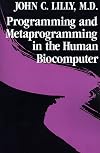
The author explored the use of LSD to probe the human mind – specifically his own mind – in the 1950's and 1960s. The title indicates his belief that the human brain is essentially a very large, sophisticated computer that not only runs “programs”, but can somehow create its own programs (hence the “metaprogramming”). It is worth reading because of its originality, and because of the author's open-minded approach to subjective personal experience – an unusual topic for a show more scientist. Unfortunately, the writing is not very clear. It often reads like an outline for a status report of a research project. Since the author eventually wrote several more books on the same topic (e.g. The Center of the Cyclone: Looking into Inner Space), perhaps these later books are more readable account of the author's research.
Most chapters deal with the author's experience with LSD. However, one chapter discusses the author's interest in inter-species communication. The author studied human-dolphin communication and later wrote a few books on this research project (e.g. Lilly on Dolphins: Humans of the Sea). The chapter in this book is brief, but suggests ways that inter-species communication might be attempted. He suggests that a good strategy is to begin with mimicry of the other species behavior. The idea seems to be that this demonstrates an intention to communicate even when there is not yet a common language. And it has an advantage of being free of what he terms an “anthropocentric” bias. His later books on the subject of human-dolphin ought to be interesting, if they are written at least twice as good as this one.
Overall, the book is worth reading if you are interested in the philosophical or psychological or scientific study of the mind or consciousness. The author is writing from direct experience. The book is short. The drawback is that it could have been written better. Later books by the same author may be better. show less
Most chapters deal with the author's experience with LSD. However, one chapter discusses the author's interest in inter-species communication. The author studied human-dolphin communication and later wrote a few books on this research project (e.g. Lilly on Dolphins: Humans of the Sea). The chapter in this book is brief, but suggests ways that inter-species communication might be attempted. He suggests that a good strategy is to begin with mimicry of the other species behavior. The idea seems to be that this demonstrates an intention to communicate even when there is not yet a common language. And it has an advantage of being free of what he terms an “anthropocentric” bias. His later books on the subject of human-dolphin ought to be interesting, if they are written at least twice as good as this one.
Overall, the book is worth reading if you are interested in the philosophical or psychological or scientific study of the mind or consciousness. The author is writing from direct experience. The book is short. The drawback is that it could have been written better. Later books by the same author may be better. show less
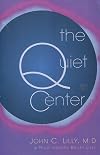
This is a pleasant bit of new age nonsense, like a sci-fi Carlos Castaneda. I particularly enjoyed the bit about the Earth Coincidence Control Office, which is pretty much straight out of Philip K. Dick.
What I didn't enjoy was the extremely poor work of Amy Demmon, credited as copy editor for this book. Her incompetence cannot be overstated. There are significant typos on almost every page, occasionally bad enough to confuse meaning. The book has two chapter fours. I once found a comma in show more the middle of a word. Maybe this is what copyediting on entheogenics looks like.
I hope Ronin Books didn't pay her for her services. show less
What I didn't enjoy was the extremely poor work of Amy Demmon, credited as copy editor for this book. Her incompetence cannot be overstated. There are significant typos on almost every page, occasionally bad enough to confuse meaning. The book has two chapter fours. I once found a comma in show more the middle of a word. Maybe this is what copyediting on entheogenics looks like.
I hope Ronin Books didn't pay her for her services. show less
This is an important, influential and historic text. A landmark in research on the scientific and therapeutic uses of LSD. That doesn't make it fun to read. I don't doubt it's significance but beyond its opening remarks on the nature of human consciousness I got very little from it. It's just too dense — or I am. I got much more from listening to Robert Anton Wilson wax lyrical about this book than I did from the book itself.
This was ostensibly a government study- and it reads like one. But readability is not important for this book. Lots of books have been written about mind expansion, self-help, and LSD. This one comes from a scientific study conducted by John C. Lilly- a very diligent and precise scientist and MD and author of the more famous Center of the Cyclone. The findings are reported in a very objective manner in clear language.
The book is interesting not only for its findings but as a look at the show more research done into LSD by the government and what came of at least this one study.
Probably one of the most important axioms for reminding oneself of one's limitations comes from this book:
"In the province of the mind, what one believes to be true is true or becomes true, within certain limits to be found experientially and experimentally. These limits are further beliefs to be transcended. In the mind, there are no limits."
A truly uplifting and empowering statement- the moreso the longer it is contemplated and because it comes from a solid scientific government report. show less
The book is interesting not only for its findings but as a look at the show more research done into LSD by the government and what came of at least this one study.
Probably one of the most important axioms for reminding oneself of one's limitations comes from this book:
"In the province of the mind, what one believes to be true is true or becomes true, within certain limits to be found experientially and experimentally. These limits are further beliefs to be transcended. In the mind, there are no limits."
A truly uplifting and empowering statement- the moreso the longer it is contemplated and because it comes from a solid scientific government report. show less
Lists
Awards

You May Also Like


Associated Authors
Statistics
- Works
- 16
- Also by
- 1
- Members
- 1,428
- Popularity
- #18,016
- Rating
- 3.7
- Reviews
- 15
- ISBNs
- 69
- Languages
- 8
- Favorited
- 5