
David John Cawdell Irving
Author of The Trail of the Fox
About the Author
Image credit: David Irving taken in London By Allan warren - Own work, CC BY-SA 3.0, https://commons.wikimedia.org/w/index.php?curid=20363043
Works by David John Cawdell Irving
Tagged
Common Knowledge
- Birthdate
- 1938-03-24
- Gender
- male
- Education
- Brentwood School, Essex, England, UK
Imperial College London
University College London - Occupations
- writer
Holocaust denier - Relationships
- Irving, Beryl Irene (mother)
Irving, John James Cawdell (father) - Nationality
- UK
- Birthplace
- Hutton, Essex, England, UK
- Places of residence
- London, England, UK
- Map Location
- UK
Members
Reviews

Este libro estaba en la biblioteca de mi tia (heredado de otro tio). Es un libro muy bien escrito sobre la Segunda Guerra Mundial desde una perspectiva alemana.
Pero es un libro peligroso porque es un libro que intenta absolver a Hitler de sus errores y de sus crimenes, especialmente sobre el Holocausto. En la edición que yo leí el argumento era que Hitler estaba muy ocupado peleando una guerra y que el Holocausto fue un "desafortunado exceso" de los secuaces de Hitler.
Entiendo que en show more otras ediciones va más allá y hoy se sabe que David Irving es un negador del holocausto por lo que toda su obra debe leerse con cuidado.
Este libro en especial que siempre pinta a Hitler como un tipo razonable. show less
Pero es un libro peligroso porque es un libro que intenta absolver a Hitler de sus errores y de sus crimenes, especialmente sobre el Holocausto. En la edición que yo leí el argumento era que Hitler estaba muy ocupado peleando una guerra y que el Holocausto fue un "desafortunado exceso" de los secuaces de Hitler.
Entiendo que en show more otras ediciones va más allá y hoy se sabe que David Irving es un negador del holocausto por lo que toda su obra debe leerse con cuidado.
Este libro en especial que siempre pinta a Hitler como un tipo razonable. show less

The last somewhat decent work from a Holocaust denier. Irving hides his pro-Nazism a bit in this one, as his more overt historical inanities and racialist politics would come out soon after he published this one. Irving's reputation as a historian collapsed in the decade after this book was published. He was still considered a quirky, if usable historian when he published this work. Irving's storytelling is great and his research is rigorous in this book. Once you know his biases towards the show more Nazis, or certain Nazis, you can find where he tries to whitewash history or make Göring look better. (All while making sure dumb generals and even Göring get the blame for losing the Second World War, not his vaunted Hitler.) The most glaring stupidity is where he translates "Endlösung der Judenfrage" not as "final solution to the Jewish question" abut the innocuous-sounding "final unraveling of the Jewish question." Still, it is a serviceable biography of Göring, and would be the best if you didn't know of Irving's later downfall and his ever-present biases. So, as a citable, reputable source, it probably should be used in small, judicious citations, not leaned on in any meaningful or heavy way. As such, it means that Leonard Mosley's The Reich Marshal: A Biography of Hermann Goering must still reign supreme as the best English language biography of Hermann Göring still around. show less

Let's start with the big minuses. Before buying or reading this book, I recommend reading a bit on the author, David Irving. The Wikipedia article on him is pretty thorough. He began his career as a reputable historian, but his later books were pretty much discredited, as Irving became a full fledged racist, antisemitic Holocaust denier, and Nazi apologist. I did not know this until after I'd read this book, otherwise I wouldn't have bought it. As it is, I'm grateful that I bought a used show more copy, and none of my money went to Irving in royalties. That said, there are big pluses.
The Trail of the Fox is exceptionally well researched, and well written. I am not myself an avid military history buff, and yet I had no trouble following lengthy, detailed descriptions of military tactics, troop movements, etc. even without the visual aid of maps (which admittedly would have been a nice addition to this volume.) Irving moves through Rommel's early life pretty quickly, but close to half of this book is devoted to the Africa campaign, then a quarter to Italy, and the final quarter to Normandy, the anti-Hitler conspiracy, and Rommel's death. Irving honestly, it seems, portrays Rommel's strengths and weaknesses as a man and as a commander.
The big question I'm left with, reading this book and also reading about Irving's own disturbing Nazi sympathizing personal beliefs... How accurate are the last two chapters of the book? Was Rommel fully involved in the plot against Hitler's life? Was he partially involved? Or, as Irving presents it, did Rommel know nothing about the plot to assassinate Hitler, but simply get swept up in a witch hunt afterwards? I don't know. show less
The Trail of the Fox is exceptionally well researched, and well written. I am not myself an avid military history buff, and yet I had no trouble following lengthy, detailed descriptions of military tactics, troop movements, etc. even without the visual aid of maps (which admittedly would have been a nice addition to this volume.) Irving moves through Rommel's early life pretty quickly, but close to half of this book is devoted to the Africa campaign, then a quarter to Italy, and the final quarter to Normandy, the anti-Hitler conspiracy, and Rommel's death. Irving honestly, it seems, portrays Rommel's strengths and weaknesses as a man and as a commander.
The big question I'm left with, reading this book and also reading about Irving's own disturbing Nazi sympathizing personal beliefs... How accurate are the last two chapters of the book? Was Rommel fully involved in the plot against Hitler's life? Was he partially involved? Or, as Irving presents it, did Rommel know nothing about the plot to assassinate Hitler, but simply get swept up in a witch hunt afterwards? I don't know. show less
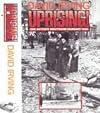
A könyv az 1956-os magyar forradalom történetét dolgozza fel, számos korabeli szemtanúval és politikussal készült interjú, valamint amerikai levéltári források alapján. Irving a forradalmat egyfajta spontán népfelkelésként mutatja be, amely a szovjet elnyomás és a helyi funkcionáriusok ("funkies") ellen irányult. A szerző ugyanakkor vitatott módon hangsúlyozza az antiszemitizmust mint a felkelés egyik állítólagos mozgatórugóját, ami miatt a művet komoly show more szakmai kritika érte. show less
Lists
You May Also Like


Associated Authors
Statistics
- Works
- 49
- Members
- 2,293
- Popularity
- #11,199
- Rating
- 3.9
- Reviews
- 33
- ISBNs
- 199
- Languages
- 12