
Works by Sam Staley
Tagged
Common Knowledge
There is no Common Knowledge data for this author yet. You can help.
Members
Reviews
Mobility First: A New Vision for Transportation in a Globally Competitive Twenty-first Century by Sam Staley
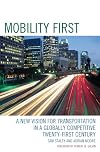
Reading Mobility First felt less like encountering a visionary manifesto and more like being walked through the painfully obvious — which is precisely what makes it infuriating. Staley and Moore present a clear, rational framework for fixing America’s transportation system: treat mobility as a primary good, price it accordingly, and let markets do what politics can’t. It’s simple. It’s logical. And we’ve known it for decades.
The book offers little in the way of groundbreaking show more theory, but that’s not its failure — it’s our failure. The real insight lies in what it reveals about the bureaucratic systems we’ve built: they resist fixing. Rational ideas are politically toxic when they threaten the entrenched. The authors don’t just diagnose what’s wrong with transportation planning, they expose how bureaucracy, ideology, and rent-seeking actively prevent the obvious answers from being implemented.
As with most of my reviews, here are a slate of lessons for today:
Lessons for Today
1. Complexity is a Feature, Not a Bug — for Bureaucrats.
When systems become so complex that no one can trace accountability, inefficiency becomes job security. Bureaucracy thrives not in solving problems, but in managing them indefinitely. Lesson: Clear metrics and performance incentives, like those proposed in this book, represent an existential threat to this model.
2. Market Signals Are More Honest Than Political Ones.
Pricing — whether for roads, bandwidth, or energy — exposes scarcity, demand, and value. Politicians obscure those signals to win votes. Lesson: Reform begins by restoring feedback loops between users and providers, even if the results are politically uncomfortable.
3. Ideology Is the Most Dangerous Form of Inertia.
The planners critiqued in this book aren’t stupid. They’re stuck in a bad worldview. What worldview? Cars are the problem, freedom (mobility) is a flaw, and individual choice (to travel) is something to be managed rather than enabled. Lesson: No reform is possible without first confronting the ideologies that keep bad systems alive.
4. The Enemy of Innovation is the Last Person Paid by the Old System.
The most aggressive resistance comes not from the public, but from those whose salaries, contracts, and influence depend on preserving inefficiency. Lesson: Policy changes must account for — and neutralize — resistance.
5. The Best Ideas Are Often the Least New.
What’s striking about Mobility First is not how radical its proposals are, but how obvious they are. Lesson: Real reform doesn’t require new ideas. It requires enough clarity — and courage — to act on the right ones we’ve ignored.
Conclusion
This isn’t a book about transportation. It’s a book about how obvious ideas die through bureaucracy. Mobility First is a sharp and frustrating read about how common sense is suppressed when it threatens entrenched interests. It’s not a call for innovation — it’s a call for courage.
* * *
Post-Script: Has Anything Changed?
After writing this, I went down the rabbit hole of so has anything changed in the last 17 years?
The answer, not surprisingly, is no — at least not really. Some change has materialized — but mostly in isolated pilot programs. Cities like London and Stockholm successfully implemented congestion pricing, and New York has recently joined them (Reuters, 2025). Bike‑sharing and micromobility networks have expanded significantly around the world, with comprehensive global analyses showing large systems in dozens of cities, and e‑bike sharing becoming a major new component of urban mobility (Mahajan et al., 2024; Galatoulas et al., 2020). Meanwhile, integrated planning frameworks such as Sustainable Urban Mobility Plans (SUMPs) have proliferated across Europe as a planning concept, though scholars highlight persistent barriers to implementation and varying success across cities (Peters, 2025).
Yet the core obstacles Staley and Moore identified remain intact. Bureaucracy still resists performance metrics. Political backlash continues to derail rational reforms, even those already showing results — as with the attempted federal halt to New York’s congestion pricing program (Reuters, 2025). Ideological narratives around “15‑minute cities” have gained traction, but often prioritize aesthetics and control over actual mobility (Le Monde, 2025)
In short, we’ve gained tools, but not the incentives — or courage — to use them systemically.
I’m not surprised.
* * *
Selected Sources
The book offers little in the way of groundbreaking show more theory, but that’s not its failure — it’s our failure. The real insight lies in what it reveals about the bureaucratic systems we’ve built: they resist fixing. Rational ideas are politically toxic when they threaten the entrenched. The authors don’t just diagnose what’s wrong with transportation planning, they expose how bureaucracy, ideology, and rent-seeking actively prevent the obvious answers from being implemented.
As with most of my reviews, here are a slate of lessons for today:
Lessons for Today
1. Complexity is a Feature, Not a Bug — for Bureaucrats.
When systems become so complex that no one can trace accountability, inefficiency becomes job security. Bureaucracy thrives not in solving problems, but in managing them indefinitely. Lesson: Clear metrics and performance incentives, like those proposed in this book, represent an existential threat to this model.
2. Market Signals Are More Honest Than Political Ones.
Pricing — whether for roads, bandwidth, or energy — exposes scarcity, demand, and value. Politicians obscure those signals to win votes. Lesson: Reform begins by restoring feedback loops between users and providers, even if the results are politically uncomfortable.
3. Ideology Is the Most Dangerous Form of Inertia.
The planners critiqued in this book aren’t stupid. They’re stuck in a bad worldview. What worldview? Cars are the problem, freedom (mobility) is a flaw, and individual choice (to travel) is something to be managed rather than enabled. Lesson: No reform is possible without first confronting the ideologies that keep bad systems alive.
4. The Enemy of Innovation is the Last Person Paid by the Old System.
The most aggressive resistance comes not from the public, but from those whose salaries, contracts, and influence depend on preserving inefficiency. Lesson: Policy changes must account for — and neutralize — resistance.
5. The Best Ideas Are Often the Least New.
What’s striking about Mobility First is not how radical its proposals are, but how obvious they are. Lesson: Real reform doesn’t require new ideas. It requires enough clarity — and courage — to act on the right ones we’ve ignored.
Conclusion
This isn’t a book about transportation. It’s a book about how obvious ideas die through bureaucracy. Mobility First is a sharp and frustrating read about how common sense is suppressed when it threatens entrenched interests. It’s not a call for innovation — it’s a call for courage.
* * *
Post-Script: Has Anything Changed?
After writing this, I went down the rabbit hole of so has anything changed in the last 17 years?
The answer, not surprisingly, is no — at least not really. Some change has materialized — but mostly in isolated pilot programs. Cities like London and Stockholm successfully implemented congestion pricing, and New York has recently joined them (Reuters, 2025). Bike‑sharing and micromobility networks have expanded significantly around the world, with comprehensive global analyses showing large systems in dozens of cities, and e‑bike sharing becoming a major new component of urban mobility (Mahajan et al., 2024; Galatoulas et al., 2020). Meanwhile, integrated planning frameworks such as Sustainable Urban Mobility Plans (SUMPs) have proliferated across Europe as a planning concept, though scholars highlight persistent barriers to implementation and varying success across cities (Peters, 2025).
Yet the core obstacles Staley and Moore identified remain intact. Bureaucracy still resists performance metrics. Political backlash continues to derail rational reforms, even those already showing results — as with the attempted federal halt to New York’s congestion pricing program (Reuters, 2025). Ideological narratives around “15‑minute cities” have gained traction, but often prioritize aesthetics and control over actual mobility (Le Monde, 2025)
In short, we’ve gained tools, but not the incentives — or courage — to use them systemically.
I’m not surprised.
* * *
Selected Sources
- Mahajan, S., et al. “Global Comparison of Urban Bike‑Sharing Accessibility: Insights from an Aggregate Database of 40 Cities.” Scientific Reports 14 (2024).
- Galatoulas, N. F., et al. “Spatio‑Temporal Trends of E‑Bike Sharing Systems Worldwide.” Sustainability 12, no. 11 (2020).
- Peters, N. V., et al. “Drivers of and Barriers to Sustainable Urban Mobility Plan Implementation: A Copenhagen Case Study.” Transportation Research Procedia (2025).
- Reuters. “NYC Congestion Program Collected $486 Million by January.” Reuters, February 24, 2025.
- Reuters. “U.S. Withdraws Approval of New York City’s Congestion Pricing Program.” Reuters, February 19, 2025.
- Le Monde. “Paris Struggles to Curb Car Traffic without Alienating Road Users.” Le Monde, September 30, 2025.
Statistics
- Works
- 5
- Members
- 47
- Popularity
- #330,642
- Rating
- 2.8
- Reviews
- 1
- ISBNs
- 9