
Lacy Crawford
Author of Notes on a Silencing: A Memoir
About the Author
Image credit: from author's website
Works by Lacy Crawford
Tagged
Common Knowledge
Members
Reviews

this is stunning. in the writing, in the story, in the coverup, in her bravery and honesty. everything about this (except the terrible truth of her story) is perfect and perfectly done. i don't even have more to say than that - this is simply excellent.
"It's not a remarkable story. In fact it's ordinary. A sexual assault at a New England boarding school. A boarding school. I was assaulted in privilege. I have survived in privilege."
"What interests me is not what happened - I remember, I have show more alway remembered. What interests me is the near impossibility of telling what happened in a way that discharges its power."
"I did not understand that self-esteem and safety weren't held like treasure between a girl's legs, but could be plundered in other ways."
"All that stuff I just said about money and power - that's not just setting. It's about character. I'm trying to show what I would have given up - what I thought I would have been forced to give up - if I had gotten caught in the boys' room. I'm trying to argue my side. That's why I didn't scream, see? That's why I didn't claw their eyeballs out or bite. I was trying to find my place in that moment and I could not admit to myself that the moment was violent."
"I gathered that I was newly arrived to where my mother was in this world of downstairs men at night, where I supposed all women lived. I didn't like it but she wasn't surprised to find me here, so what choice did I have but to be here too?"
"The reason I hate to write what happened on that card table, what I did on that card table, is because it's a defense attorney's dream. 'Ah ha! Desire.' As though my choice on one night cost me the benefit of the doubt forever. The blanket projection of proto-consent cast across all the days and nights of my life. I don't owe anyone the telling of this. I never sued or took my abusers to court. Nor is it a matter of conscience. I did not want to write it because it should not matter, but of course it does. Because a girl who is attacked will so often assume the fault lies with her. There is no escaping a primal culpability. I include the events of the summer I was fifteen in open defiance of this presumed vulnerability. And to force into view what is to me the chilling logic that a girl who has explored a boy's body, or permitted her body to be explored in any way, is thereafter suspect as a victim. In other words, it's open season on her. In other words, to believe in the perfect victim is to believe in no victim at all."
"Teachers refused to punish me, which is another way of saying they refused to look after me. I could do anything here, because nobody was willing to see me anymore."
"My story was mine but the law's version of it was not."
"I believe, in fact, that the slur 'slut' carries within it, Trojan horse style, silence as its true intent. That the opposite of slut is not virtue, but voice. So I've written what happened, exactly as I remember. It is an effort of accompaniment, as much as it is of witness, to go back to that girl leaving the boys' room on an October night, sneakers landing on a sandy path, and walk with her all the way home. " show less
"It's not a remarkable story. In fact it's ordinary. A sexual assault at a New England boarding school. A boarding school. I was assaulted in privilege. I have survived in privilege."
"What interests me is not what happened - I remember, I have show more alway remembered. What interests me is the near impossibility of telling what happened in a way that discharges its power."
"I did not understand that self-esteem and safety weren't held like treasure between a girl's legs, but could be plundered in other ways."
"All that stuff I just said about money and power - that's not just setting. It's about character. I'm trying to show what I would have given up - what I thought I would have been forced to give up - if I had gotten caught in the boys' room. I'm trying to argue my side. That's why I didn't scream, see? That's why I didn't claw their eyeballs out or bite. I was trying to find my place in that moment and I could not admit to myself that the moment was violent."
"I gathered that I was newly arrived to where my mother was in this world of downstairs men at night, where I supposed all women lived. I didn't like it but she wasn't surprised to find me here, so what choice did I have but to be here too?"
"The reason I hate to write what happened on that card table, what I did on that card table, is because it's a defense attorney's dream. 'Ah ha! Desire.' As though my choice on one night cost me the benefit of the doubt forever. The blanket projection of proto-consent cast across all the days and nights of my life. I don't owe anyone the telling of this. I never sued or took my abusers to court. Nor is it a matter of conscience. I did not want to write it because it should not matter, but of course it does. Because a girl who is attacked will so often assume the fault lies with her. There is no escaping a primal culpability. I include the events of the summer I was fifteen in open defiance of this presumed vulnerability. And to force into view what is to me the chilling logic that a girl who has explored a boy's body, or permitted her body to be explored in any way, is thereafter suspect as a victim. In other words, it's open season on her. In other words, to believe in the perfect victim is to believe in no victim at all."
"Teachers refused to punish me, which is another way of saying they refused to look after me. I could do anything here, because nobody was willing to see me anymore."
"My story was mine but the law's version of it was not."
"I believe, in fact, that the slur 'slut' carries within it, Trojan horse style, silence as its true intent. That the opposite of slut is not virtue, but voice. So I've written what happened, exactly as I remember. It is an effort of accompaniment, as much as it is of witness, to go back to that girl leaving the boys' room on an October night, sneakers landing on a sandy path, and walk with her all the way home. " show less
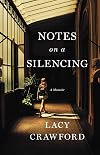
One thing the #MeToo movement has taught us is that sexual assault is not uncommon. In fact, estimates place its prevalence at around 25% of women. Crawford’s intention in writing this memoir was not to describe one more incident of rape. But instead to explore in a highly personal way how communities silence and blame the victims while minimizing the crimes. The common trope is that rape is not about sex, but about power. Crawford’s memoir emphasizes that the exercise of power extends show more beyond the rapist to the community and its institutions.
St. Paul’s School is one of those Eastern prep schools that provide the world with movers and shakers. Most of these kids are from money and privilege. They include over-achievers, obsessed with academic success. As a teen, Lacy Crawford was no exception until she discovered she had herpes and made the “mistake” of revealing that she had been raped by two fellow students. Then, the ugliness of raw power began. She observes, “It’s so simple, what happened at St. Paul’s. It happens all the time. First, they refused to believe me. Then they shamed me. Then they silenced me.”
Crawford’s third-person narrative reads more like a meticulous work of investigative journalism than a memoir. It clearly describes a series of events and strategies not unlike the stages of grief (i.e., denial, anger, bargaining, and acceptance). First, Lacy blamed herself and struggled with giving a name to what happened to her. Was it my fault for going to their room after hours? Was it really rape or just nonconsensual sex? Once the incident became common knowledge, she was shunned by her female friends and bullied by her male peers. This led to the second stage, characterized by withdrawal and anger. The bargaining stage came when she decided that graduation and acceptance to Princeton would magically make the problem disappear. Thus, she doggedly pursued these goals despite an extremely negative reaction to her presence at St. Paul’s. Lacy came to accept her experience decades later when she discovered that the State of New Hampshire had opened an investigation of a systematic pattern of coverup and obstruction that the school encouraged following multiple incidents of rape. She was further buoyed after learning of another teenage victim, who was pursuing legal remedies against the school.
This unsettling memoir is important on several levels. It not only generates empathy for the victims, but also shows the systematic ways communities silence the victims of sexual abuse, how this increases their suffering, and corrupts justice. Unfortunately, it also shows how far our society has yet to go. show less
St. Paul’s School is one of those Eastern prep schools that provide the world with movers and shakers. Most of these kids are from money and privilege. They include over-achievers, obsessed with academic success. As a teen, Lacy Crawford was no exception until she discovered she had herpes and made the “mistake” of revealing that she had been raped by two fellow students. Then, the ugliness of raw power began. She observes, “It’s so simple, what happened at St. Paul’s. It happens all the time. First, they refused to believe me. Then they shamed me. Then they silenced me.”
Crawford’s third-person narrative reads more like a meticulous work of investigative journalism than a memoir. It clearly describes a series of events and strategies not unlike the stages of grief (i.e., denial, anger, bargaining, and acceptance). First, Lacy blamed herself and struggled with giving a name to what happened to her. Was it my fault for going to their room after hours? Was it really rape or just nonconsensual sex? Once the incident became common knowledge, she was shunned by her female friends and bullied by her male peers. This led to the second stage, characterized by withdrawal and anger. The bargaining stage came when she decided that graduation and acceptance to Princeton would magically make the problem disappear. Thus, she doggedly pursued these goals despite an extremely negative reaction to her presence at St. Paul’s. Lacy came to accept her experience decades later when she discovered that the State of New Hampshire had opened an investigation of a systematic pattern of coverup and obstruction that the school encouraged following multiple incidents of rape. She was further buoyed after learning of another teenage victim, who was pursuing legal remedies against the school.
This unsettling memoir is important on several levels. It not only generates empathy for the victims, but also shows the systematic ways communities silence the victims of sexual abuse, how this increases their suffering, and corrupts justice. Unfortunately, it also shows how far our society has yet to go. show less
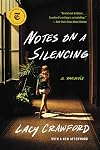
Notes on a Silencing by Lacy Crawford is a 2020 Little Brown & Co. publication.
This is a raw, searing memoir chronicling Lacy Crawford time attending St. Paul’s Academy and the all too familiar story of a horrifying sexual assault that resulted in physical illness and psychological damage, but was also covered up by a University that protected its reputation and male students at all cost.
Lacy finds her voice years later when the school finds itself under investigation... Finally.
An show more elite school with powerful allies manages to silence Crawford… or so they thought. This memoir holds nothing back and paints an appalling picture of crime, double standards, bullying and blackmail. It is also a tale of lost innocence, of a time when even parents failed to see obvious signs of distress, leaving a young girl to cope in a viscous world of harassment and entitlement.
This is not an easy book to read, and it goes without saying it is one long trigger- so prepare yourself. Still, it’s an important book- one that needs more attention now that some of the fire from the “Me Too” movement has cooled down. We still need a reminder, as we can’t be so naïve that we believe all that toxicity has magically cleared up now. Today, as we speak, there’s a Lacy Crawford out there somewhere… and she needs us to keep up the pressure, to insist on accountability, to protect these young people from abuse, coverups, harassment and years of unnecessary pain and heartbreak.
There were a couple of quibbles- I understand the author has the absolute right to tell her story, her way. But this is not a blog. It’s a professional book- published by a respected publishing house and as such, I would have preferred the use of more professional language - which would have left a deeper impression, I think.
The only other issue: Because this is a harrowing story and no matter how mentally healthy one is, it is emotionally draining, which made me feel it might have been a bit overlong. By the end, I was exhausted.
But other than that, this is a powerful memoir, that if you can handle the subject matter, it is well worth the emotional toll it takes. Lacy has endured much, and I’m glad she found the courage to step forward and tell her story. I think I’ll remember this one for a very long time to come. show less
This is a raw, searing memoir chronicling Lacy Crawford time attending St. Paul’s Academy and the all too familiar story of a horrifying sexual assault that resulted in physical illness and psychological damage, but was also covered up by a University that protected its reputation and male students at all cost.
Lacy finds her voice years later when the school finds itself under investigation... Finally.
An show more elite school with powerful allies manages to silence Crawford… or so they thought. This memoir holds nothing back and paints an appalling picture of crime, double standards, bullying and blackmail. It is also a tale of lost innocence, of a time when even parents failed to see obvious signs of distress, leaving a young girl to cope in a viscous world of harassment and entitlement.
This is not an easy book to read, and it goes without saying it is one long trigger- so prepare yourself. Still, it’s an important book- one that needs more attention now that some of the fire from the “Me Too” movement has cooled down. We still need a reminder, as we can’t be so naïve that we believe all that toxicity has magically cleared up now. Today, as we speak, there’s a Lacy Crawford out there somewhere… and she needs us to keep up the pressure, to insist on accountability, to protect these young people from abuse, coverups, harassment and years of unnecessary pain and heartbreak.
There were a couple of quibbles- I understand the author has the absolute right to tell her story, her way. But this is not a blog. It’s a professional book- published by a respected publishing house and as such, I would have preferred the use of more professional language - which would have left a deeper impression, I think.
The only other issue: Because this is a harrowing story and no matter how mentally healthy one is, it is emotionally draining, which made me feel it might have been a bit overlong. By the end, I was exhausted.
But other than that, this is a powerful memoir, that if you can handle the subject matter, it is well worth the emotional toll it takes. Lacy has endured much, and I’m glad she found the courage to step forward and tell her story. I think I’ll remember this one for a very long time to come. show less

(1) Whoa.. Powerful. Incredibly well-written. High-school is bad enough but at least most people don't have to live in the building with a den of snakes 24/7. Most people have the respite of coming home at the end of the day. This is the author's story of being sexually assaulted as a sophomore at St. Paul's Prep school and how the school covered it up. She is writing to simply tell her story ~ 25 years after it happened. And it is a searing indictment. For shame!
The author is my generation show more as opposed to the more recent story written by Chanel Miller, 'Know My Name.' This is a more artfully written book than that one and it has the benefit of time and maturity under its wing. Lacy's experiences and loneliness and bewilderment were so relatable for someone such as myself who went to a posh New England liberal arts college filled with graduates of such prep schools as a local middle class newb. No internet, no texting, only a payphone in the lobby of the dorm - how I remember.
Crawford's writing is elegant, restrained, yet poignant. It only escapes a perfect rating from me as at times it began to sound a bit like a term paper on post-assault psychology - it seemed repetitive in that vein. The reader felt Lacy's erasure in the narrative - no more was needed. It seemed that Crawford rejected this life of elitism and privilege after her experiences (although I did read that she was a college admissions advisor for hire for clients hoping to get their kids into elite schools - so maybe not so much.)
Anyway, Bravo! Highly recommended as an important literary memoir. The book to crystallize the #me too movement for the discerning reader. Gawd - they should close that school. show less
The author is my generation show more as opposed to the more recent story written by Chanel Miller, 'Know My Name.' This is a more artfully written book than that one and it has the benefit of time and maturity under its wing. Lacy's experiences and loneliness and bewilderment were so relatable for someone such as myself who went to a posh New England liberal arts college filled with graduates of such prep schools as a local middle class newb. No internet, no texting, only a payphone in the lobby of the dorm - how I remember.
Crawford's writing is elegant, restrained, yet poignant. It only escapes a perfect rating from me as at times it began to sound a bit like a term paper on post-assault psychology - it seemed repetitive in that vein. The reader felt Lacy's erasure in the narrative - no more was needed. It seemed that Crawford rejected this life of elitism and privilege after her experiences (although I did read that she was a college admissions advisor for hire for clients hoping to get their kids into elite schools - so maybe not so much.)
Anyway, Bravo! Highly recommended as an important literary memoir. The book to crystallize the #me too movement for the discerning reader. Gawd - they should close that school. show less
Lists
Awards


You May Also Like


Associated Authors
Statistics
- Works
- 2
- Members
- 573
- Popularity
- #43,719
- Rating
- 4.0
- Reviews
- 21
- ISBNs
- 16