
Heather Webb (2) (1976–)
Author of Last Christmas in Paris
For other authors named Heather Webb, see the disambiguation page.
Works by Heather Webb
Fall of Poppies: Stories of Love and the Great War (2016) — Editor & Contributor — 164 copies, 24 reviews
Associated Works
Author in Progress: A No-Holds-Barred Guide to What It Really Takes to Get Published (2016) — Contributor — 72 copies, 1 review
Tagged
Common Knowledge
- Birthdate
- 1976-10-10
- Gender
- female
- Occupations
- writer
historical novelist - Agent
- Kevan Lyon (Marshal Lyon Literary Agency)
- Short biography
- Heather Webb grew up a military brat and naturally became obsessed with travel, culture, and languages. She put her degrees to good use teaching high school French for nearly a decade before turning to full time novel writing and freelance editing. Her debut, BECOMING JOSEPHINE will release in 2014 from Plume/Penguin.
When not writing, Heather flexes her foodie skills or looks for excuses to head to the other side of the world. She loves to chitchat on Twitter with new reader friends or writers (@msheatherwebb) or via her blog. Stop on by! - Nationality
- USA
- Places of residence
- New England, USA
- Associated Place (for map)
- New England, USA
Members
Reviews
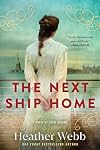
In 1902, Francesca Ricci and her sister, Maria are leaving their only home they've ever known and their abusive father in Sicily aboard a ship to the USA. With no one to meet them and no jobs lined up, the Ricci sisters are hoping for a miracle upon their arrival. Alma Bauer works at her family bierhaus, but her stepfather wants her to bring in more income. He finds Alma a job at Ellis Island with the matrons. At first, Alma does not want to help the immigrants, but she finds purpose in show more translating and helping people. Alma is taken by the Ricci sister's cause, especially after Francesca helps her. Alma decides to help Francesca stay in the USA and not have to go home on the next ship home. As Alma and Francesca's lives intertwine, they help each other more than they could imagine.
The Next Ship Home is a sweeping historical fiction novel of Ellis Island. Webb's beautiful writing sets the scene of chaos, confusion, hope, sadness and enchantment that makes up Ellis Island. Francesca and Alma came alive as their stories unfolded. They saw themselves as very different but found strength in their friendship and were both able to learn and grow as people and women in America. I was amazed at their ability to overcome a series of situations that seemed impossible and loved the way that their stories were linked together. Through Francesca and Alma, the many types of oppression of women were explored: from exploitation, abuse, rape, non-consensual marriages, and reliance upon men for basic needs. I have always adored Webb's writing and the way that real historical information is weaved in throughout. Through the story, I learned of the drama of the commissioners of Ellis Island and the rampant mistreatment of immigrants that came through. With that, I also learned of the movements that immigrants and the people of New York were able to create from their struggles including the labor movement, the subway system, and women's rights.
This book was received for free in return for an honest review. show less
The Next Ship Home is a sweeping historical fiction novel of Ellis Island. Webb's beautiful writing sets the scene of chaos, confusion, hope, sadness and enchantment that makes up Ellis Island. Francesca and Alma came alive as their stories unfolded. They saw themselves as very different but found strength in their friendship and were both able to learn and grow as people and women in America. I was amazed at their ability to overcome a series of situations that seemed impossible and loved the way that their stories were linked together. Through Francesca and Alma, the many types of oppression of women were explored: from exploitation, abuse, rape, non-consensual marriages, and reliance upon men for basic needs. I have always adored Webb's writing and the way that real historical information is weaved in throughout. Through the story, I learned of the drama of the commissioners of Ellis Island and the rampant mistreatment of immigrants that came through. With that, I also learned of the movements that immigrants and the people of New York were able to create from their struggles including the labor movement, the subway system, and women's rights.
This book was received for free in return for an honest review. show less
Liberté, égalité, sororité!
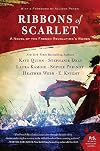
Six of my favorite historical fictions writers, referred to as the "Scarlet Sisters" (Stephanie Dray, Laura Kamoie, Eliza Knight, Sophie Perinot, Kate Quinn and Heather Webb), have combined forces in this exquisite compendium of tales of the French Revolution. The book features seven sections in chronological order - each told through the voice of an historic female figure of the revolution and written by one of the "Scarlet Sisters". The stories intentionally show more intersect from time to time, imagining how these women of note may have interacted. These historic woman come from all walks of life whether peasantry, royalty, aristocracy, merchant class or enlightened philosophy and were assuredly aware of one another.
The research which went into telling these tales is herculean. The writing is exquisite and the tales are deftly rendered. I loved how well the stories segued into one another and how beautifully the women's lives were brought to life. My own senses were heightened through the writing as I could easily imagine the stench of a prison, the wafting of a ladies rosewater perfume, the shimmer of light against the guillotine's blade and the din of an angry mob beyond control.
Although her own schedule did not allow for participating in the writing of one of the book's sections, renowned historical fiction writer, Allison Pataki provided a wonderful foreword, drawing the reader into these pages of "herstory". To the beloved "Scarlet Sisters", bravi pour un travail bien fait! show less
Six of my favorite historical fictions writers, referred to as the "Scarlet Sisters" (Stephanie Dray, Laura Kamoie, Eliza Knight, Sophie Perinot, Kate Quinn and Heather Webb), have combined forces in this exquisite compendium of tales of the French Revolution. The book features seven sections in chronological order - each told through the voice of an historic female figure of the revolution and written by one of the "Scarlet Sisters". The stories intentionally show more intersect from time to time, imagining how these women of note may have interacted. These historic woman come from all walks of life whether peasantry, royalty, aristocracy, merchant class or enlightened philosophy and were assuredly aware of one another.
The research which went into telling these tales is herculean. The writing is exquisite and the tales are deftly rendered. I loved how well the stories segued into one another and how beautifully the women's lives were brought to life. My own senses were heightened through the writing as I could easily imagine the stench of a prison, the wafting of a ladies rosewater perfume, the shimmer of light against the guillotine's blade and the din of an angry mob beyond control.
Although her own schedule did not allow for participating in the writing of one of the book's sections, renowned historical fiction writer, Allison Pataki provided a wonderful foreword, drawing the reader into these pages of "herstory". To the beloved "Scarlet Sisters", bravi pour un travail bien fait! show less
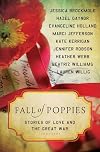
I waited anxiously for this one to arrive from February's Early Reviewer selections, and now that I have, I've devoured it like a box of Russell Stover Valentine chocolates. I was initially attracted by the prospect of a [Jennifer Brockmole] short story since I loved her [Letters from Skye], but have been introduced to a fleet of authors, mostly new to me, who describe the WWI era and its everyday-life effects vividly and sensitively.
The stories touch on soldiers adapting to wicked war show more wounds before the advent of cosmetic surgery, bereaved spouses, couples in love separated by the confusion of crossed letters, hasty war marriages, curfews, telegrams, jazz clubs, shell shock, Armistice Day, troop trains, and how wonderful an American lollipop tastes to a Belgian child who's been raised on short rations.
Normally, I don't care for reviews that include a "Fans of .... will love ...." but I'm going to break the rule here. If you liked Anne Perry's WWI series or are a devotee of Maisie Dobbs, this series of well-written period pieces should shoot straight to your sweet spot. show less
The stories touch on soldiers adapting to wicked war show more wounds before the advent of cosmetic surgery, bereaved spouses, couples in love separated by the confusion of crossed letters, hasty war marriages, curfews, telegrams, jazz clubs, shell shock, Armistice Day, troop trains, and how wonderful an American lollipop tastes to a Belgian child who's been raised on short rations.
Normally, I don't care for reviews that include a "Fans of .... will love ...." but I'm going to break the rule here. If you liked Anne Perry's WWI series or are a devotee of Maisie Dobbs, this series of well-written period pieces should shoot straight to your sweet spot. show less
 This review was written for LibraryThing Early Reviewers.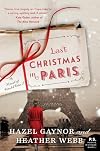
I used to write and receive a lot of letters. I am sad to say that I have let that go by the wayside for the most part, only writing a Christmas letter anymore. Early on in my letter writing career though, I used to keep every letter I ever received. I think I had some sense that if any of my long distance friends became famous, it would be good to have their words for posterity. Yes, I was a weird kid, honestly thinking about this before I even hit double digits! So far none of the friends show more I spent years writing to have become famous though, which is probably a good thing since their letters have long since found their way to the recycle bin. When you move a million times, unfortunately there's just no good justification for holding onto all of these sentimental things. It actually does make me a little sad thinking about all those lost words sent specifically to me though. Although epistolary novels aren't written to me specifically, I do still love reading through the letters in them and appreciating the idea of all those words tied up in ribbon for posterity so I was delighted to read Hazel Gaynor and Heather Webb's new WWI novel, Last Christmas in Paris.
Opening in 1968 with an ill and elderly Tom Harding making plans to go to Paris for his last Christmas where he plans to open one last letter, the bulk of the novel is a collection of letters and telegrams from WWI arranged, with one notable exception, in chronological order. When WWI is declared, Evie Elliott promises to write to her beloved older brother Will and his best friend, also a friend of hers, Tom Harding. Tom writes back consistently while Will is a less reliable pen pal. The 1914 letters are buoyant and certain of a quick finish to the war with Evie reminding Tom that the two of them, Will, and Evie's close friend Alice will reunite in Paris for Christmas. As the war continues on, the letters take a darker turn, showing the melancholy and despair that crept in but also showing as Evie and Tom opened up their very souls to each other. Evie not only reminds Tom of the good about the home front, but she also details the frustrations of not being able to do anything substantial (she's an appalling knitter) and the way that small but important opportunities start to open up to the women left behind in order to free more men to fight. Tom's letters tell of his anguish at losing his men and his friends as well as some of the truths that the government is suppressing in order to keep support and morale high at home. Other letters, beyond Evie and Tom's, add substantially to the plot as well. Evie writes to her friend Alice, a woman who enlists as an ambulance driver and nurse near the front, adding to Evie's feeling of being trapped and useless at her family's home but offering another perspective of "the war to end all wars." Tom's father's accountant, who is trying to help Tom keep the family newspaper, The London Daily Times, afloat while Tom is mired in mud at the front and Harding Sr. is ill writes to him about various issues with war time reporting, conflicts with Tom's cousin over the running of the paper, and his father's decline. More letters, to or from others, are sprinkled throughout the novel as well.
The epistolary nature of the novel makes for a limited view and few side plots but the letters outside of the bounds of Evie and Tom's correspondence allow the reader to see beyond their own cautious, carefully considered words to each other and see them falling in love through words even if they remain uncertain of each others' depth of feeling. The early letters are naive and hopeful while the later letters show the progress of the war in their aching and uncertainty, freighted with so much that cannot be said. The novel is emotionally full despite the restraint in the letters themselves. Students of history will anticipate some of the events and will cringe as they read certain place names in Evie's letters, making the tale both personal and global. The novel shows the importance and power of words and represents the "un-silencing" of women at home through Evie's newspaper column. It touches on the emotional cost of war, for soldiers and civilians, beyond the obvious loss through death. Jumping back to 1968 and Tom's need to be in Paris at Christmas to read the last letter following each succeeding year of war time letters reminds the reader that life, full of all its attendant love and sorrow, has gone on after the atrocities that played out in France, not once but twice. Evie and Tom are characters with whom the reader will find it easy to become invested and the history is well researched and included organically. Frustratingly, Tom's rancor and lack of trust towards his cousin John is mentioned obliquely many times but the history of these feelings is never quite revealed, a newer incident being the stand-in for why he's not all he appears. And a final surprise toward the end of the novel isn't really much of a surprise for astute readers. The novel is well-written and engaging and will definitely suit epistolary novel fans, those who enjoy reading about WWI, and general historical fiction buffs. show less
Opening in 1968 with an ill and elderly Tom Harding making plans to go to Paris for his last Christmas where he plans to open one last letter, the bulk of the novel is a collection of letters and telegrams from WWI arranged, with one notable exception, in chronological order. When WWI is declared, Evie Elliott promises to write to her beloved older brother Will and his best friend, also a friend of hers, Tom Harding. Tom writes back consistently while Will is a less reliable pen pal. The 1914 letters are buoyant and certain of a quick finish to the war with Evie reminding Tom that the two of them, Will, and Evie's close friend Alice will reunite in Paris for Christmas. As the war continues on, the letters take a darker turn, showing the melancholy and despair that crept in but also showing as Evie and Tom opened up their very souls to each other. Evie not only reminds Tom of the good about the home front, but she also details the frustrations of not being able to do anything substantial (she's an appalling knitter) and the way that small but important opportunities start to open up to the women left behind in order to free more men to fight. Tom's letters tell of his anguish at losing his men and his friends as well as some of the truths that the government is suppressing in order to keep support and morale high at home. Other letters, beyond Evie and Tom's, add substantially to the plot as well. Evie writes to her friend Alice, a woman who enlists as an ambulance driver and nurse near the front, adding to Evie's feeling of being trapped and useless at her family's home but offering another perspective of "the war to end all wars." Tom's father's accountant, who is trying to help Tom keep the family newspaper, The London Daily Times, afloat while Tom is mired in mud at the front and Harding Sr. is ill writes to him about various issues with war time reporting, conflicts with Tom's cousin over the running of the paper, and his father's decline. More letters, to or from others, are sprinkled throughout the novel as well.
The epistolary nature of the novel makes for a limited view and few side plots but the letters outside of the bounds of Evie and Tom's correspondence allow the reader to see beyond their own cautious, carefully considered words to each other and see them falling in love through words even if they remain uncertain of each others' depth of feeling. The early letters are naive and hopeful while the later letters show the progress of the war in their aching and uncertainty, freighted with so much that cannot be said. The novel is emotionally full despite the restraint in the letters themselves. Students of history will anticipate some of the events and will cringe as they read certain place names in Evie's letters, making the tale both personal and global. The novel shows the importance and power of words and represents the "un-silencing" of women at home through Evie's newspaper column. It touches on the emotional cost of war, for soldiers and civilians, beyond the obvious loss through death. Jumping back to 1968 and Tom's need to be in Paris at Christmas to read the last letter following each succeeding year of war time letters reminds the reader that life, full of all its attendant love and sorrow, has gone on after the atrocities that played out in France, not once but twice. Evie and Tom are characters with whom the reader will find it easy to become invested and the history is well researched and included organically. Frustratingly, Tom's rancor and lack of trust towards his cousin John is mentioned obliquely many times but the history of these feelings is never quite revealed, a newer incident being the stand-in for why he's not all he appears. And a final surprise toward the end of the novel isn't really much of a surprise for astute readers. The novel is well-written and engaging and will definitely suit epistolary novel fans, those who enjoy reading about WWI, and general historical fiction buffs. show less
Lists
Awards

You May Also Like


Associated Authors
Statistics
- Works
- 12
- Also by
- 1
- Members
- 2,069
- Popularity
- #12,420
- Rating
- 4.0
- Reviews
- 218
- ISBNs
- 105
- Languages
- 2
- Favorited
- 3
