
Annie Raser-Rowland
Author of The Art of Frugal Hedonism: A Guide to Spending Less While Enjoying Everything More
Works by Annie Raser-Rowland
The Art of Frugal Hedonism: A Guide to Spending Less While Enjoying Everything More (2016) 147 copies, 5 reviews
The Weed Forager's Handbook: A Guide to Edible and Medicinal Weeds in Australia (2012) 108 copies, 1 review
Tagged
Common Knowledge
- Other names
- Raser Rowland, Annie
- Gender
- female
Members
Reviews
The art of frugal hedonism : a guide to spending less while enjoying everything more by Annie Raser-Rowland
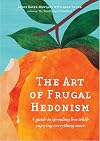
What I like about this book is its optimism. The reminders that you can enjoy your life, the morning coffee, the cool breeze, the feeling of soft socks and favorite clothes, but also the thrill of an unexpected chill, the zippy poky pain of burning your tongue. Reminders that the pleasure of life is in being alive, in feeling things, even if they are bad things, and not in having or stocking up or socking away. I like the way the authors of this book think of the future, as a cheerful place show more even if it is not filled with all the creature comforts we have come to associate with happiness.
Now, is this a perfect book? No. Is following every tip in this book practical for very many people at all? No. It’s not a how-to manual, for me, despite being arranged in a series of short tips. It’s a set of reminders that there are other ways to live, other ways to do things, that being a little old or battered or dirty isn’t a sin that merits being sent straight to hell. There is a tone of optimism in this book that does ignore life’s more bitter side, and it doesn’t address the Big Issues at all. It’s just a little list of ways that you can try being happier. And I needed that. show less
Now, is this a perfect book? No. Is following every tip in this book practical for very many people at all? No. It’s not a how-to manual, for me, despite being arranged in a series of short tips. It’s a set of reminders that there are other ways to live, other ways to do things, that being a little old or battered or dirty isn’t a sin that merits being sent straight to hell. There is a tone of optimism in this book that does ignore life’s more bitter side, and it doesn’t address the Big Issues at all. It’s just a little list of ways that you can try being happier. And I needed that. show less
The art of frugal hedonism : a guide to spending less while enjoying everything more by Annie Raser-Rowland
When I die and someone has the task of doing the eulogy, they will probably say something about how I was a teacher, and how I read a lot of books, and then they will pause and wonder what to say next. Well, I hope they’ll go on to say something about how I was content with that, because I think contentment is one of my best assets. Contentment is also a key strategy for spending less while enjoying everything more, which is the subtitle to The Art of Frugal Hedonism.
#BeforeWeStart: you show more might think, if you have seen my library and its shelves groaning with books, that I am hardly the one to start spruiking frugality. But (apart from the fact that many of them are from the OpShop) at about 800 books with a reading rate of about 200 books a year, that is only four or five years’ supply (allowing for some that come from the library like this one that I’m telling you about). And all the time I am reading those books I am not watching commercial TV ads or reading lifestyle magazines that encourage me to feel dissatisfied with what I have. Reading is the ultimate strategy for saving money and consuming less.
The Art of Frugal Hedonism is not a sober instruction manual for making your own soap and recycling your undies into dusters. It is funny. The authors have a droll style, which is very engaging. In Chapter 9, ‘Stop reading those magazines’, they point out that lifestyle magazines pander to the idea that the people in them are people like you, if only you were doing what they are doing, and then it makes sense for you to throw about phrases like ‘time poor’ and ‘retail therapy’ because they do.
The page is accompanied by a strip of photo images of people (and a leopard) smiling. It is captioned Sample facial expressions you might like to experiment with while declining to read lifestyle magazines.
To read the rest of my review please visit https://anzlitlovers.com/2017/11/13/the-art-of-frugal-hedonism-by-annie-raser-ro... show less
#BeforeWeStart: you show more might think, if you have seen my library and its shelves groaning with books, that I am hardly the one to start spruiking frugality. But (apart from the fact that many of them are from the OpShop) at about 800 books with a reading rate of about 200 books a year, that is only four or five years’ supply (allowing for some that come from the library like this one that I’m telling you about). And all the time I am reading those books I am not watching commercial TV ads or reading lifestyle magazines that encourage me to feel dissatisfied with what I have. Reading is the ultimate strategy for saving money and consuming less.
The Art of Frugal Hedonism is not a sober instruction manual for making your own soap and recycling your undies into dusters. It is funny. The authors have a droll style, which is very engaging. In Chapter 9, ‘Stop reading those magazines’, they point out that lifestyle magazines pander to the idea that the people in them are people like you, if only you were doing what they are doing, and then it makes sense for you to throw about phrases like ‘time poor’ and ‘retail therapy’ because they do.
Very few people do much of the stuff that the media implies people do, and those who do work hard to keep up. But lifestyle journalism makes it easy to feel that there is a world of people out there effortlessly dressing, holidaying, exercising, eating and thinking in certain appropriate ways, and it is human nature not to want to be terribly out of line with what everyone else is up to. Steer clear of this homogenising influence is your authors’ suggestion. Spend your Sunday morning breakfasts perusing odd facts about breeding piranhas in captivity instead. (p.57)
The page is accompanied by a strip of photo images of people (and a leopard) smiling. It is captioned Sample facial expressions you might like to experiment with while declining to read lifestyle magazines.
To read the rest of my review please visit https://anzlitlovers.com/2017/11/13/the-art-of-frugal-hedonism-by-annie-raser-ro... show less
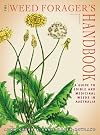
I enjoyed this book, especially as it is written for an Australian audience. Though, interestingly, most of the forageable plants described are introduced species which have often outcompeted and overwhelmed the local plants. (Prickly pear being one of the classical examples). After reading the book I have become much more conscious of the weeds around me. Even today I found myself eying off a particularly succulent looking blackberry nightshade and wondering if it was ok to eat. show more Unfortunately, I live in a heavily contaminated part of Sydney (from lead especially but also from other pollutants and toxic materials).....so I'm reluctant to actually eat anything local.
I remember buying a package of "greens" that were foraged by somebody who was selling them at a local farmer's market and we ate them as a salad. (Mixed feeling about the salad.....not bad but not brilliant either).
But the book, overall, is pretty good. A limited range of species but enough information about each to, more or less, identify the right plant and further information about how to eat it. Also includes some interesting looking recipes. Nicely illustrated. I was interested in the description of the prickly pear as I recall them being heavily used in Mexico. The authors say to cut off the spines of the leaves though I recall the Mexicans burning them off. (I can't actually recall whether this was for feeding to stock or for human consumption...though I do recall eating the leaves and they were rather like green beans..though a little slimy like okra).
Anyway, quite an enjoyable book and easily warrants four stars from me. show less
I remember buying a package of "greens" that were foraged by somebody who was selling them at a local farmer's market and we ate them as a salad. (Mixed feeling about the salad.....not bad but not brilliant either).
But the book, overall, is pretty good. A limited range of species but enough information about each to, more or less, identify the right plant and further information about how to eat it. Also includes some interesting looking recipes. Nicely illustrated. I was interested in the description of the prickly pear as I recall them being heavily used in Mexico. The authors say to cut off the spines of the leaves though I recall the Mexicans burning them off. (I can't actually recall whether this was for feeding to stock or for human consumption...though I do recall eating the leaves and they were rather like green beans..though a little slimy like okra).
Anyway, quite an enjoyable book and easily warrants four stars from me. show less
The Art of Frugal Hedonism: A Guide to Spending Less While Enjoying Everything More by Annie Raser-Rowland
This book is full of tips, and the risk with books full of tips is that you can sometimes miss the big picture for all the details. But! I really liked it. The broader philosophy is "trade time for money and you'll probably find that you don't need so much money" - the authors have taken it to an extreme. A lot of it is shedding societal expectations, creating a life for yourself that you actually like, and deploying financial resources strategically, which is theoretically easier to do show more because you've theoretically got more time because you're not working as much. And all of this sums up to a richer life. show less
Awards

You May Also Like


Associated Authors
Statistics
- Works
- 4
- Members
- 276
- Popularity
- #84,077
- Rating
- 3.8
- Reviews
- 6
- ISBNs
- 8