
Jessica Abel
Author of La Perdida
About the Author
Image credit: Luigi Novi
Series
Works by Jessica Abel
Drawing Words and Writing Pictures: Making Comics: Manga, Graphic Novels, and Beyond (2008) 336 copies, 3 reviews
Artbabe, Vol. 2, No. 3 2 copies
La Perdida Parts 1-5 1 copy
Comics from Ox-Bow 1 copy
Missive Device #17: Artbabe 1 copy
Radio 1 copy
Trazo Tina 1 copy
Associated Works
An Anthology of Graphic Fiction, Cartoons, and True Stories: v. 2 (2008) — Contributor — 169 copies, 2 reviews
Action Girl Comics #1-19 — Contributor — 1 copy
Tagged
Common Knowledge
- Birthdate
- 1969
- Gender
- female
- Education
- Carleton College
University of Chicago (BA) - Occupations
- comic book writer
artist
teacher (cartooning courses) - Organizations
- National Association of Comics Art Educators
- Awards and honors
- Kim Yale Award for Best New Talent (1997)
Harvey Award
Chicago Artists International Program Grant
Xeric Grant - Relationships
- Madden, Matt (husband)
- Nationality
- USA
- Birthplace
- Chicago, Illinois, USA
- Places of residence
- Chicago, Illinois, USA
Brooklyn, New York, USA
Mexico City, Mexico - Map Location
- USA
Members
Reviews
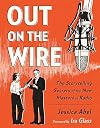
You might think you could breeze right through Out on the Wire lickety split because it is, after all, a “comic” full of pen and ink sketches and people speaking in those little balloons. But you’d be wrong. You slow down and pay attention assuming you have any interest in the topic revealed in the book’s subtitle: The Storytelling Secrets of the New Masters of Radio.
That’s the interesting thing about graphic books like this one by Jessica Abel. You can pack a lot of information show more and emotion in those boxes stacked across the page. The strips move sequentially but your eye scans up and down, and sideways to take in all the voices and details of a scene.
Abel’s work is the perfect complement to the type of radio programs she covers. Both rely on visuals, with the radio programs using sound to elicit the listener’s imagination to “see’ the story. Abel uses her accomplished artistic skills to create visuals to advance and deepen her story which wouldn’t be as interesting if told in a conventional narrative. She, like the radio producers she features, wants to connect more emotionally with the reader. Abel wants her reader to understand the emotional investment of building a great story. And she does.
If someone wanted to know how you produce a radio program or podcast like Ira Glass’s This American Life on National Public Radio, this book is a crash course or primer on how that is done. Although This American Life is the big name here and the book starts out with this show, Jessica also introduces us to other shows like The Moth, Radiolab, Planet Money, Snap Judgment, Radio Diaries, and 99% Invisible. If you are a fan of This American Life but don’t know these others, your curiosity will be piqued.
Abel tries to explain what makes these types of shows unique by interviewing key writers and producers of the shows. Each program may run a few minutes but hours and hours of labor-intensive work is behind each one. Although many of us view writing as the heart and soul behind a good story, Abel’s investigation hones in on the critical role of editing. Criticism by your writing team is intense. Picture an Iowa Writers Workshop where a story idea which got your creative juices flowing is often turned upside down, inside out and every which way but its original form. Picture writers being shredded by their peers all in the service of a good story.
Editing emerges as the critical ingredient shaping the stories. There’s even a very specific term to describe the meetings where the collaborative but critical eye is focused on the story’s primary writer/developer. This is an edit, and it’s actually considered separate from editing.
As Abel goes through all aspects of bringing these stories to the public, you see there is a twinship between the radio programs and her own graphic storytelling. Both seem so simple but are not. The story seems natural and straightforward, but extensive editing is behind that.
Fans of these programs and graphic storytelling will appreciate Abel’s considerable craftsmanship. Anyone interested in radio production will also learn a lot here and in a more enjoyable way than reading a textbook about it. Abel’s book may have a narrow niche but she fills it quite well. show less
That’s the interesting thing about graphic books like this one by Jessica Abel. You can pack a lot of information show more and emotion in those boxes stacked across the page. The strips move sequentially but your eye scans up and down, and sideways to take in all the voices and details of a scene.
Abel’s work is the perfect complement to the type of radio programs she covers. Both rely on visuals, with the radio programs using sound to elicit the listener’s imagination to “see’ the story. Abel uses her accomplished artistic skills to create visuals to advance and deepen her story which wouldn’t be as interesting if told in a conventional narrative. She, like the radio producers she features, wants to connect more emotionally with the reader. Abel wants her reader to understand the emotional investment of building a great story. And she does.
If someone wanted to know how you produce a radio program or podcast like Ira Glass’s This American Life on National Public Radio, this book is a crash course or primer on how that is done. Although This American Life is the big name here and the book starts out with this show, Jessica also introduces us to other shows like The Moth, Radiolab, Planet Money, Snap Judgment, Radio Diaries, and 99% Invisible. If you are a fan of This American Life but don’t know these others, your curiosity will be piqued.
Abel tries to explain what makes these types of shows unique by interviewing key writers and producers of the shows. Each program may run a few minutes but hours and hours of labor-intensive work is behind each one. Although many of us view writing as the heart and soul behind a good story, Abel’s investigation hones in on the critical role of editing. Criticism by your writing team is intense. Picture an Iowa Writers Workshop where a story idea which got your creative juices flowing is often turned upside down, inside out and every which way but its original form. Picture writers being shredded by their peers all in the service of a good story.
Editing emerges as the critical ingredient shaping the stories. There’s even a very specific term to describe the meetings where the collaborative but critical eye is focused on the story’s primary writer/developer. This is an edit, and it’s actually considered separate from editing.
As Abel goes through all aspects of bringing these stories to the public, you see there is a twinship between the radio programs and her own graphic storytelling. Both seem so simple but are not. The story seems natural and straightforward, but extensive editing is behind that.
Fans of these programs and graphic storytelling will appreciate Abel’s considerable craftsmanship. Anyone interested in radio production will also learn a lot here and in a more enjoyable way than reading a textbook about it. Abel’s book may have a narrow niche but she fills it quite well. show less
 This review was written for LibraryThing Early Reviewers.
Cartoonist Jessica Abel’s fascination for the recent renaissance of narrative nonfiction radio has resulted in two graphic novels to date—Out on the Wire and 1999’s Radio: An Illustrated Guide (a large chunk of which is excerpted in this latest volume). I was intrigued enough to pick up Radio: An Illustrated Guide when it originally came out because I’d been a fan of her previous comic work, not because I listened to NPR’s This American Life—or any radio, for that matter. Whereas show more that original slim volume provided some insight into how Ira Glass and his NPR team create episodes of This American Life, Out on the Wire succeeds in conveying an entirely different level of insight into the creative process.
Though much of the graphic novel consists quite understandably of talking heads, she intersperses that with her interpretations of scenes from some of the radio episodes, as well as an occasional flight of surrealistic fantasy to illustrate concepts such as finding your way out of the daunting “German forest.” Despite the copious amount of expository dialogue, it still proves to be an engaging read.
Many of the lessons that Abel conveys through her words and pictures are relevant to many more creative endeavors than just narrative nonfiction radio shows—and that is what really elevates this volume above the previous one. The notion of needing to do the work until you get it right is hammered home through interviews with producers of several different public radio shows. The way Abel lays out how to sift through research and winnow the key moments from dozens of interviews and thousands of hours of tape to eventually get your mind around what the story is really about is equally relevant for screenwriters and comic book writers and novelists. show less
Though much of the graphic novel consists quite understandably of talking heads, she intersperses that with her interpretations of scenes from some of the radio episodes, as well as an occasional flight of surrealistic fantasy to illustrate concepts such as finding your way out of the daunting “German forest.” Despite the copious amount of expository dialogue, it still proves to be an engaging read.
Many of the lessons that Abel conveys through her words and pictures are relevant to many more creative endeavors than just narrative nonfiction radio shows—and that is what really elevates this volume above the previous one. The notion of needing to do the work until you get it right is hammered home through interviews with producers of several different public radio shows. The way Abel lays out how to sift through research and winnow the key moments from dozens of interviews and thousands of hours of tape to eventually get your mind around what the story is really about is equally relevant for screenwriters and comic book writers and novelists. show less
This review was written for LibraryThing Early Reviewers.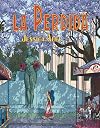
This is a beautiful, well-executed graphic novel. The way the dialog moves from English to spanglish to "spanish" is well-thought out, and the drawings can make you feel like you're there. The main character is a well-meaning naif who moves to Mexico City and gets in over her head. The situations and characters feel very real, particularly the main character. I avoid people like her in real life, so it is a powerful testament to the high quality of Abel's work that I found it hard to finish show more the book because the protagonist was so realistic I didn't want to spend time watching her get more than she bargained for in Fictionland. show less
Abel conveys a wealth of information about "narrative journalism" (Ira Glass's term), interviewing various radio shows to illustrate her points. I'm convinced Abel is best able to write her book using the comic format, but not persuaded this specific topic is best covered that way. Yet her story did not suffer in the telling, and the format made for interesting reading. I would not have been prompted to pick up her book elsewise, despite a general interest in radio.
Insights into specific show more programs aside, most impressive is Abel's close scrutiny of a number of broader ideas: the creative process and its capacity to be enriched through guidelines or games; best practices in sound production (mic technique, the necessity of capturing dead air in specific spaces for later use when editing interviews, general approaches to sound editing); and, basic tenets of storytelling, whether oral or in prose.
Perhaps the larger point emerging from Abel's format is radio's counterintuitive potential to be visual: in structure, in scripting, and also sound design. Not all radio is: the standard news headline show, for example, conjures little visually, and if a specific reporter provides a story that is visual, it adds to the program but is hardly necessary. This potential is perhaps most widely recognised in niche programming: radioplays, sports broadcasts. Radioplays are no longer mainstream, though enjoying something of an artisanal rennaissance. Sports seem relegated to radio only as a supplement to television, though baseball play-by-play is famously visual, the very purpose to bring the listener onto the field, and to paint a picture of the action. The programs showcased in Out on the Wire (99% Invisible; The Moth; Planet Money; Radio Diaries; Radiolab; Snap Judgment; This American Life) each seems to have a similar aim, and demonstrate the visual aspect of radio could be better utilised generally. show less
Insights into specific show more programs aside, most impressive is Abel's close scrutiny of a number of broader ideas: the creative process and its capacity to be enriched through guidelines or games; best practices in sound production (mic technique, the necessity of capturing dead air in specific spaces for later use when editing interviews, general approaches to sound editing); and, basic tenets of storytelling, whether oral or in prose.
Perhaps the larger point emerging from Abel's format is radio's counterintuitive potential to be visual: in structure, in scripting, and also sound design. Not all radio is: the standard news headline show, for example, conjures little visually, and if a specific reporter provides a story that is visual, it adds to the program but is hardly necessary. This potential is perhaps most widely recognised in niche programming: radioplays, sports broadcasts. Radioplays are no longer mainstream, though enjoying something of an artisanal rennaissance. Sports seem relegated to radio only as a supplement to television, though baseball play-by-play is famously visual, the very purpose to bring the listener onto the field, and to paint a picture of the action. The programs showcased in Out on the Wire (99% Invisible; The Moth; Planet Money; Radio Diaries; Radiolab; Snap Judgment; This American Life) each seems to have a similar aim, and demonstrate the visual aspect of radio could be better utilised generally. show less
This review was written for LibraryThing Early Reviewers.Lists
Female Author (1)
Awards


You May Also Like


Associated Authors
Statistics
- Works
- 46
- Also by
- 10
- Members
- 3,595
- Popularity
- #7,050
- Rating
- 3.5
- Reviews
- 182
- ISBNs
- 59
- Languages
- 5
- Favorited
- 1


