
Stanley Burns
Author of Sleeping Beauty: Memorial Photography in America
About the Author
Works by Stanley Burns
A Morning's Work: Medical Photographs from the Burns Archive & Collection, 1843-1939 (1998) 72 copies
Sleeping Beauty II: Grief, Bereavement in Memorial Photography American and European Traditions (2002) 45 copies, 1 review
Sleeping Beauty III: Memorial Photography: The Children by Stanley B. Burns, MD (2010) Hardcover (2011) 28 copies, 3 reviews
Forgotten Marriage: The Painted Tintype & the Decorative Frame, 1860-1910 : A Lost Chapter in American Portraiture (1995) 18 copies, 1 review
Oncology tumors & treatment : a photographic history : selections from the Burns Archive (2004) 2 copies
Oncology Tumors & Treatment: A Photographic History, Volume 3: The X-Ray Era, 1901-1915 (2004) 1 copy
Associated Works
Harms Way: Lust & Madness, Murder & Mayhem : A Book of Photographs (1994) — Photographer — 74 copies
Tagged
Common Knowledge
- Legal name
- Burns, Stanley Benjamin
- Birthdate
- 1938-12-03
- Gender
- male
- Education
- Brooklyn College (AB|1960)
State University of New York Upstate Medical University (MD|1964) - Occupations
- physician
photographic archivist
university professor
museum curator - Organizations
- The Burns Archive (founder)
New York University
Daguerrian Society
Medical Archivists of New York
International Society of Physician Historians
National Arts Club (show all 7)
American Photographic Historical Society - Awards and honors
- New York Academy of Sciences
Fellow, American College of Surgeons
Fellow, American Photographic Historical Society - Nationality
- USA
- Associated Place (for map)
- USA
Members
Reviews
Sleeping Beauty III: Memorial Photography: The Children by Stanley B. Burns, MD (2010) Hardcover by M.D. Stanley B. Burns
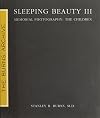
Very sad, very moving book on postmortem photography. This particular book is about children, and the era it spans is from the advent of photography until the present.
I found this interesting in the introduction as I really liked the film The Others:
"Sleeping Beauty has also served as inspiration to documentary filmmakers and several Hollywood feature film directors who used photographs from the book in their films. . . .Producer Tom Cruise and director Alejandro Amenabar's film The Others, show more starring Nicole Kidman, featured several full screen postmortem photographs from Sleeping Beauty, with the images playing a central role in the story." (May have to watch that film again.) show less
I found this interesting in the introduction as I really liked the film The Others:
"Sleeping Beauty has also served as inspiration to documentary filmmakers and several Hollywood feature film directors who used photographs from the book in their films. . . .Producer Tom Cruise and director Alejandro Amenabar's film The Others, show more starring Nicole Kidman, featured several full screen postmortem photographs from Sleeping Beauty, with the images playing a central role in the story." (May have to watch that film again.) show less
A lot of people find memorial photography morbid – if you stumble across a Facebook account where death photography is discussed or reproduced, the comments range from an appreciation of the history to people thinking the parents long ago were insane or that the whole thing in general is somehow morally wrong or gross. “Ewww! Why would anyone want to take a picture of a dead person?” As much as I dislike it when people react to these pictures from a strictly modern sensibility or a show more squeamish quasi-morality, I often have a hard time explaining why it is such images appeal to me. Burns does his best to explain why these images may seem so jarring:
"It is difficult for most of us today to understand the prior culture’s need to take memorial photographs. We no longer live with personal death and dying as part of our everyday lives. By the 1930s, dealing with death had been left to professionals ranging from physicians to morticians. The advance of medicine, control of killer epidemics, the ability to treat disease, and the removal of the sick from the home made us unaccustomed to living with and seeing death. Children dying before parents, something so common in the nineteenth century, has become unusual in the twentieth century."
He goes on:
"Memorial postmortem photographs have deep meaning for mourners. These keepsakes become special icons that help survivors move through the bereavement process. Healthy grieving ultimately distances us from the dead. The human bond, our connection with others, is mankind’s strongest guiding emotion and thus influences our fears and actions. These images represent confrontation with our loved one’s mortality and our own."
I would like to think this fear of death that these images can provoke is behind the “Yuck!” reactions people sometimes express.
You can read my entire discussion here: http://ireadoddbooks.com/sleeping-beauty-iii-by-stanley-r-burns-m-d/ show less
"It is difficult for most of us today to understand the prior culture’s need to take memorial photographs. We no longer live with personal death and dying as part of our everyday lives. By the 1930s, dealing with death had been left to professionals ranging from physicians to morticians. The advance of medicine, control of killer epidemics, the ability to treat disease, and the removal of the sick from the home made us unaccustomed to living with and seeing death. Children dying before parents, something so common in the nineteenth century, has become unusual in the twentieth century."
He goes on:
"Memorial postmortem photographs have deep meaning for mourners. These keepsakes become special icons that help survivors move through the bereavement process. Healthy grieving ultimately distances us from the dead. The human bond, our connection with others, is mankind’s strongest guiding emotion and thus influences our fears and actions. These images represent confrontation with our loved one’s mortality and our own."
I would like to think this fear of death that these images can provoke is behind the “Yuck!” reactions people sometimes express.
You can read my entire discussion here: http://ireadoddbooks.com/sleeping-beauty-iii-by-stanley-r-burns-m-d/ show less
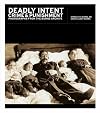
"We believe Deadly Intent will be enjoyed as much for its detailed text as for its dramatic photographs," Stanley and Sara Burns wrote in the introduction to this book. For me, at least, that was spot-on -- the photographs are lovely, yes, but it's the informative captions that make this book really stand out. This book is not a gore-fest. Oh, it's gory all right, but everything is very tastefully presented and it's clear the authors intend to educate and enlighten the reader, not jut shock show more them. HIGHLY recommended. show less
Certainly this is a morbid subject and the book is no ray of sunshine, but I found many of the photographs were actually quite touching. Burns also briefly introduces the reader to earlier photographic methods and the industry of memorial photography, which (I was surprised to learn) has experienced a slight revival in the 21st century. He includes some modern memorial photos at the end. I also liked that he had not just photos from the United States but from various locations in Europe as well.
You May Also Like


Associated Authors
Statistics
- Works
- 27
- Also by
- 1
- Members
- 402
- Popularity
- #60,415
- Rating
- 4.3
- Reviews
- 12
- ISBNs
- 22