
Joel-Peter Witkin
Author of Witkin
About the Author
Image credit: correnticalde.com
Works by Joel-Peter Witkin
Harms Way: Lust & Madness, Murder & Mayhem : A Book of Photographs (1994) — Editor; Introduction — 74 copies
Associated Works
Take My Advice: Letters to the Next Generation from People Who Know a Thing or Two (2002) — Contributor — 50 copies
Tagged
Common Knowledge
- Birthdate
- 1939-09-13
- Gender
- male
- Education
- Cooper Union (School of Art)
University of New Mexico - Occupations
- photographer
- Short biography
- son of Max and Mary (Pellegrino) Witkin
- Nationality
- USA
- Birthplace
- Brooklyn, New York, USA
- Places of residence
- Albuquerque, New Mexico, USA
- Associated Place (for map)
- USA
Members
Reviews
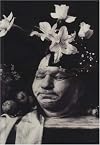
Any discussion of Witkin's work is bound to mention his uses of _______. Let's see whether I can write anything worthwhile about him w/o mention of that. When I 1st encountered Witkin's fotography I probably tended to associate it w/ the likes of Charles Gatewood & BalTimOre fotographer Stephen John Phillips. Davide Faccioli, the author of the essay that begins this bk, brings up Diane Arbus. Arbus & Gatewood both concentrate on people outside the norm, as does Witkin. That's enuf to make me show more like him right there - since I consider myself to be outside the norm too.
Aesthetically, though, I see the less well-known Phillips as being closer to Witkin. What makes Witkin by far one of my favorite fotographers is not just his attn to outsiderness, it's also his minute attn to details of texture, arrangement & color. He's a still-life fotographer par excellence. His "Harvest" revisits Arcimboldo's wonderful "Spring" & "Summer" paintings. Witkin's work is rife w/ awesome reworkings of historical artworks: Botticelli's "The Birth of Venus", eg, cd be renamed "The Birth of HermAphrodite". Instead, Witkin calls it "Gods of Earth and Heaven". His "The Raft of George W. Bush" references Théodore Géricault's painting "The Raft of Medusa". This latter cd be sd to be a critique of the abandonment of the proletariat to die during a shipwreck - a theme later developed in Hans Werner Henze's oratorio Das Floss der Medusa Für Che Guevara. Both Phillips & Witkin use sepia tinting & simulated aging (distressing) to evoke times past.
Despite any sensationalism that might be associated w/ Witkin's work, I find it 1st & foremost evocative of LIFE & NATURE. Instead of a Nazi sanitization of the gene pool intended to narrow down possibilities to homogenized culture, Witkin presents life (& death) in a full glory of variety & richness. There's no nastiness here, IMO, life is shown as something that grows & mutates - not as a jungle that 'needs' paving over as a parking-lot - rather as a jungle from wch the marvelous erupts & is then reabsorbed into. show less
Aesthetically, though, I see the less well-known Phillips as being closer to Witkin. What makes Witkin by far one of my favorite fotographers is not just his attn to outsiderness, it's also his minute attn to details of texture, arrangement & color. He's a still-life fotographer par excellence. His "Harvest" revisits Arcimboldo's wonderful "Spring" & "Summer" paintings. Witkin's work is rife w/ awesome reworkings of historical artworks: Botticelli's "The Birth of Venus", eg, cd be renamed "The Birth of HermAphrodite". Instead, Witkin calls it "Gods of Earth and Heaven". His "The Raft of George W. Bush" references Théodore Géricault's painting "The Raft of Medusa". This latter cd be sd to be a critique of the abandonment of the proletariat to die during a shipwreck - a theme later developed in Hans Werner Henze's oratorio Das Floss der Medusa Für Che Guevara. Both Phillips & Witkin use sepia tinting & simulated aging (distressing) to evoke times past.
Despite any sensationalism that might be associated w/ Witkin's work, I find it 1st & foremost evocative of LIFE & NATURE. Instead of a Nazi sanitization of the gene pool intended to narrow down possibilities to homogenized culture, Witkin presents life (& death) in a full glory of variety & richness. There's no nastiness here, IMO, life is shown as something that grows & mutates - not as a jungle that 'needs' paving over as a parking-lot - rather as a jungle from wch the marvelous erupts & is then reabsorbed into. show less
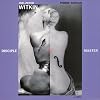
This collection of Witkin shows the photographs and the works that inspired them, and contains fascinating and enlightening annotations by the artist. The connections are as brilliant as the photos themselves.

This nicely designed catalogue published to accompany a 1985 exhibition of Witkin's work at the San Francisco Museum of Modern Art presents good reproductions of some of his most powerful and intriguing images. Van Deren Coke discusses the photographs in the show in detail and traces the development of Witkin's work.

The Bone House is a well executed photography book by the artist Joel-Peter Witkin. Witkin's photos mesh classical compositions and framing in his elaborate and macabre still lifes. Witkin frequently uses cadavers and body parts borrowed from the police and morgue to create his very disturbing, but oddly graceful images.
You May Also Like


Associated Authors
Statistics
- Works
- 33
- Also by
- 3
- Members
- 513
- Popularity
- #48,355
- Rating
- 4.4
- Reviews
- 4
- ISBNs
- 21
- Languages
- 4
- Favorited
- 2