
Sandra S. Phillips
Author of Exposed: Voyeurism, Surveillance, and the Camera Since 1870
About the Author
Image credit: PORTRAIT.GOV.AU
Works by Sandra S. Phillips
Associated Works
Tagged
Common Knowledge
- Canonical name
- Phillips, Sandra S.
- Other names
- Phillips, Sandy
- Birthdate
- 1945
- Gender
- female
- Education
- Bard College (BA|1967)
Bryn Mawr College (MA|1969)
City University of New York (Ph.D|1985) - Occupations
- photographic historian
curator - Organizations
- San Francisco Museum of Modern Art
Vassar College Art Gallery
Mills College - Awards and honors
- Vision Award (2013)
- Relationships
- Weber, Nelva M. (mother)
- Nationality
- USA
- Birthplace
- New York, New York, USA
- Associated Place (for map)
- New York, USA
Members
Reviews
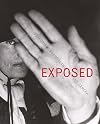
Since the rise of the photographic medium in the late 19th century, people have been fascinated by the camera’s ability to record striking moments both public and private. From Mathew Brady’s haunting images of the Civil War to the present day paparazzi’s brand of voyeurism-for-hire, photography has long served to capture not only the posed portrait but also the personal, the intimate, the unexpected, and the taboo. This fascinating book examines the ways in which acts of voyeurism and show more surveillance have inspired, challenged, and expanded the medium of photography throughout its evolution. Featuring photography by Sophie Calle, Henri Cartier-Bresson, Walker Evans, Harun Farocki, Nan Goldin, Robert Mapplethorpe, Helmut Newton, Andy Warhol, and Weegee, among others, Exposed chronicles the artistic, political, and even moral dilemmas that underlie some of these artists’ best known works. Through insightful essays and commentary by Sandra Phillips, one of the foremost authorities on the history of 20th-century photography, Exposed examines some of the most invasive and unsettling aspects of photography, including the use of the hidden camera, the production of erotic pictures and pornography, and the intersection of photography with both celebrity and violence. show less
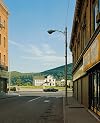
Drawing from the vast photography collection at the San Francisco Museum of Modern Art, American Geography charts a visual history of land use in the United States
From the earliest photographic records of human habitation to the latest aerial and digital pictures, from almost uninhabited desert and isolated mountainous territories to suburban sprawl and densely populated cities, this compilation offers an increasingly nuanced perspective on the American landscape. Divided by region, these show more photographs address ways in which different histories and traditions of land use have given rise to different cultural transitions: from the Midwestern prairies and agricultural traditions of the South, to the riverine systems in the Northeast, and the environmental challenges and riches of the far West. American Geography also looks at the evidence of older habitation from the adobe dwellings and ancient cultures of the Southwest to the Midwestern mounds, many of them prehistoric.
SFMOMA's last photography exhibition to consider land use, Crossing the Frontier (1996), examined only the American West. At the time, this focus offered a different way to think about landscape, and a useful way to reconsider pictures of the region. American Geography expands upon the groundwork laid by Crossing the Frontier, providing a complex, thought-provoking survey. show less
From the earliest photographic records of human habitation to the latest aerial and digital pictures, from almost uninhabited desert and isolated mountainous territories to suburban sprawl and densely populated cities, this compilation offers an increasingly nuanced perspective on the American landscape. Divided by region, these show more photographs address ways in which different histories and traditions of land use have given rise to different cultural transitions: from the Midwestern prairies and agricultural traditions of the South, to the riverine systems in the Northeast, and the environmental challenges and riches of the far West. American Geography also looks at the evidence of older habitation from the adobe dwellings and ancient cultures of the Southwest to the Midwestern mounds, many of them prehistoric.
SFMOMA's last photography exhibition to consider land use, Crossing the Frontier (1996), examined only the American West. At the time, this focus offered a different way to think about landscape, and a useful way to reconsider pictures of the region. American Geography expands upon the groundwork laid by Crossing the Frontier, providing a complex, thought-provoking survey. show less
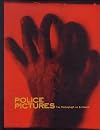
Catalog of an exhibition held at the San Francisco Museum of Modern Art, Oct. 17, 1997-Jan. 20, 1998.
You May Also Like


Associated Authors
Statistics
- Works
- 9
- Also by
- 1
- Members
- 322
- Popularity
- #73,504
- Rating
- 4.5
- Reviews
- 3
- ISBNs
- 13
- Languages
- 1