
Larry Clark (1) (1943–)
Author of Tulsa
For other authors named Larry Clark, see the disambiguation page.
Works by Larry Clark
The Smell of Us 6 copies
The Tulsa reader 1971-2010 3 copies
Larry Clark, fotografier: Fotografiska museet, Stockholm 20 september-16 november 1986 (Moderna museets katalog) (Swedish Edition) (1986) 2 copies, 1 review
Tagged
Common Knowledge
- Birthdate
- 1943-01-01
- Gender
- male
- Occupations
- film director
photographer
writer
flim producer - Nationality
- USA
- Birthplace
- Tulsa, Oklahoma, USA
- Associated Place (for map)
- Oklahoma, USA
Members
Reviews
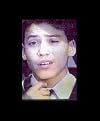
A black book to show a dark story. Published on the Larry Clark exhibition at the Groninger Museum, this conceptual book has more than 100 photographs of video stills about footage of the Menendez brothers’ murder trial in 1989, accused of one of the most mediatic, notorious, ugliest and discussed American crimes.
Lyle and Erik shot their rich parents to death in the family’s Beverly Hills home. They then drove up to Mulholland Drive, where they dumped their guns before continuing to a show more local movie theater to buy tickets as an alibi.
The Menendez murders became a national sensation when the television broadcast the trial in 1993. Rich, charismatic and wickedly handsome Menendez Brothers seemed to have it all but they wanted more, their heritage. Among these and other images the book examines adolescence and the dark undercurrents of violence and lust, providing a frank depiction of a period that is often idealized. show less
Lyle and Erik shot their rich parents to death in the family’s Beverly Hills home. They then drove up to Mulholland Drive, where they dumped their guns before continuing to a show more local movie theater to buy tickets as an alibi.
The Menendez murders became a national sensation when the television broadcast the trial in 1993. Rich, charismatic and wickedly handsome Menendez Brothers seemed to have it all but they wanted more, their heritage. Among these and other images the book examines adolescence and the dark undercurrents of violence and lust, providing a frank depiction of a period that is often idealized. show less

Los Angeles 2003-2006: Volume 1 is a documentation of Larry Clark's time in California after moving from New York's harsh winter. During his time there, he met a group of young Latino skaters at a little skatepark in Venice Beach. Clark befriended this group and photographed them while they skated. He became especially close with Jonathan Velasquez, who was just 14 years at the time. Velasquez was Clark's muse for many years, their close bond is shown in these intimate photographs of show more Velasquez and his friends. show less

Includes Clark's controversial black and white photographs from the "Tulsa" and Teenage Lust" work, as well as previously unpublished color and black and white images.
From the publisher: "Larry Clark's work has always obsessively circled around adolescent boys, their awakening sexual drives, the enormous energies they have to harness. Clark offers the viewer a cultural anthropology of this transitory period that oscillates between painful pleasure and exuberant self-destruction. Clark is show more spellbound with the vital, unruly, and destructive force teen boys exude. Clark confronts us with lucid images of male sexuality and its equally creative and destructive impulses. He combines pop-culture imagery with his own photographs to evoke a myth ingrained in the heart of our culture.
The Perfect Childhood combines an overview of Clark's work-ranging from collages and found images to photographs from his native Oklahoma in the late 1960's-with a new series of tender and erotic portraits of a skater boy-the latest incarnation of the mythical eternal youth Clark investigates and idolizes in his work. Material from the past 30 years is combined to create one new work of art-overwhelming proof of the consistency of Clark's artistic vision. The book is as raunchy and brutally straightforward as it is melancholy and affectionate. Its attitude will confound all those thinking in comfortable and complacent opposites-gay and straight, creative and destructive, tenderness and violence, good and evil. Clark's work is a mirror for those strong enough to face the truth about growing up as a boy." show less
From the publisher: "Larry Clark's work has always obsessively circled around adolescent boys, their awakening sexual drives, the enormous energies they have to harness. Clark offers the viewer a cultural anthropology of this transitory period that oscillates between painful pleasure and exuberant self-destruction. Clark is show more spellbound with the vital, unruly, and destructive force teen boys exude. Clark confronts us with lucid images of male sexuality and its equally creative and destructive impulses. He combines pop-culture imagery with his own photographs to evoke a myth ingrained in the heart of our culture.
The Perfect Childhood combines an overview of Clark's work-ranging from collages and found images to photographs from his native Oklahoma in the late 1960's-with a new series of tender and erotic portraits of a skater boy-the latest incarnation of the mythical eternal youth Clark investigates and idolizes in his work. Material from the past 30 years is combined to create one new work of art-overwhelming proof of the consistency of Clark's artistic vision. The book is as raunchy and brutally straightforward as it is melancholy and affectionate. Its attitude will confound all those thinking in comfortable and complacent opposites-gay and straight, creative and destructive, tenderness and violence, good and evil. Clark's work is a mirror for those strong enough to face the truth about growing up as a boy." show less
Tulsa by Larry Clark
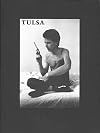
When it first appeared in 1971, Larry Clark's groundbreaking book Tulsa sparked immediate controversy across the nation. Its graphic depictions of sex, violence, and drug abuse in the youth culture of Oklahoma were acclaimed by critics for stripping bare the myth that Middle America had been immune to the social convulsions that rocked America in the 1960s. The raw, haunting images taken in 1963, 1968, and 1971 document a youth culture progressively overwhelmed by self-destruction -- and are show more as moving and disturbing today as when they first appeared. Originally published in a limited paperback version and republished in 1983 as a limited hardcover edition commissioned by the author, rare-book dealers sell copies of this book for more than a thousand dollars. Now in both hardcover and paperback editions from Grove Press, this seminal work of photographic art and social history is once again available to the general public. show less
You May Also Like


Associated Authors
Statistics
- Works
- 22
- Members
- 581
- Popularity
- #43,162
- Rating
- 4.0
- Reviews
- 15
- ISBNs
- 87
- Languages
- 4