
Michael Damian Thomas
Author of Glitter & Mayhem
Works by Michael Damian Thomas
Queers Dig Time Lords: A Celebration of Doctor Who by the LGBTQ Fans Who Love It (2013) — Editor — 81 copies, 2 reviews
Uncanny Magazine Issue 66: September/October2025 — Editor — 4 copies
Associated Works
Lightspeed Magazine, Issue 61 • June 2015 (Queers Destroy Science Fiction! special issue) (2015) — Contributor — 112 copies, 3 reviews
Uncanny Magazine Issue 30: September/October 2019 (Disabled People Destroy Fantasy) (2019) — Contributor — 22 copies, 4 reviews
Uncanny Magazine: The Best of 2018 — Editor, some editions — 4 copies
Tagged
Common Knowledge
Members
Reviews
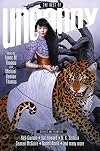
The SF magazine Uncanny was founded in 2014; this 2019 anthology collects highlights from its first few years. It's a generous sampling, at nearly 700 pages, containing 34 stories and 10 poems. And it's superb. I didn't find more than two or three stories here that clunked so badly I couldn't finish them, and the best stories are working at the very top of the genre.
The authors are young, which isn't surprising for a new magazine; established authors already have relationships with existing show more publishers, so are less likely to submit to an unknown new outlet. They're overwhelmingly female, at least based on this sampling. One hesitates to make assumptions about such things these days, but is you count the pronouns in the 42 author bio paragraphs at the back of the book, you get 31 she/her, 6 he/him, and 5 they/them.
Some of the highlights:
•Brooke Bolander's "Our Talons Can Crush Galaxies," the shortest, and the best, of several stories dealing with sexual harrassment and abuse. I suspect those two adjectives aren't unrelated. Fury, no matter how justified, is difficult to sustain for long, for both reader and writer; it can be exhausting at length.
•Caroline M. Yoachim's "The Words on My Skin" finds a lovely way to explore the extent to which parents can (or should) take responsibility for shaping who their children will become.
•Arkady Martine's "The Hydraulic Emperor" is about a film collector who might finally get to see a long-lost film; I suspect that its themes of artistic obsession would resonate with many here at LT.
•A pair of stories re-imagine the history of very different cultural icons: Sam J. Miller's "The Heat of Us: Notes Toward an Oral History," on the Stonewall riots, and Maria Dahvana Headley's "If You Were a Tiger, I'd Have to Wear White," about Leo, the MGM lion.
•Best-in-book honors go to Sarah Pinsker's ingenious "And Then There Were (N-One)," which as you might guess from the title, is an SF variation on a theme by Agatha Christie.
You might have noticed that the Uncanny editors like their titles to be long and poetically evocative. See also "I Frequently Hear Music in the Very Heart of Noise" (Pinsker again), "You'll Surely Drown Here if You Stay" (Alyssa Wong), and "Clearly Lettered in a Mostly Steady Hand" (Fran Wilde).
These stories are so good, so consistent, and so closely in line with my own taste in SF that as soon as I hit the "post message" button, I'm going to the Uncanny website to order myself a subscription. show less
The authors are young, which isn't surprising for a new magazine; established authors already have relationships with existing show more publishers, so are less likely to submit to an unknown new outlet. They're overwhelmingly female, at least based on this sampling. One hesitates to make assumptions about such things these days, but is you count the pronouns in the 42 author bio paragraphs at the back of the book, you get 31 she/her, 6 he/him, and 5 they/them.
Some of the highlights:
•Brooke Bolander's "Our Talons Can Crush Galaxies," the shortest, and the best, of several stories dealing with sexual harrassment and abuse. I suspect those two adjectives aren't unrelated. Fury, no matter how justified, is difficult to sustain for long, for both reader and writer; it can be exhausting at length.
•Caroline M. Yoachim's "The Words on My Skin" finds a lovely way to explore the extent to which parents can (or should) take responsibility for shaping who their children will become.
•Arkady Martine's "The Hydraulic Emperor" is about a film collector who might finally get to see a long-lost film; I suspect that its themes of artistic obsession would resonate with many here at LT.
•A pair of stories re-imagine the history of very different cultural icons: Sam J. Miller's "The Heat of Us: Notes Toward an Oral History," on the Stonewall riots, and Maria Dahvana Headley's "If You Were a Tiger, I'd Have to Wear White," about Leo, the MGM lion.
•Best-in-book honors go to Sarah Pinsker's ingenious "And Then There Were (N-One)," which as you might guess from the title, is an SF variation on a theme by Agatha Christie.
You might have noticed that the Uncanny editors like their titles to be long and poetically evocative. See also "I Frequently Hear Music in the Very Heart of Noise" (Pinsker again), "You'll Surely Drown Here if You Stay" (Alyssa Wong), and "Clearly Lettered in a Mostly Steady Hand" (Fran Wilde).
These stories are so good, so consistent, and so closely in line with my own taste in SF that as soon as I hit the "post message" button, I'm going to the Uncanny website to order myself a subscription. show less
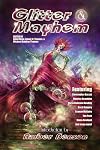
A collection with a unifying theme of glitter, disco, roller derby? For some reason, I was expecting something more overall upbeat, but I am not at all disappointed to find stories that run the gamut from deliciously creepy speculative fiction to re-imagined fairy tales to the more cheerful roller girls fun I figured the title implied. Rather than getting what I expected, I got more!
I picked it up for Seanan McGuire's story because I love her Incryptid series (and I wasn't disappointed!) but show more this is one of those collections that introduces you to a lot of amazing talent, so it's worth picking up even if you only know one or two of the names on the front. I'll be looking for more from quite a few of these authors! show less
I picked it up for Seanan McGuire's story because I love her Incryptid series (and I wasn't disappointed!) but show more this is one of those collections that introduces you to a lot of amazing talent, so it's worth picking up even if you only know one or two of the names on the front. I'll be looking for more from quite a few of these authors! show less
 This review was written for LibraryThing Early Reviewers.
It’s like each woman doing what she can until one day, somehow, it is enough.
WELL, GOSH. I'm shook, to be quite honest. I have found a new author to adore. Alix E. Harrow's The Sycamore and the Sybil is utterly captivating. You can feel the sisterhood and solidarity running through every word and the prose is simply lush.
Totally, totally recommend.
WELL, GOSH. I'm shook, to be quite honest. I have found a new author to adore. Alix E. Harrow's The Sycamore and the Sybil is utterly captivating. You can feel the sisterhood and solidarity running through every word and the prose is simply lush.
Totally, totally recommend.

Khaw's evocative prose slams into your gut like a tsunami. Read it. Meet, ever so briefly, the Jade Emperor and his retinue of celestial gods. This short inspired me to read [b:Monkey: The Journey to the West|100237|Monkey The Journey to the West|Wu Cheng'en|https://images.gr-assets.com/books/1347431752s/100237.jpg|96649].
Merged review:
Insightful essay on vampire-like Filipino monsters, aswang and manananggal, as Filipina empowerment, "Blood of the Revolution: On Filipina Writers and show more Aswang".
Khaw's evocative prose slams into your gut like a tsunami. Read it, "Goddess, Worm". Meet, ever so briefly, the Jade Emperor and his retinue of celestial gods. This short inspired me to read [b:Monkey: The Journey to the West|100237|Monkey The Journey to the West|Wu Cheng'en|https://images.gr-assets.com/books/1347431752s/100237.jpg|96649]. show less
Merged review:
Insightful essay on vampire-like Filipino monsters, aswang and manananggal, as Filipina empowerment, "Blood of the Revolution: On Filipina Writers and show more Aswang".
Khaw's evocative prose slams into your gut like a tsunami. Read it, "Goddess, Worm". Meet, ever so briefly, the Jade Emperor and his retinue of celestial gods. This short inspired me to read [b:Monkey: The Journey to the West|100237|Monkey The Journey to the West|Wu Cheng'en|https://images.gr-assets.com/books/1347431752s/100237.jpg|96649]. show less
Lists
Awards


You May Also Like
Associated Authors
Statistics
- Works
- 45
- Also by
- 3
- Members
- 941
- Popularity
- #27,308
- Rating
- 3.8
- Reviews
- 156
- ISBNs
- 6
