
Lena Dunham
Author of Not That Kind of Girl: A Young Woman Tells You What She's Learned
About the Author
Lena Dunham is the creator, executive producer, writer, director, and actress of the HBO series Girls. She won two Golden Globes, including Best Actress, for her work on Girls. She wrote and directed two feature-length films. Her first book, Not That Kind of Girl: A Young Woman Tells You What She's show more "Learned", was published in 2014. (Bowker Author Biography) show less
Image credit: David Shankbone
Series
Works by Lena Dunham
Girls - Season 1-2 [STANDARD EDITION] [Import anglais] — Creator — 2 copies
Girls: Lena Dunham's Twitter Journal 2 copies
Too Much 1 copy
Six Sausages 1 copy
Catherine Called Birdy 1 copy
Associated Works
Courage Is Contagious and Other Reasons to Be Grateful for Michelle Obama (2017) — Foreword — 45 copies, 1 review
No One Has Seen It All: Lessons for Living Well from Nearly a Century of Good Taste (2025) — Foreword — 5 copies
Tagged
Common Knowledge
- Birthdate
- 1986-05-13
- Gender
- female
- Education
- Oberlin College
- Occupations
- actor
screenwriter
producer - Relationships
- Dunham, Cyrus Grace (sibling)
- Nationality
- USA
- Birthplace
- New York, New York, USA
- Associated Place (for map)
- New York, USA
Members
Reviews
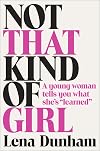
I read this when it was first released and am reviewing it much later. I had not/have not seen Girls and had not read anything else by Dunham; I had only read pre-release reviews extolling it as a groundbreaking work by a voice of millennial feminism.
I think I made it as far as the chapter that was entirely a list of foods with accompanying caloric intakes when I just started skimming. My impression of that essay (based also on what had preceded it) was that Dunham likely wrote it on a show more cocktail napkin of an upscale bar late, late on evening. It was likely the kind of bar where I would gauge the price of a drink in terms of what percentage of my rent it was. I picture her there after a day of doing . . . very trendy, sophisticated things that I really wouldn't understand. Stuff. Things. That involved assistants. In-jokes and knowing winks based on a complex and dense shared background.
The preceding snide paragraph is an attempt to convey how distant I felt from the world that Dunham (repeatedly) describes. I do not demand that memoirists/essayists live a life identical to mine; reading about my own life would be pretty tedious. However, many other writers with vastly different experiences manage to create a sense of intimacy or in-gathering-- to invite you into what they're describing-- and Dunham does not do that. Each essay is a door quietly closing in the reader's face: this is what it was like, but I can only tell you about it. That is the only way I can really express the peculiar coolness of this volume.
Because I know so little of Dunham, I'm not sure if the "feminist voice" label is her own or if it somehow got applied to her during the press-release process. One way or the other, I also don't understand how this book would earn that distinction. Broadly speaking, I did not note her saying anything new or noteworthy in a new or remarkable way. The lack of self-awareness on so many levels is a deep impairment to any contribution to a feminist discussion; it's a roadblock to so many avenues of discourse. I have trouble picturing the setting in which this book would actually be useful: you would have to find the exactly appropriate (narrow) audience, and then you would have to positively mine the book for the points worthy of discussion. I honestly have trouble labeling her self-effacing rather than oblivious. Again, there are other memoirists who play off problematic backgrounds (etc.) using various devices: for example, they may be tongue-in-cheek. Dunham offers no stylistic counterpoint to the many uncomfortable moments in the essays; such devices might assure the reader that they're not simply being presented with no self-critique or self-analysis.
By the time I'd reached the end, Dunham had left me variously exasperated and infuriated. The touching incident that later reached high furor in the media was not at a fever pitch yet, and thus I had my own little list of grievances even at the time.
I do very much wish Dorothy Parker was still around to review this one. show less
I think I made it as far as the chapter that was entirely a list of foods with accompanying caloric intakes when I just started skimming. My impression of that essay (based also on what had preceded it) was that Dunham likely wrote it on a show more cocktail napkin of an upscale bar late, late on evening. It was likely the kind of bar where I would gauge the price of a drink in terms of what percentage of my rent it was. I picture her there after a day of doing . . . very trendy, sophisticated things that I really wouldn't understand. Stuff. Things. That involved assistants. In-jokes and knowing winks based on a complex and dense shared background.
The preceding snide paragraph is an attempt to convey how distant I felt from the world that Dunham (repeatedly) describes. I do not demand that memoirists/essayists live a life identical to mine; reading about my own life would be pretty tedious. However, many other writers with vastly different experiences manage to create a sense of intimacy or in-gathering-- to invite you into what they're describing-- and Dunham does not do that. Each essay is a door quietly closing in the reader's face: this is what it was like, but I can only tell you about it. That is the only way I can really express the peculiar coolness of this volume.
Because I know so little of Dunham, I'm not sure if the "feminist voice" label is her own or if it somehow got applied to her during the press-release process. One way or the other, I also don't understand how this book would earn that distinction. Broadly speaking, I did not note her saying anything new or noteworthy in a new or remarkable way. The lack of self-awareness on so many levels is a deep impairment to any contribution to a feminist discussion; it's a roadblock to so many avenues of discourse. I have trouble picturing the setting in which this book would actually be useful: you would have to find the exactly appropriate (narrow) audience, and then you would have to positively mine the book for the points worthy of discussion. I honestly have trouble labeling her self-effacing rather than oblivious. Again, there are other memoirists who play off problematic backgrounds (etc.) using various devices: for example, they may be tongue-in-cheek. Dunham offers no stylistic counterpoint to the many uncomfortable moments in the essays; such devices might assure the reader that they're not simply being presented with no self-critique or self-analysis.
By the time I'd reached the end, Dunham had left me variously exasperated and infuriated. The touching incident that later reached high furor in the media was not at a fever pitch yet, and thus I had my own little list of grievances even at the time.
I do very much wish Dorothy Parker was still around to review this one. show less
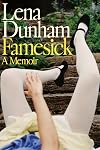
Color me impressed. I found this immersive, challenging, and very well written. Dunham has a lot of blind spots, and she is a drama queen, but she has also faced a lot of hurdles that would fell people with better mental and physical health, and it appears she has come out stronger, smarter, and happier. I loved learning more about Dunham's parents and brother. She shares deeply about her relationships with Jack Antonoff and Jenni Konner, and that was riveting. Lena is a lot, and you can see show more that they both went through the wars with her. I don't think she always knows how exhausting she is, and as a result, I don't think he understands why Konner was so ungracious at the end and why Antonoff closed the door between them so comprehensively. We see it is not because they are bad people or did not love her, but the only defense against a marauding army is to never allow a crack in one's defenses. Still, this is Lena's story, and she gets to tell it how she sees it. Speaking of which, I listened to the audio narrated by Lena, and I think it is the way to go.
One last thing. I keep seeing negative comments about Lena's privilege. First, it is a celebrity memoir; of course, she is privileged -- those reviewers went in wanting to bitch about privilege and to make this all about themselves. They might want to think about the irony in that. Second, who cares if she has privilege? She is telling her story, which reflects her life, which is no less important or valid because she has the money to seek certain solutions to her problems. You want to read the bio of an unhoused person or an uninsured gig worker with chronic mental and physical health problems? Go right ahead. I might want to read that too, but that is not what this is. show less
One last thing. I keep seeing negative comments about Lena's privilege. First, it is a celebrity memoir; of course, she is privileged -- those reviewers went in wanting to bitch about privilege and to make this all about themselves. They might want to think about the irony in that. Second, who cares if she has privilege? She is telling her story, which reflects her life, which is no less important or valid because she has the money to seek certain solutions to her problems. You want to read the bio of an unhoused person or an uninsured gig worker with chronic mental and physical health problems? Go right ahead. I might want to read that too, but that is not what this is. show less
I can't say that I always agree with Lena Dunham, but I agree with her approach to a lot of things. She's incapable of not sharing and uncomfortable with secrets and this is not for attention, it's how she ticks. She knows she doesn't have everything figured out and that is empowering for her, rather than holding her back. She's got a lot of fears but she confronts them and sees where the road takes her. And she's damn funny when she does it.
This is not a book for everyone and if you don't show more like Dunham, you'll probably hate it. I like that she's in her mid-20's and not sure where she goes from here, but she's excited about it. I like that she owns her past and realizes she's made mistakes, will make more, and hasn't learned all her lessons yet. She feels so REAL, and I think that's the biggest thing she's trying to convey. Watching someone embrace their flaws, not glorifying them, just recognizing they're part of being human, is refreshing. show less
This is not a book for everyone and if you don't show more like Dunham, you'll probably hate it. I like that she's in her mid-20's and not sure where she goes from here, but she's excited about it. I like that she owns her past and realizes she's made mistakes, will make more, and hasn't learned all her lessons yet. She feels so REAL, and I think that's the biggest thing she's trying to convey. Watching someone embrace their flaws, not glorifying them, just recognizing they're part of being human, is refreshing. show less
If you read the comments on negative reviews here on Goodreads, these are some recurring themes you'll run into:
"You didn't read this whole entire book, so you're not allowed to rate or review it."
"Some reviewers are obviously just looking for an excuse to trash books."
"If you don't like a book, why go on and on about it? Put it down and get on with your life, already. Think about the things you could have done in time you spent writing this review."
"Clearly you're just a very negative show more person."
"I loved it. Clearly we didn't read the same book."
"Why did you read a book you don't even like?"
The fact that the last question on that list directly contradicts the first is a clue to what's going on here.
What's going on here is that some readers are treating books they love like sacred texts.
A friend of mine once got in touch with another friend he hadn't seen in a while. She was now devoutly religious, and urged him to convert to her faith. She was happier than she'd ever been, she said, and she wanted him to be happy, too. She gave him a copy of what was now her holy book. "Please, read this," she said. "Then you'll understand."
He read it. He still didn't want to convert to her religion.
"Why not?" she asked.
He attempted to engage her in conversation, to discuss issues the book in question had brought up for him. He wanted to hear her opinions, to see how she would answer his questions. She was confused and dismayed.
"That's not how you're supposed to read it," she said. "You're not supposed to pick it apart like that. You're supposed to read it with your heart."
It doesn't matter which holy book I'm talking about. Everyone who's read any of the livelier comment sections of any of the negative reviews on Goodreads knows that in terms of the attitude I just described, I could be talking about Jane Austen or Jane Eyre or the latest YA bestseller. People who love these works are sometimes not content with loving the books they love. They have to convert the heretics who are refusing to bow to the greatness that stands before them.
I read this book because I saw people being trashed for disliking it solely because of some understandably infamous passages – quotes that got around so widely that even people who can't remember Lena Dunham's name know some things she claims to have done to her younger sister.
"You're taking those quotes out of context," commenters insisted. "You can't judge this book unless you've read it."
The short answer: Fine. I read the book. I saw some very good writing. I also saw some very repulsive writing. And those infamous quotes are, to me, every bit as creepy in context as out of it.
The longer, more important answer: You didn't really mean that you thought the reviewers in question should at least read this book before commenting on it. You meant that you wanted them to read this book, experience a Saul-on-the-road-to-Damascus blinded-by-the-light conversion, fall off their high horses, and sing Lena Dunham's praises in exactly the same key you do.
I watched some clips from Girls. I'm planning to see Dunham's film Tiny Furniture, because it looks wonderfully bizarre. I understand that Lena Dunham is an extremely talented writer, actor, producer, and director.
I still don't like this book, and yes those quotes are still way creepy.
...
Those dots stand for the time it took me to get up and check how many separate copies of Pride and Prejudice I currently own.
I counted 7. I may not have caught them all.
That's too many even for someone who's researching Regency England with an eye to setting a novel there (which I am).
I have an entire set of shelves dedicated to books by and about Austen. Not a shelf: an entire bookcase.
Clearly it's time to call the authorities, if you can figure out which authorities deal with this sort of madness.
I have friends who don't enjoy Austen. I have a friend here on GR who specifically dislikes Austen, and she's a former English major who's now a university professor. Of English literature.
I love her comments and reviews, and I love her that much more for having that spot of inexplicability.
Here are three things I think are true:
1. If a book is still in print decades or even centuries after it was published, you don't have to like it. But you should try to understand why it's still around. What does it have to offer, and to whom? Why is this particular title still in print when the vast majority of books ever published die swift and silent deaths? What made this one different? If you can figure this out and still not like the book, you'll have learned something valuable about reading, writing, readers, and writers.
2. If you write something and you ask someone to please read it and tell you what they think, you shouldn't necessarily make all the changes they suggest. Maybe you shouldn't make any of those changes. But you should ask them why they want you to make the changes in question, and you should listen very carefully to their answers. You should understand completely why they're saying what they're saying. And then you should seriously consider their suggestions. Even if you end up throwing each one of those suggestions out the window, you'll have learned something valuable about reading, writing, readers, and writers.
3. If you can't understand even a little bit why people like some things you hate and hate some things you like, you should take a vow of silence (and that includes Internet silence) until you figure out how to live in a world full of people whose opinions are different from yours.
There is some good, even brilliant writing in this book. I can understand why this book is not merely infamous, but loved and admired.
I don't like this book at all, and I sympathize with every person who read the passages about Dunham's sister Grace and said "OH HELL NO."
Those people have a perfectly valid point, and provided they're clear and upfront about how much of this book they read and why it skeeved them out, they're as entitled to post a rating and a review as anyone else is.
For everyone who wondered why I tortured myself reading this book: I've had a lot of these ideas on my mind for some time now, and this particular review seemed like the ideal time to put them together.
For everyone who thinks this doesn't count as a "real" review: deal with it. show less
"You didn't read this whole entire book, so you're not allowed to rate or review it."
"Some reviewers are obviously just looking for an excuse to trash books."
"If you don't like a book, why go on and on about it? Put it down and get on with your life, already. Think about the things you could have done in time you spent writing this review."
"Clearly you're just a very negative show more person."
"I loved it. Clearly we didn't read the same book."
"Why did you read a book you don't even like?"
The fact that the last question on that list directly contradicts the first is a clue to what's going on here.
What's going on here is that some readers are treating books they love like sacred texts.
A friend of mine once got in touch with another friend he hadn't seen in a while. She was now devoutly religious, and urged him to convert to her faith. She was happier than she'd ever been, she said, and she wanted him to be happy, too. She gave him a copy of what was now her holy book. "Please, read this," she said. "Then you'll understand."
He read it. He still didn't want to convert to her religion.
"Why not?" she asked.
He attempted to engage her in conversation, to discuss issues the book in question had brought up for him. He wanted to hear her opinions, to see how she would answer his questions. She was confused and dismayed.
"That's not how you're supposed to read it," she said. "You're not supposed to pick it apart like that. You're supposed to read it with your heart."
It doesn't matter which holy book I'm talking about. Everyone who's read any of the livelier comment sections of any of the negative reviews on Goodreads knows that in terms of the attitude I just described, I could be talking about Jane Austen or Jane Eyre or the latest YA bestseller. People who love these works are sometimes not content with loving the books they love. They have to convert the heretics who are refusing to bow to the greatness that stands before them.
I read this book because I saw people being trashed for disliking it solely because of some understandably infamous passages – quotes that got around so widely that even people who can't remember Lena Dunham's name know some things she claims to have done to her younger sister.
"You're taking those quotes out of context," commenters insisted. "You can't judge this book unless you've read it."
The short answer: Fine. I read the book. I saw some very good writing. I also saw some very repulsive writing. And those infamous quotes are, to me, every bit as creepy in context as out of it.
The longer, more important answer: You didn't really mean that you thought the reviewers in question should at least read this book before commenting on it. You meant that you wanted them to read this book, experience a Saul-on-the-road-to-Damascus blinded-by-the-light conversion, fall off their high horses, and sing Lena Dunham's praises in exactly the same key you do.
I watched some clips from Girls. I'm planning to see Dunham's film Tiny Furniture, because it looks wonderfully bizarre. I understand that Lena Dunham is an extremely talented writer, actor, producer, and director.
I still don't like this book, and yes those quotes are still way creepy.
...
Those dots stand for the time it took me to get up and check how many separate copies of Pride and Prejudice I currently own.
I counted 7. I may not have caught them all.
That's too many even for someone who's researching Regency England with an eye to setting a novel there (which I am).
I have an entire set of shelves dedicated to books by and about Austen. Not a shelf: an entire bookcase.
Clearly it's time to call the authorities, if you can figure out which authorities deal with this sort of madness.
I have friends who don't enjoy Austen. I have a friend here on GR who specifically dislikes Austen, and she's a former English major who's now a university professor. Of English literature.
I love her comments and reviews, and I love her that much more for having that spot of inexplicability.
Here are three things I think are true:
1. If a book is still in print decades or even centuries after it was published, you don't have to like it. But you should try to understand why it's still around. What does it have to offer, and to whom? Why is this particular title still in print when the vast majority of books ever published die swift and silent deaths? What made this one different? If you can figure this out and still not like the book, you'll have learned something valuable about reading, writing, readers, and writers.
2. If you write something and you ask someone to please read it and tell you what they think, you shouldn't necessarily make all the changes they suggest. Maybe you shouldn't make any of those changes. But you should ask them why they want you to make the changes in question, and you should listen very carefully to their answers. You should understand completely why they're saying what they're saying. And then you should seriously consider their suggestions. Even if you end up throwing each one of those suggestions out the window, you'll have learned something valuable about reading, writing, readers, and writers.
3. If you can't understand even a little bit why people like some things you hate and hate some things you like, you should take a vow of silence (and that includes Internet silence) until you figure out how to live in a world full of people whose opinions are different from yours.
There is some good, even brilliant writing in this book. I can understand why this book is not merely infamous, but loved and admired.
I don't like this book at all, and I sympathize with every person who read the passages about Dunham's sister Grace and said "OH HELL NO."
Those people have a perfectly valid point, and provided they're clear and upfront about how much of this book they read and why it skeeved them out, they're as entitled to post a rating and a review as anyone else is.
For everyone who wondered why I tortured myself reading this book: I've had a lot of these ideas on my mind for some time now, and this particular review seemed like the ideal time to put them together.
For everyone who thinks this doesn't count as a "real" review: deal with it. show less
Lists
Awards


You May Also Like


Associated Authors
Statistics
- Works
- 18
- Also by
- 10
- Members
- 2,128
- Popularity
- #12,098
- Rating
- 3.8
- Reviews
- 86
- ISBNs
- 67
- Languages
- 12
- Favorited
- 2