
Howard Bryant (1) (1968–)
Author of The Last Hero: A Life of Henry Aaron
For other authors named Howard Bryant, see the disambiguation page.
About the Author
Howard Bryant is a senior writer for ESPN and a correspondent for NPRs Weekend Edition. His acclaimed books include The Heritage, Juicing the Game, and The Last Hero. He lives in Massachusetts.
Series
Works by Howard Bryant
Juicing the Game: Drugs, Power, and the Fight for the Soul of Major League Baseball (2005) 120 copies
The Heritage: Black Athletes, a Divided America, and the Politics of Patriotism (2018) 112 copies, 7 reviews
Legends: The Best Players, Games, and Teams in Baseball: World Series Heroics! Greatest Homerun Hitters! Classic Rivalries! And Much, Much More! (2015) 56 copies, 1 review
Associated Works
Four Hundred Souls: A Community History of African America, 1619-2019 (2021) — Contributor — 1,168 copies, 25 reviews
Hope Nation: YA Authors Share Personal Moments of Inspiration (2018) — Contributor — 179 copies, 7 reviews
Tagged
Common Knowledge
- Canonical name
- Bryant, Howard
- Birthdate
- 1968-11-25
- Gender
- male
- Education
- Temple University
San Francisco State University (MA) - Occupations
- author
radio sports correspondent
senior writer (ESPN.com ∙ ESPN The Magazine)
sports journalist
public speaker - Awards and honors
- Associated Press Sports Editors (APSE ∙ 2001)
- Agent
- Janet Pawson (Headline Media Management)
Katie Freeman (Pantheon Books)
Deirdre Mullane (Mullane Literary Associates) - Nationality
- USA
- Birthplace
- Dorchester, Massachusetts, USA
- Places of residence
- Boston, Massachusetts, USA
Dorchester, Massachusetts, USA (birthplace) - Associated Place (for map)
- Massachusetts, USA
Members
Reviews
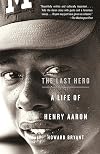
Howard Bryant’s The Last Hero: A Life of Henry Aaron digs deeply to get beyond just Aaron’s superlative on-field accomplishments and provides a fascinating insight into the reticent and sensitive persona of the man who suffered the indignities of racial discrimination, personal slights (some real and some largely imagined), and the fear associated with the rampant credible death threats as he approached Babe Ruth’s career home run record in the Deep South of Atlanta, Georgia. This is show more easily one of the finest baseball biographies. show less
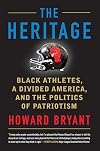
Summary: An account of black athletes in professional sports, from the path-breakers whose very presence was political, to the athletes of the '70's onward whose success tempted them to just play the game, to the recent clash of patriotism and protest that has led to a new generation of athlete-activists.
When Colin Kaepernick took a knee during the national anthem to protest of the numbers of blacks dying in police-involved shooting, his act was the latest of a long line of black athletes show more whose presence, and whose advocacy asserted that they were far more than mere bodies, employed for the pleasure of largely white audiences and the profit of white team owners. When Kaepernick could not get another position when his contract expired, he joined "the Heritage"--a long line of black athlete activists who could not settle for simply "playing the game" in the face of the injustices faced by his people, and often suffered the consequences from acting as people with voices and minds, and not merely bodies to be employed for sport.
Howard Bryant, a senior writer for ESPN, chronicles this history in The Heritage. He traces the beginnings of the Heritage in the lives of Paul Robeson, Jesse Owens (who went from US Olympic glory in Hitler's Germany to poverty and bankruptcy), Jackie Robinson who broke the color barrier in baseball, Jim Brown, Muhammad Ali who went to prison for his refusal to be drafted on religious principle, the 1968 raised fist protests of Tommie Smith and John Carlos, and Curt Flood, whose refusal to accept a trade led to free agency, but also resulted in his being blackballed from baseball.
Things changed in the 1970's in what Bryant calls the "greenwashing" of professional athletes. Beginning with stars like O.J. Simpson, who received huge contracts and endorsement deals, a new generation of black athlete came on the scene who "just played the game" and took the money. Perhaps they invested it quietly in causes that uplifted the communities in which they played, or grew up. Bryant focuses on three as representative of this period: Simpson, Michael Jordan, and Tiger Woods, who in an interview described himself as "Cablinasian."
In sports as so much of American life, everything changed on 9/11. The citizenship rite of the national anthem was replaced by elaborate patriotic displays: singing police officers, fly-overs and veterans salutes, huge flags on the fifty yard lines. First responders and those in the armed services became heroes who were recognized in some form at every game. A kind of undifferentiated hero worship failed to grapple with a more nuanced reality of some real heroes, many decent, hard-working people, and some bad apples--just like in most of society. Bryant also cites evidence that this was staged by the military, rather than being simply an honest, spontaneous gesture of sports team. Teams profited by tax money spent for these displays, which were seen as good recruiting tools. An American public indulged these displays, perhaps guilty over treatment of returning Vietnam vets and the fact that most of us were at the mall while a small percent were fighting our wars in far off places.
Bryant argues that this set up the clash between black athletes protesting injustices in policing, and a wider American public. What began as an effort to call attention to ways a country wasn't living up to the values represented by the flag clashed with the patriotism displays that had become commonplace in the nearly twenty years since 9/11. Some efforts were effectual. When players at the University of Missouri threatened to refuse to play because of issues of systemic racism, a university president was ousted. LeBron James could wear "I can't breathe" jerseys with impunity, being at the top of his game and flush with endorsement deals. But a quarterback at the end of his contract was blackballed because he took a knee, a respectful symbol of praying usually reserved for locker rooms or end zones and his action was characterized as unpatriotic and an insult to soldiers. People who wanted Kaepernick to just play the game failed to observe that the game itself had been co-opted for political purposes in an unqualified endorsement of both police and military (and unspoken in all this were the ongoing wars in which the military was engaged).
This is an uncomfortable book perhaps most of all because it raises the issue that black athletes' value continues to be their bodies, and that while they may be rewarded well when they excel in physical feats, the powers that be will continue the attempt to silence them when they use their voices and minds to speak for those who do not share their fame and expose the ways as a nation we fail to live up to our principles.
It also raises the issue of the ways we've changed as a country since 9/11. A simple citizenship rite at the beginning of a game has become wrapped in a celebration of both safety and military forces, and the use of their power to keep a fearful nation safe. Instead of celebrating the shared liberties of an empowered people, we've come to celebrate the power of the state. We've traded "peanuts and cracker jacks" for "shock and awe."
I suspect I've probably made some people mad simply because I reviewed this book and haven't done the white thing of pushing back with all that is wrong with it. I guess I've come to a place where I want to understand why a talented quarterback chooses to throw it all away by a simple gesture (actually unnoticed for several games) that for the life of me looks like prayer. I find myself wondering why such a humble gesture is so threatening that despite the fact that no law was broken, a combination of media, public opinion and even presidential power was brought to bear to suppress it. I find myself wondering what this gesture threatens. I wonder...
____________________________
Disclosure of Material Connection: I received a complimentary review copy of this book from the publisher via LibraryThing's Early Reviewers Program in exchange for an honest review. The opinions I have expressed are my own. show less
When Colin Kaepernick took a knee during the national anthem to protest of the numbers of blacks dying in police-involved shooting, his act was the latest of a long line of black athletes show more whose presence, and whose advocacy asserted that they were far more than mere bodies, employed for the pleasure of largely white audiences and the profit of white team owners. When Kaepernick could not get another position when his contract expired, he joined "the Heritage"--a long line of black athlete activists who could not settle for simply "playing the game" in the face of the injustices faced by his people, and often suffered the consequences from acting as people with voices and minds, and not merely bodies to be employed for sport.
Howard Bryant, a senior writer for ESPN, chronicles this history in The Heritage. He traces the beginnings of the Heritage in the lives of Paul Robeson, Jesse Owens (who went from US Olympic glory in Hitler's Germany to poverty and bankruptcy), Jackie Robinson who broke the color barrier in baseball, Jim Brown, Muhammad Ali who went to prison for his refusal to be drafted on religious principle, the 1968 raised fist protests of Tommie Smith and John Carlos, and Curt Flood, whose refusal to accept a trade led to free agency, but also resulted in his being blackballed from baseball.
Things changed in the 1970's in what Bryant calls the "greenwashing" of professional athletes. Beginning with stars like O.J. Simpson, who received huge contracts and endorsement deals, a new generation of black athlete came on the scene who "just played the game" and took the money. Perhaps they invested it quietly in causes that uplifted the communities in which they played, or grew up. Bryant focuses on three as representative of this period: Simpson, Michael Jordan, and Tiger Woods, who in an interview described himself as "Cablinasian."
In sports as so much of American life, everything changed on 9/11. The citizenship rite of the national anthem was replaced by elaborate patriotic displays: singing police officers, fly-overs and veterans salutes, huge flags on the fifty yard lines. First responders and those in the armed services became heroes who were recognized in some form at every game. A kind of undifferentiated hero worship failed to grapple with a more nuanced reality of some real heroes, many decent, hard-working people, and some bad apples--just like in most of society. Bryant also cites evidence that this was staged by the military, rather than being simply an honest, spontaneous gesture of sports team. Teams profited by tax money spent for these displays, which were seen as good recruiting tools. An American public indulged these displays, perhaps guilty over treatment of returning Vietnam vets and the fact that most of us were at the mall while a small percent were fighting our wars in far off places.
Bryant argues that this set up the clash between black athletes protesting injustices in policing, and a wider American public. What began as an effort to call attention to ways a country wasn't living up to the values represented by the flag clashed with the patriotism displays that had become commonplace in the nearly twenty years since 9/11. Some efforts were effectual. When players at the University of Missouri threatened to refuse to play because of issues of systemic racism, a university president was ousted. LeBron James could wear "I can't breathe" jerseys with impunity, being at the top of his game and flush with endorsement deals. But a quarterback at the end of his contract was blackballed because he took a knee, a respectful symbol of praying usually reserved for locker rooms or end zones and his action was characterized as unpatriotic and an insult to soldiers. People who wanted Kaepernick to just play the game failed to observe that the game itself had been co-opted for political purposes in an unqualified endorsement of both police and military (and unspoken in all this were the ongoing wars in which the military was engaged).
This is an uncomfortable book perhaps most of all because it raises the issue that black athletes' value continues to be their bodies, and that while they may be rewarded well when they excel in physical feats, the powers that be will continue the attempt to silence them when they use their voices and minds to speak for those who do not share their fame and expose the ways as a nation we fail to live up to our principles.
It also raises the issue of the ways we've changed as a country since 9/11. A simple citizenship rite at the beginning of a game has become wrapped in a celebration of both safety and military forces, and the use of their power to keep a fearful nation safe. Instead of celebrating the shared liberties of an empowered people, we've come to celebrate the power of the state. We've traded "peanuts and cracker jacks" for "shock and awe."
I suspect I've probably made some people mad simply because I reviewed this book and haven't done the white thing of pushing back with all that is wrong with it. I guess I've come to a place where I want to understand why a talented quarterback chooses to throw it all away by a simple gesture (actually unnoticed for several games) that for the life of me looks like prayer. I find myself wondering why such a humble gesture is so threatening that despite the fact that no law was broken, a combination of media, public opinion and even presidential power was brought to bear to suppress it. I find myself wondering what this gesture threatens. I wonder...
____________________________
Disclosure of Material Connection: I received a complimentary review copy of this book from the publisher via LibraryThing's Early Reviewers Program in exchange for an honest review. The opinions I have expressed are my own. show less
 This review was written for LibraryThing Early Reviewers.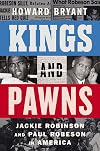
Despite its focus on two Black athletes, at its core this is not a sports book. Instead, it is a compelling account of political courage during one of the most repressive eras in modern American life—one that unfortunately has resurfaced in modern times. Bryant places Paul Robeson and Jackie Robinson squarely within the crucible of the Cold War hysteria while revealing the stakes each man faced as Blacks navigating patriotism, protest, racism, and survival in America.
Both men were show more used—and targeted—by a nation eager to promote democracy abroad while suppressing equality at home. Robeson’s uncompromising internationalism and Robinson’s more cautious but still courageous activism in baseball emerge as opposites. Yet they shared a common goal of achieving equality for their people. In his book, Bryant captures the prices each man paid for speaking out when civil rights and anti-communist paranoia collided. In a time when American democracy faces new existential threats, Bryant provides important lessons in citizenship and racial justice through the historical lens of two remarkably gifted Black men. show less
Both men were show more used—and targeted—by a nation eager to promote democracy abroad while suppressing equality at home. Robeson’s uncompromising internationalism and Robinson’s more cautious but still courageous activism in baseball emerge as opposites. Yet they shared a common goal of achieving equality for their people. In his book, Bryant captures the prices each man paid for speaking out when civil rights and anti-communist paranoia collided. In a time when American democracy faces new existential threats, Bryant provides important lessons in citizenship and racial justice through the historical lens of two remarkably gifted Black men. show less
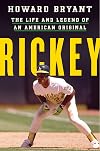
On the second page of the Preface, you find out that Rickey Henderson was named after the 50s teen idol Ricky Nelson. Jeeeeeez, okay.
Rickey Henderson is the most exciting baseball player I have ever watched. And that includes a lot of great players — I am old enough to have seen Mays, Mantle, Aaron, Nolan Ryan, Randy Johnson, . . . . I was too young to see some of them in their youngest days, like Mays, so that may factor in.
But Rickey was unique. He was a rally just walking up to the show more batter’s box. It wasn’t that he was so likely to hit a home run — he could do that, but that’s just a one-and-done thing. He was a master of “small-ball,” something we don’t see today. He would walk, presenting that microscopic strike zone when he got into his batting crouch. Or he’d single. Then he’d torture everyone on the other team and in their dugout. The pitcher trying to hold him on first and losing concentration on the batter, the catcher worried about when Rickey was going to take off for second, the shortstop or second baseman cheating toward the bag to take the throw when he did take off, the manager wondering if it wouldn’t be better to just give Rickey second and even third to eliminate the stress.
And Rickey knew it. He exploited it with his image, his style. He irritated, he boasted, he grandstanded, he even announced when he was going to steal a base.
That was the Rickey I loved to watch. He dominated the game just by being Rickey.
Bryant’s biography captures that unique ability, and all the accomplishments that went with it.
But he puts it all into the context of Rickey’s personality. Because Rickey’s personality was just as unique as his effect on the game.
Rickey was always himself, always Rickey Style. And he really did envision himself as a one-name person, the “Henderson” being superfluous like “Jackson” to Reggie.
Bryant interviewed teammates, friends, acquaintances who weren’t friends, managers, general managers, Rickey’s family, all to get the big picture.
Rickey could not be pinned down. He evaded stereotypes, he evaded the press, he evaded a good portion of the popular fame that he could have had. The words you see thrown around about him — “weird,” “unique,” “unapproachable,” “different,” . . .
He really did do everything Rickey Style, on his own time, in his own way, for his own reasons. He always knew he would be great, it was just a matter of playing it out, and getting the respect he believed was his by right. He told the high school coach who put him on the JV baseball team as a freshman, “You must not know who I am.” A high school freshman! 14 years old.
He was also haunted, as Bryant tells the story, by a couple of things. Rickey was born in Chicago, but his mom (Rickey’s father was absent) moved the family to rural Arkansas before bringing them to Oakland. Rickey felt “country” around his schoolmates and friends. He didn’t talk right. He wasn’t right for them. In fact he never did talk “normal.”
And he apparently had an undiagnosed reading problem. Even when he got to the major leagues, he had teammate Dwayne Murphy read newspaper stories to him. Part of his absence from commercials and television appearances may have been due to his inability to read and memorize scripts. It may even have contributed to his choosing baseball over football as a career — he would not have qualified academically to go straight from high school to a big college program. And football really was his first love.
He worked on those things, like he worked on everything. But that’s not to say they didn’t haunt him, give him both a chip on his shoulder and an insecurity to suffer.
Rickey’s greatness as a player raised everything to the nth degree. Every insecurity, every quirk, every overplay of ego built an image that no doubt went way beyond the real Rickey and gained a life of its own. And Rickey’s image had a lot to build on — all of those odd personality pieces, plus all the abilities and accomplishments that were themselves unique in the game.
And he was a Black man in a game that was still getting used to Black players expressing and playing a style that wasn’t “old school.” It rubbed the baseball establishment the wrong way. Rickey Style rubbed them the wrong way.
And Rickey’s drive for respect and recognition rubbed them the wrong way. All this at a time when baseball’s owners and management were trying to fend off the realities of free agency and denying the players their fare share of what the game produced in revenue and profit.
All of those ingredients lead to the central theme or conflict of Bryant’s biography. Rickey was great. One of the greatest to ever play baseball, and certainly the greatest at what he did — the leadoff hitter, the base stealer, and the run scorer. He made teams.
But he was never the kind of person, and the sport was never the kind of institution that gave him an easy home. Somebody like Cal Ripken, at least publicly, slid easily into greatness and fame. Rickey was a puzzle piece that seemed like it was from a different puzzle, a chord that must have been from a different song.
Sportswriters, managers, owners, teammates, and general managers complained that Rickey didn’t give everything to the game, that he wasn’t a team player, that he was selfish. He “jaked,” he took days off, he showed up to spring training late, he didn’t run out every ground ball, he sulked.
They couldn’t have been right. Rickey accomplished things beyond imagination. He was never a slouch. If he were, he would never have set all time records for base stealing, for runs scored, he wouldn’t have led team after team to winning seasons and playoffs. You don’t get to be great by jaking.
And he did it all without a hint of a PED scandal during the days when baseball heroes were falling left and right to revelations of steroid or HGH cheating.
Rickey Style just wasn’t what they wanted. They wanted the guy who just loved to go out and play baseball, like Ernie Banks saying, “Let’s play two!”
But it has to be hard to retain your childhood love of a sport at this level. You have to be prepared to take things not just to a different level but to a different game — the one that includes money, negotiation, press relationships, time commitments away from the field, and maybe the toughest thing of all for Rickey — being “owned.”
Rickey was “owned” by some of the most notorious — Finley and Steinbrenner.
Finley the cheapskate. Steinbrenner the narcissist.
But some of this is on Rickey.
Rickey was as self-absorbed as he was great.
From a distance, we can admire Rickey for the excitement he brought and for his incredible accomplishments. But even teammates like Dwayne Murphy, who batted behind Rickey for those years together in Oakland, seem to have kept their distance. You just never knew when you were going to take one from Rickey, to get chewed up in Rickey self-glorification.
Like Lou Brock did in the most famous incident of that kind. Brock held the season stolen base record that Rickey broke. The league and Rickey’s team, the Oakland A’s, went big to celebrate, on the field during the game. Brock had flown in to be there, to pass the baton. And Rickey announced to the crowd, with Brock standing next to him, “Lou Brock was the symbol of great base stealing, but today, I am the greatest of all time.” Take that, Lou!
He dissed Dwayne Murphy, the guy who had taken all those pitches, batting beyond him at Oakland, so that Rickey was free to steal.
He almost absent-mindedly dissed teammate Mike Gallego during one of his many salary complaints, saying, “If you’re going to pay me like Mike Gallego, I’m gonna play like Mike Gallego.”
It's not just that he said unkind things about those players. In some sense, I don't think he even meant to say unkind things -- his point was not about them, it was about himself. They were just collateral damage. Gallego didn't make much money because he wasn't worth more. Rickey was. Murphy couldn't make a team a winner. Rickey could. And Lou Brock was great once, but now it's Rickey Time.
And you don't even have to say unkind things about others to disrespect them. How about all of those teammates whose names Rickey never even bothered to learn?
Worst of all, he repeatedly slighted his wife and companion/partner since high school, Pamela. Pamela said it: “To be the center is what it takes to achieve all the things he has achieved. You have to put yourself first. Always. Above everything . . . But there’s also a price, and the people close to you pay that price.”
Rickey was absolutely charismatic and magnetic, but his magnetism flowed just one way.
I think Pamela got it right. None of that takes away Rickey’s greatness. None of it makes him less exciting to watch. There’s just a price he (and others) paid.
Bryant is very sensitive to this tension in Rickey’s life, between his greatness and the cost to those around him. As Rickey grew older, he appeared to soften a bit. His Hall of Fame induction speech, quoted in full by Bryant, was impeccable. He gave credit to all, including Pamela, to whom it was due, and he displayed rare humility.
Bryant’s book is definitive of the history of Rickey. His focus is on Rickey’s playing career, his style, and his relations with teammates, organizations, and the press. Rickey doesn’t give away that much about his personal life, and Bryant respected that.
This is not a fast, slick read. Bryant presents a lot of material, he takes his subject seriously. There’s no hero-worship. Good for him. You’ll never know the real Rickey, but at least you’ll know why. show less
Rickey Henderson is the most exciting baseball player I have ever watched. And that includes a lot of great players — I am old enough to have seen Mays, Mantle, Aaron, Nolan Ryan, Randy Johnson, . . . . I was too young to see some of them in their youngest days, like Mays, so that may factor in.
But Rickey was unique. He was a rally just walking up to the show more batter’s box. It wasn’t that he was so likely to hit a home run — he could do that, but that’s just a one-and-done thing. He was a master of “small-ball,” something we don’t see today. He would walk, presenting that microscopic strike zone when he got into his batting crouch. Or he’d single. Then he’d torture everyone on the other team and in their dugout. The pitcher trying to hold him on first and losing concentration on the batter, the catcher worried about when Rickey was going to take off for second, the shortstop or second baseman cheating toward the bag to take the throw when he did take off, the manager wondering if it wouldn’t be better to just give Rickey second and even third to eliminate the stress.
And Rickey knew it. He exploited it with his image, his style. He irritated, he boasted, he grandstanded, he even announced when he was going to steal a base.
That was the Rickey I loved to watch. He dominated the game just by being Rickey.
Bryant’s biography captures that unique ability, and all the accomplishments that went with it.
But he puts it all into the context of Rickey’s personality. Because Rickey’s personality was just as unique as his effect on the game.
Rickey was always himself, always Rickey Style. And he really did envision himself as a one-name person, the “Henderson” being superfluous like “Jackson” to Reggie.
Bryant interviewed teammates, friends, acquaintances who weren’t friends, managers, general managers, Rickey’s family, all to get the big picture.
Rickey could not be pinned down. He evaded stereotypes, he evaded the press, he evaded a good portion of the popular fame that he could have had. The words you see thrown around about him — “weird,” “unique,” “unapproachable,” “different,” . . .
He really did do everything Rickey Style, on his own time, in his own way, for his own reasons. He always knew he would be great, it was just a matter of playing it out, and getting the respect he believed was his by right. He told the high school coach who put him on the JV baseball team as a freshman, “You must not know who I am.” A high school freshman! 14 years old.
He was also haunted, as Bryant tells the story, by a couple of things. Rickey was born in Chicago, but his mom (Rickey’s father was absent) moved the family to rural Arkansas before bringing them to Oakland. Rickey felt “country” around his schoolmates and friends. He didn’t talk right. He wasn’t right for them. In fact he never did talk “normal.”
And he apparently had an undiagnosed reading problem. Even when he got to the major leagues, he had teammate Dwayne Murphy read newspaper stories to him. Part of his absence from commercials and television appearances may have been due to his inability to read and memorize scripts. It may even have contributed to his choosing baseball over football as a career — he would not have qualified academically to go straight from high school to a big college program. And football really was his first love.
He worked on those things, like he worked on everything. But that’s not to say they didn’t haunt him, give him both a chip on his shoulder and an insecurity to suffer.
Rickey’s greatness as a player raised everything to the nth degree. Every insecurity, every quirk, every overplay of ego built an image that no doubt went way beyond the real Rickey and gained a life of its own. And Rickey’s image had a lot to build on — all of those odd personality pieces, plus all the abilities and accomplishments that were themselves unique in the game.
And he was a Black man in a game that was still getting used to Black players expressing and playing a style that wasn’t “old school.” It rubbed the baseball establishment the wrong way. Rickey Style rubbed them the wrong way.
And Rickey’s drive for respect and recognition rubbed them the wrong way. All this at a time when baseball’s owners and management were trying to fend off the realities of free agency and denying the players their fare share of what the game produced in revenue and profit.
All of those ingredients lead to the central theme or conflict of Bryant’s biography. Rickey was great. One of the greatest to ever play baseball, and certainly the greatest at what he did — the leadoff hitter, the base stealer, and the run scorer. He made teams.
But he was never the kind of person, and the sport was never the kind of institution that gave him an easy home. Somebody like Cal Ripken, at least publicly, slid easily into greatness and fame. Rickey was a puzzle piece that seemed like it was from a different puzzle, a chord that must have been from a different song.
Sportswriters, managers, owners, teammates, and general managers complained that Rickey didn’t give everything to the game, that he wasn’t a team player, that he was selfish. He “jaked,” he took days off, he showed up to spring training late, he didn’t run out every ground ball, he sulked.
They couldn’t have been right. Rickey accomplished things beyond imagination. He was never a slouch. If he were, he would never have set all time records for base stealing, for runs scored, he wouldn’t have led team after team to winning seasons and playoffs. You don’t get to be great by jaking.
And he did it all without a hint of a PED scandal during the days when baseball heroes were falling left and right to revelations of steroid or HGH cheating.
Rickey Style just wasn’t what they wanted. They wanted the guy who just loved to go out and play baseball, like Ernie Banks saying, “Let’s play two!”
But it has to be hard to retain your childhood love of a sport at this level. You have to be prepared to take things not just to a different level but to a different game — the one that includes money, negotiation, press relationships, time commitments away from the field, and maybe the toughest thing of all for Rickey — being “owned.”
Rickey was “owned” by some of the most notorious — Finley and Steinbrenner.
Finley the cheapskate. Steinbrenner the narcissist.
But some of this is on Rickey.
Rickey was as self-absorbed as he was great.
From a distance, we can admire Rickey for the excitement he brought and for his incredible accomplishments. But even teammates like Dwayne Murphy, who batted behind Rickey for those years together in Oakland, seem to have kept their distance. You just never knew when you were going to take one from Rickey, to get chewed up in Rickey self-glorification.
Like Lou Brock did in the most famous incident of that kind. Brock held the season stolen base record that Rickey broke. The league and Rickey’s team, the Oakland A’s, went big to celebrate, on the field during the game. Brock had flown in to be there, to pass the baton. And Rickey announced to the crowd, with Brock standing next to him, “Lou Brock was the symbol of great base stealing, but today, I am the greatest of all time.” Take that, Lou!
He dissed Dwayne Murphy, the guy who had taken all those pitches, batting beyond him at Oakland, so that Rickey was free to steal.
He almost absent-mindedly dissed teammate Mike Gallego during one of his many salary complaints, saying, “If you’re going to pay me like Mike Gallego, I’m gonna play like Mike Gallego.”
It's not just that he said unkind things about those players. In some sense, I don't think he even meant to say unkind things -- his point was not about them, it was about himself. They were just collateral damage. Gallego didn't make much money because he wasn't worth more. Rickey was. Murphy couldn't make a team a winner. Rickey could. And Lou Brock was great once, but now it's Rickey Time.
And you don't even have to say unkind things about others to disrespect them. How about all of those teammates whose names Rickey never even bothered to learn?
Worst of all, he repeatedly slighted his wife and companion/partner since high school, Pamela. Pamela said it: “To be the center is what it takes to achieve all the things he has achieved. You have to put yourself first. Always. Above everything . . . But there’s also a price, and the people close to you pay that price.”
Rickey was absolutely charismatic and magnetic, but his magnetism flowed just one way.
I think Pamela got it right. None of that takes away Rickey’s greatness. None of it makes him less exciting to watch. There’s just a price he (and others) paid.
Bryant is very sensitive to this tension in Rickey’s life, between his greatness and the cost to those around him. As Rickey grew older, he appeared to soften a bit. His Hall of Fame induction speech, quoted in full by Bryant, was impeccable. He gave credit to all, including Pamela, to whom it was due, and he displayed rare humility.
Bryant’s book is definitive of the history of Rickey. His focus is on Rickey’s playing career, his style, and his relations with teammates, organizations, and the press. Rickey doesn’t give away that much about his personal life, and Bryant respected that.
This is not a fast, slick read. Bryant presents a lot of material, he takes his subject seriously. There’s no hero-worship. Good for him. You’ll never know the real Rickey, but at least you’ll know why. show less
Lists
Awards


You May Also Like


Associated Authors
Statistics
- Works
- 12
- Also by
- 5
- Members
- 1,176
- Popularity
- #21,864
- Rating
- 4.1
- Reviews
- 26
- ISBNs
- 61
