
Series
Works by Andrew Maraniss
Games of Deception: The True Story of the First U.S. Olympic Basketball Team at the 1936 Olympics in Hitler's Germany (2019) 145 copies, 3 reviews
Strong Inside (Young Readers Edition): The True Story of How Perry Wallace Broke College Basketball's Color Line (2017) 91 copies, 1 review
Strong Inside: Perry Wallace and the Collision of Race and Sports in the South (2014) 51 copies, 1 review
Inaugural Ballers: The True Story of the First US Women's Olympic Basketball Team (2022) 40 copies, 2 reviews
Beyond the Game: LeBron James (Beyond the Game: Athletes Change the World) (2024) 18 copies, 1 review
Tagged
Common Knowledge
There is no Common Knowledge data for this author yet. You can help.
Members
Reviews
Beyond the Game: Jordan Marie Brings Three White Horses Whetstone (Beyond the Game: Athletes Change the World) by Andrew Maraniss

Hard, important history. I love that this series focuses on how elite athletes use their visibility to shine a light on the causes they care about. This one is about MMIW and Standing Rock and all the ways Jordan Marie Brings Three White Horses Whetstone has stood up to try and change the world. Inspiring.

I love how this series is sports focused, accessible, appealing illustrated, and absolutely focused on how athletes can use their spotlight to change the world. From asking the readers to think about what they can also do to change things for the better, to carefully calling out life details that change how sports figures take the court -- short, sweet, and truly honors the individuals at the heart. This one is about LeBron and how his life led to I Promise. It simplifies a lot of both the show more struggle and the controversies that he lived through in order to focus on the larger message. in a 60 page book, I think that's a great way to get kids interested in learning more. show less
Inaugural Ballers: The True Story of the First US Women's Olympic Basketball Team by Andrew Maraniss

She was a Visionary
Andrew Maraniss writes about the forgotten history of women’s basketball, focusing on what lead up to the first Woman’s Olympics in 1976. This book is a brief history of the creation of basketball, and how women have been a part of this sport from the beginning. Andrew Maraniss brings together stories of women who fought for the inclusion of women in sports, and how basketball helped women prove they could play sports. All leading to the Olympics recognizing women’s show more basketball as a competitive sport. Filled with wonderful black-and-white pictures of the events in the book.
Andrew Maraniss jumps around through eras, sometimes in confusing leaps, highlighting some of the important milestones that finally allowed women to freely compete in basketball. This is not just a book about the history of women’s basketball, but a history of feminism. A history of women from 1891 to 1976, which is a lot to cover in one book. From winning the vote, to the birth of feminism, to funding sports, to foreign politics. All intermixed with the introductions of some of the key players of the ’76 US women’s basketball team. Though briefly touched on, the difficult political climates during these times show the real struggle that women overcame to play the sport they loved.
In this book there are heavy introductions to feminism, gender disparity, racism, global poverty, gender identity, and mentions of homophobia. Often interjecting such footnotes after each chapter as a reminder that despite impressive wins, they are not inclusive to every social issue of the time. Again, these are points in history and current social issues that should be explored further outside the brief summaries in this book.
The final lead up to forming of the US women’s Olympic team is a grueling test of endurance and commitment from all the basketball players who were chosen. There is no doubt that each of them worked their hardest to participate and win. Overall, there are a lot of heavy issues that the reader must interpret for themselves, and hopefully explore further. show less
Andrew Maraniss writes about the forgotten history of women’s basketball, focusing on what lead up to the first Woman’s Olympics in 1976. This book is a brief history of the creation of basketball, and how women have been a part of this sport from the beginning. Andrew Maraniss brings together stories of women who fought for the inclusion of women in sports, and how basketball helped women prove they could play sports. All leading to the Olympics recognizing women’s show more basketball as a competitive sport. Filled with wonderful black-and-white pictures of the events in the book.
Andrew Maraniss jumps around through eras, sometimes in confusing leaps, highlighting some of the important milestones that finally allowed women to freely compete in basketball. This is not just a book about the history of women’s basketball, but a history of feminism. A history of women from 1891 to 1976, which is a lot to cover in one book. From winning the vote, to the birth of feminism, to funding sports, to foreign politics. All intermixed with the introductions of some of the key players of the ’76 US women’s basketball team. Though briefly touched on, the difficult political climates during these times show the real struggle that women overcame to play the sport they loved.
In this book there are heavy introductions to feminism, gender disparity, racism, global poverty, gender identity, and mentions of homophobia. Often interjecting such footnotes after each chapter as a reminder that despite impressive wins, they are not inclusive to every social issue of the time. Again, these are points in history and current social issues that should be explored further outside the brief summaries in this book.
The final lead up to forming of the US women’s Olympic team is a grueling test of endurance and commitment from all the basketball players who were chosen. There is no doubt that each of them worked their hardest to participate and win. Overall, there are a lot of heavy issues that the reader must interpret for themselves, and hopefully explore further. show less
Games of Deception: The True Story of the First U.S. Olympic Basketball Team at the 1936 Olympics in Hitler's Germany by Andrew Maraniss
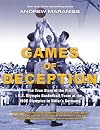
Basketball made its debut as an Olympic sport at the 1936 Games in Berlin. The United States sent a team but it was against the backdrop of Hitler and Nazi Germany. The roots of the team were in Hollywood and a tire factory in Ohio. A Jewish team member consulted on whether to go to the Olympics and decided to play. When the Olympians arrive, they are feted and celebrated but many also noted the Germans’ disturbing fanaticism for Hitler. The medalist games were played outdoors in the rain show more and what became a mud pit, where the ball was slippery and could not bounce in the mud. In the end it would be the first gold in basketball for the United States. This was also the Olympics with Jesse Owens and the “Boys in the Boat.” Compelling storytelling, forward pacing, presents the key players as integral and interesting parts of the hole. Background and history set the scene. show less
Lists
Recreation (1)
Awards


You May Also Like


Statistics
- Works
- 11
- Members
- 450
- Popularity
- #54,505
- Rating
- 4.1
- Reviews
- 14
- ISBNs
- 42