
Erin Claiborne
Author of A Hero at the End of the World
Works by Erin Claiborne
Associated Works
Tagged
Common Knowledge
- Gender
- female
- Occupations
- teacher
- Nationality
- USA
- Birthplace
- USA
- Places of residence
- USA
Canada
South Korea
London, England, UK
Members
Reviews
Wow. This book is pretty awesome! I enjoyed every minute I spent reading it, and it didn't take long since I couldn't put it down. An acquaintance of mine mentioned that she had read this book and really liked it, and while doing some research for a grad project I discovered the publisher, Big Bang Press. (They are doing some cool stuff. You should look them up.) I saw this book on the website and realized it was the same one my acquaintance was talking about. I read the synopsis and had to show more have it. It proved to be one of the best purchase decisions I've made in a while.
The book is a light-hearted satire on the 'chosen one' motif that is so prevalent in YA fantasy and fantasy in general. Erin Claiborne masterfully shows her readers that while she pokes fun at this form of storytelling, it stills holds a very special place in her heart. A feeling that I believe many YA fantasy and sci-fi readers share. It's healthy to poke fun at the things you love, and this book proves that this fun can be just as good as what inspires it.
The characters in this book are really lovable, flaws and all (because what lovable character doesn't have those) and you find yourself rooting for everyone and hating no one. The dialogue between the characters was amazing and made me laugh out loud. I sometimes got weird looks for this, but I was having too much fun to care. I couldn't help but be completely invested in their lives which made the story that much more moving and funny.
A Hero at the End of the World is both hilarious and sincere in its depiction of a broken friendship, the difficulties of having to live up to exceedingly high expectations, and the pain that follows when those expectations aren't met. Many can relate to these characters on many levels. Who hasn't failed at something and felt devastated after? Or conversely, let a success go to their head? It's human. It's funny. It's touching. It's everything you could ever want from a YA novel, or any fantasy novel for that matter.
I will recommend this book to basically everyone I talk to. I am really looking forward to reading more from Erin Claiborne, whether she writes in this universe again or not. show less
The book is a light-hearted satire on the 'chosen one' motif that is so prevalent in YA fantasy and fantasy in general. Erin Claiborne masterfully shows her readers that while she pokes fun at this form of storytelling, it stills holds a very special place in her heart. A feeling that I believe many YA fantasy and sci-fi readers share. It's healthy to poke fun at the things you love, and this book proves that this fun can be just as good as what inspires it.
The characters in this book are really lovable, flaws and all (because what lovable character doesn't have those) and you find yourself rooting for everyone and hating no one. The dialogue between the characters was amazing and made me laugh out loud. I sometimes got weird looks for this, but I was having too much fun to care. I couldn't help but be completely invested in their lives which made the story that much more moving and funny.
A Hero at the End of the World is both hilarious and sincere in its depiction of a broken friendship, the difficulties of having to live up to exceedingly high expectations, and the pain that follows when those expectations aren't met. Many can relate to these characters on many levels. Who hasn't failed at something and felt devastated after? Or conversely, let a success go to their head? It's human. It's funny. It's touching. It's everything you could ever want from a YA novel, or any fantasy novel for that matter.
I will recommend this book to basically everyone I talk to. I am really looking forward to reading more from Erin Claiborne, whether she writes in this universe again or not. show less
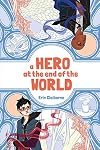
I learned about this one via KizunaYueMichaelis' review of it. Although the review basically boiled down to “meh,” I loved Jade Liebes' cover art, so I decided to give the book a shot.
Imagine a world where prophecy states that a specific boy would be the one to defeat a tyrant. That boy spends years thinking that it's his destiny to be a hero, and everyone around him goes easy on him because, well, he's the prophesied hero. Then the time comes for him to carry out his destiny...and he show more chickens out, delays the final battle, and his handsome and smart best friend kills the tyrant instead. This is Ewan Mao's story.
Fast forward five years, and Ewan has a dead-end job at a crappy coffee shop while Oliver Abrams, his former best friend, is a rising star at the Home Office's Serious Magical Crimes Agency (SMCA). When Ewan is approached by Archibald Gardener Hobbes (aka Archie) about an alternative magical system that's supposed to be able to change lives, he is, at first, annoyed and desperate to be left alone. When he eventually caves, he's told that he can be everything he ever hoped he could be. The only catch is, he has to convince Oliver to kill someone first. Which sounds suspiciously evil. But if the person Ewan convinces Oliver to kill is evil, then that would make Ewan a hero, right?
The framework of this world is going to feel familiar to anyone who knows a little about the Harry Potter series. Duff Slan was Voldemort, Ewan had Harry Potter's “chosen one” role, and the agents of the SMCA were basically Aurors. However, Ewan and Oliver's world didn't have non-magical “Muggles” and wizards - as far as I could tell, everyone was magical, although the type of magic people used varied.
Alapomancers like Oliver and Ewan drew their magic from totems. If their totems were drained dry or taken away from them, they were helpless. Dréags, like Oliver's partner Sophie, drew their magic from their own bodies. While they didn't have to worry about being separated from their source of magic, their lifespans were shorter. The appeal of Zaubernegativum, the alternative magical system Archie and his mother dangled in front of Ewan's nose, was that magic could be drawn from anything, and there was no limit to how much could be gathered and used. The magical systems in this book didn't really interest me all that much, although I was curious about whether Zaubernegativum actually worked and whether it would destroy the world. Nearly everyone but Archie and his mother seemed to think it was nothing more than a crazy theory.
This book's biggest appeal, for me, was its humor. Ewan had a gift for making terrible decisions, and almost all of the characters lacked the ability to see the things that were right in front of their noses. There were loads of funny moments: Oliver's unquestioning acceptance of his superiors referring to themselves as “Shadowy Figures,” Ewan discovering to his dismay that making coffee was always his destiny, the incredibly obvious romantic relationships (both m/f and m/m) that kept coming as a complete surprise to everyone, and more.
Unfortunately, one big thing kept me from fully enjoying the story: I disliked almost all of the characters. Ewan was a lazy, cowardly, whining man-child who allowed one moment to define his entire life. Oliver was full of himself. Archie was annoying and had difficulty thinking for himself. Sophie was pretty much the only one I liked. She wasn't afraid to let Oliver know when he was acting like a jerk.
While the characters all recognized their mistakes and apologized for the things they'd done wrong by the end of the book, for the most part it felt like too little, too late. I was okay with Oliver, especially because I figured Sophie would be happy to deflate his ego whenever necessary, but I never managed to get past the horrible stuff Ewan and Archie either did or chose to ignore.
All in all, this was good for a few laughs, and I liked how Claiborne messed with the stereotypical “chosen one” story.
Extras:
There are black-and-white illustrations throughout the book.
(Original review, with read-alikes, posted on A Library Girl's Familiar Diversions.) show less
Imagine a world where prophecy states that a specific boy would be the one to defeat a tyrant. That boy spends years thinking that it's his destiny to be a hero, and everyone around him goes easy on him because, well, he's the prophesied hero. Then the time comes for him to carry out his destiny...and he show more chickens out, delays the final battle, and his handsome and smart best friend kills the tyrant instead. This is Ewan Mao's story.
Fast forward five years, and Ewan has a dead-end job at a crappy coffee shop while Oliver Abrams, his former best friend, is a rising star at the Home Office's Serious Magical Crimes Agency (SMCA). When Ewan is approached by Archibald Gardener Hobbes (aka Archie) about an alternative magical system that's supposed to be able to change lives, he is, at first, annoyed and desperate to be left alone. When he eventually caves, he's told that he can be everything he ever hoped he could be. The only catch is, he has to convince Oliver to kill someone first. Which sounds suspiciously evil. But if the person Ewan convinces Oliver to kill is evil, then that would make Ewan a hero, right?
The framework of this world is going to feel familiar to anyone who knows a little about the Harry Potter series. Duff Slan was Voldemort, Ewan had Harry Potter's “chosen one” role, and the agents of the SMCA were basically Aurors. However, Ewan and Oliver's world didn't have non-magical “Muggles” and wizards - as far as I could tell, everyone was magical, although the type of magic people used varied.
Alapomancers like Oliver and Ewan drew their magic from totems. If their totems were drained dry or taken away from them, they were helpless. Dréags, like Oliver's partner Sophie, drew their magic from their own bodies. While they didn't have to worry about being separated from their source of magic, their lifespans were shorter. The appeal of Zaubernegativum, the alternative magical system Archie and his mother dangled in front of Ewan's nose, was that magic could be drawn from anything, and there was no limit to how much could be gathered and used. The magical systems in this book didn't really interest me all that much, although I was curious about whether Zaubernegativum actually worked and whether it would destroy the world. Nearly everyone but Archie and his mother seemed to think it was nothing more than a crazy theory.
This book's biggest appeal, for me, was its humor. Ewan had a gift for making terrible decisions, and almost all of the characters lacked the ability to see the things that were right in front of their noses. There were loads of funny moments: Oliver's unquestioning acceptance of his superiors referring to themselves as “Shadowy Figures,” Ewan discovering to his dismay that making coffee was always his destiny, the incredibly obvious romantic relationships (both m/f and m/m) that kept coming as a complete surprise to everyone, and more.
Unfortunately, one big thing kept me from fully enjoying the story: I disliked almost all of the characters. Ewan was a lazy, cowardly, whining man-child who allowed one moment to define his entire life. Oliver was full of himself. Archie was annoying and had difficulty thinking for himself. Sophie was pretty much the only one I liked. She wasn't afraid to let Oliver know when he was acting like a jerk.
While the characters all recognized their mistakes and apologized for the things they'd done wrong by the end of the book, for the most part it felt like too little, too late. I was okay with Oliver, especially because I figured Sophie would be happy to deflate his ego whenever necessary, but I never managed to get past the horrible stuff Ewan and Archie either did or chose to ignore.
All in all, this was good for a few laughs, and I liked how Claiborne messed with the stereotypical “chosen one” story.
Extras:
There are black-and-white illustrations throughout the book.
(Original review, with read-alikes, posted on A Library Girl's Familiar Diversions.) show less
This was part of a Humble Bundle I bought a number of years ago where the theme was "Made Through Kickstarter". I decided to finally read this one to satisfy this year's Reddit Bingo "Self-published / Indie Publisher" square. From what I understand, this writer started out doing fanfic, and then published this book through Kickstarter that also helped fund an Indie press that published three books. I think where this book fell short for me was that the characters were very...one dimensional. show more Ewan, one of the protagonists of this story is so boring. He's just existing and he has nothing to endear him to the reader, no likable qualities, nothing to root for, he's just there. Oliver is very assertive and heroic, and at least he tries to do things. Ewan just reacts to things throughout almost the entire book. Sophie is sick of everyone's mess and that's about it. Archie is the rich kid whose actions also don't make sense. I found the budding romance between him and Ewan to be very unbelievable because neither character had qualities worth falling for. The story was a bit all over the place and had some pacing issues. The ending was a bit anticlimactic but also kind of saccharine. Ewan finally had some growth as a character, as well as Oliver. But for whatever reason, as I was reading this, it never quite made sense to me. Until now. If you take this as some sort of Harry Potter fanfic, but names and descriptions changed, but basic character archetypes retained, it makes more sense. The author didn't spend time developing these characters, because if you read HP, it is assumed you'd know them. But this isn't fanfic, this is a separate novel, so that's where it ultimately failed for me show less
PROLOGUE
I WILL NOT begin my review by comparing this book to "Harry Potter".
I VEHEMENTLY REFUSE. And so, I hope, will you.
There was a world of magic before "Harry Potter", alongside it, and there is still one afterwards.
"Harry Potter" does NOT hold monopoly on magic, schools, magic schools, prophecies, destiny, heroic quests etc.
I am tired of people treating it like it does. DESIST!
THE ACTUAL REVIEW
I've come across this book through one of the book blogs I follow and was intrigued. So I show more thought I'd try to get the book. Did. (thankfully I borrowed, not bought)
'I like it but I don't. Eh?? What?'
That about sums up my experience with this one.
You see, I liked the idea and it started off well. But somewhere in the middle... it lost its spark?
Only 3 hours after finishing the book, I don't really remember it. All those little comments in Reading Progress? I already forgot what those were about. That's a horrible sign. A full-on Red Alert.
It was a fast fun read.
But I felt like quitting half-way through.
The world is blurry, not defined properly. That's a shame.
(And how on earth do you determine evil? There's an almost dictatorship there, no?)
One of the worst things is proof reading. Not sure there was any of that. I don't like being distracted from the story by a bunch of typos and whatnot. There goes a whole star right there.
Not to say the book was bad.
It read fast, and the characters were normal messed up people (I love psychological explorations done right)
Psychologically speaking, the emotional side was believable - resentment, and hurt, and depression, and loss of direction...
But it doesn't have enough to get me emotionally involved with the story. I just did not feel invested.
EPILOGUE/VERDICT
I would not really push anyone to read it. I do recognize that there are people who would absolutely adore this book. But I'm not one of them.
It's promising, but rather MEH. show less
I WILL NOT begin my review by comparing this book to "Harry Potter".
I VEHEMENTLY REFUSE. And so, I hope, will you.
There was a world of magic before "Harry Potter", alongside it, and there is still one afterwards.
"Harry Potter" does NOT hold monopoly on magic, schools, magic schools, prophecies, destiny, heroic quests etc.
I am tired of people treating it like it does. DESIST!
THE ACTUAL REVIEW
I've come across this book through one of the book blogs I follow and was intrigued. So I show more thought I'd try to get the book. Did. (thankfully I borrowed, not bought)
'I like it but I don't. Eh?? What?'
That about sums up my experience with this one.
You see, I liked the idea and it started off well. But somewhere in the middle... it lost its spark?
Only 3 hours after finishing the book, I don't really remember it. All those little comments in Reading Progress? I already forgot what those were about. That's a horrible sign. A full-on Red Alert.
It was a fast fun read.
But I felt like quitting half-way through.
The world is blurry, not defined properly. That's a shame.
(And how on earth do you determine evil? There's an almost dictatorship there, no?)
One of the worst things is proof reading. Not sure there was any of that. I don't like being distracted from the story by a bunch of typos and whatnot. There goes a whole star right there.
Not to say the book was bad.
It read fast, and the characters were normal messed up people (I love psychological explorations done right)
Psychologically speaking, the emotional side was believable - resentment, and hurt, and depression, and loss of direction...
But it doesn't have enough to get me emotionally involved with the story. I just did not feel invested.
EPILOGUE/VERDICT
I would not really push anyone to read it. I do recognize that there are people who would absolutely adore this book. But I'm not one of them.
It's promising, but rather MEH. show less
Lists
Awards

You May Also Like
Associated Authors
Statistics
- Works
- 3
- Also by
- 1
- Members
- 144
- Popularity
- #143,280
- Rating
- 3.4
- Reviews
- 8
- ISBNs
- 3