
Saroo Brierley
Author of A Long Way Home: A Memoir
About the Author
Saroo Brierley was born in 1981 in Madhya Pradesh, India. He was adopted by an Australian family at 5 years old after being separated from his biological mother. At the age of 30 he was reunited with his biological mother after many years of searching. His account of this experience was published show more in 2013 in the book, A Long Way Home. It was later made into the film 'Lion' in 2016 starring Dev Patel. His book unfolds the story of Saroo and his older brother Guddu becoming separated at a train station in India as they are searching for food. Saroo ends up falling asleep on a train and travels 1.500 kilometers from his hometown. His attempts to find his way home are unsuccessful and he is later adopted into an Australian family. It is years later that he is able to find his way back home with the help of Google Earth. In 2016 the film 'Lion' was released which was based on his life's journey. It was directed by Garth Davis and starred Dev Patel, Nicole Kidman and Rooney Mara. (Bowker Author Biography) show less
Works by Saroo Brierley
Tagged
Common Knowledge
- Legal name
- Khan, Sheru Munshi (birth name)
- Birthdate
- 1981
- Gender
- male
- Education
- Australian International Hotel School
- Occupations
- businessman
memoirist - Nationality
- India
Australia - Birthplace
- Khandwa, Madhya Pradesh, India
- Places of residence
- Hobart, Tasmania, Australia
Canberra, Australian Capital Territory, Australia
Khandwa, Madhya Pradesh, India - Associated Place (for map)
- Australia
Members
Reviews
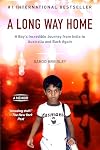
I listened to this book in audiobook format. First and foremost, I have to say I was riveted by Brierley's story. As a young child born into a very poor family in India, he follows his older brother one evening on some adventure. When he tires, his brother tells him to sit on the bench at the train station and not move, that he will return for him soon. Saroo falls asleep, and when he awakens, his brother still has not returned. Saroo enters a seemingly abandoned train car, seeking a more show more comfortable bench and falls asleep again. The train begins to move and he is trapped, unable to get out or contact anyone. He arrives, many hours later, in Calcutta, very far from home and completely lost. He does not know his last name, or the name of his town. He survives somehow on the streets, scavenging for food, avoiding the perils that surely claim many in such dire conditions until, finally, he is taken to an agency for lost or orphaned children. Did I mention that he is all of 5 years old, at this time?! It is mind-boggling to imagine that such a young child would have wits enough to make it through. Through sheer luck and good fortune (karma?), he is adopted by a loving Australian family, grows up in Hobart, Tasmania, and has a good life. However, he has always had the *map* in his head of his home town and in his mid-20s, with the help of Google Earth, he begins to search for that original home and family. It takes some years but he succeeds and this book chronicles that journey.
A really excellent read. show less
A really excellent read. show less

The latest edition of Saroo Brierley's "A Long Way Home" has been renamed "Lion," the title of the feature film based on Saroo's amazing but true story. Brierley relates his odyssey from India to Hobart, Tasmania—from abject poverty, hunger, and illiteracy to a comfortable house, nourishing meals, and educational opportunities—but he also describes his longing to locate the birth family he had not seen in twenty-five years. In simple but eloquent prose (kudos to Brierley and his show more co-author Larry Buttrose), Saroo recalls how he survived as an impoverished youngster in a small town in central India. He, along with his single mother, Kamla, and his three siblings had to scrounge daily for food. Kamla hauled rocks for a living, while her four children begged, stole, and scavenged to keep starvation at bay. They were close-knit, but living on the edge took its toll.
One evening in 1986, fourteen-year-old Guddu, Saroo's brother, reluctantly agreed to allow Saroo to accompany him on his nocturnal wanderings. Unfortunately, the five-year-old Saroo, who spoke only Hindi, inadvertently ended up on a train that took him to Calcutta, 930 miles away from home. Saroo was terrified and unable to communicate with the Bengali speakers he encountered in the bustling city. Brierley poignantly describes his despair, but credits resilience, resourcefulness, street smarts, the kindness of strangers, and good luck for his ability to emerge from his ordeal relatively unscathed.
A loving couple from Australia adopted six-year-old Saroo in 1987. However, he still dreamed about his past and hoped someday to visit his relatives in India. The problem was that he did not remember the name of the place from which he came. This memoir is a fitting tribute to the kindness of those who went out of their way to help a lost child. In addition, the author educates us about the huge number of homeless children in India who are vulnerable to exploitation by predatory adults. Saroo, now thirty-five, realizes that he could have easily ended up as just another sad statistic. "Lion" celebrates the unbreakable bond between a sensitive young man and his two families—both in India and Australia. The black and white photographs add texture to this engrossing account of an incredible and inspiring journey. show less
One evening in 1986, fourteen-year-old Guddu, Saroo's brother, reluctantly agreed to allow Saroo to accompany him on his nocturnal wanderings. Unfortunately, the five-year-old Saroo, who spoke only Hindi, inadvertently ended up on a train that took him to Calcutta, 930 miles away from home. Saroo was terrified and unable to communicate with the Bengali speakers he encountered in the bustling city. Brierley poignantly describes his despair, but credits resilience, resourcefulness, street smarts, the kindness of strangers, and good luck for his ability to emerge from his ordeal relatively unscathed.
A loving couple from Australia adopted six-year-old Saroo in 1987. However, he still dreamed about his past and hoped someday to visit his relatives in India. The problem was that he did not remember the name of the place from which he came. This memoir is a fitting tribute to the kindness of those who went out of their way to help a lost child. In addition, the author educates us about the huge number of homeless children in India who are vulnerable to exploitation by predatory adults. Saroo, now thirty-five, realizes that he could have easily ended up as just another sad statistic. "Lion" celebrates the unbreakable bond between a sensitive young man and his two families—both in India and Australia. The black and white photographs add texture to this engrossing account of an incredible and inspiring journey. show less
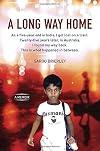
This is my first review for the Early Reviews on Librarything. I received the book late on a Thursday and picked it up that Friday evening and read the whole book. It is a fast read. The story, by western standards, is unimaginable. A small child around 5 years old and younger basically surviving on his own instincts. He becomes separated from his older brother one night after jumping on a train and going to a neighboring village....this is where the story really begins. He ends up on a show more train, and after an indeterminable amount of time lands in Calcutta. That he can survive at such a young age in the city of Calcutta tells you a lot about this persons forttitude. He eventually ends up adopted and living in Australia. I don't want to retell the whole here, it is worth reading.
There is some repetitiveness about the story, which I always find irritating, since I don't feel I need to be told over and over the same thing. But generally the story moves along. The beginning when he is recalling his life with his family and mother in their village I felt the voice was that of a young child, but when he got to his later life it took on a more mature voice.
The letter from the editor said it was a book about " what drives the human spirit: hope. I saw something else in this story.....the incredible connection we as humans have for our roots....not just our place of origin, but our actual orgin....our mother. The author mentioned several times that he felt he was Australian....but he went to incredible lengths to find his home. That bond and our desire to know and have that bond is imprinted on us. That to me is the really story.
I decided to,add this after some thought. This would be a great book for people who are considering adoption to read. The yearning to find ones "true family" even if they have loving adoptive parents can't be denied. This book details that very well. show less
There is some repetitiveness about the story, which I always find irritating, since I don't feel I need to be told over and over the same thing. But generally the story moves along. The beginning when he is recalling his life with his family and mother in their village I felt the voice was that of a young child, but when he got to his later life it took on a more mature voice.
The letter from the editor said it was a book about " what drives the human spirit: hope. I saw something else in this story.....the incredible connection we as humans have for our roots....not just our place of origin, but our actual orgin....our mother. The author mentioned several times that he felt he was Australian....but he went to incredible lengths to find his home. That bond and our desire to know and have that bond is imprinted on us. That to me is the really story.
I decided to,add this after some thought. This would be a great book for people who are considering adoption to read. The yearning to find ones "true family" even if they have loving adoptive parents can't be denied. This book details that very well. show less
 This review was written for LibraryThing Early Reviewers.
You may remember a news story from a couple of years ago, about a poor young boy in India who lost his family when he was five years old by getting on the wrong train. When efforts to find his family failed, he was put up for adoption and ended up being raised in Australia. Then, almost miraculously, he managed to find his birth family again more than 20 years later by using Google Earth to identify his old neighbourhood. This is his story, and I found it a fascinating one.
The first part, show more about his early life in India, is the most shocking. Saroo came from a poor family, and faced a daily, unsuccessful struggle to find enough food to eat. After getting lost, he spent several weeks living on the streets of Calcutta (as Kolkata was known then), relying on instinct to stay alive. The nightmares that he endured were made tolerable to read about by knowing all along that everything would have a happy ending, but it was still disturbing to see what sort of life can be considered normal by a five-year-old who has never known anything else. Saroo adapted fairly easily to life on the streets, because begging and scavenging for food were what he was used to at home anyway. His resilience is striking, and makes what could be a bleak and depressing tale seem almost optimistic.
I enjoyed reading about his transition to life in Australia, and his amazement at the luxuries that were suddenly available to him. I actually would have liked more detail in this section, which moves quickly from his initial impressions to his life as a teenager and young adult, without spending much time on his childhood. But I guess that's largely peripheral to the main story, and the book does have the advantage of moving along quickly. I think this is my fastest read of the year so far.
There's not much to say about Saroo's hours and months spent scouring Google Earth; it was laborious work, but it finally paid the ultimate dividends, and we get to enjoy the heartwarming story of his reunion with his birth family. This book as a whole manages to be both eye-opening and informative and also almost a comfort read; you know all along that the happy ending is coming. I enjoyed it, and I suspect that many other readers will too. show less
The first part, show more about his early life in India, is the most shocking. Saroo came from a poor family, and faced a daily, unsuccessful struggle to find enough food to eat. After getting lost, he spent several weeks living on the streets of Calcutta (as Kolkata was known then), relying on instinct to stay alive. The nightmares that he endured were made tolerable to read about by knowing all along that everything would have a happy ending, but it was still disturbing to see what sort of life can be considered normal by a five-year-old who has never known anything else. Saroo adapted fairly easily to life on the streets, because begging and scavenging for food were what he was used to at home anyway. His resilience is striking, and makes what could be a bleak and depressing tale seem almost optimistic.
I enjoyed reading about his transition to life in Australia, and his amazement at the luxuries that were suddenly available to him. I actually would have liked more detail in this section, which moves quickly from his initial impressions to his life as a teenager and young adult, without spending much time on his childhood. But I guess that's largely peripheral to the main story, and the book does have the advantage of moving along quickly. I think this is my fastest read of the year so far.
There's not much to say about Saroo's hours and months spent scouring Google Earth; it was laborious work, but it finally paid the ultimate dividends, and we get to enjoy the heartwarming story of his reunion with his birth family. This book as a whole manages to be both eye-opening and informative and also almost a comfort read; you know all along that the happy ending is coming. I enjoyed it, and I suspect that many other readers will too. show less
This review was written for LibraryThing Early Reviewers.Lists
Awards


You May Also Like


Associated Authors
Statistics
- Works
- 6
- Members
- 1,570
- Popularity
- #16,442
- Rating
- 4.0
- Reviews
- 72
- ISBNs
- 85
- Languages
- 9
