
Malala Yousafzai
Author of I Am Malala: The Girl Who Stood Up for Education and Was Shot by the Taliban
About the Author
Malala Yousafzai was born in the Swat Valley of Pakistan on July 12, 1997. In 2009, she wrote a diary for BBC using a pen name about the critical situation in Swat at that time. On October 8, 2012, she was attacked by the Taliban while returning home from school. I Am Malala: The Girl Who Stood up show more for Education and Was Shot by the Taliban is her first book. She won the 2014 Nobel Peace Prize. In 2015 she launched the #BooksNotBullets campaign on social media to pressure world leaders to invest in education rather than the military. Yousafzai asks low- and middle-income countries to commit a minimum of 20% of national budgets on education, rather than the current average of 15%. (Bowker Author Biography) show less
Image credit: Malala Yousafzai [By Russell Watkins/Department for International Development.]
Works by Malala Yousafzai
I Am Malala: The Girl Who Stood Up for Education and Was Shot by the Taliban (2013) 7,988 copies, 291 reviews
I Am Malala: How One Girl Stood Up for Education and Changed the World {Young Readers Edition} (2016) 3,463 copies, 80 reviews
We Are Displaced: My Journey and Stories from Refugee Girls Around the World (2019) 509 copies, 11 reviews
I Am Malala: The Girl Who Stood Up for Education and Was Shot by the Taliban [Quick Reads Edition] (2016) 15 copies
Tagged
Common Knowledge
- Other names
- Makai, Gul
- Birthdate
- 1997-07-12
- Gender
- female
- Education
- Lady Margaret Hall, University of Oxford (BA|2020)
- Occupations
- activist
- Organizations
- Malala Fund
- Awards and honors
- Sakharov Prize for Freedom of Thought (2013)
Nobel Prize (Peace, 2014) - Relationships
- Malik, Asser (husband)
- Short biography
- https://malala.org/malalas-story
- Nationality
- Pakistan
- Birthplace
- Mingora, Khyber Pakhtunkhwa, Pakistan
- Places of residence
- Mingora, Pakistan
Birmingham, England, UK - Map Location
- Pakistan
Members
Discussions
Biography Group Read, 4th Quarter: I am Malala by Malala Yousafzai and Christina Lamb, General Discussion in 2014 Category Challenge (December 2014)
Reviews
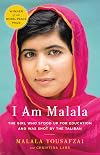
Malala was raised by a father who believed in the education of all Pakistanis, including girls. He sacrificed much to open a school for girls, including death threats when the Taliban started wielding increased power in Afghanistan and Pakistan. Malala found her worth in knowledge and in competing with other girls in her class. Her father's cause quickly became her own and she was a public speaker about educating girls for many months before the incident that brought her worldwide attention. show more Malala brings beauty to the impoverished way of life in Swat Valley. She is fiercely proud of her heritage, even while she criticizes its treatment of women. She draws clear lines between the true teachings of Islam and what the Taliban and others claim as religious belief. The lives of many in Pakistan were changed forever by the extremist beliefs enforced by the Taliban and ignored by the government. Though her story occasionally gets bogged down in political detail, Malala's passion and determination shine through, leaving the reader awed by the sheer will and bravery of one teenage girl. show less
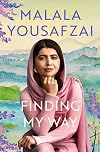
Whereas the bestselling "I Am Malala" made Malala Yousafzai a hero, this book makes her human. It is Malala's voice entirely, discarding the ghost writer from her previous book. After being shot by the Taliban, earning world-wide fame and becoming the youngest winner in history of a Nobel prize, this is Malala's actual coming-of-age story. And why shouldn't it be? So much of life's experience still lay ahead of her. Throughout this book, she both insists and demonstrates that the world's show more image of her doesn't fully capture her real personality. There is no need to have read her other book, or even to know her from the headlines, to appreciate what she shares here.
It is the story of an Oxford education, perhaps typical of many experiences in some ways, but with unique twists: her fame that precedes her, her ever present security, the fish-out-of-water feeling attached to her longing for home in Pakistan, and her ongoing work she continues in parallel to promote women's education. I appreciated the level of detail about a student's routine at Oxford, a far cry from my own school experience. I thought her reputation's intrusion would be a major part of the story but this happens remarkably rarely, if at all. The friends she made weren't fazed in the least, not even when her face appeared larger than life alongside world leaders in a poster for the debate club. More of a factor is her being constantly concerned about photographers catching her off guard at casual moments who might impact her image in Pakistan and her mission.
She is a bit more critical this time of her parents and the media, but still fair in her assessments of their help and hindrances. She can see them now through an adult's eyes, and appreciate what she could not before. Her openness about her mental health experiences and therapy hopefully adds to the positive impact she has as an influencer. Acknowledging these challenges and how to deal with them may go a long way to helping others. Asser is an extraordinary man, able to say the right things in the right circumstances, and at times I had to remember I was not reading a very good romance novel. Malala is very fortunate to have found him. She is barely more than half my age, and yet she continues to teach me things about multiple topics with a deeply affecting voice. I hope she continues to write so that I can continue to learn. show less
It is the story of an Oxford education, perhaps typical of many experiences in some ways, but with unique twists: her fame that precedes her, her ever present security, the fish-out-of-water feeling attached to her longing for home in Pakistan, and her ongoing work she continues in parallel to promote women's education. I appreciated the level of detail about a student's routine at Oxford, a far cry from my own school experience. I thought her reputation's intrusion would be a major part of the story but this happens remarkably rarely, if at all. The friends she made weren't fazed in the least, not even when her face appeared larger than life alongside world leaders in a poster for the debate club. More of a factor is her being constantly concerned about photographers catching her off guard at casual moments who might impact her image in Pakistan and her mission.
She is a bit more critical this time of her parents and the media, but still fair in her assessments of their help and hindrances. She can see them now through an adult's eyes, and appreciate what she could not before. Her openness about her mental health experiences and therapy hopefully adds to the positive impact she has as an influencer. Acknowledging these challenges and how to deal with them may go a long way to helping others. Asser is an extraordinary man, able to say the right things in the right circumstances, and at times I had to remember I was not reading a very good romance novel. Malala is very fortunate to have found him. She is barely more than half my age, and yet she continues to teach me things about multiple topics with a deeply affecting voice. I hope she continues to write so that I can continue to learn. show less

Educational rights activist and Nobel Peace Prize-winner Malala Yousafzai describes her childhood in Pakistan's Swat Valley in this lovely, deeply poignant and inspirational picture-book. Growing up, Malala wished that she had the magical pencil possessed by the hero of one of her favorite television shows, imagining all the ways she could improve both her own life and the world around her. When the Taliban took over her region, outlawing education for girls, she realized that although she show more didn't have a magical pencil, she did have a voice - a voice she could use to promote the right of girls to go to school. Attacked for her work, Malala survived, and went on to become one of the world's most recognizable figures in this field of activism...
Malala Yousafzai has written both an adult memoir, and a young reader's version of that adult memoir, but Malala's Magic Pencil is aimed at younger children, at the preschool and early primary school level. Given that this is so, it's important to note that some of the most disturbing elements of her story - the fact that the Taliban attempted to assassinate her, for instance - are treated very obliquely here. The episode is covered in a two-page spread, the right-hand page a solid black, with the words "My voice became so powerful that dangerous men tried to silence me. But they failed" on it, and the left-hand page showing Malala at a window, wearing a hospital bracelet. This seems like a good way to handle the issue given the age of the audience, concentrating on the motives behind the attack and its failure, rather than on its violence. The moving narrative here is well-matched by the gorgeous artwork of Kerascoët, a pseudonym used by the husband and wife team of Sébastien Cosset and Marie Pommepuy. The illustrations are very expressive, in the human scenes, but there is an element of visual magic too, when Malala is using her pen, and the endpapers are beautifully decorative. All in all, a lovely picture-book introduction to this important figure, one I would recommend to young children interested in their peers around the world, or to anyone searching for children's books that emphasize what a vital blessing access to educations is. show less
Malala Yousafzai has written both an adult memoir, and a young reader's version of that adult memoir, but Malala's Magic Pencil is aimed at younger children, at the preschool and early primary school level. Given that this is so, it's important to note that some of the most disturbing elements of her story - the fact that the Taliban attempted to assassinate her, for instance - are treated very obliquely here. The episode is covered in a two-page spread, the right-hand page a solid black, with the words "My voice became so powerful that dangerous men tried to silence me. But they failed" on it, and the left-hand page showing Malala at a window, wearing a hospital bracelet. This seems like a good way to handle the issue given the age of the audience, concentrating on the motives behind the attack and its failure, rather than on its violence. The moving narrative here is well-matched by the gorgeous artwork of Kerascoët, a pseudonym used by the husband and wife team of Sébastien Cosset and Marie Pommepuy. The illustrations are very expressive, in the human scenes, but there is an element of visual magic too, when Malala is using her pen, and the endpapers are beautifully decorative. All in all, a lovely picture-book introduction to this important figure, one I would recommend to young children interested in their peers around the world, or to anyone searching for children's books that emphasize what a vital blessing access to educations is. show less
alala, as she is simply called, is widely known as the girl who stood up to the Taliban for girls’ education. She paid for it by being shot in the face, but amazingly survived. She spent the rest of her youth in Manchester in Britain, protected by a security detail against would-be assassins. She started an international fund called the Malala Fund to aid girls’ education in needy countries. This book does not tell that heroic story, but instead tells her coming-of-age story at Oxford show more and easing into a marriage of her choice. We get to know her behind the bright lights.
As a trailblazer uprooting thousands of years of tradition, she sought to exemplify how young Pakistani women can choose their own life with autonomy. Of course, she made mistakes and admits such. But like almost any other college student, she learned to break free from the confines of her family to own her life.
She tells of adventures with students at Oxford, learning to make friends and balance her fundraising work. She talks openly about her academic and mental health struggles and how she learned to overcome them. She laments the fall of Afghanistan to the Taliban and the decimation of hope for girls’ autonomy.
Of course, she also details falling in love on her own, outside of the confines of an arrangement by her family. She ended up marrying the guy, but not first without struggling with how her marriage might work, without a hampering patriarchy and tradition. Every move she makes is accompanied with threats and insults, especially on social media, and she learned to disregard most of them. Still, her heavy responsibility is a heavy weight that led to mental health struggles with PTSD and panic attacks. She speaks openly about her therapy, with concepts relatively new to her and to her former corner of the world.
Her tale is ingratiating and should make any warm-hearted person fall in love with her! I enjoyed hearing her own voice on the audiobook. She remains a personal case for educating the most oppressed girls in the world and giving them real choices on how to live. It’s sad that she – and what she stands for – is even controversial, but I laud her courage to simply be herself. show less
As a trailblazer uprooting thousands of years of tradition, she sought to exemplify how young Pakistani women can choose their own life with autonomy. Of course, she made mistakes and admits such. But like almost any other college student, she learned to break free from the confines of her family to own her life.
She tells of adventures with students at Oxford, learning to make friends and balance her fundraising work. She talks openly about her academic and mental health struggles and how she learned to overcome them. She laments the fall of Afghanistan to the Taliban and the decimation of hope for girls’ autonomy.
Of course, she also details falling in love on her own, outside of the confines of an arrangement by her family. She ended up marrying the guy, but not first without struggling with how her marriage might work, without a hampering patriarchy and tradition. Every move she makes is accompanied with threats and insults, especially on social media, and she learned to disregard most of them. Still, her heavy responsibility is a heavy weight that led to mental health struggles with PTSD and panic attacks. She speaks openly about her therapy, with concepts relatively new to her and to her former corner of the world.
Her tale is ingratiating and should make any warm-hearted person fall in love with her! I enjoyed hearing her own voice on the audiobook. She remains a personal case for educating the most oppressed girls in the world and giving them real choices on how to live. It’s sad that she – and what she stands for – is even controversial, but I laud her courage to simply be herself. show less
Lists
Awards


You May Also Like


Associated Authors
Statistics
- Works
- 14
- Members
- 13,254
- Popularity
- #1,762
- Rating
- 4.2
- Reviews
- 440
- ISBNs
- 232
- Languages
- 25
- Favorited
- 4