
Pat Zietlow Miller
Author of Be Kind (Be Kind, 1)
About the Author
Image credit: via Audible
Series
Works by Pat Zietlow Miller
Unstoppable John: How John Lewis Got His Library Card--and Helped Change History (2025) 18 copies, 1 review
Güclü Olmak 2 copies
Wherever You Go 1 copy
Sophie's Squash 1 copy
Tagged
Common Knowledge
- Gender
- female
Members
Reviews
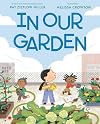
Gray days spur a child to come up with a creative solution to ennui.
Millie realizes that a rooftop garden could be just what the school needs. Millie shares their idea with the other students, who are initially skeptical. The teacher finally agrees, though a rooftop garden will be a lot of work. With the help of the community, they build their garden, and wait…and wait…and wait for their seeds to sprout and for the brown soil to be filled with colorful vegetables. Once sprouted and show more grown, the produce comes in a deluge, and all of the children get to take home veggies in an assortment of colors. Reminiscent of Christian Robinson’s art, Crowton’s extraordinary illustrations are appropriate for a child audience; Millie, who just moved from “more than an ocean away” and has pale skin and dark hair, and the racially diverse students look as though they could break the fourth wall and start talking to the reader. The primary colors are bright and clear and can easily be seen from a distance during a read-aloud. Miller’s lyrical prose is breezy and engaging, emphasizing how important teamwork is when it comes to creating a successful garden and that the waiting period between planting and growing can feel excruciating. (This book was reviewed digitally.)
A nourishing delight. (Picture book. 4-7) show less
Millie realizes that a rooftop garden could be just what the school needs. Millie shares their idea with the other students, who are initially skeptical. The teacher finally agrees, though a rooftop garden will be a lot of work. With the help of the community, they build their garden, and wait…and wait…and wait for their seeds to sprout and for the brown soil to be filled with colorful vegetables. Once sprouted and show more grown, the produce comes in a deluge, and all of the children get to take home veggies in an assortment of colors. Reminiscent of Christian Robinson’s art, Crowton’s extraordinary illustrations are appropriate for a child audience; Millie, who just moved from “more than an ocean away” and has pale skin and dark hair, and the racially diverse students look as though they could break the fourth wall and start talking to the reader. The primary colors are bright and clear and can easily be seen from a distance during a read-aloud. Miller’s lyrical prose is breezy and engaging, emphasizing how important teamwork is when it comes to creating a successful garden and that the waiting period between planting and growing can feel excruciating. (This book was reviewed digitally.)
A nourishing delight. (Picture book. 4-7) show less

child faced with a challenge learns about and practices being strong.
When this young narrator has to climb the wall in the school gymnasium, they don’t reach the top the way classmate Cayla can. The kid feels the opposite of strong. Family members tell the protagonist that being strong gets you through life, so the kid asks, “How can I be strong?” Each family member has advice. Being strong can look like “showing up,” “speaking up,” and “not giving up.” Each family member show more also lives an example of their words. The narrator, a small Black child with large, puffy hair, takes the advice of parents and grandmother. The kid practices being strong by showing up for friends, speaking out for peers, and not giving up when learning new things. The text is straightforward and immersive, with braided threads that are easy and delightful to follow. The illustrations are made up of busy spreads of neighborhood scenes and sparse scenes of individual and small group actions, making for a well-paced journey through the child’s experiences with family and community. This exploration of the true meaning of being strong is layered and lovely, provoking deep thought, feeling, and conversation about this important virtue and its corollaries—perseverance, leadership, and caring. (This book was reviewed digitally.)
Smart and warm. show less
When this young narrator has to climb the wall in the school gymnasium, they don’t reach the top the way classmate Cayla can. The kid feels the opposite of strong. Family members tell the protagonist that being strong gets you through life, so the kid asks, “How can I be strong?” Each family member has advice. Being strong can look like “showing up,” “speaking up,” and “not giving up.” Each family member show more also lives an example of their words. The narrator, a small Black child with large, puffy hair, takes the advice of parents and grandmother. The kid practices being strong by showing up for friends, speaking out for peers, and not giving up when learning new things. The text is straightforward and immersive, with braided threads that are easy and delightful to follow. The illustrations are made up of busy spreads of neighborhood scenes and sparse scenes of individual and small group actions, making for a well-paced journey through the child’s experiences with family and community. This exploration of the true meaning of being strong is layered and lovely, provoking deep thought, feeling, and conversation about this important virtue and its corollaries—perseverance, leadership, and caring. (This book was reviewed digitally.)
Smart and warm. show less
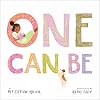
Thank you to NetGalley and the publisher, Broadleaf Books (Beaming Books) for this DRC in exchange for a fair and honest review. The thoughts and opinions expressed below are my own.
The book is a welcome reassurance to young readers who are natural introverts, or who simply enjoy spending time on their own. It reminds them that being alone does not necessarily mean that one is lonely. The young unnamed protagonist (who reminds me of myself at that age, down to the hairstyle and clothing show more choices) is shown smiling while creating on her own, aware og what's happening outside without showing any signs of sadness or feat about missing out. Author Zietlow Miller uses sparse but assertive statements in her poems about the positivity that can come from sitting with one's own ideas. In this way, the text provides good (and necessary) exposure for other young readers who thrive in being in large groups; opening up ways of understanding and connecting with their quieter classmates.
One thing that I loved about the book is that the little girl joins the neighborhood children in her own time, collaborating with them on her little free library idea. No one, adult or otherwise, push her to go out and play when she isn't ready, nor do they interrupt her during her quiet time inside. Zietlow Miller's narrative tone and Annie Cron's soft illustrations subtly reinforce that neither one of the environments, inside or outside, are better than the other. Each of them have appeal in their own way and have their own opportunities for fun. Her friends also wait patiently for her and are happy to see her join the group and get started right away on the project, which helps bring the neighborhood together even more.
This is the type of book that I would have gravitated to as a child, and I would purchase it for any friends and family members who have a similar "One" among them. This would also make a nice gift for those a little older than the target range, including adults, just as a reminder if they need to be encouraged. This would also make a good addition to a public and/or classroom library collection, to add to books that talk about personality differences. show less
The book is a welcome reassurance to young readers who are natural introverts, or who simply enjoy spending time on their own. It reminds them that being alone does not necessarily mean that one is lonely. The young unnamed protagonist (who reminds me of myself at that age, down to the hairstyle and clothing show more choices) is shown smiling while creating on her own, aware og what's happening outside without showing any signs of sadness or feat about missing out. Author Zietlow Miller uses sparse but assertive statements in her poems about the positivity that can come from sitting with one's own ideas. In this way, the text provides good (and necessary) exposure for other young readers who thrive in being in large groups; opening up ways of understanding and connecting with their quieter classmates.
One thing that I loved about the book is that the little girl joins the neighborhood children in her own time, collaborating with them on her little free library idea. No one, adult or otherwise, push her to go out and play when she isn't ready, nor do they interrupt her during her quiet time inside. Zietlow Miller's narrative tone and Annie Cron's soft illustrations subtly reinforce that neither one of the environments, inside or outside, are better than the other. Each of them have appeal in their own way and have their own opportunities for fun. Her friends also wait patiently for her and are happy to see her join the group and get started right away on the project, which helps bring the neighborhood together even more.
This is the type of book that I would have gravitated to as a child, and I would purchase it for any friends and family members who have a similar "One" among them. This would also make a nice gift for those a little older than the target range, including adults, just as a reminder if they need to be encouraged. This would also make a good addition to a public and/or classroom library collection, to add to books that talk about personality differences. show less

Author Pat Zietlow Miller and illustrator Patrice Barton join forces in Remarkably You, a new inspirational picture-book meant to encourage children to use their talents to do good things in the world. Whatever their personalities, whatever their interests, the rhyming text here exhorts the reader: "Don't sit on the sidelines. / Be part of the fray. / Go after your passions a little each day. / Find what needs fixing. / Repair what you can. / Then choose a new problem and do it again." show more Ending with a message of affirmation, the story concludes that the listener/reader is "remarkably you..."
Remarkably You is the second inspirational picture-book I have read in the last few days, following upon Samantha Berger's Rock What Ya Got. Unlike the Berger title, which I found somewhat unbalanced in its exploration of the idea of self-affirmation, here I thought that author Pat Zietlow Miller got it just right. Rather than being a rejection of change, as was the case in the well-meaning Rock What Ya Got, which seemed to equate any attempt at self-improvement as a form of self-hatred, here the narrative calls for change at the very beginning, encouraging readers to get involved in the world around them. Every bit as affirmational as the Berger book, with similar messages about self-acceptance, Remarkably You offers the kind of balance I mentioned as being missing, in my review of Rock What Ya Got. The engaging text here is paired with lovely artwork from illustrator Patrice Barton, whose work I have encountered (and enjoyed) in such titles as The Invisible Boy and Hello Goodbye Dog. All in all, a sweet new picture-book, one I would recommend to those looking for children's books that encourage both a sense of self worth and a sense of engagement with the wider world. show less
Remarkably You is the second inspirational picture-book I have read in the last few days, following upon Samantha Berger's Rock What Ya Got. Unlike the Berger title, which I found somewhat unbalanced in its exploration of the idea of self-affirmation, here I thought that author Pat Zietlow Miller got it just right. Rather than being a rejection of change, as was the case in the well-meaning Rock What Ya Got, which seemed to equate any attempt at self-improvement as a form of self-hatred, here the narrative calls for change at the very beginning, encouraging readers to get involved in the world around them. Every bit as affirmational as the Berger book, with similar messages about self-acceptance, Remarkably You offers the kind of balance I mentioned as being missing, in my review of Rock What Ya Got. The engaging text here is paired with lovely artwork from illustrator Patrice Barton, whose work I have encountered (and enjoyed) in such titles as The Invisible Boy and Hello Goodbye Dog. All in all, a sweet new picture-book, one I would recommend to those looking for children's books that encourage both a sense of self worth and a sense of engagement with the wider world. show less
Lists
Awards


You May Also Like


Associated Authors
Statistics
- Works
- 26
- Members
- 3,915
- Popularity
- #6,464
- Rating
- 4.2
- Reviews
- 155
- ISBNs
- 101
- Languages
- 3