
Iain S. Thomas
Author of Every Word You Cannot Say
About the Author
Works by Iain S. Thomas
What Makes Us Human: An Artificial Intelligence Answers Life's Biggest Questions (2022) 25 copies, 2 reviews
I Am Incomplete Without You: An Interactive Poetry Journal from the Author of I Wrote This For You (2016) 14 copies
Que nos hace Humanos 2 copies
Who You Were Before You Were You: A short book about hope, understanding and the lessons life teaches us. (2020) 1 copy
Associated Works
Disconnected: Poems & Stories of Connection and Otherwise (2018) — Contributor — 36 copies, 4 reviews
Tagged
Common Knowledge
- Gender
- male
- Nationality
- South Africa
- Places of residence
- Cape Town, South Africa
- Map Location
- South Africa
Members
Reviews
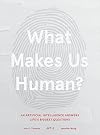
I can imagine that there will be two general reactions to this book. The first will be more positive, taking the project to be a worthwhile compilation of humanity’s collective spiritual wisdom. The second will be more critical, taking the project to be nothing more than a series of meaningless, random strings of words that more closely resemble the ramblings of New Age gurus and charlatans. Let’s see if we can work out which side is closer to the truth.
First, the majority of the book show more is written by GPT-3, a natural-language-processing artificial intelligence (AI) that was asked a series of philosophical questions, which it then answered by referencing a variety of classic religious and philosophical works such as the Bible, the Tao Te Ching, Meditations by Marcus Aurelius, Man’s Search for Meaning by Viktor Frankl, and more.
According to the most charitable interpretation of the project, the AI-generated answers represent an amalgamation of the best ideas humanity has yet developed regarding matters of great spiritual significance. GPT-3’s answers, then—rather than being random—are based on deep patterns of wisdom as reflected in the great books of the past.
In support of this interpretation is the fact that, as you read through the answers, discernable patterns do keep cropping up—ideas about connectedness, love, and the personal creation of meaning, which are repeated often and throughout the book. Clearly, these themes are common enough in humanity’s greatest works that GPT-3 was practically forced to reiterate them, and that in itself may represent an important insight about human psychology and practical wisdom. On this interpretation, you’re essentially reading humanity’s higher, collective mind.
The counter-argument, on the other hand, would hold that most (or maybe all) of GPT-3’s answers are indistinguishable from the sentences that various random-sentence-generator websites produce online for free, and are therefore essentially meaningless. As I have a suspicion that this may be closer to the truth, I’ve put together a list of sentences I generated from a particular random-sentence generator on the web—the New Age Bullshit Generator—mixed in with ones I pulled from the book. See if you can tell which ones specifically came from the book:
1. Although you may not realize it, you are divine.
2. You are part of everything, and everything is part of you.
3. To roam the world is to become one with it.
4. Do not allow the demands of the world and the control of the ego to keep you from the holy moment of now.
5. Conscious living is the growth of self-actualization, and of us.
6. Where there is suffering, presence cannot thrive.
7. If a warrior is standing in a river and the river begins to flood, the warrior knows to stand back from the onrushing water.
8. To navigate the mission is to become one with it.
9. You may be ruled by illusion without realizing it. Do not let it extinguish the richness of your story. Without freedom, one cannot live. We can no longer afford to live with illusion.
10. The pursuit of knowledge and freedom are really the same thing. They are different sides of the same coin.
11. Today, science tells us that the essence of nature is fulfillment. Will is the richness of aspiration, and of us.
12. Ask yourself if you are walking down the path of your soul, or just walking down a path. One will lead to greatness, the other will lead you nowhere.
The ones from the book are 2, 4, 7, 10, and 12. To me, all 12 answers above seem entirely interchangeable, which introduces the following question: If you cannot devise any reliable method to distinguish between the output of a sophisticated AI system—one that was given 570 GBs worth of human wisdom—and a quick BS generator built quickly online, then what real educational or spiritual value can that AI-generated output really provide?
Ultimately, I suppose that’s up to each reader to decide. Perhaps GPT-3’s answers will inspire you or else affect some positive change in your outlook or behavior. And maybe GPT-3’s answers really are humanity’s collective wisdom shining through the page. The fact that the same themes keep resurfacing over and over must mean something, and, besides, it’s fascinating to see the output. These are all good reasons to read the book.
But the nagging idea that the entire project is a hyped-up version of a random-sentence generator is hard to shake. You may end up feeling that you could have saved yourself twenty-five bucks by generating some random sentences on your own—or, alternatively, that you could have better spent your time by finding an actual human author with a coherent philosophical system that you could more appropriately draw some inspiration from. For what it’s worth, I’m more sympathetic to this latter view. show less
First, the majority of the book show more is written by GPT-3, a natural-language-processing artificial intelligence (AI) that was asked a series of philosophical questions, which it then answered by referencing a variety of classic religious and philosophical works such as the Bible, the Tao Te Ching, Meditations by Marcus Aurelius, Man’s Search for Meaning by Viktor Frankl, and more.
According to the most charitable interpretation of the project, the AI-generated answers represent an amalgamation of the best ideas humanity has yet developed regarding matters of great spiritual significance. GPT-3’s answers, then—rather than being random—are based on deep patterns of wisdom as reflected in the great books of the past.
In support of this interpretation is the fact that, as you read through the answers, discernable patterns do keep cropping up—ideas about connectedness, love, and the personal creation of meaning, which are repeated often and throughout the book. Clearly, these themes are common enough in humanity’s greatest works that GPT-3 was practically forced to reiterate them, and that in itself may represent an important insight about human psychology and practical wisdom. On this interpretation, you’re essentially reading humanity’s higher, collective mind.
The counter-argument, on the other hand, would hold that most (or maybe all) of GPT-3’s answers are indistinguishable from the sentences that various random-sentence-generator websites produce online for free, and are therefore essentially meaningless. As I have a suspicion that this may be closer to the truth, I’ve put together a list of sentences I generated from a particular random-sentence generator on the web—the New Age Bullshit Generator—mixed in with ones I pulled from the book. See if you can tell which ones specifically came from the book:
1. Although you may not realize it, you are divine.
2. You are part of everything, and everything is part of you.
3. To roam the world is to become one with it.
4. Do not allow the demands of the world and the control of the ego to keep you from the holy moment of now.
5. Conscious living is the growth of self-actualization, and of us.
6. Where there is suffering, presence cannot thrive.
7. If a warrior is standing in a river and the river begins to flood, the warrior knows to stand back from the onrushing water.
8. To navigate the mission is to become one with it.
9. You may be ruled by illusion without realizing it. Do not let it extinguish the richness of your story. Without freedom, one cannot live. We can no longer afford to live with illusion.
10. The pursuit of knowledge and freedom are really the same thing. They are different sides of the same coin.
11. Today, science tells us that the essence of nature is fulfillment. Will is the richness of aspiration, and of us.
12. Ask yourself if you are walking down the path of your soul, or just walking down a path. One will lead to greatness, the other will lead you nowhere.
The ones from the book are 2, 4, 7, 10, and 12. To me, all 12 answers above seem entirely interchangeable, which introduces the following question: If you cannot devise any reliable method to distinguish between the output of a sophisticated AI system—one that was given 570 GBs worth of human wisdom—and a quick BS generator built quickly online, then what real educational or spiritual value can that AI-generated output really provide?
Ultimately, I suppose that’s up to each reader to decide. Perhaps GPT-3’s answers will inspire you or else affect some positive change in your outlook or behavior. And maybe GPT-3’s answers really are humanity’s collective wisdom shining through the page. The fact that the same themes keep resurfacing over and over must mean something, and, besides, it’s fascinating to see the output. These are all good reasons to read the book.
But the nagging idea that the entire project is a hyped-up version of a random-sentence generator is hard to shake. You may end up feeling that you could have saved yourself twenty-five bucks by generating some random sentences on your own—or, alternatively, that you could have better spent your time by finding an actual human author with a coherent philosophical system that you could more appropriately draw some inspiration from. For what it’s worth, I’m more sympathetic to this latter view. show less
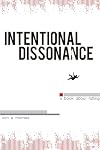
Describes a post-apocalyptic world with characters I couldn't care less about. So melodramatic.
The main character regularly consumes a drug called Sadness. He consumes Sadness because the govnermnet is pumping some other chemical into the water supply to make everyone happy. The protagonist seems to think Sadness is the more authentic state for him. I have to ask though- what is he so sad about? Its been ten years since the world changed. Thats more then enough time to adapt. Additionally, he lives with the woman of his dreams, and has all the basic necessities and then some. This makes him come across as immature and quite unlikeable.
All other characters and the setting suffer because of the self absorbed narrator. The reader learns next to nothing about any of the other supporting characters: Edward, One Eye, Michelle, Emily, or the Doctor. This is because all you ever hear about is how hard life is for the main character.
The net affect is:
When the 'real Michelle' is revealed and betrays the main character. You don't care either way. The 'real Michelle' might as well be an anonymous person and the protagonists reaction to her is straight up demented- insisting that they have had real experiences together when they have not.
When the protagonists side kicks die- Edward and One Eye- its fast and evokes almost no emotional reaction. I attribute this to the fact that they are both almost completely undeveloped. Edward is basically an anonymous ent (tree man) given a name. One eye is mysterious, but essentially boils down to a killing machine.
The main conflict in the story is the protagonists desire to be happy, and inability to do so. The only physical conflict is the doctor trying to apprehend him so he can exploit his supernatural gift to try and encourage mankind to be better. I found neither appealing.
This book, on top of being unengaging, is also weird from a technical perspective. The story is told from a 1st person perspective, but the protogonist refers to himself in the third person. Additionally, this approach is broken a couple times when the narrator suddenly starts describing events he should be completely unaware of.
The one cool idea in the book was the idea of teleporters glitching out and causing endless loops of events. What ruined it for me is when at the end of the book- the author copy and pastes the entire first chapter and wants you to reread it again- implying such a loop. From a continuity perspective it makes no sense- as no other loop in the book indicated the person in the loop could ever see themself at another point of the loop, but the main character does see himself committing suicide in the distance. It just feels like another gimmick.
I rarely dislike a book so much.
One of the final lines of the book was: "When you stop reading, Jon stops existing. I stop existing."
Thank god.
I want my five dollars back. show less
The main character regularly consumes a drug called Sadness. He consumes Sadness because the govnermnet is pumping some other chemical into the water supply to make everyone happy. The protagonist seems to think Sadness is the more authentic state for him. I have to ask though- what is he so sad about? Its been ten years since the world changed. Thats more then enough time to adapt. Additionally,
All other characters and the setting suffer because of the self absorbed narrator. The reader learns next to nothing about any of the other supporting characters: Edward, One Eye, Michelle, Emily, or the Doctor. This is because all you ever hear about is how hard life is for the main character.
The net affect is:
When the 'real Michelle' is revealed and betrays the main character. You don't care either way. The 'real Michelle' might as well be an anonymous person and the protagonists reaction to her is straight up demented- insisting that they have had real experiences together when they have not.
When the protagonists side kicks die- Edward and One Eye- its fast and evokes almost no emotional reaction. I attribute this to the fact that they are both almost completely undeveloped. Edward is basically an anonymous ent (tree man) given a name. One eye is mysterious, but essentially boils down to a killing machine.
The main conflict in the story is the protagonists desire to be happy, and inability to do so. The only physical conflict is the doctor trying to apprehend him so he can exploit his supernatural gift to try and encourage mankind to be better. I found neither appealing.
This book, on top of being unengaging, is also weird from a technical perspective. The story is told from a 1st person perspective, but the protogonist refers to himself in the third person. Additionally, this approach is broken a couple times when the narrator suddenly starts describing events he should be completely unaware of.
The one cool idea in the book was the idea of teleporters glitching out and causing endless loops of events. What ruined it for me is when at the end of the book- the author copy and pastes the entire first chapter and wants you to reread it again- implying such a loop. From a continuity perspective it makes no sense- as no other loop in the book indicated the person in the loop could ever see themself at another point of the loop, but the main character does see himself committing suicide in the distance. It just feels like another gimmick.
I rarely dislike a book so much.
One of the final lines of the book was: "When you stop reading, Jon stops existing. I stop existing."
Thank god.
I want my five dollars back. show less
I don't know how to rate a book that contains both lines that I quickly read over without a second thought and lines that felt like they contained condensed truth, spoken in a way I haven't read before. I'm giving it 4 stars now, but might revise my rating upon a reread.
I liked this collection but it wasn’t my favorite. There were some really good nuggets to take away but as a whole it was just ok for me.
I received a free copy from netgalley in exchange for an honest review.
I received a free copy from netgalley in exchange for an honest review.
You May Also Like


Associated Authors
Statistics
- Works
- 19
- Also by
- 2
- Members
- 551
- Popularity
- #45,289
- Rating
- 3.7
- Reviews
- 7
- ISBNs
- 27
- Languages
- 1
- Favorited
- 1