
Keith Rommel (1)
Author of You Killed My Brother
For other authors named Keith Rommel, see the disambiguation page.
Works by Keith Rommel
Bloody Bucket Bridge 3 copies
Tagged
Common Knowledge
Members
Reviews
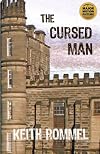
The Cursed Man left me breathless and I'll admit, a little frightened. This book reaches towards the deep, obscure trenches of the human mind and the indistinguishable haze of perception, and it's one that kept me on my toes throughout.
Alister Kunkle believes that death is in love with him, which explains the gruesome, opportune slaughters of anyone who speaks to him, as well as his present confinement at Sunnyside Capable Care Mental Institution. But when an alluring doctor enters his life show more and shows him how to open up his mind, even persuading him to doubt his own convictions, he leaves his mental ailment behind and enters reality—our curse-free, babble-less reality. Or so he thinks.
The plot absolutely stunned me. It's a rollercoaster of a story that skillfully blurs the thin line between reality, insanity, and the paranormal in the freakiest of ways. It portrays the frightening side of hallucinations expertly, as well as the mere possibility that the people we call "crazy" may not be so crazy after all.
What's explosive, is that readers know the truth about Alister's fate—we know the truth, whatever TRUTH really is—from the very beginning; it's just that as readers, we choose not to believe it because it's delusional—it's mad. We resist and juxtapose truth just as Alister does, and this hinders our knowledge of it, which is the mind-boggling, devastating reality The Cursed Man alarmingly reveals.
We regard Alister's claims as deranged, but in The Cursed Man, we learn the tragedy and terror inflicted upon society when beliefs turn out to be viciously, startlingly real. We learn reality is something one can have one moment, then lose grasp of, the next. We learn from the perspective of the mentally ill—the unfair, uncommunicable perspective of not being understood and being labeled as insane.
I was deeply affected by the book's highlighting of the brutal, disturbing consequences of malice and child abuse on conscience, self-esteem, and sanity, as well as its infectious rancor that never ends and forever consumes. I was also impressed with how well we get to know Alister through the book's limited third-person perspective. There's a detached elegance to Rommel's storytelling approach, and that's what makes the entire book so suspenseful.
Stylistically, the narrative isn't anything wonderful, but it does have great flow and never gets boring. It combines the past and present, which I found to be an intriguing technique on the story's procession's part, but also confusing at times. While Rommel's writing isn't particularly sharp or lyrical or insightful, it is well-composed; I finished it with great ease and enthusiasm.
Pros: Spine-tingling // Exceptionally gruesome // Fast-paced, smooth narration // Mind-blowing revelations of perception, psychiatric patients, and reality // Original, well-developed plot // Fantastic characterization and analysis on Alister // Marvelous heart-stopping moments
Cons: Some bumpy transition from past to present // Readable, but not particularly masterful in style
Verdict: The Cursed Man hurls readers on a deceptive, single-minded, magnificently instable ride that'll strip readers of their mental security and make them question what reality is. Akin to the metaphysique found in Tim O'Brien's The Things They Carried, the deeply disturbing, unhinged elements of The Cursed Man make for a brilliantly complex, brilliantly structured story. Chilling, fresh, and horrific in all the right places, this psychological thriller is a psychiatric nightmare that's come to life; it will force you to question existence and perception like you never have before
8 hearts: An engaging read; highly recommended show less
Alister Kunkle believes that death is in love with him, which explains the gruesome, opportune slaughters of anyone who speaks to him, as well as his present confinement at Sunnyside Capable Care Mental Institution. But when an alluring doctor enters his life show more and shows him how to open up his mind, even persuading him to doubt his own convictions, he leaves his mental ailment behind and enters reality—our curse-free, babble-less reality. Or so he thinks.
The plot absolutely stunned me. It's a rollercoaster of a story that skillfully blurs the thin line between reality, insanity, and the paranormal in the freakiest of ways. It portrays the frightening side of hallucinations expertly, as well as the mere possibility that the people we call "crazy" may not be so crazy after all.
What's explosive, is that readers know the truth about Alister's fate—we know the truth, whatever TRUTH really is—from the very beginning; it's just that as readers, we choose not to believe it because it's delusional—it's mad. We resist and juxtapose truth just as Alister does, and this hinders our knowledge of it, which is the mind-boggling, devastating reality The Cursed Man alarmingly reveals.
We regard Alister's claims as deranged, but in The Cursed Man, we learn the tragedy and terror inflicted upon society when beliefs turn out to be viciously, startlingly real. We learn reality is something one can have one moment, then lose grasp of, the next. We learn from the perspective of the mentally ill—the unfair, uncommunicable perspective of not being understood and being labeled as insane.
I was deeply affected by the book's highlighting of the brutal, disturbing consequences of malice and child abuse on conscience, self-esteem, and sanity, as well as its infectious rancor that never ends and forever consumes. I was also impressed with how well we get to know Alister through the book's limited third-person perspective. There's a detached elegance to Rommel's storytelling approach, and that's what makes the entire book so suspenseful.
Stylistically, the narrative isn't anything wonderful, but it does have great flow and never gets boring. It combines the past and present, which I found to be an intriguing technique on the story's procession's part, but also confusing at times. While Rommel's writing isn't particularly sharp or lyrical or insightful, it is well-composed; I finished it with great ease and enthusiasm.
Pros: Spine-tingling // Exceptionally gruesome // Fast-paced, smooth narration // Mind-blowing revelations of perception, psychiatric patients, and reality // Original, well-developed plot // Fantastic characterization and analysis on Alister // Marvelous heart-stopping moments
Cons: Some bumpy transition from past to present // Readable, but not particularly masterful in style
Verdict: The Cursed Man hurls readers on a deceptive, single-minded, magnificently instable ride that'll strip readers of their mental security and make them question what reality is. Akin to the metaphysique found in Tim O'Brien's The Things They Carried, the deeply disturbing, unhinged elements of The Cursed Man make for a brilliantly complex, brilliantly structured story. Chilling, fresh, and horrific in all the right places, this psychological thriller is a psychiatric nightmare that's come to life; it will force you to question existence and perception like you never have before
8 hearts: An engaging read; highly recommended show less
This review was written for LibraryThing Member Giveaways.

The story of the Devil's Chair is based on legend and folklore. Set in the town of Cassadaga, Florida, this town is known to have a community of spiritualists and psychic mediums. Apparently, there is a structure in the form of a chair located in Lake Helen Cemetery that is called the Devil's Chair. It is said that anyone who sits in the chair at midnight will experience paranormal contact and if you leave an offering and it disappears by morning, that indicates the Devil's acceptance.
Arya show more and her fellow paranormal investigator friends decide to find out for themselves if there is any truth to the mystery of the chair and the stories circulating around about it. The writing is very descriptive and pulls you in and makes you feel like you are actually there. I enjoyed that this story was tied to an actual place with historical elements. The story does alternate between present and the past which provides some historical background of Cassadaga and the surrounding area mixed in with fictional elements to enhance the story.
This story was a little slow-paced and reads like a spooky ghost story rather than an action packed thriller. However, the use of a real legend and the mystery behind the chair kept me engaged and wanting to find out what happens and discover how the characters develop.
Thanks to Keith Rommel and Library Thing for this ARC copy. This is my honest review. show less
Arya show more and her fellow paranormal investigator friends decide to find out for themselves if there is any truth to the mystery of the chair and the stories circulating around about it. The writing is very descriptive and pulls you in and makes you feel like you are actually there. I enjoyed that this story was tied to an actual place with historical elements. The story does alternate between present and the past which provides some historical background of Cassadaga and the surrounding area mixed in with fictional elements to enhance the story.
This story was a little slow-paced and reads like a spooky ghost story rather than an action packed thriller. However, the use of a real legend and the mystery behind the chair kept me engaged and wanting to find out what happens and discover how the characters develop.
Thanks to Keith Rommel and Library Thing for this ARC copy. This is my honest review. show less
 This review was written for LibraryThing Early Reviewers.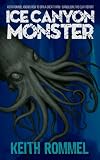
Review by: L. G. Cullens (author of Calan's Eden) on Oct. 17, 2016
This is much more than a monster book, addressing very real problems we face with a tantalizing story. Beyond the reality based setting, this many talented and award wining author drags the reader into the story as few I've read do.
What lengths would you go to if your cherished way of life, and those you cared for, were being destroyed by a corrupt and uncaring materialistic culture? Now imagine you're an Eskimo Shaman, and show more ask yourself the same question.
I toss aside many books, especially the fanciful kind written by the naïve, so based on the cover alone I passed over picking this up several times. When I did eventually give it a shot though, I had trouble putting it down. Warning, this book moves like a freight train. Strangely for this storytelling ilk, I even found myself rooting for the monster.
It's hard for me to imagine anyone not enjoying this book. As another reviewer said, "Here comes Keith and he is taking no prisoners with his new book!" show less
This is much more than a monster book, addressing very real problems we face with a tantalizing story. Beyond the reality based setting, this many talented and award wining author drags the reader into the story as few I've read do.
What lengths would you go to if your cherished way of life, and those you cared for, were being destroyed by a corrupt and uncaring materialistic culture? Now imagine you're an Eskimo Shaman, and show more ask yourself the same question.
I toss aside many books, especially the fanciful kind written by the naïve, so based on the cover alone I passed over picking this up several times. When I did eventually give it a shot though, I had trouble putting it down. Warning, this book moves like a freight train. Strangely for this storytelling ilk, I even found myself rooting for the monster.
It's hard for me to imagine anyone not enjoying this book. As another reviewer said, "Here comes Keith and he is taking no prisoners with his new book!" show less
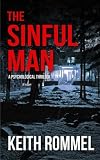
Leo is running through a night-time forest, frantically trying to escape unseen, but evil, creatures that are chasing him. He stumbles upon a small house, and pounds on the door. Twyla, the elderly woman inside, eventually lets him in.
Leo's only thought is to find a phone, or the nearest road, or maybe he can outrun his tormentors (in an unfamiliar forest at night). Twyla tries to tell him that there is no phone, or road, and with an injured shoulder, Leo should forget about trying to outrun show more the creatures that are waiting for him. She also tries to tell Leo that his presence at this time is not an accident.
Included is the story of Leo's immediate past. He became a junkie with "help" from Saint Nick, the local drug kingpin. Leo's parents have thrown him out of the house. Leo wanders the streets in a torrential rainstorm. A local priest tries to help, but Leo is not interested. Leo owes Saint Nick a considerable amount of money, and really needs a "hit" to calm his physical agony.
Back at the house, someone else is pounding on the door, desperate to get in. Keir, a young boy who lives with Twyla, eventually lets him in, and takes him to a different part of the house. It is vital that Leo and the other man don't see each other until the right time. The other man's thoughts are also consumed with escape, and Keir tries to tell him that it's not possible. The other man tries to escape, but does not get very far.
Twyla takes Leo into a different room in the house, which opens into a vast room, full of shelves containing a book for every person who has ever lived. Leo's name is on one of those books. He also gets to confront the other man, who Twyla says is the source of all of Leo's problems. Is it Saint Nick?
The author does an excellent job at turning up the tension in the first few pages, and keeping it going until the end. It also gets nice and weird, without going overboard, by the end. This one is very much worth reading. show less
Leo's only thought is to find a phone, or the nearest road, or maybe he can outrun his tormentors (in an unfamiliar forest at night). Twyla tries to tell him that there is no phone, or road, and with an injured shoulder, Leo should forget about trying to outrun show more the creatures that are waiting for him. She also tries to tell Leo that his presence at this time is not an accident.
Included is the story of Leo's immediate past. He became a junkie with "help" from Saint Nick, the local drug kingpin. Leo's parents have thrown him out of the house. Leo wanders the streets in a torrential rainstorm. A local priest tries to help, but Leo is not interested. Leo owes Saint Nick a considerable amount of money, and really needs a "hit" to calm his physical agony.
Back at the house, someone else is pounding on the door, desperate to get in. Keir, a young boy who lives with Twyla, eventually lets him in, and takes him to a different part of the house. It is vital that Leo and the other man don't see each other until the right time. The other man's thoughts are also consumed with escape, and Keir tries to tell him that it's not possible. The other man tries to escape, but does not get very far.
Twyla takes Leo into a different room in the house, which opens into a vast room, full of shelves containing a book for every person who has ever lived. Leo's name is on one of those books. He also gets to confront the other man, who Twyla says is the source of all of Leo's problems. Is it Saint Nick?
The author does an excellent job at turning up the tension in the first few pages, and keeping it going until the end. It also gets nice and weird, without going overboard, by the end. This one is very much worth reading. show less
Statistics
- Works
- 11
- Members
- 195
- Popularity
- #112,376
- Rating
- 4.0
- Reviews
- 80
- ISBNs
- 24
- Favorited
- 1

