
Bill Madden
Author of Steinbrenner: The Last Lion of Baseball
About the Author
Bill Madden, the 2010 recipient of the Baseball Hall of Fame's J.G. Taylor Spink Award, is the author of the New York Times bestseller Steinbrenner For more than thirty years, he has covered baseball for the New York Daily News. He lives in New Jersey.
Image credit: Bill Madden
Works by Bill Madden
Damned Yankees: A No-Holds-Barred Account of Life With "Boss" Steinbrenner (1990) 70 copies, 1 review
1954: The Year Willie Mays and the First Generation of Black Superstars Changed Major League Baseball Forever (2014) 70 copies, 1 review
Associated Works
Tagged
Common Knowledge
- Birthdate
- 1946
- Gender
- male
- Occupations
- journalist
columnist - Organizations
- United Press International
Daily News (New York)
Baseball Writers Association of America - Nationality
- USA
- Birthplace
- Oradell, New Jersey, USA
- Places of residence
- Montvale, New Jersey, USA
- Associated Place (for map)
- New Jersey, USA
Members
Reviews
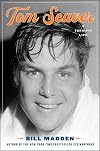
The author is a sportswriter who had become particularly close to Seaver over the years. He had conducted several lengthy interviews with Seaver after the pitcher's retirement. I wouldn't say there's a whole lot of depth to this biography. It's essentially an (adoring) survey of Seaver's life and, especially, baseball career. Well, when a 70-year life is covered in only 285 pages, you are not going to get much in-depth probing. As such, though, I mostly enjoyed it. It's not the most sharply show more written book on the bookshelf, and there are some spots where an editor's hand might have been useful, and that recounting of Seaver's life was interesting enough for a baseball fan.
I did learn a few things that I either didn't know or had forgotten. One is that Seaver openly criticized the U.S. involvement in Vietnam. The other was that Seaver signed first by the Atlanta Braves, and he was looking forward to being teammates with the great Hank Aaron. But due to an entirely accidental breaking of the rule against signing college players while the collegiate season was in progress (two games that everybody thought had been pre-season exhibitions had turned out to be on the official season schedules of the team involved), Seaver ended up the prize in a lottery among any team that was willing to match the Braves' offer, and in that way ended up on the Mets. It was nice to learn that throughout his life, and even at the height of his fame and success, Seaver remained close friends with many of the guys he'd played Little League, high school and junior college baseball with in his home town of Fresno, CA. Seaver's battles with Mets general manager M. Donald Grant are well chronicled, here, as is his up-and-down relationship with his own fame, and certain individual games are highlighted in depth to good effect. Madden is, after all, a sportswriter first and foremost. All in all I'd say this is a good if not great biography, but absolutely for baseball fans only. show less
I did learn a few things that I either didn't know or had forgotten. One is that Seaver openly criticized the U.S. involvement in Vietnam. The other was that Seaver signed first by the Atlanta Braves, and he was looking forward to being teammates with the great Hank Aaron. But due to an entirely accidental breaking of the rule against signing college players while the collegiate season was in progress (two games that everybody thought had been pre-season exhibitions had turned out to be on the official season schedules of the team involved), Seaver ended up the prize in a lottery among any team that was willing to match the Braves' offer, and in that way ended up on the Mets. It was nice to learn that throughout his life, and even at the height of his fame and success, Seaver remained close friends with many of the guys he'd played Little League, high school and junior college baseball with in his home town of Fresno, CA. Seaver's battles with Mets general manager M. Donald Grant are well chronicled, here, as is his up-and-down relationship with his own fame, and certain individual games are highlighted in depth to good effect. Madden is, after all, a sportswriter first and foremost. All in all I'd say this is a good if not great biography, but absolutely for baseball fans only. show less
1954: The Year Willie Mays and the First Generation of Black Superstars Changed Major League Baseball Forever by Bill Madden
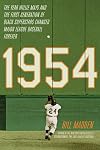
Despite Jackie Robinson breaking the color barrier in 1947, only half of the sixteen major league teams had a black player on their roster when spring training commenced in 1954. However the growing tide of talent signed from the waning Negro Leagues and being nurtured in the minor league system would eventually cause sweeping changes in the composition of major league rosters. With preternaturally gifted stars such as Mays and Aaron already making their presence felt, even teams with show more serious reservations about integrating their rosters accepted the inevitable.
The Indians won the American League pennant in 1954 breaking the Yankees string of dominance. Center fielder Larry Doby was a major contributor to the Indians' success and the Yankees would finally squelch the racist impulses of management and add future star Elston Howard to their roster in 1955. The Red Sox would be the last team to integrate, waiting until 1959.
The then NY Giants would go on to upset the Indians by sweeping them in the 54' Series, a series which helped immortalize Mays with " The Catch." As he and other black superstars asserted their influence on the game, the likes of Clemente, Gibson ... waited in the wings. 1954 was a pivotal year in race relations, for baseball and for society, it was the same year as the Brown vs. Board decision was rendered, with far-reaching consequences.
This is a must-read narrative of an exciting season and a watershed year as America gradually came to grips with its moral blemish of institutional racism. show less
The Indians won the American League pennant in 1954 breaking the Yankees string of dominance. Center fielder Larry Doby was a major contributor to the Indians' success and the Yankees would finally squelch the racist impulses of management and add future star Elston Howard to their roster in 1955. The Red Sox would be the last team to integrate, waiting until 1959.
The then NY Giants would go on to upset the Indians by sweeping them in the 54' Series, a series which helped immortalize Mays with " The Catch." As he and other black superstars asserted their influence on the game, the likes of Clemente, Gibson ... waited in the wings. 1954 was a pivotal year in race relations, for baseball and for society, it was the same year as the Brown vs. Board decision was rendered, with far-reaching consequences.
This is a must-read narrative of an exciting season and a watershed year as America gradually came to grips with its moral blemish of institutional racism. show less
A good little book about the life of Tom Terrific. Not too much new info that I hadn’t already heard, but it was well put together nonetheless. If you don’t know much about Seaver, this would be a good place to start.
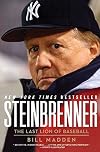
Enjoyable. A few great stories that I hadn't heard before, but mostly a fun romp through my baseball watching past which I mostly remember. If a book is ever written on those Gabe Paul tapes, now THAT would be awesome.
Lists
Awards


You May Also Like


Associated Authors
Statistics
- Works
- 10
- Also by
- 1
- Members
- 431
- Popularity
- #56,716
- Rating
- 3.7
- Reviews
- 6
- ISBNs
- 40
