

Henry Jacoby (1)
Author of House and Philosophy: Everybody Lies
For other authors named Henry Jacoby, see the disambiguation page.
Works by Henry Jacoby
Tagged
Common Knowledge
- Birthdate
- 20th Century
- Gender
- male
- Education
- University of Southern California (PhD)
Ohio State University (BA|MA) - Nationality
- USA
- Places of residence
- Goldsboro, North Carolina, USA
- Associated Place (for map)
- North Carolina, USA
Members
Reviews
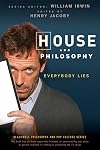
Recently, I was asked by a friend to list fifteen of the most influential fictional characters in my life...characters that would always stick with me. Since the list didn't specify between literary and television/film characters, I had difficulty, at least in retrospect, leaving Gregory House off of that list. House is a character that has always resonated with me. On my, how should I say, less than optimistic days, I've been told that I have everything in common with him except walking show more with a cane. There's something about being so good at what you do that you can get by with saying whatever you think that is alluring to me...though perhaps it shouldn't be. That, though, is exactly the appeal.
This book was loaned to me by a friend. I haven't explored philosophy in popular culture titles much as of yet, but have been interested in doing so, and this was as good a place as any to begin. The book is a collection of essays from philosophy professors at various American universities, and the content varies from literary analysis to arguments presenting which philosophical perspectives the character of House espouses. With respect to the individual scholars, the quality of the content of these essays varies dramatically from the thought provoking to the unbelievable. One essay discusses in depth the inspiration of the character of House by the character of Sherlock Holmes, and points out fascinating correlations between House's television program and the literary world of Doyle. One essay discusses House's presentation of Sarte's philosophy ("Hell is other people"), and an entire section of the book discusses the ethics of the physicians in the show as they correspond to accepted medical ethics in the "real world." Other essays leave you flipping pages quickly to reach the end of the them because they lack all credibility from their premise forward (House as Zen Bhuddist rhetorician? Really?).
What fascinates me most about the book, however, is that it speaks to the quality of the character of Gregory House as he has been conceived by the screenwriters and brought to life by Hugh Laurie. There is something about this character, as much as he alternately repulses and attracts us, that makes us unable to look away, almost as though we've driven by a car accident. Whether it is disgust or admiration that motivates the viewer, almost everyone I know that watches this show has something constructive and insightful to say about House. The character is simply that powerful.
The academic ventures of recent years to discuss the rhetoric, philosophy, and theology of popular culture is an important pursuit to our society, and this book is evidence of that. The philosophy isn't presented at a deep academic level, but rather in a well-balanced style that meets both the philosophical novice and the student who has studied philosophy at some depth in the middle. The language is accessible, and overall the book goes by very quickly once you begin. All in all, If you're a fan of the show, this is a worthwhile read, if for no other reason than the fact that you will be able to discuss the next episode with much more insight and depth. show less
This book was loaned to me by a friend. I haven't explored philosophy in popular culture titles much as of yet, but have been interested in doing so, and this was as good a place as any to begin. The book is a collection of essays from philosophy professors at various American universities, and the content varies from literary analysis to arguments presenting which philosophical perspectives the character of House espouses. With respect to the individual scholars, the quality of the content of these essays varies dramatically from the thought provoking to the unbelievable. One essay discusses in depth the inspiration of the character of House by the character of Sherlock Holmes, and points out fascinating correlations between House's television program and the literary world of Doyle. One essay discusses House's presentation of Sarte's philosophy ("Hell is other people"), and an entire section of the book discusses the ethics of the physicians in the show as they correspond to accepted medical ethics in the "real world." Other essays leave you flipping pages quickly to reach the end of the them because they lack all credibility from their premise forward (House as Zen Bhuddist rhetorician? Really?).
What fascinates me most about the book, however, is that it speaks to the quality of the character of Gregory House as he has been conceived by the screenwriters and brought to life by Hugh Laurie. There is something about this character, as much as he alternately repulses and attracts us, that makes us unable to look away, almost as though we've driven by a car accident. Whether it is disgust or admiration that motivates the viewer, almost everyone I know that watches this show has something constructive and insightful to say about House. The character is simply that powerful.
The academic ventures of recent years to discuss the rhetoric, philosophy, and theology of popular culture is an important pursuit to our society, and this book is evidence of that. The philosophy isn't presented at a deep academic level, but rather in a well-balanced style that meets both the philosophical novice and the student who has studied philosophy at some depth in the middle. The language is accessible, and overall the book goes by very quickly once you begin. All in all, If you're a fan of the show, this is a worthwhile read, if for no other reason than the fact that you will be able to discuss the next episode with much more insight and depth. show less
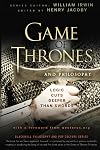
Тази книга е част от много любопитната серия, която използва примери от популярни телевизионни шоута, книги и филми, за да обяснява основни положения във философията.
Вписвайки се в интригата на Игра на тронове, авторът използва политическата ситуация във Весерос за да show more обясни идеите на Джон Лок, Платон, Томас Хобс, Макиавели и др. влиятелни философи, изказали се по въпросите на държавността, управлението, гражданския морал и т.н. като за всеки намират герой, който най-добре ги въплъщава.
Като цяло занимателно и любопитно. Може да даде начален философски тласък на хора, досега неизкушени от подобни мисли. show less
Вписвайки се в интригата на Игра на тронове, авторът използва политическата ситуация във Весерос за да show more обясни идеите на Джон Лок, Платон, Томас Хобс, Макиавели и др. влиятелни философи, изказали се по въпросите на държавността, управлението, гражданския морал и т.н. като за всеки намират герой, който най-добре ги въплъщава.
Като цяло занимателно и любопитно. Може да даде начален философски тласък на хора, досега неизкушени от подобни мисли. show less
House and Philosophy: Everybody Lies (The Blackwell Philosophy and Pop Culture Series) by Henry Jacoby
One would think a book on the philosophy of House MD could only go so far. It is just a TV show, right? Sure, but a show that presents probing ethical, moral, and philosophical questions; probably more so than any other currently in prime time. You have characters (The mesmerizing idiosyncrasies of the titular character alone could probably take up a whole book) and premises that are ripe for philosophical examination. The essay on House as an embodiment of Nietzsche's Ubermensch is of show more particular interest, as the thought had crossed my mind before, but to see it examined in such detail was quite a treat. show less
House and Philosophy: Everybody Lies (The Blackwell Philosophy and Pop Culture Series) by Henry Jacoby
This was an interesting read with a few good essays. However, several of the essays had practical issues (the quoted episode was about a different character) and two flat out misquoted the show and based the article ON that misquote. I spent half the time in contemplation and the other half raging at the book. If the goal was to get an emotional reaction, it succeeded. In the bios of the authors, one said that she thought Hugh Laurie's British accent on Jeeves & Wooster was excellent. I sure show more hope that was a joke...
The e book format I bought was buggy due to the chapter and sub-chapter layout and the index. show less
The e book format I bought was buggy due to the chapter and sub-chapter layout and the index. show less
You May Also Like


Associated Authors
Statistics
- Works
- 2
- Members
- 631
- Popularity
- #39,928
- Rating
- 3.7
- Reviews
- 14
- ISBNs
- 31
- Languages
- 7