

Kevin S. Decker
Author of Star Wars and Philosophy: More Powerful Than You Can Possibly Imagine
About the Author
Kevin S. Decker is Associate Professor of Philosophy and Associate Dean of the College of Arts, Letters and Education at Eastern Washington University. He has co-edited books on the philosophical significance of Star Wars, Star Trek and the Terminator films and television show.
Image credit: Dr. Kevin S. Decker
Works by Kevin S. Decker
Star Wars and Philosophy: More Powerful Than You Can Possibly Imagine (2005) — Editor — 378 copies, 3 reviews
Terminator and Philosophy: I'll Be Back, Therefore I Am (The Blackwell Philosophy and Pop Culture Series) (2009) — Editor — 87 copies, 2 reviews
The Ultimate Star Wars and Philosophy: You Must Unlearn What You Have Learned (The Blackwell Philosophy and Pop Culture Series) (2015) — Editor — 71 copies
Alien and Philosophy: I Infest, Therefore I Am (The Blackwell Philosophy and Pop Culture Series) (2017) 25 copies
Associated Works
Tagged
Common Knowledge
- Canonical name
- Decker, Kevin S.
- Birthdate
- 1968-09-15
- Gender
- male
- Education
- Saint Louis University
University of Missouri-St. Louis
McKendree College - Occupations
- philosopher
- Organizations
- Eastern Washington University
John Dewey Society
American Philosophical Association
Society for the Advancement of American Philosophy
William James Society - Nationality
- USA
- Places of residence
- Spokane, Washington, USA
- Associated Place (for map)
- Washington, USA
Members
Reviews
Terminator and Philosophy: I'll Be Back, Therefore I Am (The Blackwell Philosophy and Pop Culture Series) by Richard Brown
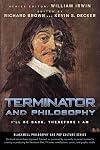
Be advised, SPOILERS for the Terminator movies and The Sarah Connor Chronicles TV show...
The Blackwell Philosophy and Pop Culture series (culture clears the cobwebs from Kant!) takes on the Terminator franchise - and I am so glad they did! I am no student of philosophy but I do enjoy Terminator a great deal and those two traits put me in the target audience for this book.
There's a lot of name-dropping in these essays, Marx, Kant and movements like Utilitarianism (very popular) but most show more authors give you a little background before jumping in with their arguments. Many of them assume you know the characters from the franchise. T2:Judgement Day is by far the most discussed film in the book. The fourth movie, Terminator:Salvation was released after this book went to print and so it is not discussed at all (a shame).
The Terminator franchise is very much about death and life. What is the value of a life and are some lives worth more than others?
"Our moral intuition recoils at the idea of sacrificing innocent lives for some greater good. Even if we approved of shooting Miles Dyson to save three billion people, most of us would not sanction sacrificing humans in medical experiments that would lead to a cure for AIDS or cancer."
Scenes across the Terminator franchise address the idea of a cyborg's personhood. If it learns outside of its programming, does it have rights or is it alive? Do the T-101 and T-1000 truly understand the emotion of crying or the sensation of pain, as they state, or is their programming simply picking up on feedback from humans they are interacting with? If a Terminator can only follow its programming can it truly commit suicide, self-sacrifice or allow euthanasia - as in T2, T3 or T4?
"If we're moved by the self-destruction of the Terminator, it's because we feel that somebody and not just something is being destroyed."
"The T-101 (T3) dies in an inauthentic way because it refuses to acknowledge death as the end of possibility - this Terminator will live again, it believes... the T-101 in T2, on the other hand, does accept that its death is the end of possibilities: indeed, the whole point of its sacrifice is that there will never be a Skynet or Terminators.
Where is the line between human and cyborg drawn? This is explored a great deal in Terminator: Salvation and The Sarah Connor Chronicles. In T4, we meet Marcus as a human on death row and then later as a Terminator who believes he is human and indeed possesses a heart inside his chest. In TSCC Sarah often refers to the Terminator Cameron as a "Tin Miss". In The Wonderful Wizard of Oz, the Tin Man needed a heart, but he had been human once and had become metal a piece at a time. Cameron has the memories of a real girl (Allison Young from Palmdale, CA), yet it's not explained how or why.
"The theme of humans transcending their corporeal bodies by downloading their consciousness into computers or robotic bodies has been a staple of the genre (today philosophers talk about this same theme in terms of "posthumanism" or "transhumanism")."
"We truly extend ourselves into the various technologies we use in our thought processes...whether you are surfing the internet, embroiled in a role-playing game, or typing an email, the computer-driven activities you engage in can be understood as extended components of your mind at work. Your thoughts and experiences are themselves partly constituted by the computational processes in the PC."
Is John Connor fated to be the leader of the human resistance or can he refuse? If the resistance can prevent Skynet's existence then John does not have to fulfill his messiah role. TSCC picked up on this quite a bit in its first season. The book discusses this in relation to Social contract theory.
"John Connor, like any other member of society, would be obligated to answer the call to leadership affirmatively."
"Being a human being existing in the world in a meaningful way (rather than, say, in a comatose or pathological state) requires that we confront moral claims made by others upon us and that we make moral claims upon others."
And to this end, the issue of time and time travel. How does the young John Connor keep from messing with the plans of the older John Connor? In TSCC Cameron treats teenage John as if he was not the same person as "Future John". She makes a distinction between the two of them as if they were separate people. And maybe they are. Who was John Connor's father, really?
"John Connor's original father had to be someone other than Kyle Reese. By changing the past Kyle seems to become the only father of John, but Kyle would never have been able to travel back in time unless there was a first father other than Kyle Reese. So even if this first father was "wiped out of existence" (whatever that means), he still had to exist for a time... in order to make Kyle Reese's trip back in time possible."
"He (Connor) realizes that it was, is, and will be his fate to train himself to become the future John Connor who will lead the future human insurrection. The future protects the past so it can continue being the future."
I found myself thinking about these essays over and again. I was really impressed with the breadth of topics covered by the authors. Not that I completely understood everything that was theorized or agreed with everything that was said, but it continues to percolate around in my gray matter and if that is the intent of the authors (I think it is) then they were successful. show less
The Blackwell Philosophy and Pop Culture series (culture clears the cobwebs from Kant!) takes on the Terminator franchise - and I am so glad they did! I am no student of philosophy but I do enjoy Terminator a great deal and those two traits put me in the target audience for this book.
There's a lot of name-dropping in these essays, Marx, Kant and movements like Utilitarianism (very popular) but most show more authors give you a little background before jumping in with their arguments. Many of them assume you know the characters from the franchise. T2:Judgement Day is by far the most discussed film in the book. The fourth movie, Terminator:Salvation was released after this book went to print and so it is not discussed at all (a shame).
The Terminator franchise is very much about death and life. What is the value of a life and are some lives worth more than others?
"Our moral intuition recoils at the idea of sacrificing innocent lives for some greater good. Even if we approved of shooting Miles Dyson to save three billion people, most of us would not sanction sacrificing humans in medical experiments that would lead to a cure for AIDS or cancer."
Scenes across the Terminator franchise address the idea of a cyborg's personhood. If it learns outside of its programming, does it have rights or is it alive? Do the T-101 and T-1000 truly understand the emotion of crying or the sensation of pain, as they state, or is their programming simply picking up on feedback from humans they are interacting with? If a Terminator can only follow its programming can it truly commit suicide, self-sacrifice or allow euthanasia - as in T2, T3 or T4?
"If we're moved by the self-destruction of the Terminator, it's because we feel that somebody and not just something is being destroyed."
"The T-101 (T3) dies in an inauthentic way because it refuses to acknowledge death as the end of possibility - this Terminator will live again, it believes... the T-101 in T2, on the other hand, does accept that its death is the end of possibilities: indeed, the whole point of its sacrifice is that there will never be a Skynet or Terminators.
Where is the line between human and cyborg drawn? This is explored a great deal in Terminator: Salvation and The Sarah Connor Chronicles. In T4, we meet Marcus as a human on death row and then later as a Terminator who believes he is human and indeed possesses a heart inside his chest. In TSCC Sarah often refers to the Terminator Cameron as a "Tin Miss". In The Wonderful Wizard of Oz, the Tin Man needed a heart, but he had been human once and had become metal a piece at a time. Cameron has the memories of a real girl (Allison Young from Palmdale, CA), yet it's not explained how or why.
"The theme of humans transcending their corporeal bodies by downloading their consciousness into computers or robotic bodies has been a staple of the genre (today philosophers talk about this same theme in terms of "posthumanism" or "transhumanism")."
"We truly extend ourselves into the various technologies we use in our thought processes...whether you are surfing the internet, embroiled in a role-playing game, or typing an email, the computer-driven activities you engage in can be understood as extended components of your mind at work. Your thoughts and experiences are themselves partly constituted by the computational processes in the PC."
Is John Connor fated to be the leader of the human resistance or can he refuse? If the resistance can prevent Skynet's existence then John does not have to fulfill his messiah role. TSCC picked up on this quite a bit in its first season. The book discusses this in relation to Social contract theory.
"John Connor, like any other member of society, would be obligated to answer the call to leadership affirmatively."
"Being a human being existing in the world in a meaningful way (rather than, say, in a comatose or pathological state) requires that we confront moral claims made by others upon us and that we make moral claims upon others."
And to this end, the issue of time and time travel. How does the young John Connor keep from messing with the plans of the older John Connor? In TSCC Cameron treats teenage John as if he was not the same person as "Future John". She makes a distinction between the two of them as if they were separate people. And maybe they are. Who was John Connor's father, really?
"John Connor's original father had to be someone other than Kyle Reese. By changing the past Kyle seems to become the only father of John, but Kyle would never have been able to travel back in time unless there was a first father other than Kyle Reese. So even if this first father was "wiped out of existence" (whatever that means), he still had to exist for a time... in order to make Kyle Reese's trip back in time possible."
"He (Connor) realizes that it was, is, and will be his fate to train himself to become the future John Connor who will lead the future human insurrection. The future protects the past so it can continue being the future."
I found myself thinking about these essays over and again. I was really impressed with the breadth of topics covered by the authors. Not that I completely understood everything that was theorized or agreed with everything that was said, but it continues to percolate around in my gray matter and if that is the intent of the authors (I think it is) then they were successful. show less

You can recognize a good philosophy book, you know them. They have an 8-point font and every other paragraph runs on for at least 2 pages. Until now.
THe Popular Culture and Philosophy series changes that. With Star Trek and Philosophy, several philosophers use the Star Trek universe to explore different topics in philosophy. They make great use of different facets of the numerous series and movies to discuss philosophical points.
For instance, Professor Harald Thorsrud discusses stoicism show more comparing it to Vulcan philosophies. He makes good use of the series, with a few dialog excerpts to drive points. Other topics include ethics of bioengineering, aspects of religion, the nature of time, and Lyotard's theory of the Differend, among many other topics.
The book offers good breadth with narrow depth, but provides enough depth in its choice of topics to give you a good taste of the subject. The book is light, yet full of information that is easy to digest. Any fan of Star Trek with at least a passing interest in philosophy should consider it for reading.
Care to discuss this book?
http://books.randolphking.com/?p=734 show less
THe Popular Culture and Philosophy series changes that. With Star Trek and Philosophy, several philosophers use the Star Trek universe to explore different topics in philosophy. They make great use of different facets of the numerous series and movies to discuss philosophical points.
For instance, Professor Harald Thorsrud discusses stoicism show more comparing it to Vulcan philosophies. He makes good use of the series, with a few dialog excerpts to drive points. Other topics include ethics of bioengineering, aspects of religion, the nature of time, and Lyotard's theory of the Differend, among many other topics.
The book offers good breadth with narrow depth, but provides enough depth in its choice of topics to give you a good taste of the subject. The book is light, yet full of information that is easy to digest. Any fan of Star Trek with at least a passing interest in philosophy should consider it for reading.
Care to discuss this book?
http://books.randolphking.com/?p=734 show less
This book seems to be set up to introduce fans of Star Trek to the ideas of various philosophers. Since I usually find philosophy dull and meaningless, especially when you get down to individual philosophers, I didn't find much in this book attractive. There was one interesting essay on Deep Space Nine and problems of people getting along with irreconcilable differences. Unfortunately the philosopher highlighted in the essay, Jean-Francois Lyotard, doesn't really seem to propose any solution show more to this very real and pressing problem, so I wasn't any more informed on the subject than I was before reading the essay. But if you think simply liberal tolerance will do the trick, this essay might prove enlightening. show less
Star Wars and Philosophy: More Powerful than You Can Possibly Imagine (Popular Culture and Philosophy) by Kevin S. Decker
Star Wars & Philosophy edited by Kevin S. Decker and Jason T. Eberl is a collection of philosophical essays that draw on the Star Wars movies for examples and the philosophies of St. Augustine, Sartre, and others. The collection is moderately well done in some parts and blatantly falls short in others, with one particular essay not using secondary sources to back up its arguments at all and leaving readers to beg the question whether Trekkies can write about Star Wars at all. The essays draw show more on ancient philosophers as far back as Plato and Aristotle as well as one essay about Eastern philosophies and mythologies. There are also essays that point to the theories of Kant, Heidegger, and Hegel.
Read the full review: http://savvyverseandwit.com/2012/03/star-wars-philosophy-edited-by-kevin-s-decke... show less
Read the full review: http://savvyverseandwit.com/2012/03/star-wars-philosophy-edited-by-kevin-s-decke... show less
You May Also Like


Associated Authors
Statistics
- Works
- 10
- Also by
- 2
- Members
- 893
- Popularity
- #28,688
- Rating
- 3.7
- Reviews
- 10
- ISBNs
- 44
- Languages
- 2
