
Carol Plum-Ucci
Author of The Body of Christopher Creed
About the Author
Series
Works by Carol Plum-Ucci
The Omnivore's Dilemma 1 copy
Associated Works
Secrets of the Dragon Riders: Your Favorite Authors on Christopher Paolini's Inheritance Cycle (2008) — Contributor — 45 copies, 1 review
Tagged
Common Knowledge
- Canonical name
- Carol Plum-Ucci
- Legal name
- Plum-Ucci, Carol
- Birthdate
- 1957-08-16
- Gender
- female
- Education
- Purdue University (BS)
Rutgers University - Occupations
- novelist
essayist - Nationality
- USA
- Places of residence
- Atlantic City, New Jersey, USA
Brigantine, New Jersey, USA
Absecon, New Jersey, USA - Associated Place (for map)
- New Jersey, USA
Members
Reviews

What a great read. FIRE WILL FALL was just great fun, although I have to complain a little about it keeping me up too late at night. In fact, the tension was so great at one point that I had to resolve not to read the book too close to bedtime because it was freaking me out.
The story is a follow-up to a previous book --Streams of Babel-- that I haven't read, but which I am definitely going to track down. It's principally about 4 teenagers who are recovering from a poisoning that took place show more in the previous book where terrorists dumped toxic bio-hazards into their small town's water supply. Most of these teens lost parents and friends, and they are still barely surviving on a pharmaceutical cocktail of meds that have some odd side effects. They are brought to a restored house to recover with the assurance that they are out of danger from the terrorists. 'Dogs don't return to their vomit', they are told. BUT unfortunately that doesn't turn out to be the case as they just happen to have been settled near the next target site.
TALKING POINTS:::
I don't do "terrorists/spy" books, and I don't do popular thrillers (no Dan Brown for me), but maybe I should broaden my reading and take a look at more books in this genre, because I really enjoyed FIRE WILL FALL. I thought Plum-Ucci did a fabulous job with building tension and with differentiating the characters. In fact, I guess that's why I like the book: I got hooked on the characters and how they interacted. The mind-tingling excitement of trying to figure out who would die, was just delicious icing on that cake!
All good things said, this shouldn't be a book you pick up when your exhausted because the chapters are divided amongst 6 points of view, and first person at that. Everything flows brilliantly, but it won't be as much fun for you if you are tired and can't quite remember who is who.
NOTE: You absolutely do not have to have read the first book. This one stands on it's own.
Brilliant fun. A definite 'guilty-pleasure'. Enjoy!
Pam T~
(booksforkids-reviews) show less
The story is a follow-up to a previous book --Streams of Babel-- that I haven't read, but which I am definitely going to track down. It's principally about 4 teenagers who are recovering from a poisoning that took place show more in the previous book where terrorists dumped toxic bio-hazards into their small town's water supply. Most of these teens lost parents and friends, and they are still barely surviving on a pharmaceutical cocktail of meds that have some odd side effects. They are brought to a restored house to recover with the assurance that they are out of danger from the terrorists. 'Dogs don't return to their vomit', they are told. BUT unfortunately that doesn't turn out to be the case as they just happen to have been settled near the next target site.
TALKING POINTS:::
I don't do "terrorists/spy" books, and I don't do popular thrillers (no Dan Brown for me), but maybe I should broaden my reading and take a look at more books in this genre, because I really enjoyed FIRE WILL FALL. I thought Plum-Ucci did a fabulous job with building tension and with differentiating the characters. In fact, I guess that's why I like the book: I got hooked on the characters and how they interacted. The mind-tingling excitement of trying to figure out who would die, was just delicious icing on that cake!
All good things said, this shouldn't be a book you pick up when your exhausted because the chapters are divided amongst 6 points of view, and first person at that. Everything flows brilliantly, but it won't be as much fun for you if you are tired and can't quite remember who is who.
NOTE: You absolutely do not have to have read the first book. This one stands on it's own.
Brilliant fun. A definite 'guilty-pleasure'. Enjoy!
Pam T~
(booksforkids-reviews) show less
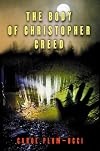
What does it say about a community when the least popular boy in school goes missing and no one cares? Christopher Creed wrote a bizarre and mysterious email to the school's principal before he suddenly disappeared; he could have been murdered, committed suicide, or simply run away. But most people are just relieved that he's gone and no-one seems to be really trying to find him.
One guy, alone, feels guilty about the way Christopher Creed was treated and sets out to solve the mystery of show more what happened to him. Along the way he learns a whole lot more than he bargained for, about the dirty secrets hidden beneath the polished facade of his normal-seeming neighborhood. show less
One guy, alone, feels guilty about the way Christopher Creed was treated and sets out to solve the mystery of show more what happened to him. Along the way he learns a whole lot more than he bargained for, about the dirty secrets hidden beneath the polished facade of his normal-seeming neighborhood. show less
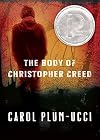
I've always liked reading mysteries, and this one did not disappoint - in fact, I stayed up late to finish it because I had to know how it ended. The plot centers on the disappearance of Christopher Creed, an unpopular "weirdo" and longtime classmate of the main character, Torey Adams, in the town of Steepleton. Though Creed's parents insist at first that he has run away, soon rumors that he has been murdered begin to swirl around the school. The way that the topic is treated casually show more bothers Torey, who seems to have more of a conscience - a more developed sense of empathy - than his friends. Torey has to know what happened to Chris Creed, and he slowly pulls away from his popular friends and begins to hang out with those on the fringes - who, he discovers, are not at all the way their reputations led him to believe they would be.
Torey muses a lot about the nature of popularity and friendship, the role that rumors and gossip play in the town (both in high school and among grown-ups), truth and lies and hypocrisy:
"It was easier to point the finger at somebody else. If Creed had written that note, we would have had to point the finger at ourselves, or at least take a good long look at our ways and agonize over questions. Like, could we have played it out differently? Could we have been nicer? Do we have a heartless streak, and can we be bastards?....Maybe it was my time in life, or maybe it was this whole thing with Creed. But something inside of me felt totally ready to be completely nice to the rejects - people like Creed, the boons - and to be somebody who's not so drowning in surface junk." (59)
"This weird kid leaves, but the weirdness stays. It starts coming out of everybody else. I felt like Chris's ghost was in us, trying to make us understand." (117)
"I wondered if being a geek made you a better, less judgmental person." (130)
"Flocks of kids were all doing their usual homeroom things - talking, laughing, finishing up homework they didn't do before. But they had fangs like snakes that came out when something rubbed them wrong. I knew it. I'd been part of it. They could bite. They could ruin my life..." (130)
"...I felt very close to Creed. I could feel all his confusion over what was real and what was made up in his own head. I felt his wish for make-believe to come alive, for some sort of control over the universe so that if life started to suck, you could just imagine something else into existence." (215)
"This was the most dangerous kind of lying, it struck me, the kind that was happening to me now - where people need the lie so badly they become convinced the lie is true. It's dangerous because they can tell the lie with so much belief that it sounds like the truth, and they can make other people believe it." (216)
"I've stayed awake wondering what people think when they spit out some enormous lie, like, do they even stop to think, Why am I saying this?." (238)
"Some people like to state their opinions as fact. I'm sort of the opposite. I'm afraid of believing some lie for the sake of convenience." (238)
These musings don't slow down the pace of the story, however; this is a book with plot and suspense as well as good characters. Torey tells the story at a slight distance from the events; the reader learns right up front that he has transferred to a boarding school to get away from Steepleton. He is still searching for Creed, via the internet, and at the end of the book there are four responses that he has received: the "most flattering," "most insulting," "mostly likely to be from Chris Creed in disguise," and the "reply that makes me believe totally that Creed is alive." That final reply will most likely convince the reader, as well.
A final note: at one point in the story, Torey suffers some trauma and talks to a therapist afterward. Torey says, "I mean, I just don't understand how people can show all the violence [in visual representations of Jesus]. But they single out [cover up] the nudity. Nudity is a problem, but all the violence isn't. I don't understand people." Dr. Fadhi replies, "We live in a culture that has definite quirks about both sex and violence" (226). This is an insightful observation for a teenage boy to make, but it is true that American morality is much more concerned with sex than with violence. show less
Torey muses a lot about the nature of popularity and friendship, the role that rumors and gossip play in the town (both in high school and among grown-ups), truth and lies and hypocrisy:
"It was easier to point the finger at somebody else. If Creed had written that note, we would have had to point the finger at ourselves, or at least take a good long look at our ways and agonize over questions. Like, could we have played it out differently? Could we have been nicer? Do we have a heartless streak, and can we be bastards?....Maybe it was my time in life, or maybe it was this whole thing with Creed. But something inside of me felt totally ready to be completely nice to the rejects - people like Creed, the boons - and to be somebody who's not so drowning in surface junk." (59)
"This weird kid leaves, but the weirdness stays. It starts coming out of everybody else. I felt like Chris's ghost was in us, trying to make us understand." (117)
"I wondered if being a geek made you a better, less judgmental person." (130)
"Flocks of kids were all doing their usual homeroom things - talking, laughing, finishing up homework they didn't do before. But they had fangs like snakes that came out when something rubbed them wrong. I knew it. I'd been part of it. They could bite. They could ruin my life..." (130)
"...I felt very close to Creed. I could feel all his confusion over what was real and what was made up in his own head. I felt his wish for make-believe to come alive, for some sort of control over the universe so that if life started to suck, you could just imagine something else into existence." (215)
"This was the most dangerous kind of lying, it struck me, the kind that was happening to me now - where people need the lie so badly they become convinced the lie is true. It's dangerous because they can tell the lie with so much belief that it sounds like the truth, and they can make other people believe it." (216)
"I've stayed awake wondering what people think when they spit out some enormous lie, like, do they even stop to think, Why am I saying this?." (238)
"Some people like to state their opinions as fact. I'm sort of the opposite. I'm afraid of believing some lie for the sake of convenience." (238)
These musings don't slow down the pace of the story, however; this is a book with plot and suspense as well as good characters. Torey tells the story at a slight distance from the events; the reader learns right up front that he has transferred to a boarding school to get away from Steepleton. He is still searching for Creed, via the internet, and at the end of the book there are four responses that he has received: the "most flattering," "most insulting," "mostly likely to be from Chris Creed in disguise," and the "reply that makes me believe totally that Creed is alive." That final reply will most likely convince the reader, as well.
A final note: at one point in the story, Torey suffers some trauma and talks to a therapist afterward. Torey says, "I mean, I just don't understand how people can show all the violence [in visual representations of Jesus]. But they single out [cover up] the nudity. Nudity is a problem, but all the violence isn't. I don't understand people." Dr. Fadhi replies, "We live in a culture that has definite quirks about both sex and violence" (226). This is an insightful observation for a teenage boy to make, but it is true that American morality is much more concerned with sex than with violence. show less
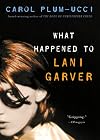
This book was hauntingly good, in my opinion. You know right from the start that something horrible is going to happen to Lani, so everything in the book feels like foreshadowing. Watching Lani and Claire hurdle toward this inevitable end is heartbreaking, even as you cheer on Lani's continual "I don't care what they think" attitude. Claire is a bit more cautious than he is. As she grows and changes over the course of the novel she cares less and less what her friends and the fish frat think show more of her, but she knows what they are capable of doing to Lani and herself. However, her growing sense of the injustice of it all, in combination with her new-found temper, still trips her up. The way things end up happening in the end is not how you would expect, at least it wasn't the way that I had put it together in my head.
The best thing about What Happened to Lani Garver is its honesty. For example:
I shook my head, embarrassed by my curiosity but more embarrassed by how none of this made sense to me. "We're talking about a guy with a girl, who propositions you once, and then called you a faggot. What is a person like that?"
"Do you mean, is there a clinical name for someone like that?"
"Well...yeah."
"Dunno. I think they call it 'hypocritical.'"
p81
It's an honest question, one that I'm sure more people than fictional Claire would like an answer to. Small teaching moments like this are peppered throughout the book in a natural and conversational way. Also, the language, as I'm sure you noticed in both of the quotes, makes me cringe, but, as the girlfriend pointed out, this was how we all talked in high school, before we knew it wasn't PC. The dichotomy of the way words like "faggot" are used by the fish frat and the way they are used by the people Lani and his friends is very striking. And though the feeling that we can say it about our own but you can't say it about us is confusing (which is true of a lot of words about a lot of groups that are considered either derogatory or familiar depending on who is saying them to whom), it appears naturally here without forced explanations of why it is or isn't okay.
Warning: There are three chapters worth of the bad thing that happens to Claire and Lani. It's told from Claire's perspective and she goes in and out of consciousness for a lot of it, so it doesn't end up being graphic. It is still pretty upsetting and might be downright detrimental reading for someone who has gone through this type of experience themselves. show less
The best thing about What Happened to Lani Garver is its honesty. For example:
I shook my head, embarrassed by my curiosity but more embarrassed by how none of this made sense to me. "We're talking about a guy with a girl, who propositions you once, and then called you a faggot. What is a person like that?"
"Do you mean, is there a clinical name for someone like that?"
"Well...yeah."
"Dunno. I think they call it 'hypocritical.'"
p81
It's an honest question, one that I'm sure more people than fictional Claire would like an answer to. Small teaching moments like this are peppered throughout the book in a natural and conversational way. Also, the language, as I'm sure you noticed in both of the quotes, makes me cringe, but, as the girlfriend pointed out, this was how we all talked in high school, before we knew it wasn't PC. The dichotomy of the way words like "faggot" are used by the fish frat and the way they are used by the people Lani and his friends is very striking. And though the feeling that we can say it about our own but you can't say it about us is confusing (which is true of a lot of words about a lot of groups that are considered either derogatory or familiar depending on who is saying them to whom), it appears naturally here without forced explanations of why it is or isn't okay.
Warning: There are three chapters worth of the bad thing that happens to Claire and Lani. It's told from Claire's perspective and she goes in and out of consciousness for a lot of it, so it doesn't end up being graphic. It is still pretty upsetting and might be downright detrimental reading for someone who has gone through this type of experience themselves. show less
Lists
Awards


You May Also Like


Associated Authors
Statistics
- Works
- 11
- Also by
- 1
- Members
- 2,314
- Rating
- 3.9
- Reviews
- 89
- ISBNs
- 81
- Favorited
- 4