

Alden Nowlan (1933–1983)
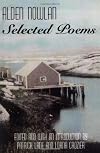
Author of Alden Nowlan: Selected Poems
About the Author
Alden Nowlan was born January 25, 1933 in Stanley, Nova Scotia. He worked as a newspaperman, and published poetry, plays, short stories, and novels. His poetry collection Bread, Wine and Salt won the Governor's General Award for Poetry in 1967. He became the writer-in-residence at the University of show more New Brunswick in 1969 and held that position until his death. He also won the University of Western Ontario's President's Medal for Fiction in 1970, the Canadian Author's Association Silver Medal in 1978, and the Queen's Jubilee Medal in 1979. He collaborated with theatre director Walter Learning on a number of plays, including Frankenstein, The Dollar Woman, and The Incredible Murder of Cardinal Tosca. He died June 27, 1983. He is buried in the Poets' Corner of the Forest Hill cemetery in Fredericton, New Brunswick. (Bowker Author Biography) show less
Works by Alden Nowlan
Associated Works
Tagged
Common Knowledge
- Canonical name
- Nowlan, Alden
- Legal name
- Nowlan, Alden Albert
- Birthdate
- 1933-1-25
- Date of death
- 1983-6-27
- Gender
- male
- Occupations
- journalist
writer-in-residence (University of New Brunswick, 1969|1983) - Short biography
- Alden Nowlan, poet (b at Windsor, NS 25 Jan 1933; d at Fredericton, NB 27 June 1983). Largely self-educated, Nowlan was a former newspaperman whose many collections of poetry grew steadily in their power and intensity. Primary among them are Bread, Wine and Salt (1967, Governor General's Award), Playing the Jesus Game (1970) and Between Tears and Laughter (1971), all of them rich in regional sensibility and in affection for ordinary people but connected by Nowlan's intelligence, temperament and reading to a literary world far beyond folk culture. He was also a playwright, a story writer and, with Various Persons Named Kevin O'Brien (1973), a novelist; several other Nowlan books appeared posthumously. He was often at the centre of the literary community in Fredericton and Atlantic Canada generally, through the vivid example of his craftsmanship, through his work at University of New Brunswick, where he became writer-in-residence in 1969, and through his individualistic personality.
- Nationality
- Canada
- Birthplace
- Stanley, Hants County, Nova Scotia, Canada
- Place of death
- Fredericton, New Brunswick, Canada
- Burial location
- Poets' Corner, Forest Hill Cemetery, Fredericton, New Brunswick
- Associated Place (for map)
- Canada
Members
Reviews
8.5/10
One of my favourites from this collection.
1914-1918
Thinking again of all those young men who were given the same first name,
Canada, once they had reached the place which we in our innocence then
called Overseas, doubtless with the same intonation
as Frankish peasants had used eight centuries earlier
in speaking of the sons who had followed their steely Lords to Outre Mar;
thinking of how a German officer remembered this for half a century as the strangest thing
he saw in four years of war show more — the Canadians walking,
simply walking, in no apparent order, but like any group of men going anywhere,
into a hailstorm of machine-gun fire that flattened them like wheat,
“They did not even look like soldiers, yet fought like Prussian Guards,”
I wish, as they would have done, who were much like me,
though they were so much younger, that God’s bad brother,
having killed them, had said Enough! and had not proceeded
to prove their deaths were pointless; if they had to die
(and all of us do; oh, all of us do), then I wish
that we could say that we are who we are because they were who they were.
That much, at least, has been given others. I think of names:
Salamanca, Antietam, Leningrad. I think of Polish miners
singing of Polish horsemen, a Cuban schoolchild placing flowers
at a wall filled with old photographs.
All of it lies,
perhaps, or romantic rubbish, though those young men would not have thought it was.
My country has no history, only a past. show less
One of my favourites from this collection.
1914-1918
Thinking again of all those young men who were given the same first name,
Canada, once they had reached the place which we in our innocence then
called Overseas, doubtless with the same intonation
as Frankish peasants had used eight centuries earlier
in speaking of the sons who had followed their steely Lords to Outre Mar;
thinking of how a German officer remembered this for half a century as the strangest thing
he saw in four years of war show more — the Canadians walking,
simply walking, in no apparent order, but like any group of men going anywhere,
into a hailstorm of machine-gun fire that flattened them like wheat,
“They did not even look like soldiers, yet fought like Prussian Guards,”
I wish, as they would have done, who were much like me,
though they were so much younger, that God’s bad brother,
having killed them, had said Enough! and had not proceeded
to prove their deaths were pointless; if they had to die
(and all of us do; oh, all of us do), then I wish
that we could say that we are who we are because they were who they were.
That much, at least, has been given others. I think of names:
Salamanca, Antietam, Leningrad. I think of Polish miners
singing of Polish horsemen, a Cuban schoolchild placing flowers
at a wall filled with old photographs.
All of it lies,
perhaps, or romantic rubbish, though those young men would not have thought it was.
My country has no history, only a past. show less

Awards


You May Also Like


Associated Authors
Statistics
- Works
- 32
- Also by
- 5
- Members
- 275
- Popularity
- #84,338
- Rating
- 4.1
- Reviews
- 2
- ISBNs
- 49
- Favorited
- 1