
Leonard Cohen (1934–2016)
Author of Beautiful Losers
About the Author
Leonard Norman Cohen was born in Montreal, Canada on September 21, 1934. He received a degree in English from McGill University and studied literature at Columbia University for a year. His first collection of poetry, Let Us Compare Mythologies, was published in 1956. His other collections of show more poetry include The Spice-Box of Earth, Flowers for Hitler, Death of a Lady's Man, Poems and Songs, and Book of Longing. He also wrote two novels entitled The Favorite Game and Beautiful Losers. He was a musician and songwriter for almost five decades. He recorded 14 studio albums including Songs of Leonard Cohen, Songs from a Room, Songs of Love and Hate, Ten New Songs, Dear Heather, Popular Problems, and You Want It Darker. He wrote numerous songs including Hallelujah, Suzanne, Dress Rehearsal Rag, Bird on a Wire, The Story of Isaac, Famous Blue Raincoat, Dance Me to the End of Love, First We Take Manhattan, Everybody Knows, and Tower of Song. In 2008, he was inducted into the Rock and Roll Hall of Fame. In 2010, he received a lifetime achievement award from the National Academy of Recording Arts and Sciences. He died on November 7, 2016 at the age of 82. (Bowker Author Biography) show less
Image credit: Photo by Roland Godefroy
Series
Works by Leonard Cohen
Słynny niebieski prochowiec 4 copies
Suzanne 3 copies
Leonard Cohen Folk 3 copies
Leonard Cohen (Great lyricists) 2 copies
Highlights (Golden highlights) 2 copies
Mojo Presents Cohen Covered Cd 2 copies
Greatest hits 1 copy
Leonard Cohen Artworks 1 copy
Os Vencidos da Vida 1 copy
Mort d'un séducteur 1 copy
Księga miłosierdzia 1 copy
Hallelujah [single] 1 copy
I´m your man 1 copy
Zurich 1993 1 copy
Hallelujah for Two Violins 1 copy
L'energie des Esclaves 1 copy
Leonard Cohen Poems (Everyman's Library Pocket Poets) by Leonard Cohen (25-Mar-2011) Hardcover 1 copy
Poesie: Confrontiamo allora i nostri miti-Le spezie della terra. Testo inglese a fronte (2018) 1 copy
Un ballet de leprosos 1 copy
Salmos 1 copy
Balet gubavaca 1 copy
Leonard One Offs 1 copy
...leonard cohen (disk) 1 copy
Gezangen 1 copy
Soldado de la vida 1 copy
Gedichten 1 copy
Leonard Cohen, Tour 2010 1 copy
In short--Leonard Cohen 1 copy
At the Beeb 1 copy
The kite is a victim 1 copy
Prophet of the Heart 1 copy
Lauluja 1 copy
Snaga robova 1 copy
Who by fire 1 copy
(Untitled) 1 copy
Leonard Cohen Songs II 1 copy
Associated Works
The Tibetan Book of the Dead: A Way of Life / The Great Liberation [1994, documentary] (2000) — Narrator — 14 copies
Recollection: Best of Concrete Blonde — Songwriter — 6 copies
The Columbia Sound: A Collection of 16 Original Big Hits [1968 Sound Recording Album] (1968) — Artist, some editions — 1 copy
Poets in New York — Contributor — 1 copy
Tagged
Common Knowledge
- Canonical name
- Cohen, Leonard
- Legal name
- Cohen, Leonard Norman
- Birthdate
- 1934-09-21
- Date of death
- 2016-11-07
- Gender
- male
- Education
- McGill University (BA | 1951)
McGill University (Law | left)
Columbia University (left) - Occupations
- poet
songwriter
singer
musician
novelist - Organizations
- McGill Debating Union
- Awards and honors
- Order of Canada (Companion 2003)
Juno/Canadian Music Hall of Fame (1991)
Order of Canada (Officer, 1991)
Governor General's Performing Arts Award (1993)
Canadian Songwriters Hall of Fame (2006)
US Rock and Roll Hall of Fame (2008) (show all 17)
US Songwriters Hall of Fame (2010)
McGill Literary Award (1956)
Grand Officer, National Order of Quebec (2008)
Prince of Asturias Award (2011)
Glenn Gould Prize (2011)
Prix Denise-Pelletier (2012)
Queen Elizabeth II Diamond Jubilee Medal (2012)
Grammy Lifetime Achievement Award (2010)
Canadian Songwriters Hall of Fame (2006)
Canadian Folk Music Walk of Fame (2005)
Governor General's Literary Award for English-language poetry (1968, declined) - Relationships
- Cohen, Adam (son)
Trudeau, Pierre Elliot (friend) - Cause of death
- a fall
- Nationality
- Canada
- Birthplace
- Montréal, Québec, Canada
- Places of residence
- Montréal, Québec, Canada
Hydra, Greece
Mount Baldy Zen Center, California, USA
Los Angeles, California, USA - Place of death
- Los Angeles, California, USA
- Burial location
- Montreal, Quebec, Canada (Shaar Hashomayim Congregation Cemetery)
- Associated Place (for map)
- Canada
Members
Reviews

A much more accessible novel than Leonard Cohen's later Beautiful Losers. That book was experimental and often impenetrable, but the structure of The Favourite Game is more regular. It is essentially a coming-of-age tale and a pseudo-autobiographical account of Cohen's youth.
The regular structure allows Cohen to shine at the things we know he is good at: lyricism and emotion. His poetic touch, whilst a drawback when it comes to plot and pacing, is excellent for scene-setting and for show more articulating emotion, and for a coming-of-age story that is key. There is a quiet majesty and intimacy in the interactions in The Favourite Game that elevate it above the self-centredness of most youthful bildungsromans.
Whilst a compelling novel in its own right, the book is more likely to be read nowadays by dedicated fans of Leonard Cohen, and in this respect it proves even more compelling. His penchant for eroticism is, thankfully, much less crude than in Beautiful Losers and whilst the womanising and bed-hopping might not play well in our more regressive, puritanical times, we do get a good insight into what makes Cohen tick and what makes him click with women. And the young Cohen who wrote The Favourite Game in 1963 can still be found in the courteous fedora-wearing gent of 2016; if you ever wondered why the man who wrote so earnestly about love could never find 'the one' and settle down with a wife, read The Favourite Game. "I'm not a good lover or I'd be with you now. I'd be beside you, not using this longing for a proof of feeling… I want no attachments. I want to begin again. I think I love you, but I love the idea of a clean slate more." (pg. 264). The book speaks of the heart of Cohen as he was, is and hopefully will be for a good while yet. show less
The regular structure allows Cohen to shine at the things we know he is good at: lyricism and emotion. His poetic touch, whilst a drawback when it comes to plot and pacing, is excellent for scene-setting and for show more articulating emotion, and for a coming-of-age story that is key. There is a quiet majesty and intimacy in the interactions in The Favourite Game that elevate it above the self-centredness of most youthful bildungsromans.
Whilst a compelling novel in its own right, the book is more likely to be read nowadays by dedicated fans of Leonard Cohen, and in this respect it proves even more compelling. His penchant for eroticism is, thankfully, much less crude than in Beautiful Losers and whilst the womanising and bed-hopping might not play well in our more regressive, puritanical times, we do get a good insight into what makes Cohen tick and what makes him click with women. And the young Cohen who wrote The Favourite Game in 1963 can still be found in the courteous fedora-wearing gent of 2016; if you ever wondered why the man who wrote so earnestly about love could never find 'the one' and settle down with a wife, read The Favourite Game. "I'm not a good lover or I'd be with you now. I'd be beside you, not using this longing for a proof of feeling… I want no attachments. I want to begin again. I think I love you, but I love the idea of a clean slate more." (pg. 264). The book speaks of the heart of Cohen as he was, is and hopefully will be for a good while yet. show less
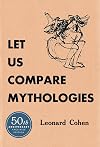
A collection of poetry first published in 1956, before much of anybody knew who Leonard Cohen was. A lot of the themes are certainly familiar to anyone who knows his music, though: love and sex, death and loss, ache and longing, and lots of religious elements and imagery. (I have, by the way, long been both confused and impressed by the way in which Leonard Cohen is pretty much the only person able to make my stubborn atheist's heart truly understand the profoundness of religious feeling on show more a deep and intuitive level.)
While I've long been a big fan of his music, this is the first time I'd read any of his poetry... Although even to say that feels a bit wrong, as it seems ridiculous to look at any of his lyrics and think of them as anything other than poetry. Except that apparently the difference between the two is significant to me, in ways that I'm finding really interesting to contemplate now, especially as I'd already been kind of re-thinking my feelings about and relationship to poetry in general lately.
So, here's the thing I've just realized: When poetry connects for me on an intellectual and/or emotional level, it's amazing. When it doesn't immediately do that, though, it seems to trigger one of two reactions in me, albeit to widely varying degrees. Either I feel as if I've just failed some sort of test by failing to properly "get" the poem and thus feel bad and inferior, or I kind of start resenting the poet for not speaking a language people like me can understand. Or both at once. Now, with the poems in this collection, some of them I got instantly and loved (or felt like I'd been hit in the heart by, which is perhaps even better). Others were more obscure to me, though, and when I found myself starting to have one of those previously mentioned reactions to them, I suddenly realized just how huge a difference there is between that and how I react when the exact same type of thing is presented to me as a song lyric. I don't instantly get or connect to every line of Cohen's songs, either, but when I don't, it's fine. It's great, even! I feel perfectly comfortable and perfectly allowed to just feel however I want about those lines or songs, to interpret them in any way that feels meaningful to me, to let them sit in my brain indefinitely in case they maybe connect to something later, or even just to enjoy them without fully understanding them. So why don't I feel like I can do that with poetry?
Ah, but it's simple, isn't it? Somewhere along the line, I internalized the impression that anyone who writes serious poetry is supposed to be (and presumably believes they are) intellectually and culturally superior to me, declaiming their Deep Thoughts in a fancy highbrow code it's my job to decipher correctly; whereas songwriting comes with absolutely none of that there's-gonna-be-a-quiz-later high school English class baggage. And I guess it took a case of the poet and the songwriter being the same person doing essentially the same thing to snap that into focus for me (and thus hopefully to help me overcome it). So I guess I owe thanks to Leonard Cohen yet again.
Rating: The poems themselves are just enough of a mixed bag for me that maybe I should rate this lower, but between how much the best of them did for me and how useful an insight reading this provided, I could hardly give it less than an approving 4/5. show less
While I've long been a big fan of his music, this is the first time I'd read any of his poetry... Although even to say that feels a bit wrong, as it seems ridiculous to look at any of his lyrics and think of them as anything other than poetry. Except that apparently the difference between the two is significant to me, in ways that I'm finding really interesting to contemplate now, especially as I'd already been kind of re-thinking my feelings about and relationship to poetry in general lately.
So, here's the thing I've just realized: When poetry connects for me on an intellectual and/or emotional level, it's amazing. When it doesn't immediately do that, though, it seems to trigger one of two reactions in me, albeit to widely varying degrees. Either I feel as if I've just failed some sort of test by failing to properly "get" the poem and thus feel bad and inferior, or I kind of start resenting the poet for not speaking a language people like me can understand. Or both at once. Now, with the poems in this collection, some of them I got instantly and loved (or felt like I'd been hit in the heart by, which is perhaps even better). Others were more obscure to me, though, and when I found myself starting to have one of those previously mentioned reactions to them, I suddenly realized just how huge a difference there is between that and how I react when the exact same type of thing is presented to me as a song lyric. I don't instantly get or connect to every line of Cohen's songs, either, but when I don't, it's fine. It's great, even! I feel perfectly comfortable and perfectly allowed to just feel however I want about those lines or songs, to interpret them in any way that feels meaningful to me, to let them sit in my brain indefinitely in case they maybe connect to something later, or even just to enjoy them without fully understanding them. So why don't I feel like I can do that with poetry?
Ah, but it's simple, isn't it? Somewhere along the line, I internalized the impression that anyone who writes serious poetry is supposed to be (and presumably believes they are) intellectually and culturally superior to me, declaiming their Deep Thoughts in a fancy highbrow code it's my job to decipher correctly; whereas songwriting comes with absolutely none of that there's-gonna-be-a-quiz-later high school English class baggage. And I guess it took a case of the poet and the songwriter being the same person doing essentially the same thing to snap that into focus for me (and thus hopefully to help me overcome it). So I guess I owe thanks to Leonard Cohen yet again.
Rating: The poems themselves are just enough of a mixed bag for me that maybe I should rate this lower, but between how much the best of them did for me and how useful an insight reading this provided, I could hardly give it less than an approving 4/5. show less
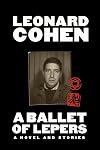
While the ecumenical depth and gentlemanly grace of Leonard Cohen does not encourage scorn, and certainly not among his fans, it is hard to see the recent publication of A Ballet of Lepers as little more than a posthumous clearing of the archives. The last Leonard Cohen book I read was The Flame in 2018, a posthumous collection of poetry that, nevertheless, displayed an effortful curation and the refined talent of the artist's later years. It was a project that the octogenarian Cohen had show more been working on but had been unable to complete by the time of his death. A Ballet of Lepers, on the other hand, is that other sort of posthumous publication: an early work that would have remained justly obscure if not for its author's later fame derived from better works.
Before he started to establish himself as a respected singer-songwriter with the 1967 album Songs of Leonard Cohen, Leonard Cohen had tried to make it as a literary figure. But before even his strange experimental novels The Favourite Game (1963) and Beautiful Losers (1966), and around the time of his first poetry collections Let Us Compare Mythologies (1956) and The Spice-Box of Earth (1961), the young unknown Cohen also wrote this short novel/novella A Ballet of Lepers, published here for the first time in 2022, attended by sixteen short stories from the same period.
Compared to his two novels, the Lepers novella is surprisingly easy to read. It's often simple writing and plotting, though Cohen displays some of his nascent lyricism and, as editor Alexandra Pleshoyano writes in her Afterword, there is early evidence of the themes that would direct his later artistic pursuits (pg. 253). There's an indulgence of sex and a temple-like adoration of women, and a creative link between the sexual and religious experiences that would bear much greater fruit in his later work (not least his signature song 'Hallelujah'). Fans will be intrigued by this Cohen in embryo, though also perhaps turned off by the emotional cruelty sometimes on display, and by some of the acts written about (including some fecal-related matters). At times, Lepers reminded me more of a poet of the mud and grime like Charles Bukowski than the Leonard Cohen we know and love.
The short stories were a surprise: I hadn't expected them at all and had never really considered the possibility that Cohen would write short stories. It's strange to read them with his name attached. Like Lepers, they're accessible and concerned largely with sexual affairs, which can make them seem frivolous and banal in retrospect. ('Signals' might be the best of the lot: "Sometimes, her hair was arranged so intricately that I just sat and stared at it as though it was some beautiful forbidden puzzle." (pg. 139)) The stories become increasingly disposable as you are reading them, only confirming the sense that A Ballet of Lepers, as a publication in 2022, is a curiosity rather than an experience. The young Cohen struggles to convey the things that really give literary weight: a sense of place; a sense of knowing and imparting secrets about the world; an ability to stage high-quality dramatic events to serve as counterpoint and emphasis to his themes. The weight in the book comes from the name of its author, and while it might not be on perfect display in Lepers, no one familiar with Leonard Cohen's subsequent career could doubt it is a considerable and worthy weight. show less
Before he started to establish himself as a respected singer-songwriter with the 1967 album Songs of Leonard Cohen, Leonard Cohen had tried to make it as a literary figure. But before even his strange experimental novels The Favourite Game (1963) and Beautiful Losers (1966), and around the time of his first poetry collections Let Us Compare Mythologies (1956) and The Spice-Box of Earth (1961), the young unknown Cohen also wrote this short novel/novella A Ballet of Lepers, published here for the first time in 2022, attended by sixteen short stories from the same period.
Compared to his two novels, the Lepers novella is surprisingly easy to read. It's often simple writing and plotting, though Cohen displays some of his nascent lyricism and, as editor Alexandra Pleshoyano writes in her Afterword, there is early evidence of the themes that would direct his later artistic pursuits (pg. 253). There's an indulgence of sex and a temple-like adoration of women, and a creative link between the sexual and religious experiences that would bear much greater fruit in his later work (not least his signature song 'Hallelujah'). Fans will be intrigued by this Cohen in embryo, though also perhaps turned off by the emotional cruelty sometimes on display, and by some of the acts written about (including some fecal-related matters). At times, Lepers reminded me more of a poet of the mud and grime like Charles Bukowski than the Leonard Cohen we know and love.
The short stories were a surprise: I hadn't expected them at all and had never really considered the possibility that Cohen would write short stories. It's strange to read them with his name attached. Like Lepers, they're accessible and concerned largely with sexual affairs, which can make them seem frivolous and banal in retrospect. ('Signals' might be the best of the lot: "Sometimes, her hair was arranged so intricately that I just sat and stared at it as though it was some beautiful forbidden puzzle." (pg. 139)) The stories become increasingly disposable as you are reading them, only confirming the sense that A Ballet of Lepers, as a publication in 2022, is a curiosity rather than an experience. The young Cohen struggles to convey the things that really give literary weight: a sense of place; a sense of knowing and imparting secrets about the world; an ability to stage high-quality dramatic events to serve as counterpoint and emphasis to his themes. The weight in the book comes from the name of its author, and while it might not be on perfect display in Lepers, no one familiar with Leonard Cohen's subsequent career could doubt it is a considerable and worthy weight. show less
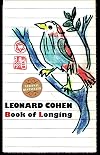
A collection of poems, including many written during Cohen's time in a Zen monastery. Anyone familiar with any of his other work will probably find the themes and contents here unsurprising: sex, love, loneliness, and desire, the sacred and the earthy and the places where the two meet, anger and sadness and wistfulness and acceptance, the darkness and the light in the world, all intermixed with little personal moments and glimmerings of self-aware, self-deprecating humor.
Some of these poems show more instantly made sense to me and evoked thoughts and feelings I could relate to. Others were obscure enough that I suspect only the poet himself really knew who and what they were about. Most fell somewhere in between, which seems like a pretty good place for poetry to fall. Although, I must say, I'm usually not a very good reader of poetry (or poetry isn't a particularly good medium for me as a reader), as I often react poorly when I don't feel like I "get" a poem. It makes me feel uncultured and dumb, I suppose, which makes me feel resentful. But Leonard Cohen, as I realized the last time I read one of his poetry collections, circumvents that problem for me entirely, because I take his poems in exactly the spirit I take his song lyrics -- indeed, not a few of these have also appeared as songs on his albums -- and I've never felt dumb not understanding a song lyric, only interested in what I could make out of it for myself. And, as with his music, there is a lot to be made out of these poems. show less
Some of these poems show more instantly made sense to me and evoked thoughts and feelings I could relate to. Others were obscure enough that I suspect only the poet himself really knew who and what they were about. Most fell somewhere in between, which seems like a pretty good place for poetry to fall. Although, I must say, I'm usually not a very good reader of poetry (or poetry isn't a particularly good medium for me as a reader), as I often react poorly when I don't feel like I "get" a poem. It makes me feel uncultured and dumb, I suppose, which makes me feel resentful. But Leonard Cohen, as I realized the last time I read one of his poetry collections, circumvents that problem for me entirely, because I take his poems in exactly the spirit I take his song lyrics -- indeed, not a few of these have also appeared as songs on his albums -- and I've never felt dumb not understanding a song lyric, only interested in what I could make out of it for myself. And, as with his music, there is a lot to be made out of these poems. show less
Lists
Awards


You May Also Like


Associated Authors
Statistics
- Works
- 191
- Also by
- 29
- Members
- 10,789
- Popularity
- #2,199
- Rating
- 3.9
- Reviews
- 129
- ISBNs
- 460
- Languages
- 24
- Favorited
- 47

