

Glenn O'Brien (1947–2017)
Author of The Cool School: Writing from America's Hip Underground
About the Author
Glenn O'Brien was born in Cleveland, Ohio on March 2, 1947. He attended Georgetown University, where he edited a student literary magazine entitled The Georgetown Journal, and studied film at Columbia University. In 1971, Andy Warhol hired him to work on and then edit the magazine Interview. He was show more the host of the public access television show TV Party from 1978 until 1982. He was an editor, art and music columnist, essayist, and poet. He wrote the Style Guy fashion advice column, which appeared in Details magazine and then in GQ, from 1999 to 2015. He also worked for Artforum, Oui, High Times, Maxim, Purple, Rolling Stone, Allure, and Harper's Bazaar. He wrote the books How to Be a Man: A Guide to Style and Behavior for the Modern Gentleman, Ruins with a View, and Like Art: Glenn O'Brien on Advertising. He edited Madonna's book Sex, wrote the play Drugs with Cookie Mueller, and was the screenwriter for Downtown 81. He was also a stand-up comedian, a creative director at Barneys New York, and an advertising copywriter including several of Calvin Klein television campaigns. In 2015, he started a new television talk show entitled Tea at the Beatrice. He died of pneumonia on April 7, 2017 at the age of 70. (Bowker Author Biography) show less
Works by Glenn O'Brien
The Cool School: Writing from America's Hip Underground (2013) — Editor; Contributor — 87 copies, 2 reviews
Jonah Freeman & Justin Lowe: Black Acid Co-op/Bright White Underground/Stray Light Grey/Artichoke Underground (2015) 3 copies
Inez van Lamsweerde/Vinoodh Matadin. Pretty Much Everything by Glenn O'Brien (2013-10-25) (1753) 1 copy
Todd Eberle Hi-Fi 1 copy
Warhol's World 1 copy
Visionaire Number 15 1 copy
Warhol, Wool, Guyton 1 copy
Chris Martin: Paintings 1 copy
Associated Works
Tagged
Common Knowledge
- Birthdate
- 1947-03-02
- Date of death
- 2017-04-07
- Gender
- male
- Education
- Georgetown University
- Organizations
- Interview
Rolling Stone - Nationality
- USA
- Birthplace
- Cleveland, Ohio, USA
- Place of death
- Manhattan, New York, USA
- Associated Place (for map)
- USA
Members
Reviews
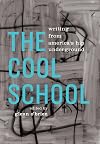
Finished in a flurry. This book was a lot... grittier than I expected. To be fair, in the introduction the editor warns us "I may have given shorter shrift to the greener, more Big Sur Zen garden end of the spectrum in favor of urban grit, but that can be easily rectified - get with Gary Snyder and he'll do the rest."
I've been hanging out in Snyder's Big Sur Zen garden for some time, so I welcomed the fresh ground. The contemporary accounts of the music are amazing, from Charlie Parker to show more Miles to Dylan visiting Woody in the asylum. The various riffs on the meaning of hip by minor scribblers wear quickly, and by the time we got to Warhol transcribing a day's conversation I was skipping parts whole parts.
Solid collection, seedier than I expected - as more and more of the previously prohibited was enveloped by the culture at-large, the remaining underground got weird indeed.
Closing with Carlin's riff on modern man was a nice touch, I'm glad to have that in writing. show less
I've been hanging out in Snyder's Big Sur Zen garden for some time, so I welcomed the fresh ground. The contemporary accounts of the music are amazing, from Charlie Parker to show more Miles to Dylan visiting Woody in the asylum. The various riffs on the meaning of hip by minor scribblers wear quickly, and by the time we got to Warhol transcribing a day's conversation I was skipping parts whole parts.
Solid collection, seedier than I expected - as more and more of the previously prohibited was enveloped by the culture at-large, the remaining underground got weird indeed.
Closing with Carlin's riff on modern man was a nice touch, I'm glad to have that in writing. show less
Well, this book is most definitely cool! An excellent collection of writers, poets, and musicians that illustrate different eras and contexts of being "cool". I really enjoyed reading my old favorites, like Kerouac, Thompson, and Burroughs, and I loved being exposed to new material, like Mezzrow, di Prima, Wurlitzer, Dylan, and Owens! This book has stories, song lyrics, poems, essays, reviews, and comedy routines, so it is very diverse, and very entertaining. And the flow between pieces has show more a nice vibe and tempo and they seem interconnected. I am glad I read this, and will proudly add it to my collection! show less
Published on the occasion of the exhibition 'Dash Snow' at Contemporary Fine Arts, Berlin, February 11 -April 20, 2012.
DASH SNOW
11 February- 24 March, 2012
Contemporary Fine Arts is pleased to announce the second solo exhibition showing works by Dash Snow (1981-2009). Mary Blair Hansen of the Dash Snow Archive curated the show that is comprised of two elements: a film and a selection of original Polaroids.
Snow archived roughly 8,000 of his Polaroids but showed small groupings of the originals show more only three times during his life (most people are familiar with them by way of 147 scanned and enlarged C-print editions). Proving to be his entrée to the art world, it was fabled that Snow used the Polaroids to document experiences he might not otherwise remember due to intoxication. This sensationalism justly grabs hold of Snow’s most lurid subject matter as well as his nostalgic bent. It also fails to acknowledge the strange and reflexive intimacy Snow imparted by both presiding over and participating in the photographs.
The groupings on view here (totalling over 400 original Polaroids) show the breadth of experience the artist compulsively chose to document. From the banal to the extreme, from the melancholy to the ecstatic, each photograph would seem to buttress a facet of the artist’s uncommon experience. That he began shooting these pictures roughly at the time of 9-11 (when Snow was 20 years old) is not immaterial. Images of Snow and his friends writing graffiti, flashing guns, making out and making art all give us a larger picture of the wiliness and abandon that would propel his circle after the attacks.
Also apparent in these pictures is Snow’s capacity to take custody of his surroundings, slinking himself into impossible moments with his camera at the ready. Sometimes these are moments of calamity and repulsiveness that would seem far too fleeting to capture: a fall, a vomit, a primordial stare. In other examples, he was audaciously present during his own or others’ sexual encounters. This sense of exceptional intrusion is also evident in his portraits of “sleepers.” Here, Snow’s own consciousness is locked to the unconsciousness of his subjects – be they vagrants on the streets or his most beloved friends and lovers. The patchwork of conditions in the sleepers (peaceful, passed-out, defaced, dismal, beautiful) reflects back toward the artist himself, their wakeful beholder.
Snow quickly expanded from the Polaroids that marked his artistic beginning to collage, sculpture, installation, and finally Super8 film, such as Familae Erase (2008), on view here. Made the year before he died, the piece may at first appear as a rough and uncomfortably raw exposure of the artist’s publicized difficulties: his drug addiction and complicated relationship with his prominent extended family. However, moving deeper into the composition of the film, one can discern a master coda to the entirety of Snow’s artistic output. The piece was edited entirely "in-camera," meaning only with the stops and starts of the recording process itself. This approach perfectly illustrates the ferocious immediacy he maintained across all of his chosen media. In Familae Erase, more explicitly than anywhere else in Snow's oeuvre, we see him performing his often stunning and poetic process: the homemade effects with blood, glitter and light; the collage materials, books and pornography swirling around him and beginning to juxtapose; the ritual and cumulative actions of making the sculptures from whatever ruinous materials are on hand. We see him enact a kind of Gothic irrationality and melodrama - all of which could seem to unfold within an interior space as easily as an exterior one.
It is this disregard for the absolute regimes of the hidden and the overt that distinguishes Snow's work. As much as it may offer a portrait, Familae Erase gives us also the defiance of a portrait. In certain moments, Snow seems to put himself vulnerably on display, a prop in his own artwork. In others, we peer over his shoulder into the crucible of his artistic process. In still others, our viewpoint is confounded by darkness and obscurity, forced into abstraction. Similarly, the Polaroids constantly shift the direction of the action; in some images our gaze is trained squarely on Snow as he presents himself intentionally. Elsewhere, our eyes are met “as Snow’s” in the responsive faces of his subjects, smiling at him and therefore back at us – perhaps encouraging us toward a false sense of truth. Just as they would define his era on the Bowery, the unruly synergies of horror and inspiration and of the inner and outer lives are at the core of Snow’s project.
New York artist Dash Snow’s death in July 2009, two weeks before his 28th birthday, sent shockwaves of grief through the art world, though it was not unexpected. Since his late teens, Snow had used photography to documents his days and nights of extreme hedonism--nights which, as he famously claimed, he might not otherwise remember. As these Polaroid photographs began to be exhibited in the early 2000s, Snow was briefly launched to art-world superstardom, keeping company with the likes of Dan Colen and Ryan McGinley, with whom he pioneered a photographic style whose subject matter is best characterized in McGinley’s brief memoir of Snow: “Irresponsible, reckless, carefree, wild, rich--we were just kids doing drugs and being bad, out at bars every night. Sniffing coke off toilet seats. Doing bumps off each others’ fists. Driving down one-way streets in Milan at 100 miles an hour blasting ‘I Did It My Way’ in a white van.” Dash Snow: I Love You, Stupid compiles these famous Polaroids, previously only published in relatively expensive editions. Opening with scenes of friends crashed on beds and couches, floors and even the street, it records hazily snatched glimpses of sex, hard drugs and hanging out; adventures in cars, baths, pools, subway cars, friends’ apartments, on boardwalks and rooftops. With 430 color reproductions this definitive and affordable monograph constitutes an extraordinary document of a life lived at full pitch.
Dash Snow (1981–2009) was a great-grandson of the founders of the Menil Collection in Houston, Dominique de Menil and John de Menil, and grandson of the Buddhist scholar Robert Thurman. After spending his teen years as a graffiti artist, Snow moved to New York, where he died on the evening of July 13, 2009, at Lafayette House, a hotel in lower Manhattan. show less
DASH SNOW
11 February- 24 March, 2012
Contemporary Fine Arts is pleased to announce the second solo exhibition showing works by Dash Snow (1981-2009). Mary Blair Hansen of the Dash Snow Archive curated the show that is comprised of two elements: a film and a selection of original Polaroids.
Snow archived roughly 8,000 of his Polaroids but showed small groupings of the originals show more only three times during his life (most people are familiar with them by way of 147 scanned and enlarged C-print editions). Proving to be his entrée to the art world, it was fabled that Snow used the Polaroids to document experiences he might not otherwise remember due to intoxication. This sensationalism justly grabs hold of Snow’s most lurid subject matter as well as his nostalgic bent. It also fails to acknowledge the strange and reflexive intimacy Snow imparted by both presiding over and participating in the photographs.
The groupings on view here (totalling over 400 original Polaroids) show the breadth of experience the artist compulsively chose to document. From the banal to the extreme, from the melancholy to the ecstatic, each photograph would seem to buttress a facet of the artist’s uncommon experience. That he began shooting these pictures roughly at the time of 9-11 (when Snow was 20 years old) is not immaterial. Images of Snow and his friends writing graffiti, flashing guns, making out and making art all give us a larger picture of the wiliness and abandon that would propel his circle after the attacks.
Also apparent in these pictures is Snow’s capacity to take custody of his surroundings, slinking himself into impossible moments with his camera at the ready. Sometimes these are moments of calamity and repulsiveness that would seem far too fleeting to capture: a fall, a vomit, a primordial stare. In other examples, he was audaciously present during his own or others’ sexual encounters. This sense of exceptional intrusion is also evident in his portraits of “sleepers.” Here, Snow’s own consciousness is locked to the unconsciousness of his subjects – be they vagrants on the streets or his most beloved friends and lovers. The patchwork of conditions in the sleepers (peaceful, passed-out, defaced, dismal, beautiful) reflects back toward the artist himself, their wakeful beholder.
Snow quickly expanded from the Polaroids that marked his artistic beginning to collage, sculpture, installation, and finally Super8 film, such as Familae Erase (2008), on view here. Made the year before he died, the piece may at first appear as a rough and uncomfortably raw exposure of the artist’s publicized difficulties: his drug addiction and complicated relationship with his prominent extended family. However, moving deeper into the composition of the film, one can discern a master coda to the entirety of Snow’s artistic output. The piece was edited entirely "in-camera," meaning only with the stops and starts of the recording process itself. This approach perfectly illustrates the ferocious immediacy he maintained across all of his chosen media. In Familae Erase, more explicitly than anywhere else in Snow's oeuvre, we see him performing his often stunning and poetic process: the homemade effects with blood, glitter and light; the collage materials, books and pornography swirling around him and beginning to juxtapose; the ritual and cumulative actions of making the sculptures from whatever ruinous materials are on hand. We see him enact a kind of Gothic irrationality and melodrama - all of which could seem to unfold within an interior space as easily as an exterior one.
It is this disregard for the absolute regimes of the hidden and the overt that distinguishes Snow's work. As much as it may offer a portrait, Familae Erase gives us also the defiance of a portrait. In certain moments, Snow seems to put himself vulnerably on display, a prop in his own artwork. In others, we peer over his shoulder into the crucible of his artistic process. In still others, our viewpoint is confounded by darkness and obscurity, forced into abstraction. Similarly, the Polaroids constantly shift the direction of the action; in some images our gaze is trained squarely on Snow as he presents himself intentionally. Elsewhere, our eyes are met “as Snow’s” in the responsive faces of his subjects, smiling at him and therefore back at us – perhaps encouraging us toward a false sense of truth. Just as they would define his era on the Bowery, the unruly synergies of horror and inspiration and of the inner and outer lives are at the core of Snow’s project.
New York artist Dash Snow’s death in July 2009, two weeks before his 28th birthday, sent shockwaves of grief through the art world, though it was not unexpected. Since his late teens, Snow had used photography to documents his days and nights of extreme hedonism--nights which, as he famously claimed, he might not otherwise remember. As these Polaroid photographs began to be exhibited in the early 2000s, Snow was briefly launched to art-world superstardom, keeping company with the likes of Dan Colen and Ryan McGinley, with whom he pioneered a photographic style whose subject matter is best characterized in McGinley’s brief memoir of Snow: “Irresponsible, reckless, carefree, wild, rich--we were just kids doing drugs and being bad, out at bars every night. Sniffing coke off toilet seats. Doing bumps off each others’ fists. Driving down one-way streets in Milan at 100 miles an hour blasting ‘I Did It My Way’ in a white van.” Dash Snow: I Love You, Stupid compiles these famous Polaroids, previously only published in relatively expensive editions. Opening with scenes of friends crashed on beds and couches, floors and even the street, it records hazily snatched glimpses of sex, hard drugs and hanging out; adventures in cars, baths, pools, subway cars, friends’ apartments, on boardwalks and rooftops. With 430 color reproductions this definitive and affordable monograph constitutes an extraordinary document of a life lived at full pitch.
Dash Snow (1981–2009) was a great-grandson of the founders of the Menil Collection in Houston, Dominique de Menil and John de Menil, and grandson of the Buddhist scholar Robert Thurman. After spending his teen years as a graffiti artist, Snow moved to New York, where he died on the evening of July 13, 2009, at Lafayette House, a hotel in lower Manhattan. show less
You May Also Like


Associated Authors
Statistics
- Works
- 41
- Also by
- 7
- Members
- 375
- Popularity
- #64,332
- Rating
- 3.6
- Reviews
- 4
- ISBNs
- 39
- Languages
- 2