
Ellie Marney
Author of None Shall Sleep
About the Author
Ellie Marney is the author of Every Word which won a Davitt Awards 2015 in the category of Young Adult Novel. (Bowker Author Biography)
Series
Works by Ellie Marney
Write Now : Where Your Story Begins 2 copies
Associated Works
Tagged
Common Knowledge
- Gender
- female
- Agent
- Josh Adams
- Nationality
- Australia
- Places of residence
- Queensland, Australia
Melbourne, Australia - Associated Place (for map)
- Australia
Members
Reviews

Rachel Watts and James Mycroft are back home in Melbourne but haven’t recovered physically or psychologically. And a couple of local murders send a clear message: they are both still in danger.
I really liked that this story deals with trauma and with consequences. Rachel is struggling with night terrors and panic attacks, and her parents are furious about the way she took off for London. Meanwhile Mycroft is throwing himself into researching his parents’ killer, to the point of becoming show more a recluse. Their respective coping strategies are a potential for conflict -- she’s trying to forget, he’s obsessively trying to find answers -- but also mean that they are both actually, in their different ways, avoiding dealing with things. This is interesting.
Then they take off on their own again, instead of properly enlisting the help of adults -- and yes, I can see their reasoning, and that being traumatised teenagers affects their ability to clearly anticipate consequences. I still was a bit frustrated. There’s also more violence and action in the final act than I really want from mysteries. But I guess it’s a fitting for this book -- and indeed for this trilogy -- to end in the place where Rachel grew up.
Quibbles aside, this trilogy has been tense and satisfying, and I appreciate that this is a Sherlock Holmes-ish story about Australian teenagers.
“Rachel, you’re a crap liar. Why aren’t you sleeping?”
“I don’t know.” I feel naked without the concealer. “It’s fine, Mai. It’ll pass.”
Mai throws up her hands. “Rachel, come on. Is being this delusional some kind of disease? Because, no shit, I will donate for the cure [...] you’re my best mate. And I hate to be the one to point out the nose on your frickin’ face, but you have PTSD. Jesus, you're as bad as Mycroft.” show less
I really liked that this story deals with trauma and with consequences. Rachel is struggling with night terrors and panic attacks, and her parents are furious about the way she took off for London. Meanwhile Mycroft is throwing himself into researching his parents’ killer, to the point of becoming show more a recluse. Their respective coping strategies are a potential for conflict -- she’s trying to forget, he’s obsessively trying to find answers -- but also mean that they are both actually, in their different ways, avoiding dealing with things. This is interesting.
Then they take off on their own again, instead of properly enlisting the help of adults -- and yes, I can see their reasoning, and that being traumatised teenagers affects their ability to clearly anticipate consequences. I still was a bit frustrated. There’s also more violence and action in the final act than I really want from mysteries. But I guess it’s a fitting for this book -- and indeed for this trilogy -- to end in the place where Rachel grew up.
Quibbles aside, this trilogy has been tense and satisfying, and I appreciate that this is a Sherlock Holmes-ish story about Australian teenagers.
“Rachel, you’re a crap liar. Why aren’t you sleeping?”
“I don’t know.” I feel naked without the concealer. “It’s fine, Mai. It’ll pass.”
Mai throws up her hands. “Rachel, come on. Is being this delusional some kind of disease? Because, no shit, I will donate for the cure [...] you’re my best mate. And I hate to be the one to point out the nose on your frickin’ face, but you have PTSD. Jesus, you're as bad as Mycroft.” show less

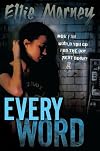
A young adult crime fiction series, the "EVERY" books from Ellie Marney are a pitch perfect example of YA that works for young and old. Particularly the old that can still remember how complicated first love was, and the young that are experiencing the same.
Following on closely in time and events from the first book EVERY BREATH, James Mycroft is still limping from close encounters in that book, and Rachel Watts is still semi-grounded by her parents. Certainly they aren't happy about Watts show more spending too much up close and personal time with Mycroft, and they probably aren't wrong to be a bit concerned:
"I can say that now: my boyfriend. It took me a while to get used to the words. I'm still getting used to the way my body reacts when Mycroft and I touch: this hot flush goes right through me. My mind goes on vacation, and my breathing catches, so I'm gasping every time he does simple things - putting his arm around my shoulders, or touching his lips gently to mine, like now."
Refreshingly this relationship isn't all girlish flutterings. Watts might be having to process the effect that Mycroft has on her physically, but she's also acutely aware that mentally, she's the stronger of the two. Mycroft's past continues to haunt him, and whether he likes to admit it or not, he needs her calming, rational presence. So she has no compunction whatsoever when it comes to getting on a plane and following him to London when he suddenly drops everything and heads that way. Now I know what many readers will be thinking. A seventeen year old girl just ups and gets on a plane? I will admit to thinking the same thing at one stage - before I realised that it's been an era or two since I was that age, and whilst in our day, acts of pushing the boundaries didn't necessarily involve stacking up the air miles, it certainly could have involved striking out on our own, no matter how much of a hissy fit our parents threw.
The investigation thread in EVERY WORD is complicated - a man dies in England in circumstances eerily similar to the death of Mycroft's own parents. A valuable Shakespeare First Folio had gone missing from his workplace, and there's no clear lead on what could have happened to it. Mycroft's ability to get involved is via the Forensic specialist Doctor that he works part-time with. Called into consult on the death in London because the dead man is Australian makes enough sense to keep the reader in the story. Mycroft accompanying him to England equally makes enough sense not to clang. And in a testament to both the pace of the story, and the strength of the writing, Rachel following afterwards also makes sense. What happens to them all in England works, as do events on their return to Australia.
Part of what makes all this work is that some of the specialised knowledge, the science used throughout the book is believable. The idea that two teenagers might escape a dire situation based on a bit of basic chemistry knowledge worked:
"He rattles the contents of an open box, angles it toward the light. 'Toilet cleaner. Two cans of air freshener. Insect spray. Toilet paper. And a bunch of bathroom cupboard knobs, with accompanying screws. ... 'If I had some foil - '. 'There's foil.' I say sharply. 'I've got foil. That kebab wrapping in the corner.'"
The great strength really of the "EVERY" series is the two central characters. Their "teenageness" feels right. Their relationship fits the bill. Their impulsiveness and their care spot on. And the reactions of their families, friends and colleagues just work.
"... Dad's on shift, but he said to say welcome home.' 'Okay,' I say slowly. 'But .... what about Mum?' Mike sighs and hunkers down to my level. 'Mum's a bit trickier.'
Perfect for any teenager's in your life, a good read for those of us older (in some cases way way older) than that, the "EVERY" series is a wonderful entry in the Australian Crime Fiction canon. The third book in the series, EVERY MOVE, will be released in March, 2015.
http://www.austcrimefiction.org/review/review-every-word-ellie-marney show less
Following on closely in time and events from the first book EVERY BREATH, James Mycroft is still limping from close encounters in that book, and Rachel Watts is still semi-grounded by her parents. Certainly they aren't happy about Watts show more spending too much up close and personal time with Mycroft, and they probably aren't wrong to be a bit concerned:
"I can say that now: my boyfriend. It took me a while to get used to the words. I'm still getting used to the way my body reacts when Mycroft and I touch: this hot flush goes right through me. My mind goes on vacation, and my breathing catches, so I'm gasping every time he does simple things - putting his arm around my shoulders, or touching his lips gently to mine, like now."
Refreshingly this relationship isn't all girlish flutterings. Watts might be having to process the effect that Mycroft has on her physically, but she's also acutely aware that mentally, she's the stronger of the two. Mycroft's past continues to haunt him, and whether he likes to admit it or not, he needs her calming, rational presence. So she has no compunction whatsoever when it comes to getting on a plane and following him to London when he suddenly drops everything and heads that way. Now I know what many readers will be thinking. A seventeen year old girl just ups and gets on a plane? I will admit to thinking the same thing at one stage - before I realised that it's been an era or two since I was that age, and whilst in our day, acts of pushing the boundaries didn't necessarily involve stacking up the air miles, it certainly could have involved striking out on our own, no matter how much of a hissy fit our parents threw.
The investigation thread in EVERY WORD is complicated - a man dies in England in circumstances eerily similar to the death of Mycroft's own parents. A valuable Shakespeare First Folio had gone missing from his workplace, and there's no clear lead on what could have happened to it. Mycroft's ability to get involved is via the Forensic specialist Doctor that he works part-time with. Called into consult on the death in London because the dead man is Australian makes enough sense to keep the reader in the story. Mycroft accompanying him to England equally makes enough sense not to clang. And in a testament to both the pace of the story, and the strength of the writing, Rachel following afterwards also makes sense. What happens to them all in England works, as do events on their return to Australia.
Part of what makes all this work is that some of the specialised knowledge, the science used throughout the book is believable. The idea that two teenagers might escape a dire situation based on a bit of basic chemistry knowledge worked:
"He rattles the contents of an open box, angles it toward the light. 'Toilet cleaner. Two cans of air freshener. Insect spray. Toilet paper. And a bunch of bathroom cupboard knobs, with accompanying screws. ... 'If I had some foil - '. 'There's foil.' I say sharply. 'I've got foil. That kebab wrapping in the corner.'"
The great strength really of the "EVERY" series is the two central characters. Their "teenageness" feels right. Their relationship fits the bill. Their impulsiveness and their care spot on. And the reactions of their families, friends and colleagues just work.
"... Dad's on shift, but he said to say welcome home.' 'Okay,' I say slowly. 'But .... what about Mum?' Mike sighs and hunkers down to my level. 'Mum's a bit trickier.'
Perfect for any teenager's in your life, a good read for those of us older (in some cases way way older) than that, the "EVERY" series is a wonderful entry in the Australian Crime Fiction canon. The third book in the series, EVERY MOVE, will be released in March, 2015.
http://www.austcrimefiction.org/review/review-every-word-ellie-marney show less
The Good Stuff
Fast paced, exciting and raw
I'm thinking Mycroft is kinda hot, but then I feel creepy cuz the dude is like 19
Intriguing secondary characters
Love the winks to Sherlock Holmes, especially the plays on characters names
Her writing is beyond description. She doesn't waste a word, yet you feel like you are living in the story with the characters and can feel and taste everything.
Wonderful sense of realism, with characters making mistakes and getting hurt and nothing wrapped up all show more neatly
Teens (ok and adult readers too) are going to love the sexual tension
Really enjoy the relationship between Watts and her brother
Smart, snarky dialogue
Strong female heroine - would be proud and terrified to have her as my daughter
The Not So Good Stuff
Trying to think of something negative, Oh yeah -- scene in the morgue - ewww (Ok not really bad as it was realistic - but icky)
Favorite Quotes/Passages
"In this weather, you can sense the uncertainty. The control you think you have - over the property, over your fate-is just an illusion."
"Detective. d'you honestly think Mycroft's going to do as he's told? He might be bright, but when it comes to issues of personal judgment he can be sort of a dickhead."
"For you, because it will hurt like crazy. But for him it will be worse, because if you can never trust anybody to let them in, you can never love. I wouldn't wish that on anybody."
"He must have been someone who loved books, loved words. Someone who saw beneath the weathered covers and the yellowing ink to the soul underneath."
4.75 Dewey's
I received this from Penguin Random House in exchange for an honest review show less
Fast paced, exciting and raw
I'm thinking Mycroft is kinda hot, but then I feel creepy cuz the dude is like 19
Intriguing secondary characters
Love the winks to Sherlock Holmes, especially the plays on characters names
Her writing is beyond description. She doesn't waste a word, yet you feel like you are living in the story with the characters and can feel and taste everything.
Wonderful sense of realism, with characters making mistakes and getting hurt and nothing wrapped up all show more neatly
Teens (ok and adult readers too) are going to love the sexual tension
Really enjoy the relationship between Watts and her brother
Smart, snarky dialogue
Strong female heroine - would be proud and terrified to have her as my daughter
The Not So Good Stuff
Trying to think of something negative, Oh yeah -- scene in the morgue - ewww (Ok not really bad as it was realistic - but icky)
Favorite Quotes/Passages
"In this weather, you can sense the uncertainty. The control you think you have - over the property, over your fate-is just an illusion."
"Detective. d'you honestly think Mycroft's going to do as he's told? He might be bright, but when it comes to issues of personal judgment he can be sort of a dickhead."
"For you, because it will hurt like crazy. But for him it will be worse, because if you can never trust anybody to let them in, you can never love. I wouldn't wish that on anybody."
"He must have been someone who loved books, loved words. Someone who saw beneath the weathered covers and the yellowing ink to the soul underneath."
4.75 Dewey's
I received this from Penguin Random House in exchange for an honest review show less
Every Breath by Ellie Marney
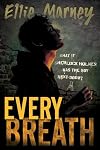
The book's front cover holds a question: WHAT IF SHERLOCK HOLMES WAS THE BOY NEXT DOOR?
It presents a backdrop for the plot. Peopled with Sherlock Holmes character types, the story's narrator, Watts (Rachel) is a smart seventeen-year-old country girl, whose family moved to the city (Melbourne) after losing their much-loved family farm. She's indispensable at home, keeping up with household chores while her parents and older brother work to make ends meet. On the show more same street, two doors down, lives Mycroft (James) a seventeen-year-old eccentric boy genius. Orphaned since age ten, Mycroft boards with Mrs. Angela Hudgson, his legal guardian but rarely-there maternal aunt. In their supportive roles, school chums and teen couple, Mai and Gus, provide likeable springboards for Watts and Mycroft's endeavors. Namely, to find out who murdered a friend, Homeless Dave, and his dog, Poodle. All the modern technologies--forensics, internet, IMing, and cell phone messages-- are used as the teen detective duo of Watts and Mycroft debate with the police whether or not a senseless "sport killing" was the motive for the crime. Even with some similarities to Holmes type characters--remember, Mycroft was the smarter Holmes brother, and Mrs. Hudson was Holmes' landlady--don't be fooled, this is no predictable cookie-cutter whodunit.
From the get-go there's the subtle attraction to draw the reader in. Opening with a glimpse of Watts and Mycroft's unique friendship already formed--they use surnames at this stage--the two are in the school's sick bay and Watts is administering first-aid to Mycroft after he's been engaged in fisticuffs. Here's what she reveals: "Mycroft turns his head, and now I'm getting the full stare. His blue eyes are luminous from the sunlight reflecting off the white bench surfaces. My palms suddenly go sweaty - it's way too warm in here. When my pulse jumps I have to look away." And the pull of it builds from there because, after all, opposites attract. She's obliging and polite. He's obsessive and dramatic. When asked by Mai and Gus if the pair are investigating the crime, Watts says, "no" to Mycroft's "yes" and it soon leads to a squabble over who cares enough over Homeless Dave's death. Mycroft insists he could solve it on his own, yet he implores Watts to help him out. Watts vacillates but then gives in. While they search for answers and decipher facts, the teen duo even finagle a way to view the body and talk with the pathologist without it seeming forced or contrived. Underlying all their detective work is the mystery surrounding the car-accident death of Mycroft's parents. Surfacing in a confrontation with hurtful things said between them, it's a plot layer that deepens the Mycroft-Watts partnership. Soon reconciled, they support and brace each other up. Literally. Mycroft braces Watts as she slips on the descend off a high-rise scaffolding after examining a graffiti mural holding a vital clue. And at a crucial moment she saves his skin. Only then do they fall into using the first-name endearments of James and Rachel.
EVERY BREATH is a realistically told YA tale that unfolds so cleverly with Mycroft's intriguing back story, some adroit twists, plus such a palpable tension between Watts and her boy genius that the pages just seem to turn themselves. Thanks to LibraryThing' Early Reviewers for giving me a chance to read the first of what, I believe, is a series. Can't wait for the sequel! show less
The book's front cover holds a question: WHAT IF SHERLOCK HOLMES WAS THE BOY NEXT DOOR?
It presents a backdrop for the plot. Peopled with Sherlock Holmes character types, the story's narrator, Watts (Rachel) is a smart seventeen-year-old country girl, whose family moved to the city (Melbourne) after losing their much-loved family farm. She's indispensable at home, keeping up with household chores while her parents and older brother work to make ends meet. On the show more same street, two doors down, lives Mycroft (James) a seventeen-year-old eccentric boy genius. Orphaned since age ten, Mycroft boards with Mrs. Angela Hudgson, his legal guardian but rarely-there maternal aunt. In their supportive roles, school chums and teen couple, Mai and Gus, provide likeable springboards for Watts and Mycroft's endeavors. Namely, to find out who murdered a friend, Homeless Dave, and his dog, Poodle. All the modern technologies--forensics, internet, IMing, and cell phone messages-- are used as the teen detective duo of Watts and Mycroft debate with the police whether or not a senseless "sport killing" was the motive for the crime. Even with some similarities to Holmes type characters--remember, Mycroft was the smarter Holmes brother, and Mrs. Hudson was Holmes' landlady--don't be fooled, this is no predictable cookie-cutter whodunit.
From the get-go there's the subtle attraction to draw the reader in. Opening with a glimpse of Watts and Mycroft's unique friendship already formed--they use surnames at this stage--the two are in the school's sick bay and Watts is administering first-aid to Mycroft after he's been engaged in fisticuffs. Here's what she reveals: "Mycroft turns his head, and now I'm getting the full stare. His blue eyes are luminous from the sunlight reflecting off the white bench surfaces. My palms suddenly go sweaty - it's way too warm in here. When my pulse jumps I have to look away." And the pull of it builds from there because, after all, opposites attract. She's obliging and polite. He's obsessive and dramatic. When asked by Mai and Gus if the pair are investigating the crime, Watts says, "no" to Mycroft's "yes" and it soon leads to a squabble over who cares enough over Homeless Dave's death. Mycroft insists he could solve it on his own, yet he implores Watts to help him out. Watts vacillates but then gives in. While they search for answers and decipher facts, the teen duo even finagle a way to view the body and talk with the pathologist without it seeming forced or contrived. Underlying all their detective work is the mystery surrounding the car-accident death of Mycroft's parents. Surfacing in a confrontation with hurtful things said between them, it's a plot layer that deepens the Mycroft-Watts partnership. Soon reconciled, they support and brace each other up. Literally. Mycroft braces Watts as she slips on the descend off a high-rise scaffolding after examining a graffiti mural holding a vital clue. And at a crucial moment she saves his skin. Only then do they fall into using the first-name endearments of James and Rachel.
EVERY BREATH is a realistically told YA tale that unfolds so cleverly with Mycroft's intriguing back story, some adroit twists, plus such a palpable tension between Watts and her boy genius that the pages just seem to turn themselves. Thanks to LibraryThing' Early Reviewers for giving me a chance to read the first of what, I believe, is a series. Can't wait for the sequel! show less
 This review was written for LibraryThing Early Reviewers.
Lists
Awards


You May Also Like


Associated Authors
Statistics
- Works
- 16
- Also by
- 1
- Members
- 1,168
- Popularity
- #22,016
- Rating
- 4.0
- Reviews
- 80
- ISBNs
- 68
