
Christopher Miller (1) (1961–)
Author of The Cardboard Universe: A Guide to the World of Phoebus K. Dank
For other authors named Christopher Miller, see the disambiguation page.
About the Author
Christopher Miller teaches at Bennington College in Vermont
Works by Christopher Miller
Tagged
Common Knowledge
- Birthdate
- 1961
- Gender
- male
- Education
- Columbia College (BA)
Washington University (MFA) - Organizations
- Bennington College
Members
Reviews

A collection of short, alphabetically arranged essays on once-ubiquitous comic tropes that have (mostly) fallen out of fashion, American Cornball is a fascinating exercise in pop-culture history. Miller writes, engagingly, in a hard-to-pull-off (and thus so rarely seen that I don't think it even has an agreed-upon name) style that I think of as "gonzo academic." He makes lightly makes serious points about human psychology, the nature of humor, and changing cultural norms, and backs them up show more with on-point examples drawn from what is clearly exhaustive research into comic strips, single-panel comics, radio, television, movies, postcards, and three-dimensional novelties. Yet, he never loses sight of the innate absurdity of his subject matter, and never forgets to have fun with it.
This is the kind of book that's best dipped into a few essays at a time (I kept it on my kitchen table, and read it with my breakfast over the course of about 6 weeks) rather than read straight through, and the individual essays -- though extensively cross-referenced -- stand quite well on their own. Miller weaves larger themes through the essays, however, and if you pay careful attention to them, the whole book becomes something greater than the sum of its (highly entertaining) parts. At the end of 500 pages, Miller has left a number of facile, pat generalizations about American culture, in tatters. We were classy, clean, and respectful in the "good old days" and we're crude and debased (or uptight, humorless prudes) now? Read Miller closely, all the way through, and then tell me that with a straight face.
American Cornball is a must-have for anyone interested in American humor, and worthwhile reading for anyone interested in American popular culture for more than just its entertainment value. show less
This is the kind of book that's best dipped into a few essays at a time (I kept it on my kitchen table, and read it with my breakfast over the course of about 6 weeks) rather than read straight through, and the individual essays -- though extensively cross-referenced -- stand quite well on their own. Miller weaves larger themes through the essays, however, and if you pay careful attention to them, the whole book becomes something greater than the sum of its (highly entertaining) parts. At the end of 500 pages, Miller has left a number of facile, pat generalizations about American culture, in tatters. We were classy, clean, and respectful in the "good old days" and we're crude and debased (or uptight, humorless prudes) now? Read Miller closely, all the way through, and then tell me that with a straight face.
American Cornball is a must-have for anyone interested in American humor, and worthwhile reading for anyone interested in American popular culture for more than just its entertainment value. show less
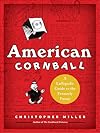
American Cornball: A Laffopedic Guide to the Formerly Funny by Christopher Miller is a very highly recommended. This entertaining and fascinating guide looks at what Americans have found humorous from the start of the 20th century until about 1966.
Arrange in alphabetical order by the subject of the humor this guide offers a startling look back at what we have found funny in the past that may not be so funny today, as well as a nice overview of what topics are found in humor. In American show more Cornball, Christopher Miller looks at the comic stripes, cartoons, and movies from our past and sifts out the cultural touchstones of humor that were seemingly shared by a majority of people.
It is rather eye opening to read about some of the topics that people found humorous early in the 20th century that we would find appalling today (racism, dead baby jokes, rape jokes, spousal abuse). There are also connections to subjects still found in humor today (bananas, ducks, baldness, back seat drivers, spinach). There are things that used to be funny but have lost their humorous context over time (boarding houses, chamber pots, tax payer's/pauper’s barrel, old maids).
Miller provides so many great little tidbits of information. For example, I never would have thought that the early and mid-1960s seems to have been the heyday of funny amnesia. Or that cartoonists have always been kinder to dogs, but they clearly find cats funnier. Did you know that feet are even funnier than noses? Or that all personal-hygiene items are funny—mouthwash, toothpaste, toilet paper, and so on—but soap may be the funniest. Even I can understand that the bigger the musical instrument, the more laughter it provokes.
Who would have imagined that "mooning” peaked in 1955? Or that the laugh track debuted on the evening of September 9, 1950, on a television comedy called The Hank McCune Show? And number 23 is the funniest number, but the number 42, with hats off to Douglas Adams, comes in a close second to 23 as the favorite funny number.
Did you know that grawlixes are the name for symbols that stand for unprintable profanities:“!#@!” Or that an "eusystolism" is a euphemistic use of initials for words we’d prefer not to utter or spell out - "B.O.," "B.M.,” “V.D.,” and “W.C.” Or that those little drops of sweat that fly off a cartoon character when he or she is alarmed or dismayed are called "plewds."
This is an informative and entertaining guide as well as a history and linguistic lesson on humor.
Disclosure: My Kindle edition was courtesy of HarperCollins via Edelweiss for review purposes. (Due to be published on 9/23/14, I read my review copy in February, 2014) show less
Arrange in alphabetical order by the subject of the humor this guide offers a startling look back at what we have found funny in the past that may not be so funny today, as well as a nice overview of what topics are found in humor. In American show more Cornball, Christopher Miller looks at the comic stripes, cartoons, and movies from our past and sifts out the cultural touchstones of humor that were seemingly shared by a majority of people.
It is rather eye opening to read about some of the topics that people found humorous early in the 20th century that we would find appalling today (racism, dead baby jokes, rape jokes, spousal abuse). There are also connections to subjects still found in humor today (bananas, ducks, baldness, back seat drivers, spinach). There are things that used to be funny but have lost their humorous context over time (boarding houses, chamber pots, tax payer's/pauper’s barrel, old maids).
Miller provides so many great little tidbits of information. For example, I never would have thought that the early and mid-1960s seems to have been the heyday of funny amnesia. Or that cartoonists have always been kinder to dogs, but they clearly find cats funnier. Did you know that feet are even funnier than noses? Or that all personal-hygiene items are funny—mouthwash, toothpaste, toilet paper, and so on—but soap may be the funniest. Even I can understand that the bigger the musical instrument, the more laughter it provokes.
Who would have imagined that "mooning” peaked in 1955? Or that the laugh track debuted on the evening of September 9, 1950, on a television comedy called The Hank McCune Show? And number 23 is the funniest number, but the number 42, with hats off to Douglas Adams, comes in a close second to 23 as the favorite funny number.
Did you know that grawlixes are the name for symbols that stand for unprintable profanities:“!#@!” Or that an "eusystolism" is a euphemistic use of initials for words we’d prefer not to utter or spell out - "B.O.," "B.M.,” “V.D.,” and “W.C.” Or that those little drops of sweat that fly off a cartoon character when he or she is alarmed or dismayed are called "plewds."
This is an informative and entertaining guide as well as a history and linguistic lesson on humor.
Disclosure: My Kindle edition was courtesy of HarperCollins via Edelweiss for review purposes. (Due to be published on 9/23/14, I read my review copy in February, 2014) show less
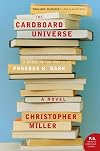
Fun & surreal look at the fictional life of an author very much like Philip K. Dick--will make you glad to be a writer or reader.
Quote: Dank’s delusion of being just another author’s creature was the kind of folly not susceptible to refutation (what would have counted as evidence against it?), but like most of his delusions it subsided of its own accord, after a month and two hundred pages of frenzied exegesis. The readiness with which he relinquished such delusions makes me think that show more Dank never really fully embraced them in the first place—even if he thought he did, even if he never understood the difference between owning a conviction and taking one for a joyride." show less
Quote: Dank’s delusion of being just another author’s creature was the kind of folly not susceptible to refutation (what would have counted as evidence against it?), but like most of his delusions it subsided of its own accord, after a month and two hundred pages of frenzied exegesis. The readiness with which he relinquished such delusions makes me think that show more Dank never really fully embraced them in the first place—even if he thought he did, even if he never understood the difference between owning a conviction and taking one for a joyride." show less
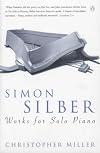
As someone with an amateur interest in piano playing I enjoyed this book very much. The eccentric characters are always entertaining and always original in their eccentricities (as eccentrics aught to be, but mostly aren't). The form of the book itself was entirely novel - written as CD-set booklet describing the music of the main (apparently deceased musician)character.
I loved the characters and many of the sketches I recall fondly: Silber criticizes a piece of music of having too wide a show more range of dynamics and sets about correcting it by turning the volume dial as the music plays so that it is all reduced to the same volume. show less
I loved the characters and many of the sketches I recall fondly: Silber criticizes a piece of music of having too wide a show more range of dynamics and sets about correcting it by turning the volume dial as the music plays so that it is all reduced to the same volume. show less
Lists
Awards


Statistics
- Works
- 4
- Members
- 181
- Popularity
- #119,335
- Rating
- 3.6
- Reviews
- 7
- ISBNs
- 104
- Languages
- 3