
R. G. Collingwood (1889–1943)
Author of The Idea of History
About the Author
R. G. Collingwood was Waynflete Professor of Metaphysical Philosophy in the University of Oxford from 1935 to 1941.
Series
Works by R. G. Collingwood
The Roman Inscriptions of Britain: Instrumentum Domesticum v.2: Instrumentum Domesticum Vol 2 (1990) 18 copies
The Philosophy of Enchantment: Studies in Folktale, Cultural Criticism, and Anthropology (2005) 16 copies
Ciencia e filosofia 5 copies
Roman Britain / by R.G. Collingwood 2 copies
R. G. Collingwood : an autobiography and other writings with essays on Collingwood's life and work (2013) 2 copies
Ambleside Roman fort, 2 copies
Idea de la historia 1 copy
The Princples of Art 1 copy
The Principles of Art 1 copy
Autobiografía 1 copy
Associated Works
Reading Aesthetics and Philosophy of Art: Selected Texts with Interactive Commentary (2005) — Contributor — 11 copies
Tagged
Common Knowledge
- Canonical name
- Collingwood, R. G.
- Legal name
- Collingwood, Robin George
- Birthdate
- 1889-02-22
- Date of death
- 1943-01-09
- Gender
- male
- Education
- University College, Oxford University (BA|1910)
Rugby School - Occupations
- historian
philosopher
professor
archaeologist - Organizations
- Pembroke College, Oxford University
Magdalen College, Oxford - Awards and honors
- Fellow, British Academy (1934)
- Relationships
- Collingwood, William Gershom (father)
Altounyan, Roger Edward Collingwood (uncle)
Ransome, Arthur (family friend) - Cause of death
- complications of a stroke
- Nationality
- UK
- Birthplace
- Gillhead, Cartmel Fell, Lancashire, England, UK
- Place of death
- Coniston, Cumbria, England, UK
- Burial location
- St Andrew Churchyard, Coniston, Cumbria, England, UK
- Associated Place (for map)
- England, UK
Members
Reviews
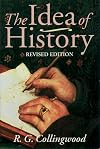
What makes history tick and what turns history into human progress? These questions have been explicitly asked by philosophers since the Enlightenment, and historian R.G. Collingwood adds his voice to the mix in this classic work. He summarizes how we understand history since its recording began. In each epoch in the Western tradition, he outlines the major players and then provides his critique on their limitations.
Unfortunately, Collingwood’s analysis is, too, limited by his era. He does show more not account well for non-Western traditions as well as traditions of oppressed peoples (like women and sub-cultures within dominant cultures). In today’s diverse world, such accounts are sorely needed. Despite this major shortcoming, this work is helpful in understanding our place in this world.
Collingwood seems, in particular, to appreciate Immanuel Kant’s perspectives. He returns to them, over and over, to illustrate his points. He speaks of history being a foundation of human self-knowledge. Indeed, I would not be surprised if Collingwood affirmed the statement that history is the queen of the sciences. He sees history not as the accumulation of facts (cut-and-paste history) but as thinking afresh the ideas of the past in a new context. It results in the accumulation of self-knowledge.
Like any good work of philosophy, this work is not for the faint of heart. It took me a while to work through. Nevertheless, it is the most thoughtful work I’ve ever read on the subject of what history consists of. It avoids the common pitfalls that 19th-century philosophers fell into – the over-simplifications of Hegel and Marx. In contrast, Collingwood’s outlook is much more modern and humanistic than them. Almost seventy-five years later, his voice needs to continue to be heard by those who seek to seriously understand history. show less
Unfortunately, Collingwood’s analysis is, too, limited by his era. He does show more not account well for non-Western traditions as well as traditions of oppressed peoples (like women and sub-cultures within dominant cultures). In today’s diverse world, such accounts are sorely needed. Despite this major shortcoming, this work is helpful in understanding our place in this world.
Collingwood seems, in particular, to appreciate Immanuel Kant’s perspectives. He returns to them, over and over, to illustrate his points. He speaks of history being a foundation of human self-knowledge. Indeed, I would not be surprised if Collingwood affirmed the statement that history is the queen of the sciences. He sees history not as the accumulation of facts (cut-and-paste history) but as thinking afresh the ideas of the past in a new context. It results in the accumulation of self-knowledge.
Like any good work of philosophy, this work is not for the faint of heart. It took me a while to work through. Nevertheless, it is the most thoughtful work I’ve ever read on the subject of what history consists of. It avoids the common pitfalls that 19th-century philosophers fell into – the over-simplifications of Hegel and Marx. In contrast, Collingwood’s outlook is much more modern and humanistic than them. Almost seventy-five years later, his voice needs to continue to be heard by those who seek to seriously understand history. show less
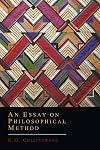
Had I written this review immediately after reading this book, I probably would have rated it lower than I have. I would have complained that the book did not appear to be offering a distinct method of philosophical investigation at all. Instead, there was a lot of talk about other methods: scientific, logical, mathematical, critical, etc. But what I realize after a bit of reflection is that the book is an example of what it advocates to be a philosophical method: preceding from the show more preliminaries that have been established before about method but not supplanting them and proclaiming truth. The book is not, as it seemed, differentiating itself from methodological approaches dedicated to induction, deduction, classification, analysis of form, logic, critique but is showing how philosophical method proceeds from those points without reaching a conclusion as long as new data points are added -- namely through the accumulation of experiences shaped by frameworks of perception but also just by being in the world. The reader is brought along for the ride, and once that becomes clear, the message of the book does as well.
I still don't feel like I know *how* to engage in philosophical inquiry except that it seems to involve finding a reason for denying previous knowledge claims that appear to conflict with new data. But this critique is not negation, which is a refusal to engage, but rather a disassembling and reconstruction that keeps the spirit of the original inquiry, taking apart the knowledge project to the point where conclusions do not conflict with new data and rebuilding to account for what is new.
Knowledge is an accumulation over time, and we all make contributions to it. It is not, even when it seems like it, the destruction of one edifice and the construction of a new one. show less
I still don't feel like I know *how* to engage in philosophical inquiry except that it seems to involve finding a reason for denying previous knowledge claims that appear to conflict with new data. But this critique is not negation, which is a refusal to engage, but rather a disassembling and reconstruction that keeps the spirit of the original inquiry, taking apart the knowledge project to the point where conclusions do not conflict with new data and rebuilding to account for what is new.
Knowledge is an accumulation over time, and we all make contributions to it. It is not, even when it seems like it, the destruction of one edifice and the construction of a new one. show less
Collingwood's "The Idea of History" is arguably one of the most important books in the 20th Century on history and the study of. The author attempts to get at what exactly it means when refers to "studying history" and what the heck history is in the first place. The first section, after briefly touching on the aforementioned topics, dives into the history of history: how everyone from the ancient Greeks to his contemporaries (~1930s) view history and what are the problems with those views. show more The next section consists of Collingwood outlining his very convincing argument of what history is and why it is so important that history is studied. While it can ramble on a bit, it is a fascinating book that is still important to read if you are interested in the study of history. show less

In The Idea of Nature Collingwood tells us about the development of Natural Science from its infancy to the form it takes more or less today. Progress was concentrated in three main eras, the Classical, Renaissance, and Modernity.
The book covers both scientific and philosophic contributions, and their impact on one another. It is interesting to realise how little has changed fundamentally, once the superstitions of the Greek view have been banished, and how much of it has been vindicated - show more notably the mathematical world view of Pythagoras which accords well with modern chemistry (he is also believed to have established that the earth is a sphere), Plato, whose Forms are largely comparable to those used by the modern philosopher Whitehead and compatible with modern mathematics, and Aristotle, whose teleological view of organic life compares favourably with the way evolution forms animals to fit niches, and genetics and its role in embryology. Of course, a lot of subtle changes have occurred, and many large ones, but in spirit the modern Idea of Nature is one conceived a long time ago.
Things changed a lot in the Renaissance, but they have also changed since then. Things went from being thought of as organic in classical times, to being mechanical in the renaissance, but modern science has shifted away from the mechanical view with Quantum theory, which will change how Nature is conceived in the future, in addition to the way it has changed our view since its discovery.
This book is very interesting to read from the viewpoint of the scientist and of the philosopher, also I imagine from that of the classicist or historian. What could fill an encyclopaedia is condensed into fairly terse and understandable book, remarkably short and easy to read, while at the same time covering the main contributions, the big discoveries, and enough historical background to make it interesting.
If the book had to be criticised, it would be for being too short. However, verbosity is far easier to let reign free than it is to control, and Collingwood does the reader a service by providing this history of the evolution of human thought through two and a half thousand years in under two hundred pages. show less
The book covers both scientific and philosophic contributions, and their impact on one another. It is interesting to realise how little has changed fundamentally, once the superstitions of the Greek view have been banished, and how much of it has been vindicated - show more notably the mathematical world view of Pythagoras which accords well with modern chemistry (he is also believed to have established that the earth is a sphere), Plato, whose Forms are largely comparable to those used by the modern philosopher Whitehead and compatible with modern mathematics, and Aristotle, whose teleological view of organic life compares favourably with the way evolution forms animals to fit niches, and genetics and its role in embryology. Of course, a lot of subtle changes have occurred, and many large ones, but in spirit the modern Idea of Nature is one conceived a long time ago.
Things changed a lot in the Renaissance, but they have also changed since then. Things went from being thought of as organic in classical times, to being mechanical in the renaissance, but modern science has shifted away from the mechanical view with Quantum theory, which will change how Nature is conceived in the future, in addition to the way it has changed our view since its discovery.
This book is very interesting to read from the viewpoint of the scientist and of the philosopher, also I imagine from that of the classicist or historian. What could fill an encyclopaedia is condensed into fairly terse and understandable book, remarkably short and easy to read, while at the same time covering the main contributions, the big discoveries, and enough historical background to make it interesting.
If the book had to be criticised, it would be for being too short. However, verbosity is far easier to let reign free than it is to control, and Collingwood does the reader a service by providing this history of the evolution of human thought through two and a half thousand years in under two hundred pages. show less
Lists
Awards


You May Also Like


Associated Authors
Statistics
- Works
- 59
- Also by
- 5
- Members
- 2,470
- Popularity
- #10,379
- Rating
- 3.7
- Reviews
- 22
- ISBNs
- 134
- Languages
- 12
- Favorited
- 5