
Dan Frey
Author of The Future Is Yours: A Novel
Works by Dan Frey
Tagged
Common Knowledge
- Gender
- male
Members
Reviews
4.5/5 stars
I received an ARC of this book from NetGalley and the publisher.
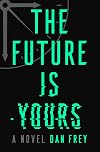
I often find epistolary novels to be a bit hit or miss. Sometimes, they get too bogged down with exposition and never manage to coalesce into anything compelling. Other times, there’s not enough exposition, and the reader is left flailing about, trying to catch up with what’s going on. Modern epistolary novels have the additional problem of feeling gimmicky—Romeo and Juliet retold through text messages will show more always feel like a cash grab. These kinds of books walk a fine line between being enjoyable and unbearably kitschy. Luckily, The Future is Yours perfectly walks that line. It utilizes its various textual sources not as a gimmick but as a way of further exploring its themes. There’s a transcript of a congressional hearing that acts as a throughline for the book, allowing various congresspeople to interrogate Ben about the various potential ethical and societal issues that might come with using the technology his company’s created. There are news articles gathered from the novel’s future, elaborating on the societal reaction to the technology being widely available. What results is a book that doesn’t just feel like a gimmick. All of the in-universe sources feel grounded in the world Frey’s created. Each piece coalesces into a story that feels like it couldn’t have been told any other way.
A lot of praise should be directed towards how well Frey structures the book. It would have been very easy to overload the reader with too much exposition at the beginning of the book—like including an in-universe biography of the characters or something like that. But that’s not what Frey does here. Instead, we learn background information about the characters and the world as they become relevant. The plot is conveyed naturalistically through the characters’ communications—research reports handle explaining how the technology works, emails between the duo and their business partners explain how the business works, etc. The whole thing results in an experience unlike any other. As the story unfolds, it becomes clear that someone has gathered all of these documents together and is presenting them in a way where each one builds off of the previous ones. For a book that’s about time travel, there’s a surprising amount of linear storytelling that happens. As you read the book, Frey lays out all of the information in such a way that you can kind of predict where the story is going—but not in a disappointing way. The book never feels derivative or too predictable. Instead, everything just feels fully developed and well-explored. The ideas explored within The Future is Yours aren’t ones that have been previously explored, which is why it is sometimes easy to see where things are going. But the way they’re explored in this book feels wholly unique and I was enthralled from beginning to end.
The book’s greatest strength is probably its characters—specifically how realistic they feel. From page one, Ben and Ahdi feel fully formed and three-dimensional. Naturally, much of this is due to great swaths of the book being comprised of communication between the two characters, in the form of emails and text messages and research reports written by one to the other. Through these writings, Frey expertly brings readers into the minds of these characters. We understand who they are, what they want, and why they want it. Their realness helps keep the book grounded, which helps the broader sci-fi elements land better. And the more we get to know the characters, the easier it is for us to guess what they’re going to do. Again, this ability to predict aspects of the story never feels disappointing. After all, the book is largely about the inevitability of the future and whether or not it can be changed. Frey simply explores his characters so well that it’s easy to understand their mindsets. And when you understand a character’s mindset, it can be easy to predict what they might do. And, honestly, there’s a lot of satisfaction to be had in making predictions that end up being correct. I adored getting to know these characters in such a deep way. For as much as the book is about the technology created by these two friends, it’s even more about their friendship—how it leads to this incredible invention and how that invention impacts their friendship.
Epistolary novels often feel very slow, bogged down by lengthy diary entries or letters. The lack of traditional prose in those novels ends up creating a more lethargic feeling. The Future is Yours, however, is comprised of a variety of sources, all of which are mostly short. This brevity helps establish the kind of faster pace that you might find in a prose-based novel. In all honesty, I didn’t find myself missing the prose at all. This isn’t the kind of story that needs a bunch of lengthy passages describing characters’ feelings, or exactly what a room looks like, or exactly what is happening in any given moment. Instead, Frey allows the various pieces of writing to establish all that needs establishing. The congressional hearings provide a narrative backbone, the emails and text messages provide the dialogue, the longer blog posts and news articles provide the backstory, etc. The variety of sources largely bridges the gap left by the lack of traditional prose and it’s amazing how none of this ends up resulting in a slow, boring book. I breezed through this book because Frey kept cutting between the various pieces of writing, interweaving between the various sources as needed. There are moments of exposition, moments of philosophical discussion, and moments of tension and excitement, but none of these outweigh each other. The Future is Yours is perfectly balanced, with pacing that could rival any of the best prose-based thrillers.
All in all, The Future is Yours is a fantastic read. It’s immediately captivating, holding the reader’s attention from its first page to its final one. The characters are fully-formed, with each of them possessing believable backstories and relationships that carefully unfold over the novel’s length. By writing an epistolary story, Frey invites his readers to feel like they are part of the book. Reading The Future is Yours is like getting to be in the world of the story. Readers get to read these documents and experience the book’s events from the vantage point of one living it. The ending is a little abrupt, though, and quite likely too ambiguous for many readers. But the rest of the book more than makes up for this. Plus, I’ll always prefer an open-ended ending in stories like this. At the end of the day, if you’re into near-future sci-fi thrillers, The Future is Yours is the book for you. show less
I received an ARC of this book from NetGalley and the publisher.
I often find epistolary novels to be a bit hit or miss. Sometimes, they get too bogged down with exposition and never manage to coalesce into anything compelling. Other times, there’s not enough exposition, and the reader is left flailing about, trying to catch up with what’s going on. Modern epistolary novels have the additional problem of feeling gimmicky—Romeo and Juliet retold through text messages will show more always feel like a cash grab. These kinds of books walk a fine line between being enjoyable and unbearably kitschy. Luckily, The Future is Yours perfectly walks that line. It utilizes its various textual sources not as a gimmick but as a way of further exploring its themes. There’s a transcript of a congressional hearing that acts as a throughline for the book, allowing various congresspeople to interrogate Ben about the various potential ethical and societal issues that might come with using the technology his company’s created. There are news articles gathered from the novel’s future, elaborating on the societal reaction to the technology being widely available. What results is a book that doesn’t just feel like a gimmick. All of the in-universe sources feel grounded in the world Frey’s created. Each piece coalesces into a story that feels like it couldn’t have been told any other way.
A lot of praise should be directed towards how well Frey structures the book. It would have been very easy to overload the reader with too much exposition at the beginning of the book—like including an in-universe biography of the characters or something like that. But that’s not what Frey does here. Instead, we learn background information about the characters and the world as they become relevant. The plot is conveyed naturalistically through the characters’ communications—research reports handle explaining how the technology works, emails between the duo and their business partners explain how the business works, etc. The whole thing results in an experience unlike any other. As the story unfolds, it becomes clear that someone has gathered all of these documents together and is presenting them in a way where each one builds off of the previous ones. For a book that’s about time travel, there’s a surprising amount of linear storytelling that happens. As you read the book, Frey lays out all of the information in such a way that you can kind of predict where the story is going—but not in a disappointing way. The book never feels derivative or too predictable. Instead, everything just feels fully developed and well-explored. The ideas explored within The Future is Yours aren’t ones that have been previously explored, which is why it is sometimes easy to see where things are going. But the way they’re explored in this book feels wholly unique and I was enthralled from beginning to end.
The book’s greatest strength is probably its characters—specifically how realistic they feel. From page one, Ben and Ahdi feel fully formed and three-dimensional. Naturally, much of this is due to great swaths of the book being comprised of communication between the two characters, in the form of emails and text messages and research reports written by one to the other. Through these writings, Frey expertly brings readers into the minds of these characters. We understand who they are, what they want, and why they want it. Their realness helps keep the book grounded, which helps the broader sci-fi elements land better. And the more we get to know the characters, the easier it is for us to guess what they’re going to do. Again, this ability to predict aspects of the story never feels disappointing. After all, the book is largely about the inevitability of the future and whether or not it can be changed. Frey simply explores his characters so well that it’s easy to understand their mindsets. And when you understand a character’s mindset, it can be easy to predict what they might do. And, honestly, there’s a lot of satisfaction to be had in making predictions that end up being correct. I adored getting to know these characters in such a deep way. For as much as the book is about the technology created by these two friends, it’s even more about their friendship—how it leads to this incredible invention and how that invention impacts their friendship.
Epistolary novels often feel very slow, bogged down by lengthy diary entries or letters. The lack of traditional prose in those novels ends up creating a more lethargic feeling. The Future is Yours, however, is comprised of a variety of sources, all of which are mostly short. This brevity helps establish the kind of faster pace that you might find in a prose-based novel. In all honesty, I didn’t find myself missing the prose at all. This isn’t the kind of story that needs a bunch of lengthy passages describing characters’ feelings, or exactly what a room looks like, or exactly what is happening in any given moment. Instead, Frey allows the various pieces of writing to establish all that needs establishing. The congressional hearings provide a narrative backbone, the emails and text messages provide the dialogue, the longer blog posts and news articles provide the backstory, etc. The variety of sources largely bridges the gap left by the lack of traditional prose and it’s amazing how none of this ends up resulting in a slow, boring book. I breezed through this book because Frey kept cutting between the various pieces of writing, interweaving between the various sources as needed. There are moments of exposition, moments of philosophical discussion, and moments of tension and excitement, but none of these outweigh each other. The Future is Yours is perfectly balanced, with pacing that could rival any of the best prose-based thrillers.
All in all, The Future is Yours is a fantastic read. It’s immediately captivating, holding the reader’s attention from its first page to its final one. The characters are fully-formed, with each of them possessing believable backstories and relationships that carefully unfold over the novel’s length. By writing an epistolary story, Frey invites his readers to feel like they are part of the book. Reading The Future is Yours is like getting to be in the world of the story. Readers get to read these documents and experience the book’s events from the vantage point of one living it. The ending is a little abrupt, though, and quite likely too ambiguous for many readers. But the rest of the book more than makes up for this. Plus, I’ll always prefer an open-ended ending in stories like this. At the end of the day, if you’re into near-future sci-fi thrillers, The Future is Yours is the book for you. show less
Frey, Dan. The Future Is Yours. Del Rey, 2021.
Dan Frey’s The Future Is Yours is time travel tech thriller that owes a lot to Paycheck, which was first a 1953 short story by Philip K. Dick, then a 2003 movie directed by John Woo and starring Ben Affleck. In the Dick/Woo story an evil corporation develops a computer that predicts the collapse of civilization caused by our knowing too much about the future. In Frey’s novel, Ben Boyce and Adhvan Chaudry, two students at Stanford (and, yes, show more there is a direct allusion to Larry and Sergei), form a company to work on quantumly entangling a computer with itself a year in the future. This would allow information from the future to be transferred to the past. That future is in our own timeline and theoretically unalterable. If you read your own future obituary and kill yourself, where does causation reside? But never mind. These two guys are optimists, at least for a while. Where Frey’s novel separates itself from Paycheck is in how it handles characters and literary form. The partners are flawed friends who in their own way betray each other. Ben is a flamboyant salesman who wants to make the world a better place. His partner is a socially withdrawn genius who guiltily lusts after his partner’s wife. Both are conscious of being ethnic outsiders in the big money world of Silicon Valley. The literary form is something like an epistolary novel, which had its beginnings in the 18th century. There is no live action. Instead, we follow the story through the kinds of documents our culture now produces in abundance: emails, text messages, and meeting transcripts. It is almost as if human beings do not exist outside their digital footprints. In this novel, friends and lovers are seldom described as meeting face to face. There is an eerie realism in this. Oddly enough, the novel does not delve into our videoconferencing culture, whose temporal footprints are even more evanescent than digital text. Some readers complain about the sudden turn the novel takes in its final pages, but such plot twists are almost inevitable in time travel narratives. Geekily good. 4 stars. show less
Dan Frey’s The Future Is Yours is time travel tech thriller that owes a lot to Paycheck, which was first a 1953 short story by Philip K. Dick, then a 2003 movie directed by John Woo and starring Ben Affleck. In the Dick/Woo story an evil corporation develops a computer that predicts the collapse of civilization caused by our knowing too much about the future. In Frey’s novel, Ben Boyce and Adhvan Chaudry, two students at Stanford (and, yes, show more there is a direct allusion to Larry and Sergei), form a company to work on quantumly entangling a computer with itself a year in the future. This would allow information from the future to be transferred to the past. That future is in our own timeline and theoretically unalterable. If you read your own future obituary and kill yourself, where does causation reside? But never mind. These two guys are optimists, at least for a while. Where Frey’s novel separates itself from Paycheck is in how it handles characters and literary form. The partners are flawed friends who in their own way betray each other. Ben is a flamboyant salesman who wants to make the world a better place. His partner is a socially withdrawn genius who guiltily lusts after his partner’s wife. Both are conscious of being ethnic outsiders in the big money world of Silicon Valley. The literary form is something like an epistolary novel, which had its beginnings in the 18th century. There is no live action. Instead, we follow the story through the kinds of documents our culture now produces in abundance: emails, text messages, and meeting transcripts. It is almost as if human beings do not exist outside their digital footprints. In this novel, friends and lovers are seldom described as meeting face to face. There is an eerie realism in this. Oddly enough, the novel does not delve into our videoconferencing culture, whose temporal footprints are even more evanescent than digital text. Some readers complain about the sudden turn the novel takes in its final pages, but such plot twists are almost inevitable in time travel narratives. Geekily good. 4 stars. show less
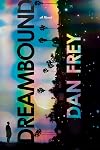
Surprises are rare. The last book that had me “turning” e-page after page to find out what happened next was Andy Weir's The Martian. Then this. Because Dreambound was so unfamiliar, so new, I had no idea what would come. I usually can't help but try to figure it out before the protagonist does, or at least predict what’s coming next. That didn't happen here. Mr. Rey wrote something that engaged me so that I didn't want to spoil what was unfolding (Chapter Twenty Two - whoa and show more F*********k!). That is refreshing. This book was gripping and I was turning those e-pages as fast as I could read. I would have finished it it one sitting if I didn't have life and all intervening. And the pace accelerated until the (okay, I did allow myself one prediction) frenetic end.
Disclosure 1) I rarely summarize fiction plots, mainly because I think it unfair to the author - there are plenty of people who do for those on the hunt, and there is almost always an extra teaser blurb somewhere - and I think it unfair to the reader who, like me, dislikes spoilers. Still,Frey crafts two worlds - the in-book imagined Hidden one, and a more familiarly grounded, yet still slightly different "real" one. And weaves them well in a non-traditional form of storytelling.
Disclosure 2) I received an advance review copy of this from NetGalley and thank the marketing rep from the publisher Del Rey/Penguin Random House for suggesting it to me. show less
Disclosure 1) I rarely summarize fiction plots, mainly because I think it unfair to the author - there are plenty of people who do for those on the hunt, and there is almost always an extra teaser blurb somewhere - and I think it unfair to the reader who, like me, dislikes spoilers. Still,Frey crafts two worlds - the in-book imagined Hidden one, and a more familiarly grounded, yet still slightly different "real" one. And weaves them well in a non-traditional form of storytelling.
Disclosure 2) I received an advance review copy of this from NetGalley and thank the marketing rep from the publisher Del Rey/Penguin Random House for suggesting it to me. show less
Told in a series of emails, texts, transcripts, and blog posts, The Future Is Yours is an interesting character study of two young men dreaming of fame, fortune, and making a difference in the world. The difficult birth of a computer that accurately shows what is going on in the world one year in the future makes compelling listening, especially when the dynamics of differing personalities, the headaches of being forced to listen to the people holding the purse strings, and the implications show more of the technology itself are added to the mix.
With the book's format of texts, emails, transcripts, and blog posts, I think The Future Is Yours is best listened to in audiobook format where the different voices can help keep readers focused on the story. I have a strong suspicion that, if I'd read this instead of listened to it, the endless stream of emails, etc. would have made my eyes glaze over from time to time whether I wanted them to or not.
If you're in the mood for a fast-paced character study about a rather scary possible technological breakthrough, I recommend Frey's thriller. It will make you think-- Do you really want to see into the future? show less
With the book's format of texts, emails, transcripts, and blog posts, I think The Future Is Yours is best listened to in audiobook format where the different voices can help keep readers focused on the story. I have a strong suspicion that, if I'd read this instead of listened to it, the endless stream of emails, etc. would have made my eyes glaze over from time to time whether I wanted them to or not.
If you're in the mood for a fast-paced character study about a rather scary possible technological breakthrough, I recommend Frey's thriller. It will make you think-- Do you really want to see into the future? show less
Awards

You May Also Like
Associated Authors
Statistics
- Works
- 5
- Members
- 202
- Popularity
- #109,081
- Rating
- 3.7
- Reviews
- 18
- ISBNs
- 8