
Erick Berry (1892–1974)
Author of Leif the Lucky: Discoverer of America
About the Author
Image credit: Wikipedia
Works by Erick Berry
Seven Beaver Skins: A Story of the Dutch in New Amsterdam (Land of the Free Series) (1948) 44 copies
Valiant captive;: A story of Margaret Eames, captured in 1676 by the Indians from the New Settlement, which later became (2011) 18 copies
Sybil Ludington's ride 6 copies
Harvest of the Hudson 6 copies
Stars in my pocket; a novel based on events in the life of Maria Mitchell, America's first woman astronomer (1960) 5 copies
Black Folk Tales 3 copies
Writing for Children 2 copies
A Pretty Little Doll 1 copy
Go and find wind 1 copy
Hay-Foot, Straw-Foot 1 copy
Associated Works
Nancy Sails — Illustrator — 2 copies
Bittersweet — Illustrator — 2 copies
The Spindle Imp and Other Tales of Maya Myth and Folklore — Illustrator — 1 copy
Tagged
Common Knowledge
- Legal name
- Best, Evangel Allena Champlin Berry
- Other names
- Maxon, Anne
- Birthdate
- 1892
- Date of death
- 1974
- Gender
- female
- Education
- Pennsylvania Academy of the Fine Arts
- Occupations
- fashion designer
illustrator - Relationships
- Best, Herbert (spouse)
- Nationality
- USA
- Birthplace
- New Bedford, Massachusetts, USA
- Places of residence
- Albany, New York, USA
Boston, Massachusetts, USA
Nigeria
Devonshire, England, UK - Associated Place (for map)
- USA
Members
Reviews
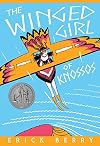
The Winged Girl of Knossos isn't actually a new book. It was written in 1933 by Erick Berry, pen name for Evangel Allena Champlin Best. It was a Newbery Honor Book but was sadly out of print for many years. Thankfully, Paul Dry Books has reprinted it because I haven't been able to stop thinking about it since I finished reading it a couple of weeks ago.
The "winged girl" is Inas, daughter of Daidalos. He is an inventor who longs to soar like the birds and she is an adventurer who does show more everything from sponge diving to bull jumping. Their home is ancient Crete, under the reign of King Minos. This story brings to life an era that time has turned into myth. Ariadne, the labyrinth and the minotaur, and Theseus are all real and they all have their places in Inas' tale.
Not only did Berry use an impressive vocabulary but she knew the right amount of tension to keep readers of all ages engaged and the historical setting is incredibly accessible. Best of all, the strong, active female character of Inas was truly ahead of her time. I suppose this is why the book received Honors. I keep thinking about the various adventures, the setting, the idea that myths come out of facts.
http://webereading.com/2017/09/new-ish-release-winged-girl-of-knossos.html show less
The "winged girl" is Inas, daughter of Daidalos. He is an inventor who longs to soar like the birds and she is an adventurer who does show more everything from sponge diving to bull jumping. Their home is ancient Crete, under the reign of King Minos. This story brings to life an era that time has turned into myth. Ariadne, the labyrinth and the minotaur, and Theseus are all real and they all have their places in Inas' tale.
Not only did Berry use an impressive vocabulary but she knew the right amount of tension to keep readers of all ages engaged and the historical setting is incredibly accessible. Best of all, the strong, active female character of Inas was truly ahead of her time. I suppose this is why the book received Honors. I keep thinking about the various adventures, the setting, the idea that myths come out of facts.
http://webereading.com/2017/09/new-ish-release-winged-girl-of-knossos.html show less

I'd read this (many times) as a teenager - was reminded of it and found it. And, amazingly, it's as good as I remembered (a lot of my teen books just aren't). It's got a lot more to it than I remembered, too. I remembered him being a drummer boy, and the English officer (only I thought it was a group) writing Yankee Doodle as a joke on these raw Provincials. I'd forgotten he had run away to join the army - and I thought it was Revolutionary War, not before that when the American army was show more still more-or-less (or officially, at least) British. Si's machinations to get a meal and a place with the army are fun, and his and his friends' adventures with army life and army drill and signals are beautifully drawn (both in words and in pictures). This is one I'm really glad to have found again. Oh, and as a bonus - it gives some early verses (possibly the original...who knows?) for Yankee Doodle and talks about the tune (which is apparently ancient - it was old in Medieval times, according to the foreword). Lots of fun! show less

The author Erick Berry was actually a multi-talented woman by the remarkable name of Evangel Allena Champlin Best. She wrote, illustrated, edited, travelled widely; married "at least twice" (LOL) according to her bio. I'll bet she would have been a kick to know.
This action of this book takes place around 1936 or so, between the wars and it seems to have been inspired by, or a stand-in for, some of the author's own experiences as an artist traveling through Europe.
Cynthia of the title is a show more youngish artist, probably around 22 years of age, who takes a ship from the USA to Europe on a contract assignment to paint a dozen cover pictures for a children's magazine. I know!! What a fluffy dream job, right? Well, yes, it's basically an artsy daydream, probably for intended for an artsy, dreamy teen audience of the time.
The book is fairly short and mostly a travelogue that follows Cynthia to Paris, south into Basque country, and eventually to Venice. She sees the sights, has a lovely time with locals. She meets various children who are persuaded to pose for her so she can capture their likeness in watercolor for the magazine cover. And I won't spoil the ending for you.
The main points of interest for me were the descriptions of French/Italian life and scenery of the period, because that's mostly what it's about. The "plot" is fairly thin and quite honestly, aside from the opening chapter, the book pretty much has no antagonists at all. It's a charming Western-European trip taken by a wholesome raven-haired blue-eyed American artist of tender years. It's quite a comfy escape snack, perfect for summer reading in a warm meadow while leaning against a mighty oak and sipping your iced tea.
For more details about the author, it's worth taking a look at the Erick Berry Papers page at Univ of Southern Mississippi.
You can find copies of this book on paper for as little as three dollars (US), but unless you're just dying to complete your collection or fill some empty shelf space, you could pop out to Project Gutenberg and download it from there. The EPUB file is nicely formatted and, as near as I can tell, typo-free. (I reported the one typo I found, and I've already heard that it's been fixed. LOL.) show less
This action of this book takes place around 1936 or so, between the wars and it seems to have been inspired by, or a stand-in for, some of the author's own experiences as an artist traveling through Europe.
Cynthia of the title is a show more youngish artist, probably around 22 years of age, who takes a ship from the USA to Europe on a contract assignment to paint a dozen cover pictures for a children's magazine. I know!! What a fluffy dream job, right? Well, yes, it's basically an artsy daydream, probably for intended for an artsy, dreamy teen audience of the time.
The book is fairly short and mostly a travelogue that follows Cynthia to Paris, south into Basque country, and eventually to Venice. She sees the sights, has a lovely time with locals. She meets various children who are persuaded to pose for her so she can capture their likeness in watercolor for the magazine cover. And I won't spoil the ending for you.
The main points of interest for me were the descriptions of French/Italian life and scenery of the period, because that's mostly what it's about. The "plot" is fairly thin and quite honestly, aside from the opening chapter, the book pretty much has no antagonists at all. It's a charming Western-European trip taken by a wholesome raven-haired blue-eyed American artist of tender years. It's quite a comfy escape snack, perfect for summer reading in a warm meadow while leaning against a mighty oak and sipping your iced tea.
For more details about the author, it's worth taking a look at the Erick Berry Papers page at Univ of Southern Mississippi.
You can find copies of this book on paper for as little as three dollars (US), but unless you're just dying to complete your collection or fill some empty shelf space, you could pop out to Project Gutenberg and download it from there. The EPUB file is nicely formatted and, as near as I can tell, typo-free. (I reported the one typo I found, and I've already heard that it's been fixed. LOL.) show less

1934. Berry (Allena Champlin) draws from the Icarus myth, incorporates Ariadne, Theseus, and others, to tell a lively story of Inas, daughter of the brilliant Daedalus, leaving readers with a happy ending. Berry includes illustrations drawn from Cretan artifacts. Reads like a modern novel, and is one worth bringing back into print.
Lists
Awards

You May Also Like


Associated Authors
Statistics
- Works
- 56
- Also by
- 20
- Members
- 629
- Popularity
- #40,057
- Rating
- 3.4
- Reviews
- 7
- ISBNs
- 27
- Languages
- 1