
Alison Griffiths (1)
Author of Vancouver
For other authors named Alison Griffiths, see the disambiguation page.
Works by Alison Griffiths
Wild Horse Annie and the Last of the Mustangs: The Life of Velma Johnston (2010) 38 copies, 2 reviews
Tagged
Common Knowledge
- Gender
- female
- Relationships
- Cruise, David (husband)
- Nationality
- Canada
- Associated Place (for map)
- Canada
Members
Reviews

Front Book Flap:
“The Annapolis Valley is one of the most beautiful places on the face of the earth. Apple blossoms, lush farms and lovely, secluded beaches have graced photographs and postcards without number. But there has been a dark evil within this idyllic land for more than two hundred years.
Overlooking the Valley is South Mountain, a long ridge of hills covered by dense forests which conceal tiny hamlets and isolated clusters of shacks set in small clearings. Lately, parts of the show more Mountain have become desirable places to live. But for most of the last two centuries it has been home to the “Clans” – thirty or so tight family groupings, living in their various Mountain enclaves. Many of them have survived the kind of poverty and deprivation associated only with the world's poorest nations.
… Then one day, a fourteen-year-old Mountain girl told authorities that her father had been “using her as a wife.” This revelation sparked a massive investigation which revealed a horrific tale of incest, sexual and physical abuse and psychological torture. Eventually, sixteen men and women, almost an entire generation of one Clan, faced more than one hundred and fifty criminal charges. At the same time, eleven children, also an entire generation of the same Clan, were taken from their homes.”
____________________
Why I read this now: I wanted to read the true story of the Goler clan, which inspired Lauren B. Davis’ novel, Our Daily Bread.
On South Mountain is well-written, impeccably researched, and an exceptional non-fiction that is difficult to put down. Admittedly, I knew very little about Nova Scotia’s clans, and nothing about the Golers. The story, however, is not one for all hearts. For me, I will continue to ask how did we, as a society, and in the 1980s, allow such travesty to be visited on our children, and simply turn the other way. People knew – church officials, politicians, teachers, doctors, social workers – and they chose to do nothing.
“For those innocents on the periphery, it is a prison sentence without end.” (208) show less
“The Annapolis Valley is one of the most beautiful places on the face of the earth. Apple blossoms, lush farms and lovely, secluded beaches have graced photographs and postcards without number. But there has been a dark evil within this idyllic land for more than two hundred years.
Overlooking the Valley is South Mountain, a long ridge of hills covered by dense forests which conceal tiny hamlets and isolated clusters of shacks set in small clearings. Lately, parts of the show more Mountain have become desirable places to live. But for most of the last two centuries it has been home to the “Clans” – thirty or so tight family groupings, living in their various Mountain enclaves. Many of them have survived the kind of poverty and deprivation associated only with the world's poorest nations.
… Then one day, a fourteen-year-old Mountain girl told authorities that her father had been “using her as a wife.” This revelation sparked a massive investigation which revealed a horrific tale of incest, sexual and physical abuse and psychological torture. Eventually, sixteen men and women, almost an entire generation of one Clan, faced more than one hundred and fifty criminal charges. At the same time, eleven children, also an entire generation of the same Clan, were taken from their homes.”
____________________
Why I read this now: I wanted to read the true story of the Goler clan, which inspired Lauren B. Davis’ novel, Our Daily Bread.
On South Mountain is well-written, impeccably researched, and an exceptional non-fiction that is difficult to put down. Admittedly, I knew very little about Nova Scotia’s clans, and nothing about the Golers. The story, however, is not one for all hearts. For me, I will continue to ask how did we, as a society, and in the 1980s, allow such travesty to be visited on our children, and simply turn the other way. People knew – church officials, politicians, teachers, doctors, social workers – and they chose to do nothing.
“For those innocents on the periphery, it is a prison sentence without end.” (208) show less
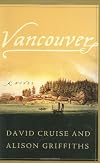
Cruise and Griffiths had plenty of models for their thick novel, Vancouver, and all by one writer: James Mitchner. Mitchner was the pioneer of the “sweeping saga” sub-sub-genre of historical fiction, and Cruise and Griffiths have followed closely in his steps. The model is simple: step forward in time, starting at some suitably dim point in the ancient past, to the present day.
Vancouver starts, not in the Pacific Northwest of British Columbia, but somewhere farther north 15,000 years show more before the present. Like Mitchner (and, incidentally, like Ayn Rand), Cruise and Griffiths subscribe to the “great man” theory of history: progress, advance and change are made by unique individuals who rise above circumstance to do great things. The great man who first came south to the present location of the beautiful city on the coast of British Columbia, they imagine, was a fellow named Manto. Manto traveled through an ice-free corridor. Never mind that the existence of an ice-free corridor probably never existed, and that the most likely route to the peopling of North America was by coastal island-hoppers: Manto’s story, like all the stories in this novel, is exciting.
All the stories in this novel are, as well, in many ways fairly formulaic. The great man (or occasionally woman), starting from a position of loss, conquers nature, culture and circumstance in order to change history, to act as a pivot for things to come. And he (or she) gets the girl (or boy) along the way. To call the linked stories that comprise Vancouver formulaic, though, is not to disparage the book: formulas exist because they work, and because they’re entertaining. And Vancouver is nothing if not entertaining.
The link between the stories is a set of jade beads, brought by Manto from his homeland (presumably from somewhere in Siberia or farther south, though Cruise and Griffith’s geography is vague). The jade beads appear generation after generation, connecting each character with those who have come before. After 700-some pages, the weight of the linkages become somewhat ponderous: Cruise and Griffiths have set themselves a difficult task, and in the conclusion things get a little contrived.
In its series of set-piece bio-pics, the novel covers all the major players of Vancouver’s history. The Indians, of course, came first. Then there were the European explorers, and Juan de Fuca gets his moment in the sun. From the earliest days of the actual city, the Chinese have been major players. Various gold rushes figure prominently, as does the real estate business. The section that picks up Vancouver in the 1960s features the stock market and, curiously, makes no mention of draft dodgers. (The science fiction writer William Gibson was one such American who made his way to Vancouver in the 1960s.) The novel comes full circle, in a sense, by ending in 2003 with the story of Ellie Nesbutt, a young Indian woman who discovers something “unbelievably beautiful”: “We are a great people…. Some of us have just forgotten.”
Vancouver has been unfairly criticized for not really painting much of a picture of the actual city. That wasn’t the authors’ intent: it’s a saga of colonization, not a portrait. And although in many ways imperfect, Vancouver is a page-turner that will surely please anyone in love with our quiet neighbor to the north.
Originally published in Curled Up with a Good Book show less
Vancouver starts, not in the Pacific Northwest of British Columbia, but somewhere farther north 15,000 years show more before the present. Like Mitchner (and, incidentally, like Ayn Rand), Cruise and Griffiths subscribe to the “great man” theory of history: progress, advance and change are made by unique individuals who rise above circumstance to do great things. The great man who first came south to the present location of the beautiful city on the coast of British Columbia, they imagine, was a fellow named Manto. Manto traveled through an ice-free corridor. Never mind that the existence of an ice-free corridor probably never existed, and that the most likely route to the peopling of North America was by coastal island-hoppers: Manto’s story, like all the stories in this novel, is exciting.
All the stories in this novel are, as well, in many ways fairly formulaic. The great man (or occasionally woman), starting from a position of loss, conquers nature, culture and circumstance in order to change history, to act as a pivot for things to come. And he (or she) gets the girl (or boy) along the way. To call the linked stories that comprise Vancouver formulaic, though, is not to disparage the book: formulas exist because they work, and because they’re entertaining. And Vancouver is nothing if not entertaining.
The link between the stories is a set of jade beads, brought by Manto from his homeland (presumably from somewhere in Siberia or farther south, though Cruise and Griffith’s geography is vague). The jade beads appear generation after generation, connecting each character with those who have come before. After 700-some pages, the weight of the linkages become somewhat ponderous: Cruise and Griffiths have set themselves a difficult task, and in the conclusion things get a little contrived.
In its series of set-piece bio-pics, the novel covers all the major players of Vancouver’s history. The Indians, of course, came first. Then there were the European explorers, and Juan de Fuca gets his moment in the sun. From the earliest days of the actual city, the Chinese have been major players. Various gold rushes figure prominently, as does the real estate business. The section that picks up Vancouver in the 1960s features the stock market and, curiously, makes no mention of draft dodgers. (The science fiction writer William Gibson was one such American who made his way to Vancouver in the 1960s.) The novel comes full circle, in a sense, by ending in 2003 with the story of Ellie Nesbutt, a young Indian woman who discovers something “unbelievably beautiful”: “We are a great people…. Some of us have just forgotten.”
Vancouver has been unfairly criticized for not really painting much of a picture of the actual city. That wasn’t the authors’ intent: it’s a saga of colonization, not a portrait. And although in many ways imperfect, Vancouver is a page-turner that will surely please anyone in love with our quiet neighbor to the north.
Originally published in Curled Up with a Good Book show less
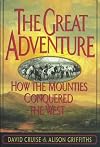
Well I believe the title is sarcasm as in this book the Mounties did NOT conquer the West of Canada. They barely made it to their destination alive (some of them anyway). The fearsome Blackfeet were laughing at these keystone cops...it is a wonder they were not attacked and scalped.
The book is a very loose story built up of snippets from the diaries of several of the men in the troop. It certainly paints a different picture than what was taught in school when I was a kid. there is lots of show more material there to create interesting novels about the Canadian West. I will search out more on Jerry Potts the eventual guide that saved them and taught them how to life on the plains. He is a lot more threatening than I first thought though he liked Major McLeod and they had a good friendship once they met.
Over and over again I come to hate my white heritage when I see the greed and disrespect for others. The Indians were no goody-two-shoes either though...there was a lot of violence in those days.
Interesting to read but after a while you get tired of snippets and want to read a continuous novel. show less
The book is a very loose story built up of snippets from the diaries of several of the men in the troop. It certainly paints a different picture than what was taught in school when I was a kid. there is lots of show more material there to create interesting novels about the Canadian West. I will search out more on Jerry Potts the eventual guide that saved them and taught them how to life on the plains. He is a lot more threatening than I first thought though he liked Major McLeod and they had a good friendship once they met.
Over and over again I come to hate my white heritage when I see the greed and disrespect for others. The Indians were no goody-two-shoes either though...there was a lot of violence in those days.
Interesting to read but after a while you get tired of snippets and want to read a continuous novel. show less
This is a group of short stories about Vancouver from earliest man to 2003. The stories are sort of linked together through a few jade beads that apparently are sacred in native culture. Whether this is in fact true or not is moot.
This is a hard book to start as the stories of early man are boring to be frank. The authors don't really have a feel for describing early life and I almost put the book down several times. Frankly the first 150 pages of this 900 page book could be ignored without show more much loss other than the legend of the beads.
The book finally became interesting with the story of Darrog Wiley and the time of 1839 in Vancouver's trading history. This is over 200 pages into the book so there is tough sledding to stay with this book that long. However, from then on it is a great read. Notable characters in succeeding stories are Soon Chong, Warburton Pike, Nanak Singh, Konrad Von Schaumberg, Walter Dolby and Tiffany Dolby. Each character giving you insight into the life of a different type of immigrant to Vancouver and different aspect of Vancouver life.
I would have given this book 5 stars except for that torturous first 200 pages. show less
This is a hard book to start as the stories of early man are boring to be frank. The authors don't really have a feel for describing early life and I almost put the book down several times. Frankly the first 150 pages of this 900 page book could be ignored without show more much loss other than the legend of the beads.
The book finally became interesting with the story of Darrog Wiley and the time of 1839 in Vancouver's trading history. This is over 200 pages into the book so there is tough sledding to stay with this book that long. However, from then on it is a great read. Notable characters in succeeding stories are Soon Chong, Warburton Pike, Nanak Singh, Konrad Von Schaumberg, Walter Dolby and Tiffany Dolby. Each character giving you insight into the life of a different type of immigrant to Vancouver and different aspect of Vancouver life.
I would have given this book 5 stars except for that torturous first 200 pages. show less
Lists
Awards

Statistics
- Works
- 10
- Members
- 429
- Popularity
- #56,933
- Rating
- 3.8
- Reviews
- 11
- ISBNs
- 39