
Susan Rieger
Author of The Divorce Papers
About the Author
Image credit: Credit Nina Subin
Works by Susan Rieger
Tagged
Common Knowledge
- Birthdate
- 20th century
- Gender
- female
- Education
- Columbia Law School
- Occupations
- Dean at Yale University
Associate Provost at Columbia - Places of residence
- New York, New York, USA
- Associated Place (for map)
- New York, USA
Members
Reviews
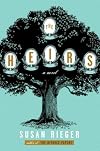
When Rupert Falkes, wealthy New York lawyer, dies, it leaves his family a bit at loose ends. His five sons- all middle aged men successful in their own fields- define themselves very strongly by their family relationships. Widow Eleanor reacts with calmness and proceeds to redecorate their home, which further upsets the boys- they take it as seeing every trace of their father vanish. Everyone is dealing with their loss, though, until yet another upsetting thing occurs: a woman contacts the show more estate, saying she has two sons by Rupert, and that they deserve a cut of the money- of which there is plenty. Suddenly, Rupert becomes a man they never really knew. Worse, Eleanor reacts calmly, which makes the boys think she knew about the other family all along and didn’t tell them. Rupert is beyond their reach, so they aim their anger at their mother.
The story twines between characters and through time, taking us through the lives and loves of not just Rupert and Eleanor, but of their sons, too. While Rupert and Eleanor seemed to their sons, to glide through life without a slip, there was a lot they never saw going on. All their lives turn out to be much more complex and, well, screwed up, than appears on the surface. These are people of old Eastern seaboard money (well, Rupert is not, having come to America as an orphan from England) and while money is not worried about, appearances are.
None of these people are totally bad (well, maybe the woman who says her sons are Rupert’s), so it was easy to read about them. Even the ones who did wretched things have good sides. I came to really like Eleanor, the calm center of the novel and of the family. The writing I found lovely; I could not put this novel down as something new was always turning up. In the end, we do not ever get the answer we (and the boys) want- but that’s okay. The journey itself is what’s important. show less
The story twines between characters and through time, taking us through the lives and loves of not just Rupert and Eleanor, but of their sons, too. While Rupert and Eleanor seemed to their sons, to glide through life without a slip, there was a lot they never saw going on. All their lives turn out to be much more complex and, well, screwed up, than appears on the surface. These are people of old Eastern seaboard money (well, Rupert is not, having come to America as an orphan from England) and while money is not worried about, appearances are.
None of these people are totally bad (well, maybe the woman who says her sons are Rupert’s), so it was easy to read about them. Even the ones who did wretched things have good sides. I came to really like Eleanor, the calm center of the novel and of the family. The writing I found lovely; I could not put this novel down as something new was always turning up. In the end, we do not ever get the answer we (and the boys) want- but that’s okay. The journey itself is what’s important. show less

This is compared to The Nest quite a bit, but other than there are people who inherit money in both stories, I don’t think they’re similar. This novel is deeper, sheds more light on relationships and has much more nuanced characters. The structure is a bit deceptive on its surface; each chapter is named for a person and you wouldn’t be alone in expecting a first person narrative, but that’s not what you get. The book is highly expository. Much is told, but not much is shown. Normally show more I hate that, but with a book this slim it’s the way things have to be. Rieger packs a lot of emotion and subterfuge into each section of the story, netting things together cleverly and in a satisfying way.
Ostensibly this book is about the heirs; five brothers and their mom who are left to cope with a surprise or two after dad dies. As in life, you won’t like everyone (I personally thought Eleanor was a moron), but Rieger confines herself to telling about the interesting only. Each section confirms ideas and events from other sections, but introduces new ones that will be enlarged upon later. After a while you can’t help wonder who will do the enlarging. I will admit that some of the brothers (Tom and Jack mostly) are so lightly included that I couldn't really keep an image of either in my head.
Another subject I thought well drawn was the difference between knowing who your family is/was and not knowing. How not knowing leaves you free to pursue your own goals and dreams. Eleanor is from a prominent New York family and has her entire personality shaped by her repugnant and ignorant mother. She is subject to her will and demands, even breaking an engagement (also at the behest of the man’s mother, bound by the same insufferable ideas about what is proper). Her marriage to Rupert, while much more acceptable, is interesting considering he’s an orphan of even more dubious origin than the unacceptable ex. But because of that, he’s grown up exactly how he wants, throwing off the chains of expectations. Their marriage isn’t founded upon the modern idea of love and romance, but on esteem and practicality and sex. It works. No one but the reader sees into the heart of it and while it may be clinical, it is a little bit enviable. The surety of feelings that seem more solid and lasting than just love alone.
I also liked the sexual slavery foisted on Rupert and Eleanor’s father. One escaped his and had a fulfilling and enjoyable life, even though he wasn’t entirely free of Vera. The other succumbed and was shackled to a harridan for life. Well almost. Never was a death more welcomed I don’t think.
Spoilery -
There is a conflict about money, but it isn’t intrinsic to the family and frankly, these people are so well-off that it wouldn’t have been a hardship for them to share. But any early sympathy the reader might have for Vera gets dashed and a new conflict is set up in wondering why Eleanor caved and set up a trust fund for her. Out of all the sons, only Sam is really curious about Rupert’s alleged other family. It seems to be tied up in the lust for a baby which is a tough thing to deal with if you’re a gay man. I liked the solution with Susanna though. Why should all families be exactly the same?
I also liked the side-story with Jim, Eleanor’s ex-fiance. So much of that relationship was made of by Jim and wife Anna, but in Eleanor’s mind it barely existed. She moved on so thoroughly that it was hard for the other two to understand that at all. Both tried inserting themselves into Eleanor’s life, but for different reasons. Her rudeness was refreshing at times, just like Rupert’s Grandma slap downs.
Overall this was an elegantly constructed novel that doesn’t suffer the meaningless bloat of many these days. It’s tight and has good humor throughout and use of irony and juxtaposition. The end is a little neat; everyone seems to get what they want and live happily ever after. Well almost. show less
Ostensibly this book is about the heirs; five brothers and their mom who are left to cope with a surprise or two after dad dies. As in life, you won’t like everyone (I personally thought Eleanor was a moron), but Rieger confines herself to telling about the interesting only. Each section confirms ideas and events from other sections, but introduces new ones that will be enlarged upon later. After a while you can’t help wonder who will do the enlarging. I will admit that some of the brothers (Tom and Jack mostly) are so lightly included that I couldn't really keep an image of either in my head.
Another subject I thought well drawn was the difference between knowing who your family is/was and not knowing. How not knowing leaves you free to pursue your own goals and dreams. Eleanor is from a prominent New York family and has her entire personality shaped by her repugnant and ignorant mother. She is subject to her will and demands, even breaking an engagement (also at the behest of the man’s mother, bound by the same insufferable ideas about what is proper). Her marriage to Rupert, while much more acceptable, is interesting considering he’s an orphan of even more dubious origin than the unacceptable ex. But because of that, he’s grown up exactly how he wants, throwing off the chains of expectations. Their marriage isn’t founded upon the modern idea of love and romance, but on esteem and practicality and sex. It works. No one but the reader sees into the heart of it and while it may be clinical, it is a little bit enviable. The surety of feelings that seem more solid and lasting than just love alone.
I also liked the sexual slavery foisted on Rupert and Eleanor’s father. One escaped his and had a fulfilling and enjoyable life, even though he wasn’t entirely free of Vera. The other succumbed and was shackled to a harridan for life. Well almost. Never was a death more welcomed I don’t think.
Spoilery -
There is a conflict about money, but it isn’t intrinsic to the family and frankly, these people are so well-off that it wouldn’t have been a hardship for them to share. But any early sympathy the reader might have for Vera gets dashed and a new conflict is set up in wondering why Eleanor caved and set up a trust fund for her. Out of all the sons, only Sam is really curious about Rupert’s alleged other family. It seems to be tied up in the lust for a baby which is a tough thing to deal with if you’re a gay man. I liked the solution with Susanna though. Why should all families be exactly the same?
I also liked the side-story with Jim, Eleanor’s ex-fiance. So much of that relationship was made of by Jim and wife Anna, but in Eleanor’s mind it barely existed. She moved on so thoroughly that it was hard for the other two to understand that at all. Both tried inserting themselves into Eleanor’s life, but for different reasons. Her rudeness was refreshing at times, just like Rupert’s Grandma slap downs.
Overall this was an elegantly constructed novel that doesn’t suffer the meaningless bloat of many these days. It’s tight and has good humor throughout and use of irony and juxtaposition. The end is a little neat; everyone seems to get what they want and live happily ever after. Well almost. show less
 This review was written for LibraryThing Early Reviewers.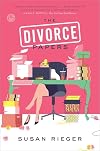
A delightfully fun novel told in the form of papers - memos, letters, emails, and legal documents - following a young criminal lawyer who gets roped into handling a high-profile divorce. Lots of utterly fantastic female characters, and a delightful turn-of-the-millennium nostalgia setting. I absolutely loved it and read the whole thing in two days. My biggest complaint would be that, although people are frequently complaining about being overly emotional, they seem pretty subdued to me - but show more maybe I'm not enough of a Yankee.
(Oh, and it takes place in a fictional state in the US, which I always find delightful, as that doesn't happen nearly often enough. It makes good sense in a book with so many legal documents, though; it gives the author a great deal of flexibility.) show less
(Oh, and it takes place in a fictional state in the US, which I always find delightful, as that doesn't happen nearly often enough. It makes good sense in a book with so many legal documents, though; it gives the author a great deal of flexibility.) show less
This review was written for LibraryThing Early Reviewers.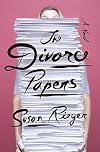
The format of The Divorce Papers takes some adjustment time. Some of the documents are only a few lines long, while the others take multiple pages. The narrative waffles between dry legalese to witty flirtation to workplace politics. Each format uses a distinctive tone, and switching between them all can be a slightly dizzying experience. It also disrupts one’s reading pace as the legal briefs require more attention than the emails, for obvious reasons. None of these issues is a reason to show more skip this delightful book, however. Once one adapts to this unusual narrative method, the story flows, Sophie charms, and Mia kicks some major butt.
Sophie is a bit of a conundrum. She has a glibness about her that can be somewhat off-putting. She does not have the gravitas that befits a criminal lawyer, let alone a divorce lawyer, making jokes that one could easily construe as tasteless or at the very least ill-timed. Her emails read like journal entries or stream-of-consciousness emotion dumps to her best friend rather than the correspondingly thoughtful conversations from said friend. She’s hyper and high-maintenance. She acts more like a lawyer fresh out of law school rather than someone with multiple cases and several years under her belt. For all that, she is infectious and charming, self-deprecating when she needs to be and equally boastful when the timing is right. She is a force of nature on the page, and it takes no great stretch of the imagination to imagine her energy and high spirits in person. The image one gets of Sophie’s personality is as complete a picture as one could possibly get without meeting her in real life and created entirely through letters and notes. It is a more than impressive writing feat.
For a novel told solely through legal briefs, email, notes, depositions, and memorandum, The Divorce Papers is effective at developing its characters and creating empathy for them. The stultifying legal paperwork offsets the somewhat free-associating emails and memorandum Sophie tends to write. Balancing the two ends of the spectrum are Mia’s obvious pain, confusion, and anger. Mia bridges the gap between the cold calculations of the negotiations and Sophie’s flippancy to create poignancy and remind readers that divorce is messy and ugly and harms all parties involved. The result is a humorous and heartbreaking look at divorce from multiple angles with greater insight into the reasons why divorce proceedings turn so nasty and the impact they have on the families as well as the lawyers involved. show less
Sophie is a bit of a conundrum. She has a glibness about her that can be somewhat off-putting. She does not have the gravitas that befits a criminal lawyer, let alone a divorce lawyer, making jokes that one could easily construe as tasteless or at the very least ill-timed. Her emails read like journal entries or stream-of-consciousness emotion dumps to her best friend rather than the correspondingly thoughtful conversations from said friend. She’s hyper and high-maintenance. She acts more like a lawyer fresh out of law school rather than someone with multiple cases and several years under her belt. For all that, she is infectious and charming, self-deprecating when she needs to be and equally boastful when the timing is right. She is a force of nature on the page, and it takes no great stretch of the imagination to imagine her energy and high spirits in person. The image one gets of Sophie’s personality is as complete a picture as one could possibly get without meeting her in real life and created entirely through letters and notes. It is a more than impressive writing feat.
For a novel told solely through legal briefs, email, notes, depositions, and memorandum, The Divorce Papers is effective at developing its characters and creating empathy for them. The stultifying legal paperwork offsets the somewhat free-associating emails and memorandum Sophie tends to write. Balancing the two ends of the spectrum are Mia’s obvious pain, confusion, and anger. Mia bridges the gap between the cold calculations of the negotiations and Sophie’s flippancy to create poignancy and remind readers that divorce is messy and ugly and harms all parties involved. The result is a humorous and heartbreaking look at divorce from multiple angles with greater insight into the reasons why divorce proceedings turn so nasty and the impact they have on the families as well as the lawyers involved. show less
This review was written for LibraryThing Early Reviewers.Lists
Awards

You May Also Like


Associated Authors
Statistics
- Works
- 3
- Members
- 1,009
- Popularity
- #25,560
- Rating
- 3.7
- Reviews
- 188
- ISBNs
- 24
- Languages
- 1
- Favorited
- 1
