
John Calvert (1)
Author of Sayyid Qutb and the Origins of Radical Islamism
For other authors named John Calvert, see the disambiguation page.
Works by John Calvert
Tagged
Common Knowledge
- Gender
- male
- Education
- McGill University (MA, PhD)
University of Toronto (MA)
University of Alberta (BA) - Occupations
- associate professor
- Organizations
- Creighton University
- Short biography
- Dr. John Calvert is the Fr. Henry W. Casper SJ Associate Professor of History at Creighton University in Omaha, Nebraska, USA. His research focuses on social protest and political resistance movements in the modern Middle East, particularly the ways such movements deploy cultural and religious resources for purposes of mobilization and legitimacy. He is author of Islamisms: A Documentary and Reference Guide (Greenwood Press: Westport, CT, 2007), co-editor and translator of Sayyid Qutb’s A Child from the Village (Syracuse: Syracuse University Press, 2005), and guest editor of a special issue of Historical Reflections/Reflexions Historiques (2004) dealing with Islam and Modernity. Dr. Calvert’s articles on Islamist movements and thinkers have appeared in Orbis, Historical Reflections, Islam and Christian-Muslim Relations, the Muslim World and the Journal of Religion and Society. He has been interviewed on the topic of Islamism by major world newspapers and has appeared in documentaries produced by BBC and National Public Radio.
http://www.creighton.edu/ccas/asianwo...
Members
Reviews
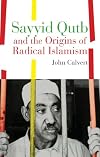
Sayyid Qutb (1906-1966) was an influential Egyptian ideologue credited with establishing the theoretical basis for radical Islamism in the post colonial Sunni Muslim world. Lacking a pure understanding of the leader's life and work, the popular media has conflated Qutb's moral purpose with the aims of bin Laden and al-Qaeda. He is often portrayed as a terrorist, Islamo-Fascist, and advocate of murder. This book rescues Qutb from misrepresentation, tracing the evolution of his thought within show more the context of his time. An expert on social protest and political resistance in the modern Middle East, as well as Egyptian nationalism, John Calvert recounts Qutb's life from the small village in which he was raised to his execution at the behest of Abd al-Nasser's regime. His study remains sensitive to the cultural, political, social, and economic circumstances that shaped Qutb's thought-major developments that composed one of the most eventful periods in Egyptian history. These years witnessed the full flush of Britain's tutelary regime, the advent of Egyptian nationalism, and the political hegemony of the Free Officers. Qutb rubbed shoulders with Taha Husayn, Naguib Mahfouz, and Abd al-Nasser himself, though his Islamism originally had little to do with religion. Only in response to his harrowing experience in prison did Qutb come to regard Islam and kufr (infidelity) as oppositional, antithetical, and therefore mutually exclusive. Calvert shows how Qutb repackaged and reformulated the Islamic heritage to pose a challenge to authority, including those who claimed (falsely, he believed) to be Muslim. show less
The subject matter is 4-star; the writing and the author's absence of objectivity and clarity is 2-star. Read between the lines and see how deeply entrenched the hatred of the West is in Islamic society.
Statistics
- Works
- 2
- Members
- 63
- Popularity
- #268,027
- Rating
- 3.6
- Reviews
- 2
- ISBNs
- 17


