
Åsa Larsson
Author of Sun Storm
About the Author
Image credit: Åsa Larsson
Photo: Bengt Oberger
Photo: Bengt Oberger
Series
Works by Åsa Larsson
Il sangue versato 1 copy
Anna 1 copy
Krew, którą nasiąkła 1 copy
A sellőlény 1 copy
Quando a tua ira passar 1 copy
Associated Works
Tagged
Common Knowledge
- Canonical name
- Larsson, Åsa
- Birthdate
- 1966-06-28
- Gender
- female
- Occupations
- tax lawyer
writer - Awards and honors
- Sweden's Best First Crime Novel Award (2003, Sun Storm)
- Nationality
- Sweden (birth)
- Birthplace
- Uppsala, Sweden
- Places of residence
- Uppsala, Sweden (birth)
Kiruna, Sweden - Associated Place (for map)
- Sweden
Members
Reviews
The Sins of our Fathers: SHORTLISTED for the CWA Crime Fiction in Translation Dagger (The Arctic Murders Book 6) by Åsa Larsson
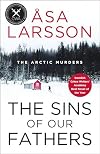
IN A NUTSHELL
The Sins Of Our Fathers' was an excellent conclusion to the six-book Rebecka Martinson series. It went well beyond the remit of a typical crime novel, tackling themes of the damage that anger, greed, and envy do, and the long shadows that they cast across generations. It was a solid mystery, told across two timelines. It also reached a milestone in Rebecka Martinsson. Rebecka was broken at the start of the series, and she remains broken at the end, but she is making the best show more life for herself that she can.
At 600 pages, ‘The Sins Of Our Fathers‘ was a lengthy crime novel, but I was grateful for that, as it gave Åsa Larsson the space to deliver a powerful, complex novel that brought the series to a satisfying conclusion.
The story was immersive, people-centric and trope-free. Emotions, fleeting and or irrepressible, were captured perfectly. The plot was powered as much by anger, envy, guilt and a struggle for hope and purpose, as it was by solving the murders. Telling the story in two timelines within one lifetime showed the long shadows trauma and regret cast over our lives.
I thought this was a wonderful read. It was so much more than a crime novel. It was a book that understood that we all make mistakes and that all of the mistakes have consequences, that life can be crap and people can be awful, that greed and the lust for power breeds predators who hunt us, but that kindness, forgiveness and the ability to find and hold onto the things that matter to us offers, if not salvation, then at least meaning.
One of the most distinctive things about the series was that Rebecka Martinsson, the central character, suffers traumas so severe that she loses her mental health and has to spend time in a psychiatric hospital to help her learn to cope. Despite, or perhaps because of, this, she continues to work hard on the cases that come her way, even when the emotional toll they take is high. She isn't a superhero. She doesn't solve cases single-handedly. She doesn't always know what she wants or what she needs, but she always tries to do the right thing. I liked that, in this final book of the series, Rebecka wasn't suddenly restored to robust mental health so that she could ride off into the sunset for her Happy Ever After ending. She remains broken and she knows that. Yet she has started to understand what she wants and needs and is doing the best she can to make a life for herself.
For me, this book, even more than the five that preceded it, sets the bar for what Nordic Noir can be. show less
The Sins Of Our Fathers' was an excellent conclusion to the six-book Rebecka Martinson series. It went well beyond the remit of a typical crime novel, tackling themes of the damage that anger, greed, and envy do, and the long shadows that they cast across generations. It was a solid mystery, told across two timelines. It also reached a milestone in Rebecka Martinsson. Rebecka was broken at the start of the series, and she remains broken at the end, but she is making the best show more life for herself that she can.
At 600 pages, ‘The Sins Of Our Fathers‘ was a lengthy crime novel, but I was grateful for that, as it gave Åsa Larsson the space to deliver a powerful, complex novel that brought the series to a satisfying conclusion.
The story was immersive, people-centric and trope-free. Emotions, fleeting and or irrepressible, were captured perfectly. The plot was powered as much by anger, envy, guilt and a struggle for hope and purpose, as it was by solving the murders. Telling the story in two timelines within one lifetime showed the long shadows trauma and regret cast over our lives.
I thought this was a wonderful read. It was so much more than a crime novel. It was a book that understood that we all make mistakes and that all of the mistakes have consequences, that life can be crap and people can be awful, that greed and the lust for power breeds predators who hunt us, but that kindness, forgiveness and the ability to find and hold onto the things that matter to us offers, if not salvation, then at least meaning.
One of the most distinctive things about the series was that Rebecka Martinsson, the central character, suffers traumas so severe that she loses her mental health and has to spend time in a psychiatric hospital to help her learn to cope. Despite, or perhaps because of, this, she continues to work hard on the cases that come her way, even when the emotional toll they take is high. She isn't a superhero. She doesn't solve cases single-handedly. She doesn't always know what she wants or what she needs, but she always tries to do the right thing. I liked that, in this final book of the series, Rebecka wasn't suddenly restored to robust mental health so that she could ride off into the sunset for her Happy Ever After ending. She remains broken and she knows that. Yet she has started to understand what she wants and needs and is doing the best she can to make a life for herself.
For me, this book, even more than the five that preceded it, sets the bar for what Nordic Noir can be. show less
The Second Deadly Sin: The Arctic Murders – A gripping and atmospheric murder mystery (Rebecka Martinsson Book 5) by Åsa Larsson
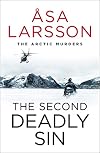
The Second Deadly Sin‘ (2012) is the fifth book featuring Recka Martisson, a prosecutor working in the far north of Sweden, having abandoned her high-powered job in Stockholm to come back to the village she was raised in.
The cover and the publisher's summary seem determined to represent 'The Second Deadly Sin' as a thriller with a long investigator search for the truth against all odds. It sets the expectation of lots of arctic action and derring-do and completely misrepresents what this show more book is about. The book is filled with violent confrontations and has many moments of high tension but it's not a book that sets out to thrill the reader. The second deadly sin that gives the book its title is greed. It seems to me that what Åsa Larsson sets out to do is to get the reader to experience and consider the ugly actions and emotions that greed generates in people.
This a dark book, even darker than the ones that went before it. It’s set in two timelines, the present day and the early twentieth century when what is now a quiet village was a booming mining town, dominated by a single employer. Larsson pulled no punches in describing the violence, misogyny, and oppression of the poor. Sadly, her descriptions of the present day show only a superficial improvement.
The link between the early twentieth-century timeline and the present day wasn't immediately apparent, except as a likely explanation of the motivation for the present-day killings. At times, I resented being pulled away from the actions of the present-day characters who I know well in order to drop back a few generations into a world where violence, greed, poverty, privilege and misogyny were so prevalent that they were taken for granted. Then, bit by bit, I got wrapped up in the story of the doomed efforts a young school teacher trying to make a life for herself in a raw scar of a town set in the beauty of the far north. It was a depressing story, made more so by being entirely plausible.
The present-day timeline delivered a solid mystery and some very tense action. The plot echoed the themes of greed and a sort of structural misogyny which normalises violence against women. The ending was tense, surprising and satisfying.
What I enjoyed even more than the mystery was watching the relationships grow between Martinsson and the police officers and Martinsson's former boss in Stockholm. I particularly enjoyed the descriptions of the prosecutor who is trying to push Martisson aside. Larsson uses him to give an insight into the self-justifying narrative that an upper-class man with more ambition than ability and with an unassailable belief in his own worth, generates to exonerate himself from all blame.
I immerse myself completely in these books, even when that means being mired in sadness and confronted with ugliness. I think the reason for that is that, in the face of it all, Martinsson manages to retain her empathy and search for a little happiness.
There's only one book left in the series now, 'The Sins Of Our Fathers'. I'm almost reluctant to read it because I know it will be my last visit with Rebecka Martinsson. show less
The cover and the publisher's summary seem determined to represent 'The Second Deadly Sin' as a thriller with a long investigator search for the truth against all odds. It sets the expectation of lots of arctic action and derring-do and completely misrepresents what this show more book is about. The book is filled with violent confrontations and has many moments of high tension but it's not a book that sets out to thrill the reader. The second deadly sin that gives the book its title is greed. It seems to me that what Åsa Larsson sets out to do is to get the reader to experience and consider the ugly actions and emotions that greed generates in people.
This a dark book, even darker than the ones that went before it. It’s set in two timelines, the present day and the early twentieth century when what is now a quiet village was a booming mining town, dominated by a single employer. Larsson pulled no punches in describing the violence, misogyny, and oppression of the poor. Sadly, her descriptions of the present day show only a superficial improvement.
The link between the early twentieth-century timeline and the present day wasn't immediately apparent, except as a likely explanation of the motivation for the present-day killings. At times, I resented being pulled away from the actions of the present-day characters who I know well in order to drop back a few generations into a world where violence, greed, poverty, privilege and misogyny were so prevalent that they were taken for granted. Then, bit by bit, I got wrapped up in the story of the doomed efforts a young school teacher trying to make a life for herself in a raw scar of a town set in the beauty of the far north. It was a depressing story, made more so by being entirely plausible.
The present-day timeline delivered a solid mystery and some very tense action. The plot echoed the themes of greed and a sort of structural misogyny which normalises violence against women. The ending was tense, surprising and satisfying.
What I enjoyed even more than the mystery was watching the relationships grow between Martinsson and the police officers and Martinsson's former boss in Stockholm. I particularly enjoyed the descriptions of the prosecutor who is trying to push Martisson aside. Larsson uses him to give an insight into the self-justifying narrative that an upper-class man with more ambition than ability and with an unassailable belief in his own worth, generates to exonerate himself from all blame.
I immerse myself completely in these books, even when that means being mired in sadness and confronted with ugliness. I think the reason for that is that, in the face of it all, Martinsson manages to retain her empathy and search for a little happiness.
There's only one book left in the series now, 'The Sins Of Our Fathers'. I'm almost reluctant to read it because I know it will be my last visit with Rebecka Martinsson. show less

IN A NUTSHELL
'Until Thy Wrath Be Past' was the best book so far in the Rebecka Martinsson series. The storytelling was accomplished, the mystery was engaging and the development of the core cast of characters was convincing.
The most remarkable thing was Larsson’s ability to generate empathy at a deep level: for the person killed, for the investigators and, most surprisingly, for the killer.
‘Until Thy Wrath Be Past‘ (2008) is the fourth Rebecka Martinsson book and I think it's the best show more one yet. With each book, the writing has become more adventurous and more accomplished. These are novels that are less about a mystery and more about showing the origins of deadly violence and its impact on the people involved.
Åsa Larsson starts to tell this story from the point of view of the spirit of a young woman who has been murdered and is sticking around to see if anyone is going to learn what happened to her and hold her killer(s) to account. This was so skillfully done that it seemed right, rather than strange to be hearing from the young woman's spirit. Who would be better placed to understand what had been taken from her?
The storytelling included many of the things I expect in a police procedural: interviews, evidence gathering, the slow revelation of who did what to whom and moments of violence and threat. Yet it doesn't read as a police procedural. Its focus was less on the puzzle and more on the emotions and experiences of the people involved. The storytelling seamlessly blended action, memory and emotion. Adding the memories and emotions of the dead young women felt like a natural extension of the storytelling style.
The mystery was engaging. I liked that the roots of the violence went all the way back to World War II. I knew, almost from the beginning. how and where the young was killed. The rest of the novel provided the Why and the By Whom in a satisfying way.
Although Rebecka Martinsson is a key character in the series, she is often not centre stage. Her role is less to be an investigator and more to be a sort of empathic interpreter of the meaning of events. In this book, Rebecka again n finds herself at the heart of the action but what places her there is her insight into people rather than a systematic investigation. The traumas inflicted on Rebecka by the events in the previous books have left her mental health a little fragile. Leaving Stockholm and returning to her cottage in the far north where she was raised by her grandmother, has opened up memories and emotions for Rebecka that are reshaping her life. So, having a dead girl appear in her dreams, didn't seem that far away from the rest of her daily life.
Real police investigation isn't ignored in this book. The police team, led by Inspector Anna-Maria Mella, did a thorough job. Anna-Maria and her team are part of the core cast of characters in these books. I liked that they and their relationships with each other keep developing in believable ways.
For me, the most remarkable thing about 'Until Thy Wrath Be Past' was Åsa Larsson’s ability to generate empathy at a deep level: for the person killed, for the investigators and, most surprisingly, for the killer. The vibrancy of the murdered young woman is vivid. The grief of her grandmother felt real and raw. The killer was drawn not as a monster but as someone shaped by all the things that had happened in their life to bring them to the point where they became a killer.
It was a book I was sad to finish. show less
'Until Thy Wrath Be Past' was the best book so far in the Rebecka Martinsson series. The storytelling was accomplished, the mystery was engaging and the development of the core cast of characters was convincing.
The most remarkable thing was Larsson’s ability to generate empathy at a deep level: for the person killed, for the investigators and, most surprisingly, for the killer.
‘Until Thy Wrath Be Past‘ (2008) is the fourth Rebecka Martinsson book and I think it's the best show more one yet. With each book, the writing has become more adventurous and more accomplished. These are novels that are less about a mystery and more about showing the origins of deadly violence and its impact on the people involved.
Åsa Larsson starts to tell this story from the point of view of the spirit of a young woman who has been murdered and is sticking around to see if anyone is going to learn what happened to her and hold her killer(s) to account. This was so skillfully done that it seemed right, rather than strange to be hearing from the young woman's spirit. Who would be better placed to understand what had been taken from her?
The storytelling included many of the things I expect in a police procedural: interviews, evidence gathering, the slow revelation of who did what to whom and moments of violence and threat. Yet it doesn't read as a police procedural. Its focus was less on the puzzle and more on the emotions and experiences of the people involved. The storytelling seamlessly blended action, memory and emotion. Adding the memories and emotions of the dead young women felt like a natural extension of the storytelling style.
The mystery was engaging. I liked that the roots of the violence went all the way back to World War II. I knew, almost from the beginning. how and where the young was killed. The rest of the novel provided the Why and the By Whom in a satisfying way.
Although Rebecka Martinsson is a key character in the series, she is often not centre stage. Her role is less to be an investigator and more to be a sort of empathic interpreter of the meaning of events. In this book, Rebecka again n finds herself at the heart of the action but what places her there is her insight into people rather than a systematic investigation. The traumas inflicted on Rebecka by the events in the previous books have left her mental health a little fragile. Leaving Stockholm and returning to her cottage in the far north where she was raised by her grandmother, has opened up memories and emotions for Rebecka that are reshaping her life. So, having a dead girl appear in her dreams, didn't seem that far away from the rest of her daily life.
Real police investigation isn't ignored in this book. The police team, led by Inspector Anna-Maria Mella, did a thorough job. Anna-Maria and her team are part of the core cast of characters in these books. I liked that they and their relationships with each other keep developing in believable ways.
For me, the most remarkable thing about 'Until Thy Wrath Be Past' was Åsa Larsson’s ability to generate empathy at a deep level: for the person killed, for the investigators and, most surprisingly, for the killer. The vibrancy of the murdered young woman is vivid. The grief of her grandmother felt real and raw. The killer was drawn not as a monster but as someone shaped by all the things that had happened in their life to bring them to the point where they became a killer.
It was a book I was sad to finish. show less
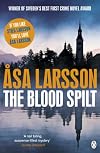
IN A NUTSHELL
This was a powerful, dark but very human story about the pain caused by misogynistic violence silently endorsed by the local patriarchy in a small village in the north of Sweden. I loved that this wasn't a tract about social issues but a story about the emotional impact of the violence on the women and men touched by it. I also liked that Rebecca Martinsson, instead of being the intrepid amateur sleuth unearthing dark secrets, spent most of the book as walking wounded looking show more for a place of safety that reminded her of her childhood home while she tries to move on from the violence that ended the first book 'The Savage Altar'.
The Blood Spilt' is the second book in the Rebecka Martinsson series I started last month with 'The Savage Altar'.
If you judge it by its content, this is a dark book, that starts with a vicious, vengeful killing and goes on to uncover a climate of violent misogyny, endorsed and encouraged by the most powerful men in the village, including the local priests. Yet, for me, this was a story about women surviving trauma and overcoming hate by finding a way to stand together and being true to themselves It was fuelled by a love of the rural setting and the possibility of serenity and community that it offers.
It takes place two years after the events of 'The Savage Altar' and I liked that Rebecka was still traumatised by her actions at the end of the first book and is questioning what her future holds. Circumstances bring her north on business, close enough to her home town to feel familiar but far enough away for her to be anonymous. I enjoyed reading the well-crafted description of Martinsson's gradual awakening to the idea that leaving Stockholm behind and returning to the home of her childhood might offer her peace. I particularly liked that participating in a successful professional services sales pitch given by an experienced Partner, was instrumental in pushing her away from her old life. The description of the pitch was realistic, unsensational and just a little distasteful.
The pace of the storytelling appealed to me. It wasn't a mystery where someone races from suspect to suspect asking "What am I missing?". It was more like a hunter in a hide, still, quiet, attuned to the forest and waiting for whatever emerges. This tense, purposeful stillness was added to by having Rebecka so focused on finding her path to the future rather than finding the killer, that she unintentionally becomes a tethered goat, set to catch a tiger. The hunting is being done by Anna Maria, the indomitable local detective, who we met in the last book, when she was heavily pregnant and allegedly on maternity leave. Now she's the mother of a young baby and back at work. I was captivated by Anna-Maria's interview technique, It was non-confrontational but relentless and cunning.
Looking back, when all had been revealed, it struck me that what was different about the way Åsa Larsson told the story was that she wasn't focused on the mechanics of solving the mystery of who killed the priest but on describing the impact of the priest's life and her death on the people around her. Åsa Larsson shows the void she left in the lives of the people who loved her and the outrage, fear and hatred she evoked in the men she challenged. The priest wasn't painted as a saint. She had flaws. She had an agenda. She was deliberately and sometimes joyfully provocative but most of all she was shining with a life. Larsson shows the darkness that spread when that light was violently extinguished.
Åsa Larsson weaves into the narrative a second story, detailing the life of a female wolf called Yellow Legs. Yellow Legs plays no active role in the human mystery although humans in the story encounter her from time to time. One of the reason's the murdered priest was hated was that she championed the protection of wolves. I found myself immersed in Yellow Legs' story. I knew I was supposed to be drawing a message from it that would add a perspective to the struggles of the women in the main story but, except at the most abstract level, the connection escaped me.
'The Blood Spilt' was a pleasure to read. I'm hooked on this series now. I'll be reading the next book, 'The Black Path' later this month. show less
This was a powerful, dark but very human story about the pain caused by misogynistic violence silently endorsed by the local patriarchy in a small village in the north of Sweden. I loved that this wasn't a tract about social issues but a story about the emotional impact of the violence on the women and men touched by it. I also liked that Rebecca Martinsson, instead of being the intrepid amateur sleuth unearthing dark secrets, spent most of the book as walking wounded looking show more for a place of safety that reminded her of her childhood home while she tries to move on from the violence that ended the first book 'The Savage Altar'.
The Blood Spilt' is the second book in the Rebecka Martinsson series I started last month with 'The Savage Altar'.
If you judge it by its content, this is a dark book, that starts with a vicious, vengeful killing and goes on to uncover a climate of violent misogyny, endorsed and encouraged by the most powerful men in the village, including the local priests. Yet, for me, this was a story about women surviving trauma and overcoming hate by finding a way to stand together and being true to themselves It was fuelled by a love of the rural setting and the possibility of serenity and community that it offers.
It takes place two years after the events of 'The Savage Altar' and I liked that Rebecka was still traumatised by her actions at the end of the first book and is questioning what her future holds. Circumstances bring her north on business, close enough to her home town to feel familiar but far enough away for her to be anonymous. I enjoyed reading the well-crafted description of Martinsson's gradual awakening to the idea that leaving Stockholm behind and returning to the home of her childhood might offer her peace. I particularly liked that participating in a successful professional services sales pitch given by an experienced Partner, was instrumental in pushing her away from her old life. The description of the pitch was realistic, unsensational and just a little distasteful.
The pace of the storytelling appealed to me. It wasn't a mystery where someone races from suspect to suspect asking "What am I missing?". It was more like a hunter in a hide, still, quiet, attuned to the forest and waiting for whatever emerges. This tense, purposeful stillness was added to by having Rebecka so focused on finding her path to the future rather than finding the killer, that she unintentionally becomes a tethered goat, set to catch a tiger. The hunting is being done by Anna Maria, the indomitable local detective, who we met in the last book, when she was heavily pregnant and allegedly on maternity leave. Now she's the mother of a young baby and back at work. I was captivated by Anna-Maria's interview technique, It was non-confrontational but relentless and cunning.
Looking back, when all had been revealed, it struck me that what was different about the way Åsa Larsson told the story was that she wasn't focused on the mechanics of solving the mystery of who killed the priest but on describing the impact of the priest's life and her death on the people around her. Åsa Larsson shows the void she left in the lives of the people who loved her and the outrage, fear and hatred she evoked in the men she challenged. The priest wasn't painted as a saint. She had flaws. She had an agenda. She was deliberately and sometimes joyfully provocative but most of all she was shining with a life. Larsson shows the darkness that spread when that light was violently extinguished.
Åsa Larsson weaves into the narrative a second story, detailing the life of a female wolf called Yellow Legs. Yellow Legs plays no active role in the human mystery although humans in the story encounter her from time to time. One of the reason's the murdered priest was hated was that she championed the protection of wolves. I found myself immersed in Yellow Legs' story. I knew I was supposed to be drawing a message from it that would add a perspective to the struggles of the women in the main story but, except at the most abstract level, the connection escaped me.
'The Blood Spilt' was a pleasure to read. I'm hooked on this series now. I'll be reading the next book, 'The Black Path' later this month. show less
Lists
Scandicrime (2)
Awards


You May Also Like


Associated Authors
Statistics
- Works
- 49
- Also by
- 2
- Members
- 5,705
- Popularity
- #4,330
- Rating
- 3.6
- Reviews
- 273
- ISBNs
- 478
- Languages
- 18
- Favorited
- 8

