
Frode Sander Øien
Author of I'm Traveling Alone
About the Author
Series
Works by Frode Sander Øien
Ik reis alleen & De doodsvogel 2 copies
La stagione del sangue 1 copy
A ILHA MORTAL 1 copy
Ostrov 1 copy
La stagione del fuoco 1 copy
Tagged
Common Knowledge
- Canonical name
- Øien, Frode Sander
- Legal name
- Øien, Frode Sander
- Other names
- Bjørk, Samuel
- Birthdate
- 1969-05-12
- Gender
- male
- Occupations
- playwright
novelist
singer-songwriter - Agent
- Paloma Agency
- Short biography
- (by Penguin Books): Samuel Bjork is the pen name of Norwegian novelist, playwright, and singer/songwriter Frode Sander Øien. Øien wrote his first stage play at the age of twenty-one and has since written two highly acclaimed novels, released six albums, written five plays, and translated Shakespeare, all in his native Norway. Øien currently lives and works in Trondheim. He is the author of I'm Traveling Alone and The Owl Always Hunts at Night.
- Nationality
- Norway
- Birthplace
- Trondheim, Sør-Trøndelag, Norway
- Places of residence
- Trondheim, Sør-Trøndelag, Norway
Steinkjer, Nord-Trøndelag, Norway - Associated Place (for map)
- Norway
Members
Reviews
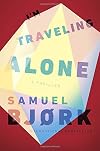
A six year old girl is found hanging from a tree by a skipping rope, dressed in old-fashioned clothes, a satchel on her back and a label around her neck saying 'I'm travelling alone'. Two young boys find a second girl and it's clear that a serial killer is at large. Disgraced detective Holger Munch is called back from exile to solve the crimes but Holger needs his brilliant former sidekick Mia Kruger. Kruger is existing only until she can commit suicide and join her sister, she has show more stockpiled pills and intends to take her life on the anniversary of Sigrid's death. When Munch comes to call she puts off this action to help solve the crime and when Munch's granddaughter disappears it becomes a personal quest.
This book signals the career of yet another outstanding Norwegian crime novelist. The two parallel stories - the murders and the strange religious group - intertwine without ever really connecting but contrast beautifully with each other. There are enough twists and turns to keep the most jaded reader engrossed and I particularly liked the comparison of individuals with clear mental illness issues, a criminal and a cop, both functioning at a certain level. The story is cleverly plotted and, whilst some characters are only drawn in outline, the team is interesting and diverse. I look forward to the next instalment! show less
This book signals the career of yet another outstanding Norwegian crime novelist. The two parallel stories - the murders and the strange religious group - intertwine without ever really connecting but contrast beautifully with each other. There are enough twists and turns to keep the most jaded reader engrossed and I particularly liked the comparison of individuals with clear mental illness issues, a criminal and a cop, both functioning at a certain level. The story is cleverly plotted and, whilst some characters are only drawn in outline, the team is interesting and diverse. I look forward to the next instalment! show less

To my surprise, I really enjoyed 'I'm Travelling Alone' and I'm now keen to read the other two books in the series.
‘I’m Travelling Alone’ has been on my shelf for five years, unread because each time I picked it up, I rejected it because of its central image. The idea of finding a dead six-year-old girl hanging from a tree in the forest, dressed in an out-moded school uniform, with an airline tag reading 'I'm Travelling Alone' around her neck is chilling. Discovering that she's going show more to be the first of many is worse. I worried that this book might be one of those that glamorised the ingenuity of the serial killer and asked me to get inside the mind of someone who thinks killing children is OK.
I decided that I'd reached the Read It Or Release It point with the book, so I added it as the letter I in my TBR ABC Challenge and read it already half expecting to set it aside part way through.
As soon as I started reading, I knew I was in for a treat. There was no frantic rush to dive into the twisted mind of a serial killer as they thrill to the slaughter of a child. Instead, the focus was on taking the time to build the characters of the two main detectives, Holger Munch and Mia Kruger.
It's easy to see Mia as the main character. She's the thirty-something good looking one with an exceptional ability to put patterns together yet it's Holger the fifty-something over-sized one heading up a Violent Crimes Unit that plucks Mia straight out the police academy and gives her and the other people on his team the space to environment to turn Mia's insights into actionable police work. I came away from the book wanting to know more about both of them.
I'm not going to go into the details of their backgrounds here as part of the fun of the book is in discovering that information as you go along, but I will comment on the aspects of their personalities that appealed to me.
The book opens with Mia living in self-imposed isolation on a remote island in Norway, self-medicating her way through depression and counting down the days to the date on which she has decided to end her life. What struck me most about this was how unsensational the telling of itt was. Mia is presented as being in pain but not as being broken. Her decision is shown as a rational choice and one consistent with who she is. This attitude towards suicide appealed to me. It wasn't a recommendation or an endorsement just a recognition that, in the right circumstances, continuing to live is a choice you have the right not to make.
In some ways, Holger is more complicated than Mia. He has more life and more mistakes behind him. He also has more to lose in terms of people who he loves. I liked his humour and the way he protected and enabled his team. I also liked that he wasn't perfect. He frays around the edges when under pressure and often gives way to anger. Yet his team are immensely loyal to him even when he's at his worst.
I liked that the Mia and Holger weren't a two-man show, they were part of a team, each of whom had something to contribute. The team is virtually drowning in clues and suspects, some clearly set up by the killer as distractions and I liked that it took the whole team to sort through it all and see where the truth lay. I thought the way the team dynamics were displayed, particularly through the use of dialogue, was skilfully done.
One of the strengths of the novel is the pacing. The plot is complicated and the story is told through seperate storylines that you know are related but you don't know how. The speed and sequence in which information was revealing in each storyline ratcheted up the tension and continuously made me reassess what I thought I knew.
I needn't have worried about this book glamorising the serial killer's view of the world. If the book has core message they are 'This shouldn't be allowed to happen to children' and that losing someone to an early death creates a sense of loss that doesn't dissipate over time.
For me, the thing that worked least well in the book was that the bad guys were so odd and yet so organised. that pushed at the boundaries of my willingness to suspend disbelief. Even so, they remained plausible. They also came across as fundamentally broken and were never glamorised.
So, now I have two more books in the series to read 'The Owl Always Hunts At Night' and 'The Boy In The Headlights' and I'm keen to find out what Holger and Mia and the team do next.
I recommend the audiobook version of 'I'm Travelling Alone' narrated by Laura Paton. Click on the SoundCloud link below to hear a sample. show less
I’m Traveling Alone is a terrific suspense novel written by Samuel Bjork. I was caught up in the story immediately and the momentum never slowed. Yes, there are a lot of characters and a lot is going on in the book, but I didn’t find it difficult to follow. Bjork blends the stories well, dead six-year-old girls dressed in doll’s dresses and a creepy religious cult in the middle of a Norwegian forest. One may be reminded a bit of the Stieg Larsson-Lisbeth Salander books, minus the sex show more and the gore. Holger Munch and Mia Kruger are a great team, and while I did a bit of page flipping at the end, wanting more, I hope this is the beginning of a new Scandinavian crime series. show less
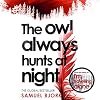
I read 'I'm Travelling Alone', the first book in this series, back in May after letting it languish on my TBR shelves for way too long. I was pleased to find that the book had engaging characters, avoided glamorising serial killers, had a twisty plot with excellent pacing and that, if it had a core message, it was that bad things shouldn't be allowed to happen to children and when they do, the effects last a lifetime.
I decided to read the rest of the series, partly because I liked Samuel show more Bjørk's storytelling and partly because I wanted to see what would happen to Holger Munch and Mia Kruger.
There are a lot of good things in 'The Owl Always Hunts At Night'. The premise is original, graphic and mysterious. There are moments of intense tension and the ending is both unexpected and truly spectacular. The characters are portrayed in a way that is powered by clinical insight leavened with a little empathy. One of the characters has a form of mental illness that makes him see the world so differently from the rest of us that even something as simple as going grocery shopping is fraught with risk. I loved the way that Samuel Bjørk showed me the world through this confused man's eyes, then showed me how others would see him and then showed me that everything he said made sense but only if you understand how the man's mind worked. I liked that the story was told by following events happening to different groups of people. It kept the narrative fresh, widened the focus beyond the investigative team, and kept me guessing about how the people and events would connect. It was a little like trying to guess the picture a jigsaw will make when you're handed the pieces in a way that keeps the image fragmented.
I enjoyed 'The Owl Always Hunts At Night', but I didn't think it worked as well as the first book Some of that was just Second Book Syndrome (the need to précis the events of the previous book, the loss of novelty, and the urge to go bigger and better on the stress and the complexity), some of it was that it seemed to me that the pacing got a bit soggy in the middle, some of it was that the explanation of the premise was a little over-elaborate. Mostly, I think it was just that the book was darker than I'd expected and that I found that darkness hard to relate to. The premise was more twisted and sadistic than I'd expected and although the worst things all happened off-screen, Samuel Bjørk made sure that my imagination filled in the blanks. I was also thrown out of the story by what seemed to me to be an unrealistically high incidence of mental illness as a mechanism for moving the plot forward. This was often done with empathy and respect but I felt there was too much of it and that. overall it relied on the mentally ill being seen as threatening in a way that they seldom are in real life.
My reaction to Mia Kruger caught me by surprise. I quite liked her in the first book. This time around, I lost all sympathy for her. I don't think this is a weakness of the book. I think it's one of the reactions Samuel Bjørk sets the reader up to have but it surprised me. Mia's sustained fixation on suicidal ideation wearied me. I wanted to shout "Live. Don't Live. It's Your Choice. But don't get paralysed by being unable to take the choice or make it go away." I think wanting to shout at a character is a sign that the author has brought you fully into the world that they've created but it made it harder for me to relax into the book.
The ending of the book is rapid and spectacular. I felt that I'd been brought to a good conclusion and that I was still committed enough to the main characters to want to know what will happen in the next book, 'The Boy In The Headlights'
I recommend listening to the audiobook, which is skilfully narrated by Laura Paton. show less
Lists
Awards


You May Also Like


Associated Authors
Statistics
- Works
- 18
- Members
- 1,563
- Popularity
- #16,503
- Rating
- 3.8
- Reviews
- 76
- ISBNs
- 206
- Languages
- 19
- Favorited
- 1


