
Charles A. Riley II
Author of The Art of Peter Max
About the Author
Works by Charles A. Riley II
Associated Works
Tagged
Common Knowledge
- Canonical name
- Riley II, Charles A.
- Birthdate
- 1958-02-21
- Gender
- male
- Education
- Princeton University
Graduate Center of CUNY - Occupations
- curator
critic
professor of English - Nationality
- USA
- Associated Place (for map)
- USA
Members
Reviews
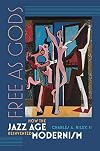
FREE AS GODS: MODERNISM: HOW THE JAZZ AGE REINVENTED MODERNISM
By Charles Riley
If you are an aficionado of jazz, of writers like Hemingway and Fitzgerald, of artists like Picasso and , this book is for you. Riley’s amazing in-depth knowledge of the arts in the decade between WWI and the Depression will astound and delight the reader. He delves into the “cross-pollenization” of all the creative artists living in Paris during this momentous time, and meticulously ties all their show more influences together. Who knew that jazz music influence ballet, and vice-versa? Or that artists and writers collaborated together and fed each other’s creative impulses? It was a pleasure to read little-known and amusing and heart-wrenching vignettes about favorite writers, musicians, dancers, and artists and their many interactions and achievements. Riley recreates a vibrant world that makes readers wish they, too, could have been in Paris, participating and observing these groundbreaking and lasting artistic accomplishments that have helped to shape our artistic world today. The legacy of those years is truly done justice by Riley’s scholarship and his accessible prose. show less
By Charles Riley
If you are an aficionado of jazz, of writers like Hemingway and Fitzgerald, of artists like Picasso and , this book is for you. Riley’s amazing in-depth knowledge of the arts in the decade between WWI and the Depression will astound and delight the reader. He delves into the “cross-pollenization” of all the creative artists living in Paris during this momentous time, and meticulously ties all their show more influences together. Who knew that jazz music influence ballet, and vice-versa? Or that artists and writers collaborated together and fed each other’s creative impulses? It was a pleasure to read little-known and amusing and heart-wrenching vignettes about favorite writers, musicians, dancers, and artists and their many interactions and achievements. Riley recreates a vibrant world that makes readers wish they, too, could have been in Paris, participating and observing these groundbreaking and lasting artistic accomplishments that have helped to shape our artistic world today. The legacy of those years is truly done justice by Riley’s scholarship and his accessible prose. show less
 This review was written for LibraryThing Early Reviewers.
One of the treason I requested this book for early review is because I don’t know as much as I would like about the Jazz Age or the Modernist movement and this seemed like a good place to start learning more. Sadly I don’t feel this book was meant for someone like me but was instead meant for someone with a fairly deep knowledge of that time period instead.
Each chapter deals with a main “character”, their history and development as an artist and something of how they influenced the show more times and arts of the era. The author mostly talked about the expected names, the Fitzgerald’s, Hemmingway, Debussy, though he did also bring up more than a few people I had never heard of before. Unfortunately also a large part of each chapter was taken up with a lot of name dropping, for lack of a better term, each chapter is just full of name after name after name with no real context of whom they are or why I should be aware or care about them. I felt as though it was assumed I would already know who they were and why they mattered…and I almost always didn’t.
I can’t call this a complete waste of my time since I did find a couple of new artists that were discussed but overall it was a slow, slog of a read due to the constant listing of names, and the sections on musicians or dance/choreography were especially hard to get though since I had no reference for what he was talking about at all never having seen or heard the pieces he was talking about.
This book may be more appropriate for someone already well versed in the time period but I would not recommend it for a neophyte or those with a more causal interest in the topic. show less
Each chapter deals with a main “character”, their history and development as an artist and something of how they influenced the show more times and arts of the era. The author mostly talked about the expected names, the Fitzgerald’s, Hemmingway, Debussy, though he did also bring up more than a few people I had never heard of before. Unfortunately also a large part of each chapter was taken up with a lot of name dropping, for lack of a better term, each chapter is just full of name after name after name with no real context of whom they are or why I should be aware or care about them. I felt as though it was assumed I would already know who they were and why they mattered…and I almost always didn’t.
I can’t call this a complete waste of my time since I did find a couple of new artists that were discussed but overall it was a slow, slog of a read due to the constant listing of names, and the sections on musicians or dance/choreography were especially hard to get though since I had no reference for what he was talking about at all never having seen or heard the pieces he was talking about.
This book may be more appropriate for someone already well versed in the time period but I would not recommend it for a neophyte or those with a more causal interest in the topic. show less
This review was written for LibraryThing Early Reviewers.Color Codes: Modern Theories of Color in Philosophy, Painting and Architecture, Literature, Music, and Psychology by Charles A. Riley II
very intellectual deep thinking and ramifications of thought upon thought upon thought upon philosophy upon meditation upon reflection upon the concept of colors and just why certain colors like RED means STOP or DANGER, and BLUE means COOL or 90's M&M. If you like deep dives, and happen to be not color blind, you'll find this right up your alley.
one thing that struck me as a bit odd and why i'm giving it the review I am, is there are no pictures. I mean, I know that may Sound like i'm a show more dummy or something but really, I feel as though this dense AF book could benefit from some visual examples? I mean, sure you can Google whatever they're talking about but then it becomes kind of a chore. I figured since the topic is color .... so yeah. Maybe i'm the only one who thinks this way, and if so ignore this but yeah. show less
one thing that struck me as a bit odd and why i'm giving it the review I am, is there are no pictures. I mean, I know that may Sound like i'm a show more dummy or something but really, I feel as though this dense AF book could benefit from some visual examples? I mean, sure you can Google whatever they're talking about but then it becomes kind of a chore. I figured since the topic is color .... so yeah. Maybe i'm the only one who thinks this way, and if so ignore this but yeah. show less
There are things brought up in this book that assume a reader's knowledge of certain ideas - musical theory, artistic and philosophic nomenclature and vocabulary, etc. - when these things are not explained, it results in a fragmented understanding. I am not sure if the author wasn't up to the task of explaining these tangential but critical ideas or just did not want to bother. So for the typical lay reader, some aspects of the book may remain opaque. Though the Introduction purports to tell show more us that all these people knew and influenced each other, sometimes the actual influencing part is somewhat muddled. I have read many books about this time period and am learning some new things - certainly being exposed to a wide range of anecdotal history and analysis. However, this book rather resembles a textbook a professor would give you to introduce you to some core ideas that you will [later] be expected to broaden one's knowledge of - being expected to expand one's understanding by turning to other texts and references one must hunt down in the library. Overall a bit dry and overly technical for me. show less
This review was written for LibraryThing Early Reviewers.You May Also Like


Associated Authors
Statistics
- Works
- 11
- Also by
- 1
- Members
- 248
- Popularity
- #92,013
- Rating
- 3.6
- Reviews
- 10
- ISBNs
- 19
