
Ken Wohlrob
Author of The Love Book
Works by Ken Wohlrob
Tagged
Common Knowledge
- Gender
- male
- Occupations
- writer
- Agent
- Still seeking...
- Short biography
- I'm a writer from Brooklyn, NY, and the author of THE LOVE BOOK, a collection of short stories on sale now.
I was founder/editor of Bully Magazine, an online publication, from 1998-2003. In addition, I have been a contributor to The New York Press, Go Metric, Friction Magazine, FreeWilliamsburg, Motel, and AlcoholReviews.com. I've also participated in the Perpetual Motion Roadshow and the Needle Exchange Hour reading series.
In 2006, I became a co-founder--along with indie writers Tim Hall, Brian Cogan, and Mike Faloon--of the Blacksmiths For Literary Progress. - Places of residence
- Brooklyn, New York, USA
- Associated Place (for map)
- New York, USA
Members
Reviews
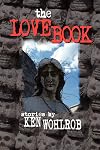
These stories of sex and death, attraction and repulsion, men and women, start out in a gritty mode, exposing the less pretty realities of some of life's unfortunates. One triumph of The Love Book is the tenderness Wohlrob reveals in the course of writing each relationship, a raw and recognizable humanity he brings to the surface in places the reader least expects: Compassion for just the characters with whom I was most uncomfortable crept over me in absorbing Wohlrob's deft and distilled show more prose. The stories in The Love Book are never veiled autobiography, but add up to an original vision all Wohlrob's own, one that has been piercingly and wisely lived, felt, and imagined. show less
(Reprinted from the Chicago Center for Literature and Photography [cclapcenter.com]. I am the original author of this essay, as well as the owner of CCLaP; it is not being reprinted illegally.)
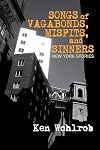
While making my way through Ken Wohlrob's Songs of Vagabonds, Misfits and Sinners, I couldn't help but think about something I read a few years ago about author Nelson Algren, of how he forever had a love/hate relationship with the first novel he ever wrote, which he blamed on the politically active, show more overly earnest liberals he was hanging out with in the Great Depression 1930s, who in good Stalinist style felt that artists accomplish nothing if they aren't directly commenting on the ills of the human condition, a sort of radical form of Social Realism that resulted in an entire decade of preachy morality tales that by and large have been completely forgotten by history. And that's because, although he certainly gets an A for effort, Wohlrob lays on the Progressive lecturing here awfully thick, a 21st-century Little Dorritt that's never satisfied with a disaster befalling a plucky immigrant hero when five disasters can befall them instead; just take the second story in the collection as a good example, "Job in Williamsburg," in which a long-suffering Spanish janitor learns to paint in a lush Renaissance style in honor of his pious, dead mother, just to have his work ridiculed by cackling hipsters at a Brooklyn group exhibition, only to find out that no less than the Museum of Modern Art ended up buying one of his pieces, only to find out (and I'm not making this up) that they only bought it literally so they could hang it in their public bathroom, as an ironic statement about its worthlessness in a postmodern age, a message I'm not sure could even be delivered more heavily-handed, unless maybe you show poor Ramon writhing on the floor while being viciously kicked by a group of frat boys in business suits, smoking cigars and gleefully chanting, "WHITE MALES RULE! WHITE MALES RULE!" Although his writing style is actually not that bad, I have the sad suspicion that Wohlrob will one day look back on this book with the same kind of ruefulness that Algren always looked at Somebody In Boots; and I encourage him in future stories to find more inventive ways to get across the points he's trying to make, and to leave the preaching at church where it belongs.
Out of 10: 6.2 show less
While making my way through Ken Wohlrob's Songs of Vagabonds, Misfits and Sinners, I couldn't help but think about something I read a few years ago about author Nelson Algren, of how he forever had a love/hate relationship with the first novel he ever wrote, which he blamed on the politically active, show more overly earnest liberals he was hanging out with in the Great Depression 1930s, who in good Stalinist style felt that artists accomplish nothing if they aren't directly commenting on the ills of the human condition, a sort of radical form of Social Realism that resulted in an entire decade of preachy morality tales that by and large have been completely forgotten by history. And that's because, although he certainly gets an A for effort, Wohlrob lays on the Progressive lecturing here awfully thick, a 21st-century Little Dorritt that's never satisfied with a disaster befalling a plucky immigrant hero when five disasters can befall them instead; just take the second story in the collection as a good example, "Job in Williamsburg," in which a long-suffering Spanish janitor learns to paint in a lush Renaissance style in honor of his pious, dead mother, just to have his work ridiculed by cackling hipsters at a Brooklyn group exhibition, only to find out that no less than the Museum of Modern Art ended up buying one of his pieces, only to find out (and I'm not making this up) that they only bought it literally so they could hang it in their public bathroom, as an ironic statement about its worthlessness in a postmodern age, a message I'm not sure could even be delivered more heavily-handed, unless maybe you show poor Ramon writhing on the floor while being viciously kicked by a group of frat boys in business suits, smoking cigars and gleefully chanting, "WHITE MALES RULE! WHITE MALES RULE!" Although his writing style is actually not that bad, I have the sad suspicion that Wohlrob will one day look back on this book with the same kind of ruefulness that Algren always looked at Somebody In Boots; and I encourage him in future stories to find more inventive ways to get across the points he's trying to make, and to leave the preaching at church where it belongs.
Out of 10: 6.2 show less
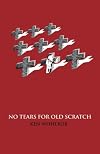
This is a difficult book to describe. I think its a morality story, pitting a town's facade of righteousness against the true nature of its citizens.
Statistics
- Works
- 6
- Members
- 14
- Popularity
- #739,558
- Rating
- 4.0
- Reviews
- 3
- ISBNs
- 3
