
Haifaa al-Mansour
Author of The Green Bicycle
About the Author
Works by Haifaa al-Mansour
Tagged
Common Knowledge
- Canonical name
- al-Mansour, Haifaa
- Birthdate
- 1974-08-10
- Gender
- female
- Nationality
- Saudi Arabia
- Associated Place (for map)
- Saudi Arabia
Members
Reviews
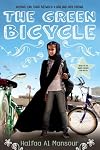
Me: Okay, I have to read the book before I watch the movie!
Book: “Based on the award-winning film!”
Me: … Oh.
The book is actually written by Haifaa Al Mansour, the film director and screenwriter who also created … you guessed it, Wadjda. This is also her first novel. It’s also surprisingly well written for a book based on a movie, and also a debut by someone focusing on film (most movies-to-books have been … pretty lackluster in my experience).
Content show more warnings:
homophobia/lesbophobia
lots of in-book misogyny
Eleven-year-old Wadjda lives in Saudi Arabia with her mother … and … nope, just mother (dad? What dad?). While her mother seems to struggle to get by on her teaching job a long, long drive away through the desert, her father has a ton of money that neither of them really see (it’s all spent on himself: gaming consoles, a TV, and, unfortunately, a dowry for another bride that threatens to tear the family apart). Meanwhile, at school, Wadjda sells forbidden mixtapes and jewelry for extra cash so she can buy the most Amazing green bicycle. Even though girls riding bikes is forbidden. Along with most other things. But Wadjda is determined to buy this bike and beat her best friend, Abdullah, in a race. The only problem(s)? The bike is 800 Riyals, her mom has forbidden her to buy said bike, and she’s just been caught selling mixtapes.
While this IS one of the best movies-to-books I’ve ever read, it failed to keep my attention all the way through. It’s a pretty big book for so simple a plot, ultimately: Wadjda dreams of getting her green bicycle. The PoV also alternates at completely random times → mostly just to Wadjda’s best friend, Abdullah. It still threw me off. Alternating PoVs as a concept should be introduced early on so readers can be well acquainted to it -- not midway. Done that way it’s one of the things most likely to throw a reader out of the story/world.
I would also like to mention that this book has a very Western bias, and I’m not sure what I can say about that except that the author does present the story and her culture through that Western lens. No opinion on this (not that I really can have one here), just a statement.
Now, what I really didn’t like:
There’s a really lesbophobic element (and yes, I know it could/might happen in Saudi Arabia every day. However, I didn’t like the way Haifaa Al Mansour particularly handled it in this book. And possibly the movie as well. Spoilers for clarity:Two girls in school who Wadjda look up to get caught being “too close” to one another by a door. While they were really going to paint their toes, it looked like maybe ?? they were somehow touching each other under their abayahs. So the teacher said they were, in fact, inappropriately touching each other and called in Wadjda as a witness. For some reason, Wadjda says she couldn’t clearly see what was going on, which condemns the two girls to public humiliation, and worse: being outcasted by everyone else at school (with “EW DON’T TOUCH ME” being a part of their daily lives now).
For anyone who didn’t read the spoiler: basically Wadjda told a lie that led to two fellow classmates being publicly humiliated and now treated awfully by everyone else at school (due to lesbophobia). Wadjda never apologized, and the narrative acts like “going back to her troublemaking self” makes up for it, since those girls called her a traitor for “being the school’s favorite convert” and playing nice.
As a lesbian reading this, though … it … doesn’t? Not for me, at least. In fact, Wadjda gets away with So Much without ever apologizing or talking things through. And buying something or pouting -- or even a simple look will get her back in good standing. Everyone else around her, including her poor mom, does everything for her and gets nearly nothing back. I even felt sorry for Abdullah a couple times, and I never thought I would with his sexist ways!
Anyway, I’ll still watch the movie, but I think the lesbophobia will still throw me off. Though the mother and daughter moments holding strong in the face of Wadjda’s father are the highlights, they don’t make up for the rest of the book, which just paled in comparison. show less
Book: “Based on the award-winning film!”
Me: … Oh.
The book is actually written by Haifaa Al Mansour, the film director and screenwriter who also created … you guessed it, Wadjda. This is also her first novel. It’s also surprisingly well written for a book based on a movie, and also a debut by someone focusing on film (most movies-to-books have been … pretty lackluster in my experience).
Content show more warnings:
homophobia/lesbophobia
lots of in-book misogyny
Eleven-year-old Wadjda lives in Saudi Arabia with her mother … and … nope, just mother (dad? What dad?). While her mother seems to struggle to get by on her teaching job a long, long drive away through the desert, her father has a ton of money that neither of them really see (it’s all spent on himself: gaming consoles, a TV, and, unfortunately, a dowry for another bride that threatens to tear the family apart). Meanwhile, at school, Wadjda sells forbidden mixtapes and jewelry for extra cash so she can buy the most Amazing green bicycle. Even though girls riding bikes is forbidden. Along with most other things. But Wadjda is determined to buy this bike and beat her best friend, Abdullah, in a race. The only problem(s)? The bike is 800 Riyals, her mom has forbidden her to buy said bike, and she’s just been caught selling mixtapes.
While this IS one of the best movies-to-books I’ve ever read, it failed to keep my attention all the way through. It’s a pretty big book for so simple a plot, ultimately: Wadjda dreams of getting her green bicycle. The PoV also alternates at completely random times → mostly just to Wadjda’s best friend, Abdullah. It still threw me off. Alternating PoVs as a concept should be introduced early on so readers can be well acquainted to it -- not midway. Done that way it’s one of the things most likely to throw a reader out of the story/world.
I would also like to mention that this book has a very Western bias, and I’m not sure what I can say about that except that the author does present the story and her culture through that Western lens. No opinion on this (not that I really can have one here), just a statement.
Now, what I really didn’t like:
There’s a really lesbophobic element (and yes, I know it could/might happen in Saudi Arabia every day. However, I didn’t like the way Haifaa Al Mansour particularly handled it in this book. And possibly the movie as well. Spoilers for clarity:
For anyone who didn’t read the spoiler: basically Wadjda told a lie that led to two fellow classmates being publicly humiliated and now treated awfully by everyone else at school (due to lesbophobia). Wadjda never apologized, and the narrative acts like “going back to her troublemaking self” makes up for it, since those girls called her a traitor for “being the school’s favorite convert” and playing nice.
As a lesbian reading this, though … it … doesn’t? Not for me, at least. In fact, Wadjda gets away with So Much without ever apologizing or talking things through. And buying something or pouting -- or even a simple look will get her back in good standing. Everyone else around her, including her poor mom, does everything for her and gets nearly nothing back. I even felt sorry for Abdullah a couple times, and I never thought I would with his sexist ways!
Anyway, I’ll still watch the movie, but I think the lesbophobia will still throw me off. Though the mother and daughter moments holding strong in the face of Wadjda’s father are the highlights, they don’t make up for the rest of the book, which just paled in comparison. show less
Eleven-year-old Wadjda lives with her parents in Saudi Arabia. Lately, however, she's seen very little of her father. Rumor has it that he is seeking a second wife. Because money is scarce and women are not permitted to drive, Wadjda's mother takes an hours-long cab ride each day to a remote village to teach school. Covered in black from head to toe, she shares the ride (without air-conditioning) with other teachers - crammed in a dilapidated cab in the sweltering desert heat. Wadjda, due to show more her young age and family's financial circumstances, has a special note that allows her to walk alone to school each day—but she longs to ride a bike like Abdullah. She and Abdullah were once friends, but now that she is older, she is not permitted to fraternize with boys.
Wadjda, however, does not easily take "no" for an answer. She rebels against the tedious rules of her girls-only school. Why shouldn't she be able to sell mix-tapes of Western musicians? She rebels against her mother and father. Why can't she play video games in her living room designated for men only. She rebels against the constraints of her culture. Why can't she talk to Abdullah if she wants to? And why can't a girl have a bicycle? Despite the obstacles and consequences, Wadjda is determined to have her way.
" A lecture she'd heard in science class tickled her memory. Again and again, her teacher had told them that dark colors absorb heat, while lighter colors reflect it back. She ended the lesson my stating that this phenomenon was one of the miracles of the universe. It proved there was one almighty God, Allah, and that he had created everything for a purpose.
Beneath her hot black veil, Wadjda twisted her lips. She wondered if people knew this scientific secret when the tribal code assigned black to women and white to men. Maybe the real miracle of the universe was that she was able to walk home in Riyadh's sweltering afternoon sun without passing out!
The boys were gone now. Their bicycles moved like a flash around the corner. Wadjda squinted into the dusty afternoon and continued slowly on her way. As she walked, she pitched the stone Father had given her at various targets— a can, a stick, a funny-colored brick on the side of a building—thinking all the while about the different miracles of the universe. It had taken so much to get her to this exact spot, at this exact moment. So what was her purpose, now that she was here? "
Wadjda is an endearing protagonist because, despite a setting that is foreign to the American reader, Wadjda is familiar to us. She is just a girl like most girls—sometimes obedient, sometimes rebellious, sometimes remorseful, sometimes not. To women and girls of the West, life as a female in Saudi Arabia seems oppressive, cruel, unfathomable. To a girl like Wadjda, it is just life—a life in which she must eke out moments of hope, happiness, and laughter. Along with heartache, Haifaa Al Mansour has showed us those moments.
More at http://shelf-employed.blogspot.com/2015/11/the-green-bicycle-review.html
My copy of The Green Bicycle was provided by the publisher at my request. show less
Wadjda, however, does not easily take "no" for an answer. She rebels against the tedious rules of her girls-only school. Why shouldn't she be able to sell mix-tapes of Western musicians? She rebels against her mother and father. Why can't she play video games in her living room designated for men only. She rebels against the constraints of her culture. Why can't she talk to Abdullah if she wants to? And why can't a girl have a bicycle? Despite the obstacles and consequences, Wadjda is determined to have her way.
" A lecture she'd heard in science class tickled her memory. Again and again, her teacher had told them that dark colors absorb heat, while lighter colors reflect it back. She ended the lesson my stating that this phenomenon was one of the miracles of the universe. It proved there was one almighty God, Allah, and that he had created everything for a purpose.
Beneath her hot black veil, Wadjda twisted her lips. She wondered if people knew this scientific secret when the tribal code assigned black to women and white to men. Maybe the real miracle of the universe was that she was able to walk home in Riyadh's sweltering afternoon sun without passing out!
The boys were gone now. Their bicycles moved like a flash around the corner. Wadjda squinted into the dusty afternoon and continued slowly on her way. As she walked, she pitched the stone Father had given her at various targets— a can, a stick, a funny-colored brick on the side of a building—thinking all the while about the different miracles of the universe. It had taken so much to get her to this exact spot, at this exact moment. So what was her purpose, now that she was here? "
Wadjda is an endearing protagonist because, despite a setting that is foreign to the American reader, Wadjda is familiar to us. She is just a girl like most girls—sometimes obedient, sometimes rebellious, sometimes remorseful, sometimes not. To women and girls of the West, life as a female in Saudi Arabia seems oppressive, cruel, unfathomable. To a girl like Wadjda, it is just life—a life in which she must eke out moments of hope, happiness, and laughter. Along with heartache, Haifaa Al Mansour has showed us those moments.
More at http://shelf-employed.blogspot.com/2015/11/the-green-bicycle-review.html
My copy of The Green Bicycle was provided by the publisher at my request. show less
That was a really nicely done coming-of-age story. I particularly liked the audio read by Ariana Delawari--it was sweet without being unbearable...maybe a bit slow with the precise diction, but I imagine it would be great for children unfamiliar with words and concepts from Saudi Arabia. I loved the largely female cast and how complicated many of the characters were--no small feat for a middle grade novel. This will definitely be a recommended read for my library families.
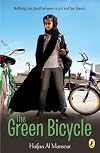
Okay, I didn't finish this. BUT. What I did get through was interesting, funny, and really well done. I just know I'm never going to go back to it now that I've already booktalked it, so I'm just admitting it now. If you're looking for a realistic story set outside the US with an intelligent and well written main character, this would be a great choice.
Awards


You May Also Like


Associated Authors
Statistics
- Works
- 4
- Members
- 207
- Popularity
- #106,919
- Rating
- 3.7
- Reviews
- 13
- ISBNs
- 23
- Languages
- 3