
Susan Vaught
Author of Big Fat Manifesto
About the Author
Series
Works by Susan Vaught
Associated Works
Beyond the Wall: Exploring George R. R. Martin's A Song of Ice and Fire, From A Game of Thrones to A Dance with Dragons (2012) — Contributor — 173 copies, 7 reviews
A New Dawn: Your Favorite Authors on Stephenie Meyer's Twilight Series (2008) — Contributor — 122 copies, 8 reviews
The World of the Golden Compass: The Otherworldly Ride Continues (2007) — Contributor — 71 copies, 2 reviews
Through the Wardrobe: Your Favorite Authors on C. S. Lewis's Chronicles of Narnia (2008) — Contributor — 61 copies, 3 reviews
Secrets of the Dragon Riders: Your Favorite Authors on Christopher Paolini's Inheritance Cycle (2008) — Contributor — 45 copies, 1 review
Tagged
Common Knowledge
- Birthdate
- 1966-10-22
- Gender
- female
- Education
- Vanderbilt University (MS, PhD)
University of Mississippi (BA) - Occupations
- young adult writer
psychologist - Nationality
- USA
- Map Location
- USA
Members
Discussions
Fictional book: Protagonist is taken from a tragic background, has special power in Name that Book (August 2015)
Reviews
It took me a while to pick this one up, and then I thought it was just a solid book -- and then I found that I wanted to know what happened and that I needed to stay up late to finish it -- and then I realized that it was an amazing book.
Jesse has a great voice and Springer is a fantastic friend, and it's really something special to read about their adventures. Loved: neurodivergent main character, really spectacular allyship on both sides of a friendship, parent serving overseas, a solid show more mystery, an impatient but super loving and supportive family, and a community coming together in the wake of a tornado. I also really appreciate how this story deals with bullying -- there's a lot of it, it escalates. Jesse fights back, and asks for help, and the adults are responsive (to a point) and it still doesn't stop. And she is a violent element in her own defense and is not strongly censured for that -- which is astonishing and refreshing, and not how these stories are usually told. Her parents are great advocates, and it does get resolved in the end, but there's just this level of pervasive realism with regards to the bullying (it's worse than people know) and also these great moments of unexpected assistance, and mostly its just such a relief to see her be believed.
I also really loved seeing the author's note in the end, talking about her own experiences and what she brought to this book. show less
Jesse has a great voice and Springer is a fantastic friend, and it's really something special to read about their adventures. Loved: neurodivergent main character, really spectacular allyship on both sides of a friendship, parent serving overseas, a solid show more mystery, an impatient but super loving and supportive family, and a community coming together in the wake of a tornado. I also really appreciate how this story deals with bullying -- there's a lot of it, it escalates. Jesse fights back, and asks for help, and the adults are responsive (to a point) and it still doesn't stop. And she is a violent element in her own defense and is not strongly censured for that -- which is astonishing and refreshing, and not how these stories are usually told. Her parents are great advocates, and it does get resolved in the end, but there's just this level of pervasive realism with regards to the bullying (it's worse than people know) and also these great moments of unexpected assistance, and mostly its just such a relief to see her be believed.
I also really loved seeing the author's note in the end, talking about her own experiences and what she brought to this book. show less
From the first paragraph, Footer’s voice is firmly established and sets the tone for the whole book. There will be dark, there will be funny, and there will most definitely be crazy.
The plot revolves around a mystery - who burned down the Abrams’ farm and shot old Mr. Abrams, and what happened to the two Abrams kids? Footer and her best friend Peavine are on the case. Meanwhile, Footer’s mom has been interned in a psychiatric hospital and Footer begins having troubling visions of the show more night of the fire that seem to indicate she might have been at the scene of the crime.
Aside from being ultra-readable, I found two of the book’s motifs to be consistently poignant and realistic. Footer’s mother has bi-polar disorder, and Footer spends the book concerned that she has inherited mental illness and is beginning to see the effects. Kids dealing with the instability of a parent’s mental illness are not necessarily well-represented in kids’ literature; but a child’s genuine worry about her own level of stability is something you just don’t see. It’s a mature concern, but Vaught handles it deftly.
Another recurring element that moved me was the broken-people-looking-out-for-each-other thing. Peavine has cerebral palsy and requires crutches to walk. Footer’s mom has bi-polar disorder. A neighbor who has returned from the war in Afghanistan suffers from PTSD. Peavine’s sister is incredibly smart and doesn’t fit in at school (which, by the way, does not automatically put her on the autism spectrum, though it’s surely a possibility). Peavine’s mother has been left by her husband. Stephanie Bridges, the social worker assigned to Footer, is a rookie who is haunted by a tragedy she blames on herself - and she has fake blonde hair (an obvious reason to make a snap judgment about her authenticity, in Footer’s eyes). These people refuse to abandon one another to face life’s rockiness alone, even when Footer is stubborn and hurtful.
This one goes in the short pile of Three Times Lucky and Dead End in Norvelt read-alikes - honorable company, in my opinion. show less
The plot revolves around a mystery - who burned down the Abrams’ farm and shot old Mr. Abrams, and what happened to the two Abrams kids? Footer and her best friend Peavine are on the case. Meanwhile, Footer’s mom has been interned in a psychiatric hospital and Footer begins having troubling visions of the show more night of the fire that seem to indicate she might have been at the scene of the crime.
Aside from being ultra-readable, I found two of the book’s motifs to be consistently poignant and realistic. Footer’s mother has bi-polar disorder, and Footer spends the book concerned that she has inherited mental illness and is beginning to see the effects. Kids dealing with the instability of a parent’s mental illness are not necessarily well-represented in kids’ literature; but a child’s genuine worry about her own level of stability is something you just don’t see. It’s a mature concern, but Vaught handles it deftly.
Another recurring element that moved me was the broken-people-looking-out-for-each-other thing. Peavine has cerebral palsy and requires crutches to walk. Footer’s mom has bi-polar disorder. A neighbor who has returned from the war in Afghanistan suffers from PTSD. Peavine’s sister is incredibly smart and doesn’t fit in at school (which, by the way, does not automatically put her on the autism spectrum, though it’s surely a possibility). Peavine’s mother has been left by her husband. Stephanie Bridges, the social worker assigned to Footer, is a rookie who is haunted by a tragedy she blames on herself - and she has fake blonde hair (an obvious reason to make a snap judgment about her authenticity, in Footer’s eyes). These people refuse to abandon one another to face life’s rockiness alone, even when Footer is stubborn and hurtful.
This one goes in the short pile of Three Times Lucky and Dead End in Norvelt read-alikes - honorable company, in my opinion. show less
There are a lot of things that Jersey Hatch doesn't know. He doesn't know why exactly his best friend can't stand the sight of him, why his parents are acting so strangely, and he can't figure out just what must have happened that made him shoot himself. Everything he once knew about the year previous was wiped clean on the day that Jersey shot himself in the head with his father's gun. All Jersey knows now is that it's a challenge to walk, to talk, to think. He knows he has scars, that show more things will never be the same, and that he needs some answers to the questions no one will ask.
We meet Jersey upon his release from his final brain injury hospital. He's headed home to the real world, where life will be much harder. Immediately, we're captured by Jersey's sardonic narration that shows through the pieces of his personality that survived his injury at the same time as it shows how his thought patterns are terribly altered and difficult to focus after the fact. He mocks his mom and his doctor and their favorite repeated phrases, is haunted by the ghost of his former overachieving self, "Jersey Before," and rails against his minder at school, the unfortunately named Ms. Wenchel who he quickly nicknames "the Wench." Despite the brain damage that alters his way of thinking and makes his mind cluttered with all sorts of unrelated words that seem to get stuck in his thoughts and repeat over and over, Jersey's narration is clear-eyed and revealing of himself and of the people around him.
Vaught, a neuropsychologist by trade, has used her experience and expertise to write a terribly convincing story. Jersey is a compelling narrator and a sympathetic one. Despite the people he has hurt by trying to take his own life, Jersey's frustrations in bridging the thought to speech divide, his humiliation at his limitations, as well as his quest for the answers that don't come easily make it impossible for us not to feel his unbearable pain. Jersey's search for answers creates suspense that makes Trigger difficult to put down. Yet even as the plot moves toward its climax, Trigger asks us to consider suicide and its far-reaching repercussions and even forces us to consider, by way of Jersey's interactions, the variety of wrongheaded ways we "normal" people view and interact with the mentally handicapped ranging from fear and awkwardness to laughter to downright cruelty. So vivid and penetrating is this theme that cuts to the heart of our insecurities about our behavior around those that are "different" that even as I read it, I was unsure whether it was "right" or not to giggle at the absurd things that get stuck in Jersey's head that he repeats ceaselessly without meaning to, and whether I should feel bad if I did giggle.
Overall, Trigger is a profound, powerful, fast-moving story that asks all the right questions without ever resorting to preaching at us. Though marketed as YA, this book is well-worth reading for young and old alike. show less
We meet Jersey upon his release from his final brain injury hospital. He's headed home to the real world, where life will be much harder. Immediately, we're captured by Jersey's sardonic narration that shows through the pieces of his personality that survived his injury at the same time as it shows how his thought patterns are terribly altered and difficult to focus after the fact. He mocks his mom and his doctor and their favorite repeated phrases, is haunted by the ghost of his former overachieving self, "Jersey Before," and rails against his minder at school, the unfortunately named Ms. Wenchel who he quickly nicknames "the Wench." Despite the brain damage that alters his way of thinking and makes his mind cluttered with all sorts of unrelated words that seem to get stuck in his thoughts and repeat over and over, Jersey's narration is clear-eyed and revealing of himself and of the people around him.
Vaught, a neuropsychologist by trade, has used her experience and expertise to write a terribly convincing story. Jersey is a compelling narrator and a sympathetic one. Despite the people he has hurt by trying to take his own life, Jersey's frustrations in bridging the thought to speech divide, his humiliation at his limitations, as well as his quest for the answers that don't come easily make it impossible for us not to feel his unbearable pain. Jersey's search for answers creates suspense that makes Trigger difficult to put down. Yet even as the plot moves toward its climax, Trigger asks us to consider suicide and its far-reaching repercussions and even forces us to consider, by way of Jersey's interactions, the variety of wrongheaded ways we "normal" people view and interact with the mentally handicapped ranging from fear and awkwardness to laughter to downright cruelty. So vivid and penetrating is this theme that cuts to the heart of our insecurities about our behavior around those that are "different" that even as I read it, I was unsure whether it was "right" or not to giggle at the absurd things that get stuck in Jersey's head that he repeats ceaselessly without meaning to, and whether I should feel bad if I did giggle.
Overall, Trigger is a profound, powerful, fast-moving story that asks all the right questions without ever resorting to preaching at us. Though marketed as YA, this book is well-worth reading for young and old alike. show less
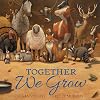
When a rain storm strongly pelts the barn, the animals inside are scared, and wondering when they will be fed. Outside, in the strong storm, is a mother fox and her babies. Seeking refuge, they try to enter the barn, only to be told "Go Away! We are full today!" Soaked and discouraged, the family has no where to go.
It is a lone little duck who travels out of the barn to dry the tears and calm the fears. That act of courage entices the other animals to come out in the sunshine after the show more terrible storm, and to listen to the small critter who encourages them to learn and show and that together they grow.
Highlighting the different colors and sizes, again, all are welcome including three babies and the mother fox. "There is room, there is room, there is room for all!"
These beautifully illustrated book ends with others longing for shelter, including a possum with four babies clinging to her back. The barn door is open and all have a space.
This book can be interpreted as a strong message for inclusion, and perhaps the need to accept people of different countries who live in poverty without food or housing. The barn is a symbol for opening space for all to live. show less
It is a lone little duck who travels out of the barn to dry the tears and calm the fears. That act of courage entices the other animals to come out in the sunshine after the show more terrible storm, and to listen to the small critter who encourages them to learn and show and that together they grow.
Highlighting the different colors and sizes, again, all are welcome including three babies and the mother fox. "There is room, there is room, there is room for all!"
These beautifully illustrated book ends with others longing for shelter, including a possum with four babies clinging to her back. The barn door is open and all have a space.
This book can be interpreted as a strong message for inclusion, and perhaps the need to accept people of different countries who live in poverty without food or housing. The barn is a symbol for opening space for all to live. show less
Lists
Awards


You May Also Like


Associated Authors
Statistics
- Works
- 17
- Also by
- 6
- Members
- 1,539
- Popularity
- #16,725
- Rating
- 3.7
- Reviews
- 81
- ISBNs
- 77
- Languages
- 2