
Grady Klein
Author of The Cartoon Introduction to Economics: Volume One: Microeconomics
Series
Works by Grady Klein
The Cartoon Introduction to Economics: Volume One: Microeconomics (2010) — Illustrator — 303 copies, 2 reviews
The Cartoon Introduction to Economics: Volume Two: Macroeconomics (2011) — Illustrator — 187 copies, 1 review
Tagged
Common Knowledge
- Gender
- male
Members
Reviews
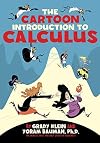
I found this in Sherman's in Bar Harbor. I had seen a similar book by the same authors on Statistics that I didn't like much, but this is brilliant. In my limited experience, Calculus was a collection of techniques that I memorized in order to solve a bunch of changing rate story problems in the classes that I took as an undergraduate, but would suddenly change into something similar but different when I used it in Physics or in Statistics. This book concentrates on the underlying concepts show more of Calculus using cartoons. It has an historical perspective, including both Newton and Leibnitz as characters, and it includes enough explanation of technique so that it ties everything to my experience. I wish I had it 50 years ago. show less

This is indeed a marvelous introduction to the concepts behind statistical analysis, with clear emphasis on the inherently tentative nature of any statistical conclusion. In wacky scenario after wacky scenario, the cartoon characters who populate this good-sized book encounter problems that require statistical analysis and attempt to resolve them using introductory methods, all the while reiterating the fact that they’re dealing in probabilities and not certainties.
From a pedagogical show more perspective, I really appreciate a few different choices the authors made in this and the previous volumes. First, each major concept or theory to be introduced has its own weird situation: for teaching about the central limit theorem, there’s a giant barn full of hypothetical cans of worms, stacked by average worm length in each can, for instance. And whenever the CLT is discussed in later portions of the book, the cans of worms are brought back up visually as well as verbally, so the visual aid really reminds you of the whole thing you learned a couple of chapters ago. And second, there’s a lot of that kind of repetition and a lot of acknowledgement of the reader’s likely comprehension struggles. In fact, there’s sometimes a little more repetition than necessary, which for the casual reader isn’t quite as fun, though I can see it’d be really useful for someone using the book as a study guide or refresher.
As a person who’s never formally studied statistics, I can’t say for certain just how useful this book would be as a student or teacher in the subject. But I can say it’s engaging and fun and makes me consider (again) taking a course or two at the community college, just because. I even tried comprehending the “Math Cave” at the end of the book and mostly succeeded–though the few real statistical formulas included stretched my wimpy math muscles to the limit. So, all in all, I think this is a great visual introduction to statistics, especially (though not exclusively) for the just-curious reader.
(A tad more may be found here.) show less
From a pedagogical show more perspective, I really appreciate a few different choices the authors made in this and the previous volumes. First, each major concept or theory to be introduced has its own weird situation: for teaching about the central limit theorem, there’s a giant barn full of hypothetical cans of worms, stacked by average worm length in each can, for instance. And whenever the CLT is discussed in later portions of the book, the cans of worms are brought back up visually as well as verbally, so the visual aid really reminds you of the whole thing you learned a couple of chapters ago. And second, there’s a lot of that kind of repetition and a lot of acknowledgement of the reader’s likely comprehension struggles. In fact, there’s sometimes a little more repetition than necessary, which for the casual reader isn’t quite as fun, though I can see it’d be really useful for someone using the book as a study guide or refresher.
As a person who’s never formally studied statistics, I can’t say for certain just how useful this book would be as a student or teacher in the subject. But I can say it’s engaging and fun and makes me consider (again) taking a course or two at the community college, just because. I even tried comprehending the “Math Cave” at the end of the book and mostly succeeded–though the few real statistical formulas included stretched my wimpy math muscles to the limit. So, all in all, I think this is a great visual introduction to statistics, especially (though not exclusively) for the just-curious reader.
(A tad more may be found here.) show less
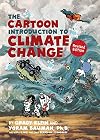
A pretty good look at climate change, from the evidence that it is indeed happening to the options we might pursue to mitigate it. Very informative and even-handed.
Too bad it doesn't look good. The art is all grayscale and wobbly, with thick and blotchy lines that often fail to connect or drop out in the middle. It reminded me of an old comic strip hanging on an officer worker's cubicle wall that was third-generation photocopy of a fax of a mimeograph.
Too bad it doesn't look good. The art is all grayscale and wobbly, with thick and blotchy lines that often fail to connect or drop out in the middle. It reminded me of an old comic strip hanging on an officer worker's cubicle wall that was third-generation photocopy of a fax of a mimeograph.
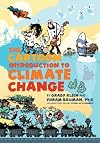
A quick and easy read, but frustrating. Some of the statements are mistaken information, and the solutions are pat, simple, market based technological innovations, with no reference to the fact that there are real downsides to most of the solutions mentioned. The book is typical of books written by economists who are environmentally conscious, but want to make money from climate change. They did some good research, but there were places that could have used better fact checking, and better show more information. Also, the idea that prosperity will increase wealth for everyone, and poor people will become fewer, had already been demonstrated by actual events to be false long before this book was written. The book should be consumed with caution, and a good fact-checker. show less
Lists
Awards

You May Also Like


Associated Authors
Statistics
- Works
- 12
- Members
- 883
- Popularity
- #29,018
- Rating
- 3.6
- Reviews
- 12
- ISBNs
- 40
- Languages
- 6