
Nick Bertozzi
Author of Shackleton: Antarctic Odyssey
Works by Nick Bertozzi
Rubber Necker 5 2 copies
Jerusalem: A Family Portrait 1 copy
UVK; Uvkatastophe 1 copy
Associated Works
The Big Book of the Weird Wild West: How the West was Really Won! (Factoid Books) (1998) — Illustrator — 117 copies
Giant-Size Action Planet Halloween Special — Illustrator — 1 copy
Tagged
Common Knowledge
- Canonical name
- Bertozzi, Nick
- Birthdate
- 1970
- Gender
- male
- Relationships
- Chaloner, Kim (wife)
- Nationality
- USA
- Places of residence
- Flushing, New York, USA
- Associated Place (for map)
- New York, USA
Members
Reviews
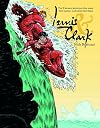
In Lewis & Clark, Nick Bertozzi relates the adventures of the renowned Lewis and Clark Expedition in graphic novel format, from Thomas Jefferson's initial assignment to Meriwether Lewis in Washington, D.C. and the party's final glimpse of white civilization in St. Louis, to the Pacific Ocean and back again three years later. Their journey, while at its core a scientific endeavor, would also prove invaluable in recording the locations, culture and social codes of the many Native American show more tribes they encountered and whose lands they traversed.
Lewis and Clark themselves are depicted as refreshingly human -- certainly not the rugged outdoorsmen or supermen one might assume the leaders of such an enterprise must be. Clark is more cautious and rational; Lewis is volatile, emotional and haunted by his own personal demons. The relative success of the Lewis and Clark Expedition is kind of amazing seen through 21st-century eyes. Although they encountered their share of hostile situations and bad luck, and were at times low on provisions, it's incredible that more men were not lost (in stark contrast to the Donner Party tragedy 42 years later). Then there is Sacagawea, the legendary Shoshone woman who served as a guide. It's important to remember that, although revered today as a heroine and a symbol of female worth and independence, she was by no means a participant by choice. Her scenes are distressing in their likely accuracy. I'm curious now to read the expedition journals myself. show less
Lewis and Clark themselves are depicted as refreshingly human -- certainly not the rugged outdoorsmen or supermen one might assume the leaders of such an enterprise must be. Clark is more cautious and rational; Lewis is volatile, emotional and haunted by his own personal demons. The relative success of the Lewis and Clark Expedition is kind of amazing seen through 21st-century eyes. Although they encountered their share of hostile situations and bad luck, and were at times low on provisions, it's incredible that more men were not lost (in stark contrast to the Donner Party tragedy 42 years later). Then there is Sacagawea, the legendary Shoshone woman who served as a guide. It's important to remember that, although revered today as a heroine and a symbol of female worth and independence, she was by no means a participant by choice. Her scenes are distressing in their likely accuracy. I'm curious now to read the expedition journals myself. show less
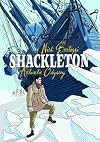
Bertozzi, author of several other historical/nonfiction graphic novels tackles the epic journeys of Shackleton, specifically the Imperial Trans-Antarctic Expedition in 1914.
The book begins with the failed British expeditions, ending in the disastrous Scott expedition that was beaten by Amundsen and died on the return journey. However, despite setbacks and discouragement, Shackleton was obsessed with the south pole and refused to give up. The expedition intended to be the first group to cross show more the Antarctic. They had careful plans, a relief ship waiting on the other side, and everything seemed like clear sailing. Unfortunately, they met disaster almost immediately, when their ship was trapped in the ice and crushed. Despite hunger, cold, illness, potential mutiny and hallucinations, the expedition team survived and completed their expedition.
The book opens with an author's note mentioning that some parts of the story were "compressed for dramatic reasons." It ends with an epilogue giving a general idea of what happened to the members later and a list of sources.
The black and white art, neatly divided into small panels, accurately conveys the boredom and endless white wilderness of the Antarctic and the men's grim struggle to survive. Most of the characters are featureless, populating each small panel like posed figures in a silent film, moving a little farther on for each successive step in the story. It's effective and artistic and fits the story well, showing the isolation and privation of the journey.
So, this sounds great, right? Actually, I really disliked this book. The more I read it, the more irritated I got. The book itself is fine, if you're into Antarctic exploration. I'm not. I can discount my boredom on the premise that I'm not interested in the subject matter. What I find really annoying is the fact that we have here yet another book about a dead white male explorer. Again, not my field of interest, but looking at it from my perspective, the guy got funding for an expensive and basically pointless expedition just because he liked wandering around in the Antarctic and wanted to prove a point about the British Empire. What, exactly, was the point of the expedition and why are people still writing books about it? A quick search in our library consortium turns up 136 items on Shackleton, including 5 for children and teens just on the first couple pages. Why do we need another book on the same old, tired canon of male explorers? I'd like to see more biographies of overlooked historical figures - there are plenty of female explorers to choose from.
Verdict: It's not just that I don't like Shackleton (I don't) it's that I'm completely fed up with the continued churning out of biographies of the same group of people. I wouldn't buy any more biographies of Amelia Earhart either. The book would be of interest to someone who has an interest in the topic, but the art style isn't going to attract any of my teen patrons and I'm looking for more diversity in my collection development.
ISBN: 9781596434516; Published 2014 by First Second; Borrowed from another library in my consortium show less
The book begins with the failed British expeditions, ending in the disastrous Scott expedition that was beaten by Amundsen and died on the return journey. However, despite setbacks and discouragement, Shackleton was obsessed with the south pole and refused to give up. The expedition intended to be the first group to cross show more the Antarctic. They had careful plans, a relief ship waiting on the other side, and everything seemed like clear sailing. Unfortunately, they met disaster almost immediately, when their ship was trapped in the ice and crushed. Despite hunger, cold, illness, potential mutiny and hallucinations, the expedition team survived and completed their expedition.
The book opens with an author's note mentioning that some parts of the story were "compressed for dramatic reasons." It ends with an epilogue giving a general idea of what happened to the members later and a list of sources.
The black and white art, neatly divided into small panels, accurately conveys the boredom and endless white wilderness of the Antarctic and the men's grim struggle to survive. Most of the characters are featureless, populating each small panel like posed figures in a silent film, moving a little farther on for each successive step in the story. It's effective and artistic and fits the story well, showing the isolation and privation of the journey.
So, this sounds great, right? Actually, I really disliked this book. The more I read it, the more irritated I got. The book itself is fine, if you're into Antarctic exploration. I'm not. I can discount my boredom on the premise that I'm not interested in the subject matter. What I find really annoying is the fact that we have here yet another book about a dead white male explorer. Again, not my field of interest, but looking at it from my perspective, the guy got funding for an expensive and basically pointless expedition just because he liked wandering around in the Antarctic and wanted to prove a point about the British Empire. What, exactly, was the point of the expedition and why are people still writing books about it? A quick search in our library consortium turns up 136 items on Shackleton, including 5 for children and teens just on the first couple pages. Why do we need another book on the same old, tired canon of male explorers? I'd like to see more biographies of overlooked historical figures - there are plenty of female explorers to choose from.
Verdict: It's not just that I don't like Shackleton (I don't) it's that I'm completely fed up with the continued churning out of biographies of the same group of people. I wouldn't buy any more biographies of Amelia Earhart either. The book would be of interest to someone who has an interest in the topic, but the art style isn't going to attract any of my teen patrons and I'm looking for more diversity in my collection development.
ISBN: 9781596434516; Published 2014 by First Second; Borrowed from another library in my consortium show less
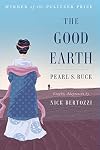
This pedestrian graphic novel adaptation barely hints at the greatness of the source material. My joy in revisiting the characters and story was muted by the clunky artwork and that clunkiness possibly causing an overreliance on caption narration instead of a show-don't-tell approach to the adaptation. I feel sorry for anyone who is using this an introduction to Pearl Buck's classic, because they are missing out on so much.
Bertozzi's Lewis & Clark is an engaging introduction to The Corps of Discovery journey, in graphic novel format. It's a fairly quick read that depicts the outlines of the expedition and a few deeper ideas (cultures clashing, frustrations and excitement among the soldiers, Sacagawea's ambiguous status) without bogging down in details.
It's not a research book. For that, try Undaunted Courage by Stephen Ambrose, which Bertozzi cites with several other sources in his bibliography. Ambrose did show more extensive research (perhaps Bertozzi did as well! But that's not the point of this graphic history) and tells the story in a way accessible to high school students and older.
The book is appropriate for kids 6 and up with one caveat. It depicts Meriwether Lewis' mental illness as a small shadowy figure, describes it as a family "demon," and is straightforward that he committed suicide. My education had left this tidbit out, but Ambrose is convinced of it, and I think parents might want to be aware of this content in the book so they can discuss it with their children. (Ambrose suggests Lewis was bipolar). show less
It's not a research book. For that, try Undaunted Courage by Stephen Ambrose, which Bertozzi cites with several other sources in his bibliography. Ambrose did show more extensive research (perhaps Bertozzi did as well! But that's not the point of this graphic history) and tells the story in a way accessible to high school students and older.
The book is appropriate for kids 6 and up with one caveat. It depicts Meriwether Lewis' mental illness as a small shadowy figure, describes it as a family "demon," and is straightforward that he committed suicide. My education had left this tidbit out, but Ambrose is convinced of it, and I think parents might want to be aware of this content in the book so they can discuss it with their children. (Ambrose suggests Lewis was bipolar). show less
Awards


You May Also Like


Associated Authors
Statistics
- Works
- 20
- Also by
- 14
- Members
- 615
- Popularity
- #40,875
- Rating
- 3.5
- Reviews
- 27
- ISBNs
- 30
- Languages
- 3