
Julie Paschkis
Author of Flutter & Hum / Aleteo y Zumbido: Animal Poems / Poemas de Animales (Bilingual)
Works by Julie Paschkis
Flutter & Hum / Aleteo y Zumbido: Animal Poems / Poemas de Animales (Bilingual) (2015) 176 copies, 8 reviews
Associated Works
The Great Smelly, Slobbery, Small-Tooth Dog: A Folktale from Great Britain (2007) — Illustrator — 60 copies, 3 reviews
Tagged
Common Knowledge
- Gender
- female
- Occupations
- fabric designer
book Illustrator - Awards and honors
- Boston Globe - Horn Book Award
- Places of residence
- Seattle, Washington, USA
- Associated Place (for map)
- Washington, USA
Members
Reviews

Did you know that the yolk of an egg turns a deeper yellow if a chicken eats more yellow plants? Or that in the 1920s pink was considered a color for boys, until the 1940s, when it switched to being associated with girls? How about the fact that in ancient times, purple dye was made of sea snails in Phoenicia (now Lebanon), and that it took about 243,000 snails to make one ounce of dye! No wonder only royalty could afford those purple robes they wore!
You will learn all this and more in this show more delightful book about color, that mixes facts and poems with whimsical pictures across every two-page spread.
I found the short poem for GREEN remarkably evocative:
GREEN
"Green smell of a summer lawn.
Damp dawn long gone.
Green song of a summer lawn.
In the hot sun I hum along."
Like most poems, it manages to paint whole worlds with just a few words.
Some are very humorous, bound to tickle both kids and the adults who read to them:
RED
“Inquired Patrice:
‘What color paint would you like tonight?
Crimson, scarlet, or cadmium light?
Magenta, madder, beet, carmine?
Quinacridone rose, alizarin?
There are a zillion!
Even vermillion!’
‘Red,’ said Fred.”
It ends with the idea of a rainbow featuring many colors at once, with the poem describing a rainbow picnic -
RAINBOW
“Corn and beans.
Collard greens.
Blueberry pie.
Sigh.
Purple plums and huckleberries.
Watermelon, juicy cherries.
Ripe red tomatoes cut thick.
Carrot sticks.
Golden apples, sun dappled.
Tart lemonade - cool sips.
Snowy white ice cream.
Slow licks, drips.
. . . "
Paschkis, who is also the illustrator, employs gouache-on-paper illustrations that include lots of different animals and whimsical design elements to keep the recommended reading age group of three and up consistently delighted.
Evaluation: Kids will return to these pages not only for the fun pictures and poems, but they will undoubtedly be drawn by the fascinating facts. Perhaps they will be inspired to investigate further, or write their own poems for colors not included. It would make a great classroom book. show less
You will learn all this and more in this show more delightful book about color, that mixes facts and poems with whimsical pictures across every two-page spread.
I found the short poem for GREEN remarkably evocative:
GREEN
"Green smell of a summer lawn.
Damp dawn long gone.
Green song of a summer lawn.
In the hot sun I hum along."
Like most poems, it manages to paint whole worlds with just a few words.
Some are very humorous, bound to tickle both kids and the adults who read to them:
RED
“Inquired Patrice:
‘What color paint would you like tonight?
Crimson, scarlet, or cadmium light?
Magenta, madder, beet, carmine?
Quinacridone rose, alizarin?
There are a zillion!
Even vermillion!’
‘Red,’ said Fred.”
It ends with the idea of a rainbow featuring many colors at once, with the poem describing a rainbow picnic -
RAINBOW
“Corn and beans.
Collard greens.
Blueberry pie.
Sigh.
Purple plums and huckleberries.
Watermelon, juicy cherries.
Ripe red tomatoes cut thick.
Carrot sticks.
Golden apples, sun dappled.
Tart lemonade - cool sips.
Snowy white ice cream.
Slow licks, drips.
. . . "
Paschkis, who is also the illustrator, employs gouache-on-paper illustrations that include lots of different animals and whimsical design elements to keep the recommended reading age group of three and up consistently delighted.
Evaluation: Kids will return to these pages not only for the fun pictures and poems, but they will undoubtedly be drawn by the fascinating facts. Perhaps they will be inspired to investigate further, or write their own poems for colors not included. It would make a great classroom book. show less
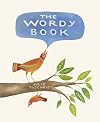
This book is a collection of paintings made up of words upon words, all moving, interacting, and creating a visually stunning and wordy universe. Each page contains a question to be answered with the words that lie within. What happens when words and pictures coexist in such a way, bump into one another, are in constant conversation? How might words paint a bird, while that very bird sings the words themselves? This book invites readers to participate in a vibrant celebration of language itself.

I was excited to see Julie Paschkis' new book for several reasons. First, because I love her books and her art and each new story almost always goes on my favorite pile. Secondly, because eggs are a Big Deal at my library. Thirdly, because I'm planning to feature her in my We Explore Art and Stories series this summer!
This is the story of P. Zonka who doesn't lay eggs. She spends her time looking at the beauties of nature around her. When the other hens finally convince her to try show more egg-laying, P. Zonka does indeed lay an egg...and what an egg! Like nothing they have every seen before, holding all the colors and patterns she has absorbed from nature.
A brief author's note explains the inspiration for the story in the Ukrainian tradition of pysanky, decorated eggs. I really enjoyed this story; it's a familiar trope (I thought immediately of Lionni's Frederick) but presented in a fresh, new setting with unique, gorgeous artwork. I also appreciated the subtle breaking of gender stereotypes, when one of the hens, Gloria, turns out to be a rooster.
I love the way she adapted her art for this book - as you can see even in the cover, everything is round and swirling, just like a pysanka. The chickens' feathers are squiggles and zigzags, the flowers curve around the page, the eggs are smooth ovals with swift, strong brushstrokes.
My library paints eggs every year, usually right before Easter and I was interested to see how pysanky are created. The process is a bit too complicated for the size and age of my group, but I'm hoping to put up pictures as well as copies of P. Zonka as inspiration before the big event. Of course, my main interest is Julie Paschkis' art, since I'll be featuring her this summer. I read and watched a whole slew of interviews, including discussions of her art techniques, before deciding how to present her art. Paschkis uses several different techniques and her style changes as well, although her vibrant colors and the line of her work is always recognizable. I decided to go with a quilt/collage project, from a recent book called Mooshka which features a lot of quilts and with painting, emphasizing the swirling lines and stylized decorations of P. Zonka by giving the children stencils to draw pictures with which they can then paint in and around, giving them a little more structure. It's going to be a fun summer!
Verdict: This would make a great Easter story, but any time of the year is perfect for celebrating art, imagination, and eggs! Highly recommended.
ISBN: 9781561458196; Published 2014 by Peach Tree; Review copy provided by the publisher; Donated to the library show less
This is the story of P. Zonka who doesn't lay eggs. She spends her time looking at the beauties of nature around her. When the other hens finally convince her to try show more egg-laying, P. Zonka does indeed lay an egg...and what an egg! Like nothing they have every seen before, holding all the colors and patterns she has absorbed from nature.
A brief author's note explains the inspiration for the story in the Ukrainian tradition of pysanky, decorated eggs. I really enjoyed this story; it's a familiar trope (I thought immediately of Lionni's Frederick) but presented in a fresh, new setting with unique, gorgeous artwork. I also appreciated the subtle breaking of gender stereotypes, when one of the hens, Gloria, turns out to be a rooster.
I love the way she adapted her art for this book - as you can see even in the cover, everything is round and swirling, just like a pysanka. The chickens' feathers are squiggles and zigzags, the flowers curve around the page, the eggs are smooth ovals with swift, strong brushstrokes.
My library paints eggs every year, usually right before Easter and I was interested to see how pysanky are created. The process is a bit too complicated for the size and age of my group, but I'm hoping to put up pictures as well as copies of P. Zonka as inspiration before the big event. Of course, my main interest is Julie Paschkis' art, since I'll be featuring her this summer. I read and watched a whole slew of interviews, including discussions of her art techniques, before deciding how to present her art. Paschkis uses several different techniques and her style changes as well, although her vibrant colors and the line of her work is always recognizable. I decided to go with a quilt/collage project, from a recent book called Mooshka which features a lot of quilts and with painting, emphasizing the swirling lines and stylized decorations of P. Zonka by giving the children stencils to draw pictures with which they can then paint in and around, giving them a little more structure. It's going to be a fun summer!
Verdict: This would make a great Easter story, but any time of the year is perfect for celebrating art, imagination, and eggs! Highly recommended.
ISBN: 9781561458196; Published 2014 by Peach Tree; Review copy provided by the publisher; Donated to the library show less
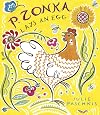
Living amid a group of hens and one rooster, whom everyone thought was female until he developed into a male, P. Zonka is an artist among hens. Rather than laying eggs like her companions, she would rather study the sky, the clouds, the blueness of it all, and the green glow of the grass. Seeing life in nature and patterns, P. Zonka is happy.
Yet, being nagged by others can be annoying. When she is goaded into trying to lay just one egg, she does so. And, what an egg it is. It is not white, show more or brown -- it is multicolored, swirling like the clouds and sky, blue and green like the sky and earth.
Noting an inspiration for this book based on the Ukrainian tradition of pysanky, or the decorating of eggs, the author/illustrator weaves a magical tale of independence, or appreciation of nature and fitting in by following examples, yet, while staying true to oneself.
Highly recommended both for the story and the illustrations. show less
Yet, being nagged by others can be annoying. When she is goaded into trying to lay just one egg, she does so. And, what an egg it is. It is not white, show more or brown -- it is multicolored, swirling like the clouds and sky, blue and green like the sky and earth.
Noting an inspiration for this book based on the Ukrainian tradition of pysanky, or the decorating of eggs, the author/illustrator weaves a magical tale of independence, or appreciation of nature and fitting in by following examples, yet, while staying true to oneself.
Highly recommended both for the story and the illustrations. show less
Lists
Awards


You May Also Like


Associated Authors
Statistics
- Works
- 19
- Also by
- 21
- Members
- 674
- Popularity
- #37,467
- Rating
- 3.9
- Reviews
- 42
- ISBNs
- 44
- Languages
- 2